The Usable Commons at the CC Summit
The Usable Commons track at the CC summit contains an exciting array of sessions that explore how to make the digital commons more discoverable, usable, and human-centered. In content communities such as 3D printing, research, and social media, we will focus on key questions of human behavior, including: What motivates people to share online? What social and technical design factors help people to make connections and build relationships? What can CC and its partners do to better facilitate and foster this collaboration online?
In order of appearance on the summit agenda, below are some of the sessions and speakers central to the Usable Commons. Note that all sessions at the summit are tagged across multiple tracks. The Usable Commons is simply one way for you to navigate this year’s excellent program.
We look forward to collaborating with you at this year’s CC Summit in Toronto!
Note: Session times are subject to change. For up-to-date descriptions of each session, check the Sched app.
Sharing norms that go beyond the licenses and CC’s role, starting with 3D design community
(Day 1, April 28) Friday, 1:30-3:30pm
What would it look like for Creative Commons to shift its primary focus to the norms of sharing content online, rather than the precise legalities of sharing? To help us envision this strategy in practice, we will apply it in the area of 3D printing. We will look at the existing norms for sharing 3D designs, and then discuss how Creative Commons could help make the culture of sharing even more pronounced and productive in this domain. As part of the discussion, we will brainstorm specific things CC might do and talk about the potential negative consequences, as we explore this new way of operating. This will be a two-part session, with discussion/debate in the second hour.
Speakers:
- Tony Buser (Thingiverse/Makerbot)
- Meghan Coakley (NIH 3D Print Exchange)
- Jeric Bautista (re3D)
- Ben Malouf (Lulzbot/Aleph Objects)
- Meredith Jacob (CC U.S.)
- Frank Polcino (Thingiverse/Makerbot)
- Michael Weinberg (Shapeways)
- Sarah Pearson (Creative Commons)
- Jane Park (Creative Commons)
CC Search: Usability, Features, and Partners
(Day 1, April 28) Friday, 4:00-5:30pm
In February, Creative Commons released a working beta of CC Search. The initial service indexes about 1 percent of the Commons, and has a few key features, including list making, favoriting, and one-click attribution. Following the release, many partners have come forward asking to be involved. Before CC builds a complete index and service, we should continue consulting with partners, users, and the CC community. We’ll generate insights and map ideas for the future of CC search as a product. We will conduct a user-testing session; share statistics and analytics of CC search tools and partner platforms; work in smaller groups to generate solutions for a vital search product for the commons built to go beyond discovery to support collaboration and human connections
Speakers:
- Ryan Merkley (Creative Commons)
- Liza Daly (Software engineer, lead of beta CC Search)
- Rob Myers (Creative Commons)
- Maarten Zeinstra (CC Netherlands /Kennisland)
How to encourage prosocial behavior
(Day 1, April 28) Friday, 4:00-5:30pm
Healthy collaboration requires a lot more than copyright licenses. Among other things, it requires that people recognize the humanity in each other and behave accordingly, something that is far from a given online. Creating online environments that encourage prosocial behavior requires proactive effort and design. This session will feature platforms who regularly grapple with these issues. Each will explain the processes and infrastructure they use to create online environments where people interact in productive ways. Discussion will follow regarding what else we can do to foster greater cooperation and sharing online, especially with regards to commons content communities. We will explore the lifecycle of sharing, including: the pre-conditions for sharing, the actual act of sharing, what happens after sharing, and then what might feed back into the cycle, which may be ongoing or a one-time act.
Speakers:
- Juliet Barbara (Wikimedia Foundation)
- Ashe Dryden (Programmer, Diversity Advocate and Consultant)
- Alex Feerst (Medium)
- Tony Buser (Thingiverse/Makerbot)
- Sarah Pearson (Creative Commons)
- Jane Park (Creative Commons)
Share or Die: Is the Future of Manufacturing Open Source? Open Hardware Business Models
(Day 2, April 29) Saturday, 9-10am
How can manufacturers open source their design and products without losing their unique value proposition? This panel, organized by Danish Design Centre, debates the challenges and opportunities of designing open source-based business models for manufacturing and looks at the future of production in a new era. An era increasingly defined by not only the technology of the maker movement, but also its major underlying currents of knowledge sharing, co-creation and crowdsourced innovation. A future where manufacturers and designers will have to learn to share – or die.
Speakers:
- Christian Villum (CC Denmark)
- Paul Stacey (Creative Commons)
How to make good on the Creative Commons Promise?
(Day 3, April 30) Sunday, 10:30-11:30am
As use of Creative Commons licenses increases, we are seeing more instances of people misunderstanding the licenses or making mistakes with reuse. Creators who use Creative Commons face the issue that they often do not receive proper attribution that the licenses promised them when their works are reused. Reusers of CC-licensed works are increasingly facing the issue of legal threats from creators if they make mistakes in their attribution. In this session, we will discuss these issues, share our experience with them, and develop strategies for addressing them. We hope to develop an approach for how to proceed to better ensure that people are getting what they expect when they both release their works using a CC license and when they reuse CC-licensed works.
Speaker:
- Charles M. Roslof (Wikimedia Foundation)
Patents: The Next Open Access Fight
(Day 3, April 30) Sunday, 1:30-2:30pm
Even as scientific research becomes accessible to a wider public, some of that same research is falling into the hands of patent trolls, companies that serve no purpose but to amass patents and sue innovators who independently created similar inventions. Those trolls can undo open access allies’ work in bringing knowledge and innovation to the public. Join us for an overview and discussion about current day challenges and opportunities, and the role that Creative Commons might play in furthering a patent commons.
Speaker:
- Elliot Harmon (Electronic Frontier Foundation)
- Jorge Contreras (University of Utah)
- Diane Peters (Creative Commons)
- Ryan Merkley (Creative Commons)
CC Usability: Reimagining CC’s tools for real users
(Day 3, April 30) Sunday, 3:00-5:00pm
If we were to reimagine CC’s core tools for real users in 2017, who would be our core audience? If we didn’t have the constraints of 15 years ago when the licenses launched, how would we design the licenses to serve CC users’ needs and desires today? We will present and discuss current and new designs of the CC licenses, buttons, deeds, and chooser. Content platforms will provide insight into their users’ motivations. Additionally, we invite participants from every region to give us insight into their users’ needs, and an opportunity to help reimagine CC’s tools for the current web and sharing climate.
Speakers:
- Alex Feerst (Medium)
- Melissa Nightingale (Wattpad)
- Cheyenne Hohman (Free Music Archive)
- Charles M. Roslof (Wikimedia Foundation)
- Mack Hardy (Affinity Bridge)
- Eric Steuer (Creative Commons)
- Ryan Merkley (Creative Commons)
- Jane Park (Creative Commons)
Hacia la Implementación del Tratado de Marrakech en Uruguay
El “Tratado de Marrakech para facilitar el acceso a obras publicadas a las personas ciegas, con discapacidad visual o con otras dificultades para acceder al texto impreso”, constituye un hito en la relación entre los derechos de autor y los DD.HH., siendo el primer tratado internacional consagrado con el objetivo exclusivo de proteger los derechos de acceso a la cultura y el conocimiento.
Dicho Tratado fue aprobado en el ámbito de la OMPI en el año 2013 y entró en vigor el 30 de setiembre de 2016. Desde su aprobación y ratificación, varios Estados parte se encuentran trabajando para lograr su efectiva implementación a nivel nacional.
La implementación del Tratado de Marrakech
Dos aspectos clave a tomar en cuenta para la implementación de Marrakech en las legislaciones nacionales son:
1) Marrakech constituye un mínimo de protección. Las cláusulas mandatorias del tratado incluyen la obligación de establecer como mínimo las siguientes excepciones o limitaciones relacionadas con el acceso a las obras publicadas a las personas ciegas, con discapacidad visual o con otras dificultades para acceder al texto impreso:
- Excepción o limitación para la producción de obras en formatos accesibles.
- Excepción o limitación para la distribución y comunicación al público de obras en formatos accesibles.
- Excepción o limitación para la exportación (transferencia internacional) de obras en formatos accesibles.
- Excepción o limitación para la importación (introducción al país) de obras en formatos accesibles.
- Excepción a las Medidas Tecnológicas de control de Acceso (DRM)
Si bien en el cuerpo del Tratado se sugieren modelos de implementación para estas excepciones, estos modelos no son vinculantes. Las Partes Contratantes podrán incluir limitaciones y excepciones distintas a las previstas o con un mayor alcance, en la medida que se cumpla con la regla de los tres pasos presente en todos los acuerdos de DA y conexos.
2) La clave del éxito de Marrakech depende de la creación de redes internacionales con procesos ágiles de producción e intercambio de ejemplares accesibles, procurando evitar la duplicación de esfuerzos.
La mayor innovación del Marrakech es, sin lugar a dudas, la instauración de un régimen internacional de transferencia internacional de ejemplares en formato accesible, facilitando el intercambio y fortaleciendo la eficiencia de aquellas entidades habilitadas a realizar la producción y distribución de este tipo de obras. Estas instituciones deben contar con un marco normativo claro y compatible con el de las entidades de otros países. Un país miembro podrá establecer como requisito suficiente para la exportación que el país haya ratificado Marrakech o que su legislación lo permita, pero también podrá disponer otro tipo de restricciones. Esto último podría dificultar enormemente el análisis de la legalidad de la transferencia, operando de barrera en el intercambio. La redacción óptima de esta excepción será siempre la más simple y menos restrictiva.
El régimen de cooperación internacional encaminado a facilitar el intercambio transfronterizo previsto en Marrakech establece a la OMPI como punto de acceso a la información, por lo que la OMPI se encuentra actualmente trabajando en la creación de una base de entidades autorizadas a nivel mundial, un catálogo mundial de obras y mecanismos de análisis de la compatibilidad entre legislaciones (a través del Proyecto ABC). Entendemos que, la implementación óptima del tratado a nivel nacional, deberá efectuarse indefectiblemente en coordinación con la OMPI.
Implementación de Marrakech en Uruguay
Los días 23 y 24 de marzo tuvo lugar en la ciudad de Montevideo el “Seminario Nacional: El derecho a la accesibilidad. La excepción a los derechos de autor en la Ley de Derechos de Autor del Uruguay y la implementación del Tratado de Marrakech de la OMPI” coorganizado por el Consejo de Derechos de Autor del Ministerio de Educación y Cultura de Uruguay (CDA – MEC) y la OMPI.
En dicha ocasión, fue presentado y discutido el proyecto de Decreto reglamentario del Tratado elaborado por el CDA-MEC. A su vez, las diferentes instituciones del gobierno, academia y sociedad civil que se encuentran trabajando en proyectos de bibliotecas digitales accesibles, presentaron sus experiencias e inquietudes.
Destacamos algunos aspectos de la propuesta de Decreto Reglamentario presentado por el CDA- MEC de Uruguay:
- Se implementa el Tratado mediante la instauración de excepciones, excluyendo el uso de licencias obligatorias o limitaciones con remuneración compensatoria. Este requisito de remuneración compensatoria sería un gran obstáculo o carga poco razonable, ya que los proyectos de bibliotecas digitales accesibles de países como Uruguay cuentan con pocos recursos e infraestructura. Por otra parte, no existiría nada que compensar cuando la oferta comercial de obras en este tipo de formatos es prácticamente inexistente.
- Se propone la creación del “Registro de Obras e Instituciones Autorizadas comprendidas en la excepción de derecho de autor a favor de personas ciegas o con otras discapacidades para la lectura”, el registro será de carácter obligatorio e implicará la creación de un catálogo nacional de obras y de una nómina de instituciones autorizadas. Dicho Registro estará a cargo de la Biblioteca Nacional del Uruguay que además cumplirá con las funciones de control, coordinación y colaboración con las las instituciones autorizadas, así como la facilitación y estímulo del intercambio interinstitucional y transfronterizo.
- El Proyecto de Decreto declara como “instituciones autorizadas” para proporcionar y producir ejemplares en formatos accesibles a las instituciones de enseñanza públicas y/o privadas, las Bibliotecas públicas o privadas y a dos asociaciones: la Unión Nacional de Ciegos del Uruguay y la Fundación Braille del Uruguay. De esta forma se facilita la existencia de proyectos de producción y distribución de ejemplares en formatos accesibles en estas instituciones. Se prevé que, para otro tipo de instituciones sin fines de lucro, exista un trámite de acreditación, autorización e inscripción en el registro.
- Se habilita directamente a los beneficiarios del tratado (personas ciegas o con problemas de acceso al texto escrito) y a las personas que actúen en su nombre a producir e importar ejemplares en formato accesible, no solamente a las instituciones autorizadas.
- El Proyecto de Decreto NO obliga a efectuar un análisis de mercado previo a la producción o distribución de cada ejemplar, con el fin de determinar la posibilidad de obtención comercial en condiciones razonables. Simplificando, de esta forma, el trabajo de las bibliotecas, instituciones educativas y fundaciones.
- El Proyecto de Decreto plantea una redacción simple, clara y sin mayores restricciones para el caso de intercambio transfronterizo de obras: toda institución autorizada que se encuentre registrada podrá distribuir, comunicar o poner a disposición de las personas beneficiarias o para una institución autorizada establecida en otro país Parte Contratante del Tratado de Marrakech o de un país cuya legislación lo admita, las obras en formato accesible de su catálogo.
- Por último, se establece la legalidad de la elusión de medidas de protección tecnológica en el marco de las actividades relacionadas con estas excepciones. Por lo que, por ejemplo, desencriptar o desactivar la protección tecnológica de un archivo que contenga una obra, para producir un ejemplar accesible, no sería sancionable por el delito penal previsto en el artículo 46 de la ley de derecho de autor de Uruguay.
Consideramos que la reglamentación propuesta por el Consejo de Derechos de Autor del Uruguay es un buen modelo a seguir, esperamos sea aprobada a la brevedad por el Poder Ejecutivo.
Almanaque Azul: a Panamanian travel guide licensed under CC
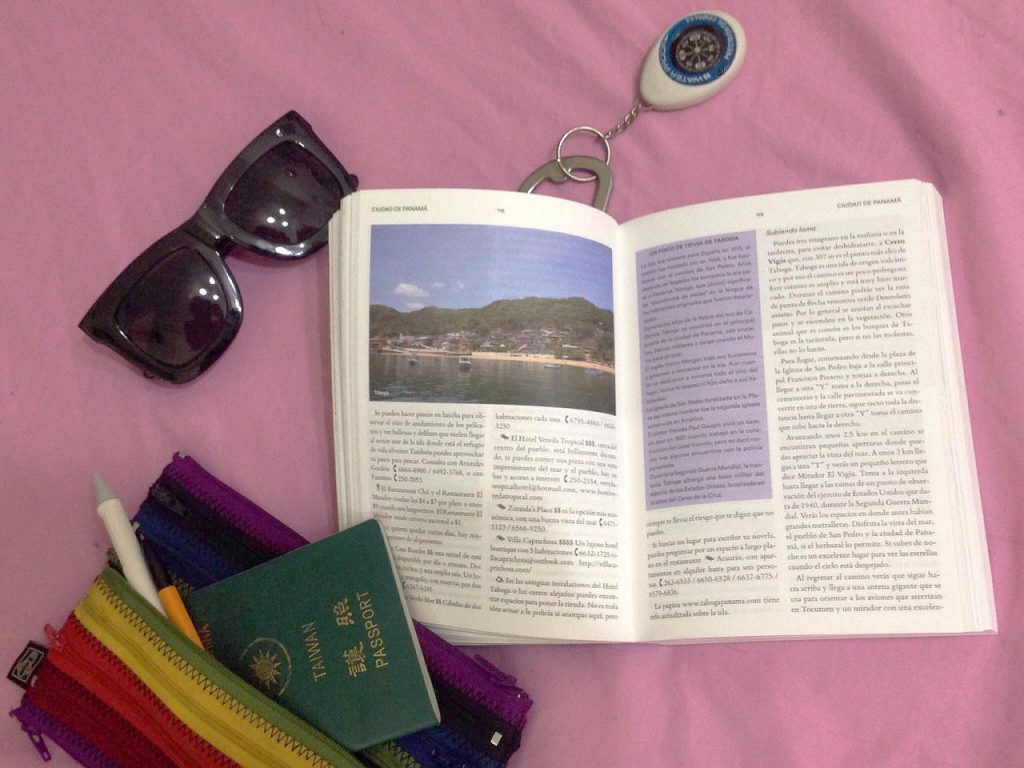
Licensed under CC BY-NC-SA by Alamanque Azul
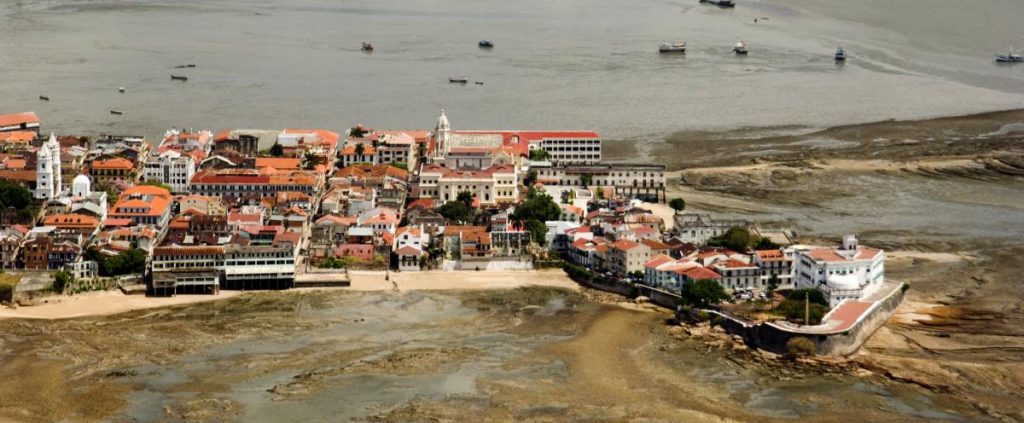
Almanaque Azul is a group of Panamanian environmentalists, artists, and explorers that began the process of creating a travel guide for the beaches of the Republic of Panama in 2005 through a blog that chronicled the amazing cultural and natural diversity of various small towns and deserted beaches.
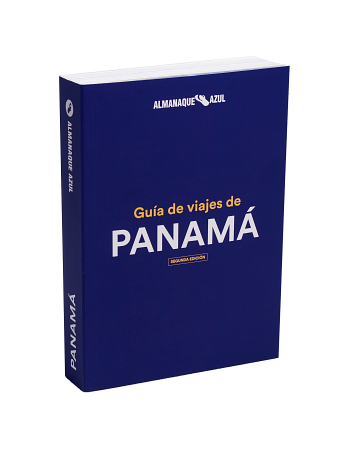
Alamanque Azul, CC BY-NC
Over the years, dozens of volunteers reported from along the Caribbean Sea and Pacific Ocean coasts of this thin Central American isthmus, otherwise known for the Canal that goes through it (though more recently for the “Panama Papers” leak of documents related to corporate tax-avoidance!)
The images and reports from volunteers were carefully edited into the Almanaque Azul website, which quickly became a popular point of reference for local travellers. The website was published under the Spanish port of the CC BY-NC-SA 2.5 licence. The scope of Almanaque Azul gradually became more activist, as large-scale tourism development and a booming real estate market for coastal land drove people off the land and caused environmental destruction throughout the country. We started promoting a more sustainable community and nature based tourism, which was being largely ignored by the market and regulatory agencies.
In 2009 the Almanaque Azul team began work on compiling the research done by the volunteers over the years into a book. We decided to go beyond the coasts and to cover the entire country, including rivers, mountains and inland towns. The result was the first edition of the Almanaque Azul Panama Travel Guide, a 432-page book published in Spanish in 2013 under a CC BY-NC-SA 3.0 unported license, with a print run of 2500 copies. We did our own, very limited distribution but even then we sold out in less than two years and the book became somewhat of a cult object.
By then we were already working on the second edition, which we just published last March. This time, we collected $20,000 from a crowdfunding campaign, which we used to print 6000 copies. The book grew to 560 pages and the license used was a 4.0 international license. More than 100 people contributed research, text, photographs, and illustrations for this edition. We have learned a lot about distribution, marketing and inventory control as well, so we expect to do much better on the economic side of publishing this edition.
We also published an e-book version of the first edition, which we sold on Amazon, under the same license and with no copy-protection.
We used almost entirely free software tools for both editions. The first one was laid out using Scribus, for the second edition we used LaTeX, which turned out to be the perfect choice for a book this large and complex. We had to invest some money in developing a LaTeX class with the book specs, which we plan to release but still haven’t decided whether to use a BY NC-SA, a BY-SA, or just an attribution license.
Using Creative Commons licenses is a natural choice for us, especially since it is a collaborative project where we want the information to spread as far and wide as possible, where everyone should be able to use, remix and republish the content. We felt it would be only fair to restrict commercial reuse, which also made it easier for some people to agree to contribute material.
We did publish some of the pictures from our volunteers and contributors on a different project, La Mochila, intended to support science education in Panama. Since we added all of those images to Wikimedia Commons, we used a CC Attribution-Share Alike License, which required us to do a bit of convincing of the institutions that contributed images, and the Creative Commons Panama Chapter team helped us.
You can check our original website (which is offline at the moment) on the Internet Archive. The book’s promotional website is here.
Influencing centres of change: the policy and advocacy track at #CCSummit
In a couple of weeks in Toronto, we will welcome a global community of advocates working to improve education and access to information and culture through copyright reform and open policy. The summit’s Policy and Advocacy track will focus on increasing the effectiveness of our community in the current and future hotbeds of law and policy change. We hope you join us in sharing your experiences, learning about what others have been doing, and collaborating with us on education and advocacy activities.
Check out the full programme, and view some of the highlights from the Policy and Advocacy track below.
This session on Friday afternoon, led by CC Portugal’s Teresa Nobre focuses on sharing research and campaign experience on influencing the current copyright reform underway in Europe. If you want a sneak peek of what they have been doing, take a look at the campaign.
Here’s a session that will be led by Vladimir Garay from Derechos Digitales. It will build on the perspectives and lessons learned from advocating for copyright reform from Uruguay to Europe to elsewhere, and explore new ideas and approaches for law reform and open policy adoption worldwide.
Alek Tarkowski of Creative Commons Poland leads this session, building on the “State of Open Policy” report, which provides an overview of open policies in the spheres of education, heritage, science, and data. This session showcases the outcomes and tries to figure out with your help how can the 2017 report be an even better resource.
We look forward to seeing everyone at the summit!
The Future of the Commons is an Open Planet
At the end of April, I’ll be joining hundreds of open culture advocates at the Creative Commons Summit in Toronto. The program is looking amazing and I’m looking forward to meeting up with friends and colleagues, both old and new.
I’ll be wearing several hats at the Summit, and I invite everyone to come and chat with me about any of them!

Greenpeace
To begin with, I can’t wait to be in a place where people believe that “sharing is at the core of successful societies”. I want to talk about how we’re all sharing this critical asset: Our Planet. All of us need to collaborate on ecological issues – it’s the only way we’re going to solve some of the global problems we’re facing.
At Greenpeace, we’re redesigning our global web presence to engage with people and to help them act on behalf of our planet. The project, code named Planet 4, is the first openly run project of its size at Greenpeace International. In the workshop “Negotiating for Open”, we’ll use Planet 4 as a case study and explore open decision and design frameworks to help you and your organization establish relationships that can achieve global impacts.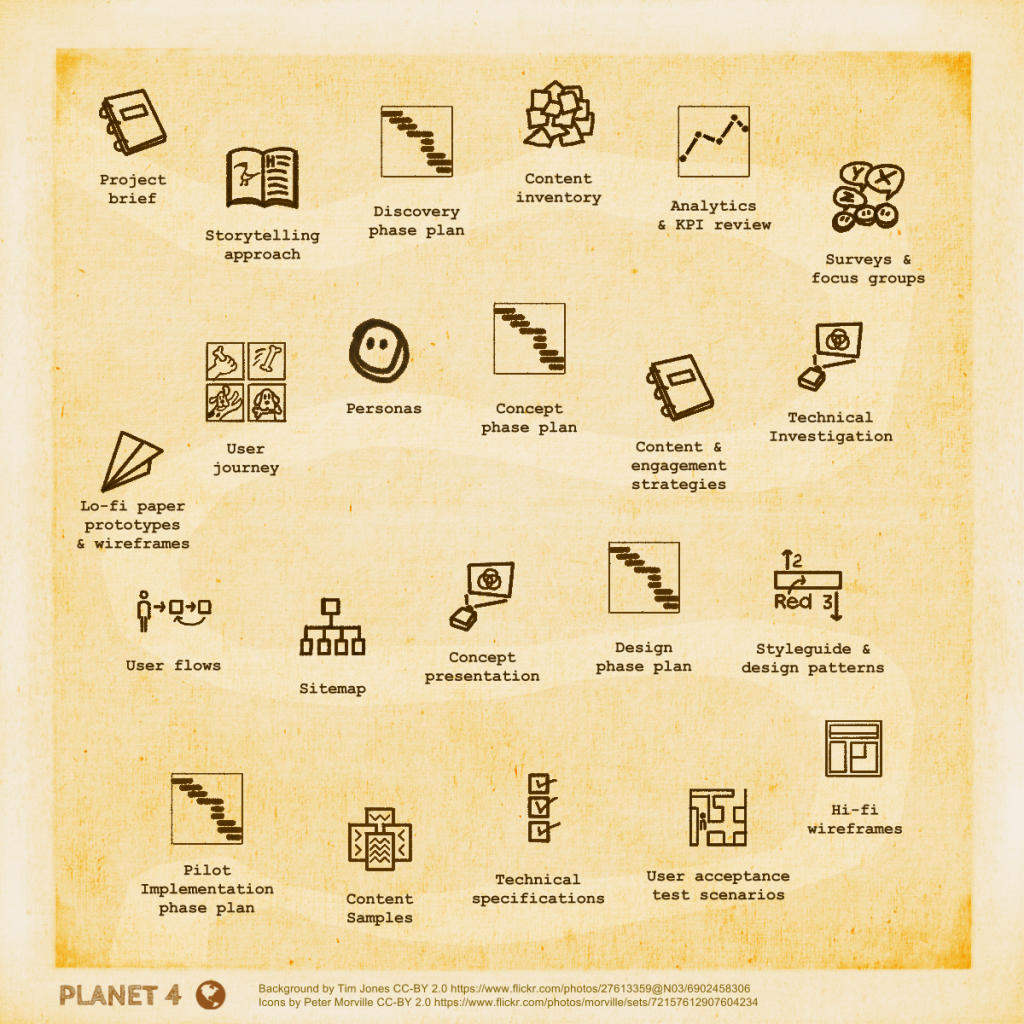
User-driven and community-based design projects are impactful and fulfilling. In the redesign of Greenpeace.org a remix of the Open Decision Framework, the Open Design Kit and community collaboration is of highest importance. In this interactive session, I’d like to share my experiences in a hands-on way. Participants can bring their ideas, their businesses, their strategic directions, and together we’ll help each other set up structures and processes that invite people in. We’ll give advice, talk through issues and create a working atmosphere that helps people solve real world problems.
The open community is full of people with the skills and attitudes that could truly affect global change. I’m hopeful that wearing my Greenpeace hat will help open advocates see the value in sharing with activists and contributing to the environmental movement.
Image by Bryan Mather, We Are Open Coop
We Are Open Co-op
Not only do we all need to understand how our planet fits into the idea of the Commons, we need to talk about openness outside of what we call Open Source or Open Culture communities. Building bridges is the future of the commons. I want to help find and illuminate connections between different communities.
I’ve spent my career working at the crossroads between technology and a variety of different industries, leading to the combinations of: Technology + Media, Technology + Education, Technology + Activism. Spreading the beliefs, processes and culture of open from the tech community and into other sectors is part of the reason I am a founding member of the We Are Open Coop. Open principles and practices have gone mainstream in the past few years – from open government to open data, open science to open education, we’re working to connect people to the ideals of open.
Over the last year it’s also become more and more clear to me how much open and co-ops have in common. Reading Hal Plokin’s excellent post and attending the Open: 2017 Platform Cooperatives conference are just two recent things that have me thinking about finding ways to translate between open communities and co-op communities. Along with Doug Belshaw, a fellow co-founder of the We Are Open Co-op, I’ll be running a session called “Help us forge links between co-ops and the commons”.
By the end of this session, we hope to have some sort of an artefact that visualizes or structures the commonalities between the Open Movement and the Co-op Movement. We’ll build off the International Principles of Co-operation to create amap or framework (or comic strip!) to help people from both movements understand how they can work together to build a most just and equitable world.
More things to talk to me about
I’m looking forward to digging in deep and having meaningful discussions about sharing, community, and collaboration. I’m bound to get into a discussion about the work we’re doing at Opensource.com, and I always have plenty of thoughts on open education, remix, diversity and inclusion…Basically, just come find me and let’s see what we have to talk about. You can also reach out on twitter in advance of the Summit.
Let’s see how our sharing helps light up the commons.
Global Coalition Pushes for Unrestricted Sharing of Scholarly Citation Data
This week a coalition of scholarly publishers, researchers, and nonprofit organizations launched the Initiative for Open Citations (I4OC), a project to promote the unrestricted open access to scholarly citation data. From the website:
Citations are the links that knit together our scientific and cultural knowledge. They are primary data that provide both provenance and an explanation for how we know facts. They allow us to attribute and credit scientific contributions, and they enable the evaluation of research and its impacts. In sum, citations are the most important vehicle for the discovery, dissemination, and evaluation of all scholarly knowledge.
There’s now open citation data from 14 million scholarly papers. Both open access and subscription-based scholarly publishers are contributing to the project. These publishers include the Association for Computing Machinery, PLOS, Wiley, SAGE Publishing, Springer Nature, eLife, Taylor & Francis, and many others.
The goals of project is to promote the availability of data on citations that are “structured, separable, and open.” According to the I4OC website:
Structured means the data representing each publication and each citation instance are expressed in common, machine-readable formats, and that these data can be accessed programmatically. Separable means the citation instances can be accessed and analyzed without the need to access the source bibliographic products (such as journal articles and books) in which the citations are created. Open means the data are freely accessible and reusable.
In order to ensure that the data are freely accessible and reusable, the structured citation metadata will be published using the CC0 Public Domain Dedication, which means that the data may be used without restriction. CC0 enables creators and owners of copyright- or database-protected content to waive those interests in their works and thereby place them as completely as possible in the public domain, so that others may freely build upon, enhance and reuse the works for any purposes without restriction under copyright or database law.
Congratulations to I4OC on the launch of this important initiative. We hope that the open sharing of citation data can aid in the discoverability of all types of research, and generate new and interesting connections in our understanding of scientific and scholarly works.
Community and Movement at CC Summit: We’re ready to jump in
It’s been a big year for community at Creative Commons. At the CC summit at the end of this month we’ll move ahead on the Global Network Strategy. We have identified platforms for people to start analysing and have network discussions for deeper conversations. The Global Network Strategy began at the last Global Summit in Seoul in 2015. No doubt you’ve either read the document, participated in a webinar or in person meeting or joined the Slack channel. This is the first time CC has spent time seriously looking at the affiliate network and the broader community. We heard you, we’re ready to jump in.
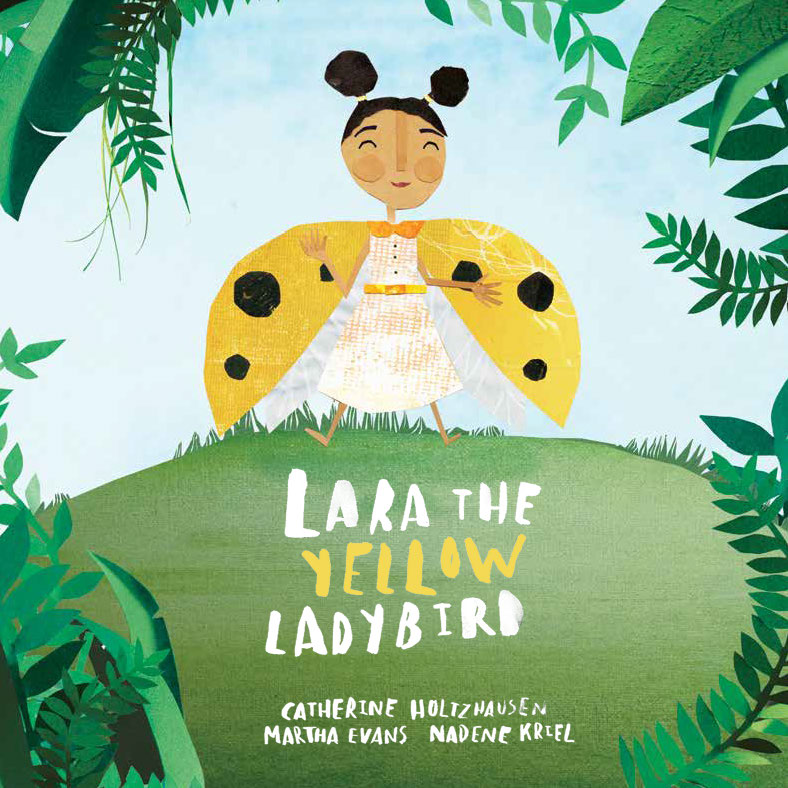
credit: Lara the Yellow Ladybird , Illustrated by Catherine Holtzhausen , Written by Martha Evans, Designed by Nadene Kriel, CC-BY 4.0
With all this energy, the Community & Movement track is filled with new voices as well as established members. If you want to learn how CC licenses work in the wild, be sure to visit the session with projects like Book Dash, African Storybook Initiative and Pratham Books’ StoryWeaver in their session Addressing the Scarcity of Multilingual Reading Resources for Children.
Look out also for a discussion on CC in the South Seas: Lessons Learned in Aotearoa New Zealand from CC New Zealand Communications Lead Elizabeth Heritage. CC New Zealand has always been a strong team, with effective newsletters and content, and this talk is sure to be inspiring to community members of all types.
Open Science nerds don’t worry! We’ve got you covered in Community & Movement. Brian Bot from SAGE Bionetworks will be there to share insights on their project in decentralized biomedical research ecosystems. Interested in hadron colliders? The ATLAS experiment at CERN is will be in Toronto to talk about Outreach and Education by large Scientific (or just Physics) collaborations.
Ready to get your hands dirty and dig in? Open educational resources (OER), Galleries, libraries and Museums (we call them ‘GLAM’), and copyright reform they will have their own space to discuss in depth regarding their actual challenges and how our movement will actively contribute to those spaces. No matter what your level of experience, join the conversation!
In addition, at summit we have three great discussions: one on Building a Culture of Gratitude and another called How Can we Work Together? Another exciting session is called Thinking BIG for the Commons.
Come find your people at the Community & Movement track! In the meantime, you can find me on Slack in the #cc-summit channel. Looking forward to seeing you in Toronto.
With Gratitude.
The revolution will be openly licensed!
An interview with Dave Mitchell of Beautiful Trouble
After Occupy and the Arab Spring in 2011, the artist-activists of Beautiful Trouble burst on the scene with a number of seasoned professionals ready to change the dialogue by utilizing creative, radical protest. Since then, the organization has created a number of invaluable online resources for social movements through their online book (CC BY-NC-SA), technology tools, case studies, and network mapping across societal and international boundaries.
Dave Mitchell, one of the founders of Beautiful Trouble, describes their goal as to “make social movements more creative, more effective, and more likely to win,” and credits CC licensing with enabling them to adopt a modular, agile approach that contributes to their message of social good. Focusing on social movements around the world, the book, game, toolbox, and litany of online and offline resources provides a much needed dose of unity, levity, and practical focus in a divisive political era.
The Beautiful Trouble toolbox can be found online, and the organization is creating a number of new tools to support social movements, including a chatbot and a game. In addition, their network of in-person artist-activist trainers provide vital resources both online and offline to support change agents around the world.
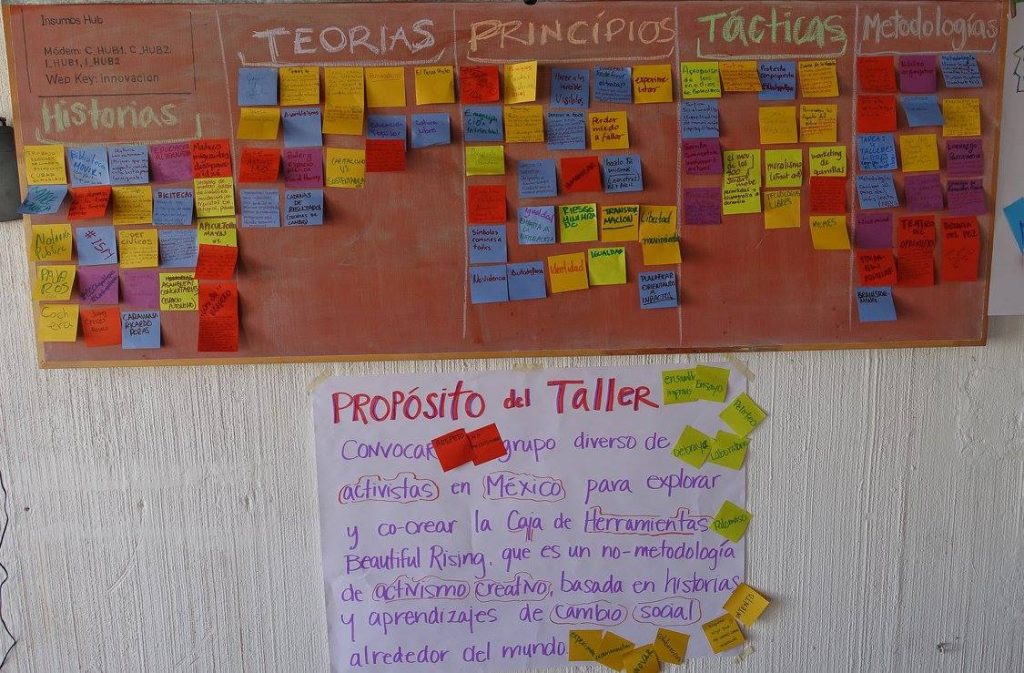
Workshop in Oaxaca, MX. Photo by Dave Mitchell
Beautiful Trouble is a toolbox for revolution, a training manual, a collection of case studies, a network map, and more. What was the impetus to start this collection of resources? Why is it important for people to be able to access a toolbox like this online?
Beautiful Trouble emerged in 2011, the year of Occupy and the Arab Spring, and with much the same creative DNA as those flashpoints. We set out to create a common platform where people could come together to share experiences, learn from the ideas and innovations of organizers all over the world, contribute their own ideas, get inspired, get involved, make something happen.
We wanted to popularize the idea that social change isn’t about just mindlessly repeating the same tactics over and over again — but also that it isn’t rocket science. That many small groups of clowns and pranksters can change the world; indeed, maybe it’s the only thing that ever has.
While Beautiful Trouble is best known in its book form, from the beginning it has also been accessible online, where so many of us live. And because it’s modular, interlinking, and constantly expanding, it lives more comfortably online. Now we’re experimenting with letting people access the toolkit as a chatbot, accessible through various messaging apps like Telegram, Slack, and Facebook Messenger.
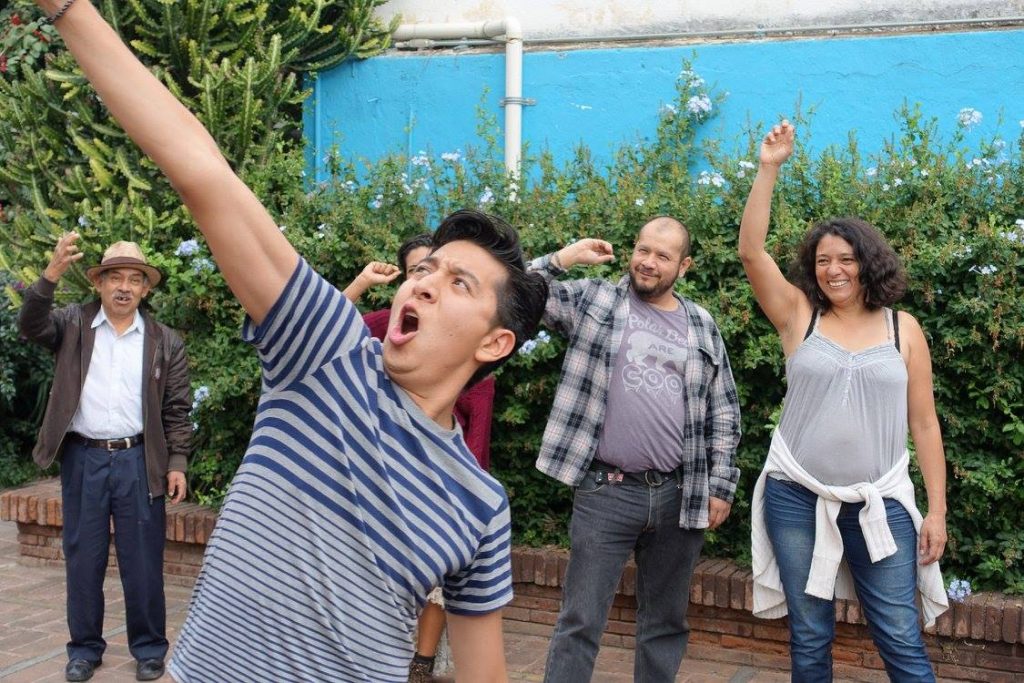
Beautiful Trouble Workshop in Oaxaca, MX by Dave Mitchell.
Why did you decide to license your work under CC BY-NC-SA? How does the CC licensing play into your work?
Creative Commons licensing made sense to us both politically and practically. Politically, our goal is to make social movements more creative, more effective, and more likely to win, and we believe that happens by promoting the kind of agile, creative and modular thinking that Beautiful Trouble embodies.
Basically, we want the ideas in Beautiful Trouble to become common knowledge — to be used, shared, repurposed, translated, adapted — so it made no sense to throw barriers of intellectual property in the path of that, beyond those required by our excellent and supportive publisher.
Practically, as the project took shape, we realized how much of it involved referencing and codifying other people’s ideas and methods. We tried always to give credit where it was due, but we also never wanted to suggest that any one person (certainly not us) owns any of the concepts or methods we included. Creative Commons licensing was one way to signal all of that.
World Social Forum Workshop, by Søren Warburg.
“Artist-activists” are at the heart of Beautiful Trouble’s work. How do you define “artist activists?” How does someone join your network?
“Artist-activist” is such an awkward, artless term — we really struggled to come up with something better… artivist? pranktivist? bohemshevik? Nothing quite fit, but what we wanted to signal was the marriage of two distinct worlds: the elegance, eye for detail, and outside-the-box creativity of the art world with the time-bound, eyes-on-the-prize, immediate-results focus of the organizer. That sweet spot is where minds and hearts open and revolutions take flight, and it’s something anyone can (and should!) seek to embody in their work. Folks who want to pitch us an idea can drop us a line at getintouch@beautifultrouble.org.
How do you define “the commons?”
The commons represents our best hope for a liveable future. It’s an important enough concept to us that we included it as one of the ‘theories’ in the book, in a piece written by Peter Barnes. In that piece, he proposes that by building a system that protects and expands our common wealth rather than one that exploits it, we can address both our ecological and social imbalances.
What kinds of stories can you tell about your work and how you support global social movements? What kinds of wins are you celebrating? What has your work looked like since November? Has it changed?
For the past few years we’ve been busy working with ActionAid and activists from across the Global South to document the tools and tactics of creative activists operating under authoritarian regimes. That project is available online at beautifulrising.org, and will be published this year as Beautiful Rising: Creative Resistance from the Global South (OR Books).
After last November’s presidential election, that focus on authoritarian regimes is sadly much more relevant and timely for activists in the United States. Specifically in response to the Trump moment, we’ve started a “Trouble vs. Trump” series to update our toolbox for the current moment. We’ve been hard at work expanding our training program to meet the explosion of interest in nonviolent direct action training, and we’ve just launched a resistance hotline to help support the surge of new progressive activists planning their first actions and campaigns.

Creative Action Training in NYC, by Søren Warburg.
You have a number of projects in addition to Beautiful Trouble including Beautiful Rising, Climate Action Labs, and Beautiful Solutions as well as your in-person trainings for activists. How do you balance this work?
Much like the book we produced, we’re basically a modular organization — a motley crew of activists, trainers and editors scattered around the globe who are organizing horizontally together to spin out related projects that align with our goal of making social movements more creative and effective. That loose structure means we’re able to respond fairly quickly to new opportunities, but also that we sometimes struggle to keep everything running smoothly, since we’ve got no central office, no dedicated development director, and a dispersed leadership structure. Somehow we’ve managed to produce a lot of great tools and keep all the plates spinning so far. Folks who want to support this juggling act are welcome to kick in a few bucks on our Patreon page, and get a copy of our next book as a token of our thanks.
As a bunch of communicators, what do you think messaging is going to look like on the left in the upcoming months and years? What should it look like?
There’s a battle raging right now for the future of the electoral left. It has taken different forms in different countries, but at its core, that struggle is over whether or not the traditional left/liberal parties can be repurposed to present a compelling, broad-based, radical alternative that speaks to people’s 21st-century fears and frustrations, hopes and dreams, or whether these parties will continue to play the role of neoliberalism’s good cop. The outcome of that battle will basically determine whether or not we can bring the fight for a better future from the margins to the mainstream.
Another way to say it: the left needs to get much better at speaking to people’s values hopes, and desires for a better future, and then put that messaging to work in service of a shared political project.
RightsCon Redux: Working Toward A Progressive Copyright Framework For Europe
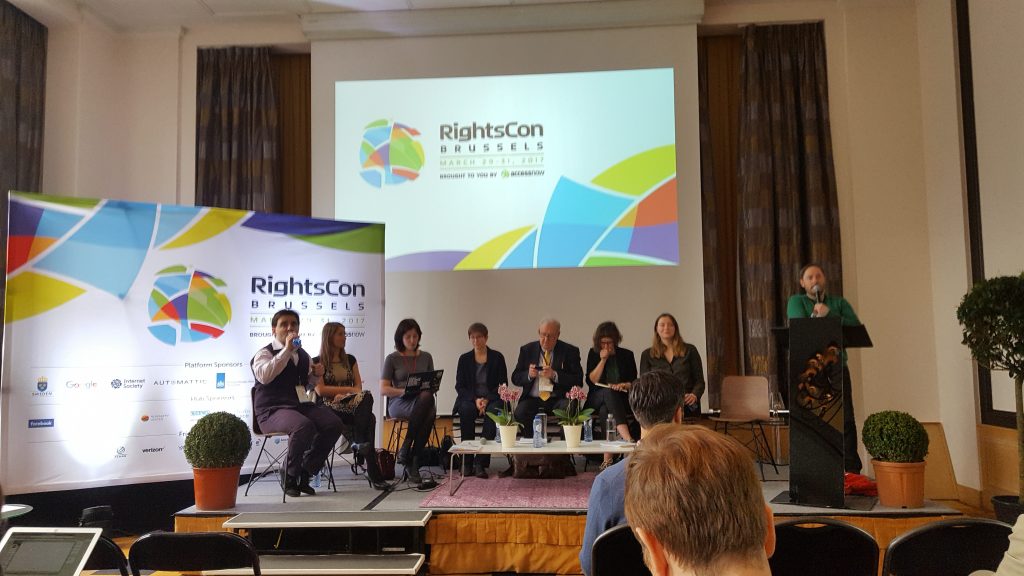
RightsCon is an annual conference that focuses on awareness-raising, organising, and advocacy on global issues at the intersection of technology and human rights. The event is produced by the international nonprofit organization AccessNow. RightsCon participants include members of digital rights organisations, legal experts, civil society, government, and business representatives.
Creative Commons, Mozilla, and the Wikimedia Foundation organized a panel discussion on the work being done to reform the European Union copyright rules. The goal of the session was to share information on key topics in the Commission’s proposal related to copyright and digital rights as well as connect people with educational and advocacy efforts that support a progressive reform in the public interest.
MEP Julia Reda set the stage for the panel, providing background about both the underlying principles for modernising the copyright rules, and also the process that’s involved and where we are now. Ms. Reda is a member of the European Pirate Party and VP for the Greens/European Free Alliance group, She was the rapporteur for the comprehensive copyright evaluation report presented to the Parliament in 2015.
We then moved on to explore six key issues of the copyright reform proposal. Lisette Kalshoven from Kennisland and the Communia Association explored the opportunities and challenges presented by the new copyright exception for education. Lisette talked about how the existing copyright exception for educational uses laid out in the 2001 Information Society Directive is quite good, but is not harmonized across all Member States and doesn’t cover online uses of educational content. The new education exception introduced in the Commission’s proposal is positive because it is mandatory. However, there are three main challenges. First, there is a feature whereby if there is a licensing option in a particular Member State, then that country could ignore the implementation of the education exception. Second, the exception would only cover more traditional educational establishments, such as schools, leaving out other informal education practices, such as online courses. Finally, there’s still some confusion about whether the new exception would adequately cover both online and offline uses of educational resources. Lisette also mentioned the recently-launched digital campaign https://rightcopyright.eu/, which aims to mobilize the public in supporting positive changes to copyright that will improve access and use of educational materials and technologies for teachers and students of all types.
Raegan MacDonald from Mozilla discussed the possibility for including a copyright exception for user-generated content. Raegan talked about how the idea of introducing this type of copyright exception would go a long way in creating a better balance in the reform, since the current provisions seem to address the (sometimes unwarranted) concerns of the traditional rights holders like publishers rather than new creators and users. While it was not included in the Commission’s original proposal for a Directive on Copyright in the Digital Single Market, an exception for user-generated content (UGC) has been introduced in the draft opinions of both the Culture and Education Committee and the Committee on the Internal Market and Consumer Protection. The key point on introducing a UGC exception is to support new digital creativity, free speech, and cultural expression.
Paul Ayris from University College London Library talked about the proposed exception to enable text and data mining. Paul said that current research predicts a 1.9% growth of European GDP if the EU commits to a broad exception for text and data mining. Researchers (or anyone else) should not be forced to acquire additional licenses to conduct text and data mining on content which they already have lawful access, and he argued that the EU should follow the lead of the recommendation laid down in the Hague Declaration that “the right to read is the right to mine.” The exception should also cover users and uses outside of the traditional academic research community, as doing so would promote novel innovation across and between the public and private sectors.
Marta Peirano from eldiario.es talked about the controversial ancillary right for press publishers. Marta explained the negative repercussion to news producers of Spain when they implemented an ancillary copyright a few years ago. This is because Google News, which would have been forced to pay fees to link to and provide context to publishers’ content, called the bluff of rightsholders by discontinuing their service. When users weren’t able to discover information through content aggregation services, access to news sites dropped precipitously. She explained that the publishers pushed for a similar ancillary right in Germany, with comparable results. With so much harm to readers and no return to rights holders, the only sane option is to remove the Commission’s ancillary right for press publishers through Parliament amendments.
Agata Nowacka from Seznam talked about the Commission’s proposal that would require filtering of user-uploaded content. Seznam is a search engine based in the Czech Republic that enjoys a high market penetration there—it is one of the few places in Europe where Google does not fully dominate the search market. Agata said that as a relatively small operation (~1000 employees) Seznam would be hard pressed to pull the resources required to implement an active monitoring mechanism proposed by the Commission’s draft directive. This type of “active censorship” would be negative for most of their users, and might only work to reinforce the ubiquity of the major players, thus reducing competition in the search business.
Finally, Dimi Dimitrov from Wikimedia’s Free Knowledge Advocacy Group EU discussed policy options for safeguarding the public domain. While there are some positive provisions in the Commission’s proposal to strengthen cultural heritage institutions, there are several ongoing disputes between museums and the Wikipedia community. Dimi pointed to a case in which a German museum claimed copyright on the digital reproduction of a portrait of composer Richard Wagner. The work was painted in 1862, so it clearly is in the public domain, which would make it a natural addition to the Wikipedia page about Wagner. However, the museum claims a new copyright that arises when the work was digitized, thus for all practical purposes keeping the work out of the public domain. Dimi said that these types of disputes are not uncommon, and that a forward-looking EU copyright law should aim to clarify that digital reproductions of public domain artworks should also be in the public domain—for the broad benefit and enjoyment of the public.
We’ll continue to advocate for a progressive reform in the public interest. Right now amendments are being tabled by the relevant committees, which will eventually be negotiated and voted on in the European Parliament and Council. There’s still time to fix this copyright law to make sure that it supports users and creators in the 21st century.
Rightcopyright.eu: Making copyright work for education

Last week COMMUNIA launched the rightcopyright.eu campaign in order to support a better copyright for education. Let’s raise our voices and spread the word about this petition so we can influence European legislators in creating a better copyright for education.
SIGN THE PETITION
Why we need your help
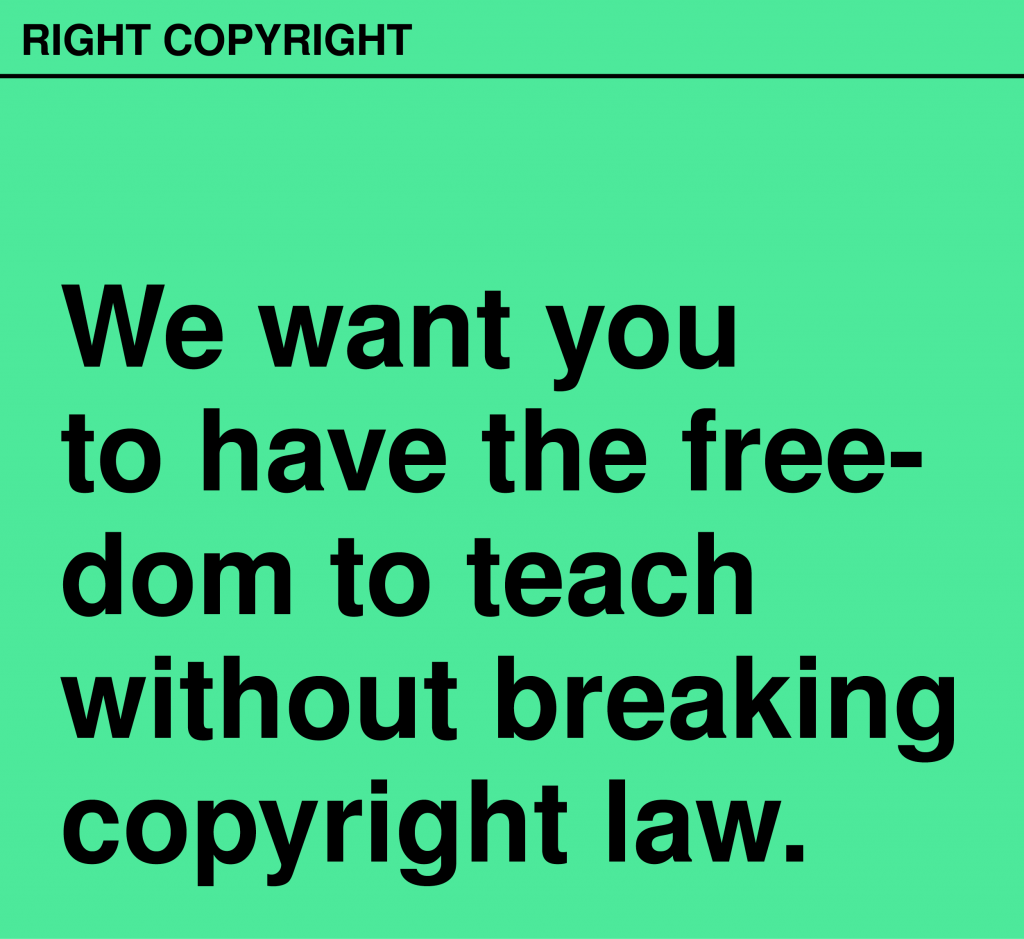
The European Commission has presented a new European copyright law (Draft Directive) to the European Parliament that deeply impacts education in a disappointing and non-facilitative manner. Educators have embraced modern possibilities, and so should copyright. Therefore, COMMUNIA has developed a campaign website to collect signatures of educators throughout Europe to let the European Parliamentarians know we need a better copyright for education.
The European parliament will vote on the proposal later this year and can change, accept or reject it. COMMUNIA will present the outcomes of the petition in the European Parliament, clearly showing them the voice of citizens eager for a good-quality education, and a copyright that matches.
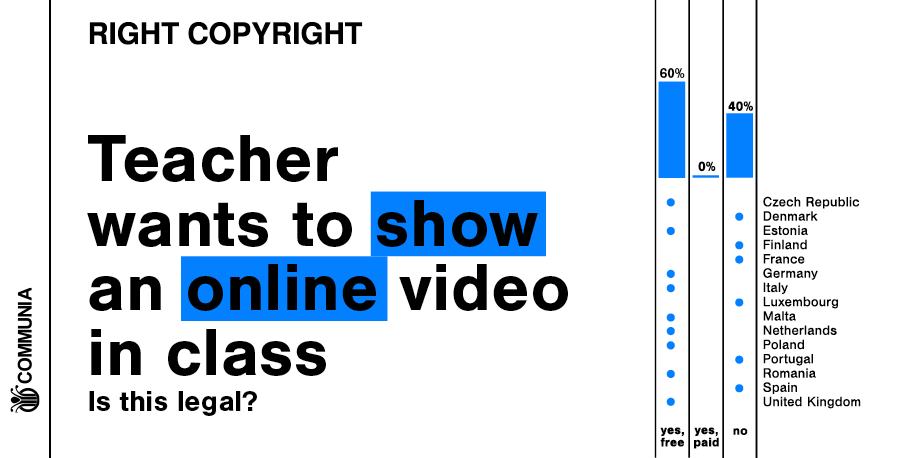
Copyright impacts education – it determines the extent to which a teacher may use, share or remix any material made by someone else. In some cases, there is a special exception to copyright for education, but teachers are often forced to do things that are not allowed. All European countries have implemented the current EU laws on copyright in a different way, which makes it very difficult for teachers to know what they can and cannot share internationally.
What you can do
Please visit the campaign website rightcopyright.eu and sign the petition for a better copyright for education. Please share the campaign with your colleagues, friends and family via mail, social media or face to face as well. You can find sample tweets, posts and images on the campaign website.
If you would like to know more about the campaign, or have questions, please contact Lisette Kalshoven at lk@kl.nl.