News
CC licensed photos and the International Olympic Committee
Mike Linksvayer, October 12th, 2009
Richard Giles, a social media specialist in Australia who frequently posts and CC licenses photos on Flickr, received a threatening letter from the International Olympic Committee last week, mentioning a set of photos he had taken at the 2008 games in Beijing.
Giles posted a rundown of the story so far on his blog. It is not clear the situation is resolved yet, and initially there was confusion about which photos or licenses are at issue, but there are many worthwhile posts about it to check out, including these:
- Olympics threaten photographer by Mathias Klang (of CC Sweden), who points out in passing that there are now over 120 million CC licensed photos on Flickr — a 20% increase in 6 months.
- Go To The Olympics? Take Photos? Put Them On Flickr? Await Olympic Committee Legal Threat Letter on Techdirt by Mike Masnick.
- International Olympic Committee Goes Copyright (& Trademark) Crazy on The Moderate Voice by Joe Windish.
- Wikipedia and Olympics Committee heading for collision? by Sage Ross, who points out that Giles’ photo(s) likely came to the attention of the IOC indirectly via English Wikipedia, where one of Giles’ photos is currently used in the Usain Bolt article.
Regarding Ross’ post, of course the UK merchant that used the photo in an advertisement that eventually attracted the IOC’s notice may have discovered the photo directly on Flickr as well. In either case, the value of moving to a more liberal license if you want your works to spread is highlighted — Giles’ Usain Bolt photo is under CC Attribution-ShareAlike, while his other Beijing photos are under CC Attribution-NonCommercial.
Whatever the resolution of this particular dispute, there’s no question that the IOC’s attempt to control how photographers use their own photos is symptomatic of the permission culture and tragedy of the anticommons we are facing. Creative Commons can’t directly influence the IOC’s policies, but we’re creating an alternative to ensure a non-gridlocked future of creativity and innovation, an alternative that offers benefits to those who participate in the commons now, and whose successes will change minds. Please support us — we’re in the midst of our 2009 campaign to raise $500,000 to fund this work.
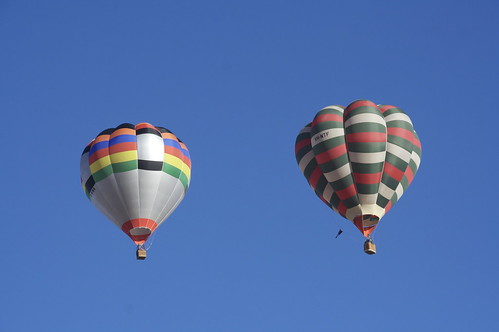
The photo at the top of this post by Richard Giles is not of the Olympics, but does look fun. Note that even such an innocuous photo could be under threat as we move in the direction of a permission economy — building owners attempt to control public photography, why not balloon owners or designers? Give now. ☺

drew Roberts
October 12th, 2009 at 8:28 am“Regarding Ross’ post, of course the UK merchant that used the photo in an advertisement that eventually attracted the IOC’s notice may have discovered the photo directly on Flickr as well.”
Wouldn’t the merchant have needed to make sure there was a model release as well? Didn’t this come up with the issue in Australia? (was that the place?)
Leslie
October 13th, 2009 at 9:04 amCreative Commons has done more to harm commercial photographers than (arguably) any other group out there. I hope that the IOC situation, along with other IP protections lead to the downfall of this ersatz “license” system.
Creatives were able to give their work to the world if they chose to and to license it however they chose to, long before CC. CC has simply ruined creatives’ earning potential by forcing the default to “free” so that creatives have to fight to get paid for their work.
Mike Linksvayer
October 13th, 2009 at 11:59 amdrew,
Publicity rights are complex and vary by jurisdiction (including by state within the US). See http://wiki.creativecommons.org/Podcasting_Legal_Guide#Publicity_Rights_Issues for a little info … public event and endorsement may figure in, but I’m not lawyer and this is not legal advice, which CC can’t give. So, the short answer is, I don’t know.
Leslie,
I think fun and cheap technology has had far more impact on the low end of the photo licensing market than have standard public licenses. Fun — people love taking, and sharing photos. Check technology — awesome photo equipment is available to anyone, at least in wealthy regions — to have fun with. This means a surfeit of high quality photos that people want to share, and CC makes doing so a bit easier and more effective. I’m glad you think we’re making a big impact!
Di
February 13th, 2010 at 9:29 amI can’t speak for Canada, but at least in the US, if it can be seen from a public street, then it is fair game.
The IOC is always shrouded in controversy, and I’m not sure they would want it any other way. Useless, arrogant, you-know-whats is what they are.
For an event that is supposed to project peace and inclusiveness, the IOC does a masterful job projecting selfishness, greed, and exclusivity.
Mitch Featherston
March 11th, 2010 at 6:24 amThis is good information and great news. I do, however, wish that Flickr would allow users properly classify images as “public domain.” It appears only institutions are allowed to do this, and that’s a shame.
Mike Linksvayer
March 11th, 2010 at 8:03 pmTest.
walwyn
March 15th, 2010 at 5:07 amUndoubtedly wikimedia may increase the use of the by and by-sa licenses but from the number of people complaining in the flickr help forums about a website ’stealing’ their photos after they have applied a freetard license, I’d say that few licensing for wikimedia use also realize that they are also allowing their images to be printed as postcards, used on websites selling real estate, or advertising hotel rooms in holiday resorts.
Over the last few years I’ve made the transition from by-nc-nd to by-nc-sa to by-nc. Basically as I’ve come to accept that the nc does all that I really want. In the past I thought that if I really wanted to disallow use by big
media organisations then the nd didn’t really matter and the sa didn’t extend outside the photo frame. However, I would never remove the nc restriction myself simply because I do not want them used by News International.
walwyn
March 15th, 2010 at 5:08 amUndoubtedly wikimedia may increase the use of the by and by-sa licenses but from the number of people complaining in the flickr help forums about a website ’stealing’ their photos after they have applied a freetard license, I’d say that few licensing for wikimedia use also realize that they are also allowing their images to be printed as postcards, used on websites selling real estate, or advertising hotel rooms in holiday resorts.
Over the last few years I’ve made the transition from by-nc-nd to by-nc-sa to by-nc. Basically as I’ve come to accept that the nc does all that I really want. In the past I thought that if I really wanted to disallow use by big media organisations then the nd didn’t really matter and the sa didn’t extend outside the photo frame. However, I would never remove the nc restriction myself simply because I do not want them used by News International.