Inside track on the future of free content licenses
If you want an inside track on the future of free content licenses you could hardly do better than watch or listen to recordings of two Wikimania sessions — Lawrence Lessig on The Ethics of the Free Culture Movement (particularly the last twenty minutes) and Eben Moglen on Document Licenses and the Future of Free Culture, which also features Q&A with both Moglen and Lessig.
You’ll recognize this discussion if you followed Lessig’s series about the history and future of Creative Commons from the end of last year.
Crow book, Pig movie, Lavender soap
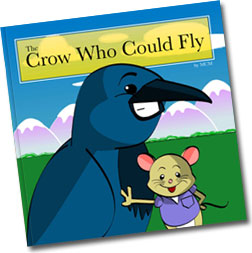 MCM, who last month published a DRM fable for children has published The Crow Who Could Fly, a patent fable for children, under the CC Attribution-ShareAlike license. German and Hungarian translations have already been published, with Chinese underway.
There’s now an effort to turn MCM’s The Pig and the Box into a movie.
If that isn’t enough MCM also recently published a very interesting pitch for a soap opera. Excerpt:
“Push” as a vidcast
Every episode of Lavender is less than 7 minutes long. It’s a standard vidcast, delivered straight to your favourite player every Sunday night. At the end of the video, Lavender is faced with a dilemma with four possible outcomes… and the audience gets to decide what happens next. Visit the official website, vote for which path Lavender takes, and the next Sunday night, see if your vote came out on top – and how it messes with her life!
Business model
The episodes themselves are totally free… CC licensed and playable anywhere. The business is in the voting. To be able to vote, subscribers pay $3/month. There may also be a very quick “this episode is brought to you by…” bit at the start, depending on advertiser interest.
Target audience
The show is largely aimed at 18-49 year old females, and not the tech-savvy sort that usually do vidcasts. This is the show that fits into their lunchtime with their expensive salad or their grande nonfat Tazo soy latte. It’s a guilty pleasure that won’t eat up too much time, and something they have control over. This is a show for the Old Media demographic, designed and developed by the New Media folks.
There’s much more at MCM’s site.
CC tastemaking and timekeeping
Gratisvibes is a newish blog reviewing and recommending CC licensed electronic music:
Gratisvibes aims to lead readers to the best of Creative Commons-licensed Electronic Music on the web, spreading the word for greater musical freedom for both artists and listeners alike.
ccMixter star teru has a new remix project, ccMusictime:
The following mixes were made to be used in a classroom setting as background and/or intermission music. In the class I am attending at the moment we frequently work on our own and then meet back up after a pre-determined time. For example we would go work at computer terminals for thirty minutes or take a break for fifteen. The mixes can be used as a musical stopwatch playing 5, 10, 15, or 30 minutes of work/study friendly music.
The samples are of course from ccMixter and fully attributed.
You can be a CC tastemaker too.
Tonight: Creative Commons Salon SF w/ PLoS, Digg, Magnatune
Just a reminder that CC Salon is happening tonight from 6-9pm at Shine in San Francisco. CC Salon is a free, casual monthly get-together focused on conversation, networking, and presentations from people or groups who are developing projects that relate to open content and tools. CC Salon SF is now being presented in conjunction with CopyNight SF.
This month’s line-up of speakers includes Hemai Parthasarathy and Barbara Cohen of the Public Library of Science, Owen Byrne of Digg, and John Buckman of Magnatune. Shannon Coulter will be DJing a set of CC music from Magnatune’s catalogue.
For more information, visit this event’s Upcoming.org listing.

This Flickr photo of CC Salon was taken by sloanro and is used under a CC BY 2.0 license.

Zimbio is fairly new to the scene — it allows people to build and participate in “public portals” with others who share their interests. A portal can include photographs, links to websites and articles, a group blog, online discussion forum, recommended RSS feeds, and live chat about the subject. While we’ve all learned to love Wikipedia, unlike Wikipedia which seeks to offer a neutral point of view, Zimbio is about opinions and discussion among like-minded people. You can find, build and engage in dialogue about a diverse range of topics including podcasting law, engery conservation, or the Tour de France. Zimbio has also partnered with companies like Webshots, SmugMug, and Flickr for photos, Aim, Skype, and Yahoo for instant messaging, and Topix, Sphere, and Blogdigger for news and blog search. All user submitted content is licensed to the public under the Creative Commons Attribution-NonCommercial-NoDerivatives license.
What happens when three Germans drive aross the US in an old red Cadillac? Route 66: An American Bad Dream documents one experience. Stefan Kluge will show SL attendees highlights of his film and discuss VEB FILM Leipzig, an open source netlabel that publishes work under a Creative Commons license. We’ll be at the CC Kula movie theateron Thursday, August 10 from 4-6pm PDT/SL.

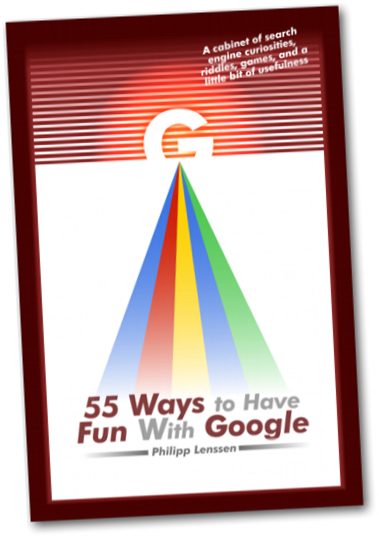
Been looking for a good book to read lately? Margot, one of our Summer ’06 interns, has put the finishing touches on a page of the CC wiki devoted to listing the various books that have been published under a Creative Commons license. The page is split into categories. The first, more conventional types of books – being “works over 35,000 words that are or have been commercially available in hardcopy and have an ISBN,” both fiction and non-fiction. Then there is also a section highlighting CC-licensed works on Lulu (who we recently featured), including the always fun “55 Ways to Have Fun With Google” by Philipp Lenssen, which is licensed to the public under the CC BY-NC-SA. And finally, a category for “online books” such as “GAM3R 7H30RY” by McKenzie Wark which introduces some of us to the concept of a “networked book.”
See any we missed? Log in and add them.
Evoca is a new service that helps you record audio via their web application, phone, or skype (you can also upload a .mp3 or .wav file) and allows people to choose a CC license or public domain dedication for their recordings. Many people seem to be doing just that!
Via Tom Raftery.
The Best Media in Life is Free is a newish blog recommending quality CC licensed music and public domain books. An early post compliments other CC tastemakers:
Shannon Campbell, Your Own Dot Org: A cute little pop-ish thing that is one of the few cc-licensed songs I have that has not turned up yet on CC 365 or one of my other regular spots. I found this one all by my own self 🙂
Last post here on CC tastemakers: Interwingling in the commons musicsphere.
It doesn’t take a dedicated blog or podcast to further the discovery process. [Re]blog and tell your friends about CC licensed media you love. Even if you only do it once it is a big help.
Via Boing Boing.
Peru, Taiwan, Korea, Columbia, Argentina
Extensive writeups on icommons.org of the CC Peru launch, a CC Collage Party in Taiwan, and the upcoming first CC Salon Seoul.
If you read Spanish see Carlonia Botero’s Q&A about CC licenses leading up to the CC Columbia launch later this month and a new book on free culture, Aprender la Libertad by CC Argentia’s Ariel Vercelli, licensed under Attribution-ShareAlike.