Building CC’s Network at scale for a new era of growth and opportunity
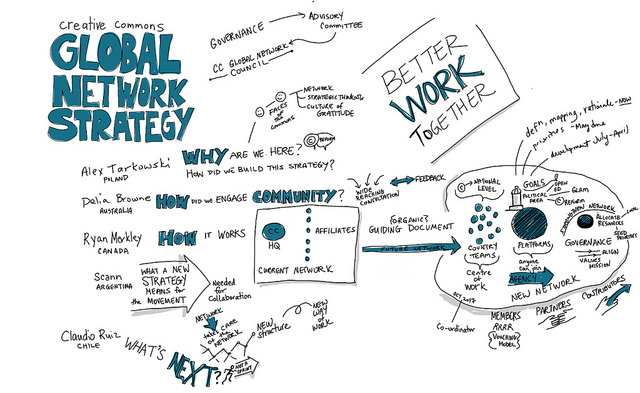
How can we build a Global Network at scale, empower members and communities to lead, and drive a new era of growth and opportunity for Creative Commons and its community? CC has been engaged with this question over the past few years as we rebuild our Global Network to work better together. Today, we’re celebrating 306 individual members and 42 institutional members! Membership is distributed across 68 countries, and 31 chapters – a truly global movement for the Commons.
Structured membership has been the key to the network’s growth. With a network site and robust vouching system, our members are self-organizing in platforms, committees, and chapters with clear, inclusive pathways for contribution.
In November, the network’s governing council met to solidify and approve network activity, which means that now is a great time to join the platform of your choice. The list of platforms, working documents, and invitation to get involved is below:
- Open Education Platform
- Platform working document
- 845 members from 55+ countries
- platform vision, mission, scope, goals, principles approved
- Working on process to propose, select, fund and launch international open education activities / projects
- Copyright Reform Platform
- Platform working document
- 150 members
- Platform rationale, goals and objectives, areas of engagement approved
- Working on drafting collaborative projects
- Community Development Platform
- Open GLAM Platform
- Culture Platform
Whether you’re a CC Newbie or a seasoned Commoner, you’re invited to join the platform of your choice to connect, build, and grow. Want to jumpstart your involvement? Register for the CC Summit today and meet community members from around the world.
Other ways to get involved:
CC’s 4.0 license suite now in Greek
Guest post by Ioanna Tzagaraki from the University of Cyprus.
All six of the Creative Commons licenses v4.0 are now available in Greek as a result of the joint and volunteer effort of the University of Cyprus, the Pedagogical Institute of Cyprus, and the legal firm Ioannides Demetriou LLC. The multi-year process began when the first draft translation of the Creative Commons license into Greek was submitted to CC HQ in 2016.
Working under the supervision of Dr. Eleni Tatiana Synodinou, Associate Professor of the Dept. of Law at the University of Cyprus, the Greek Creative Commons licenses were drafted by volunteer law students of the University of Cyprus:
- Alexander Gioumouxouzis, LL.B University of Cyprus
- Constantina Markou, LL.B. University of Cyprus
- Eleni Koumidou, Legal Consultant, LL.M Queen Mary University of London – Banking and Finance Law
- Georgina Athanasiou, Attorney at Law, LL.B. University of Cyprus
- Ioanna Georgiou, Attorney at Law, LL.B. University of Cyprus, European Master’s Degree on Human Rights and Democratisation, European InterUniversity Center
- Ioanna Tzagkaraki, LL.B. University of Cyprus, Head of the Translation Working Group
- Maria Spurou, Attorney at Law – Legal Consultant, LL.B. University of Cyprus.
The finalization of the Creative Commons licenses in Greek was succeeded in cooperation with CC Greece – EELLAK, represented by Alexandros Nousias.
With the Greek translation now published, Creative Commons Cyprus will continue communicating the Creative Commons licenses to local creators, users, and cultural institutions. To this end, the University of Cyprus, in coordination with the Pedagogical Institute of Cyprus, has already organized a series of conferences, seminars, and workshops in order to reinforce the message of “some rights reserved” and open access in Cyprus.
Join us for A Grand Re-Opening of the Public Domain
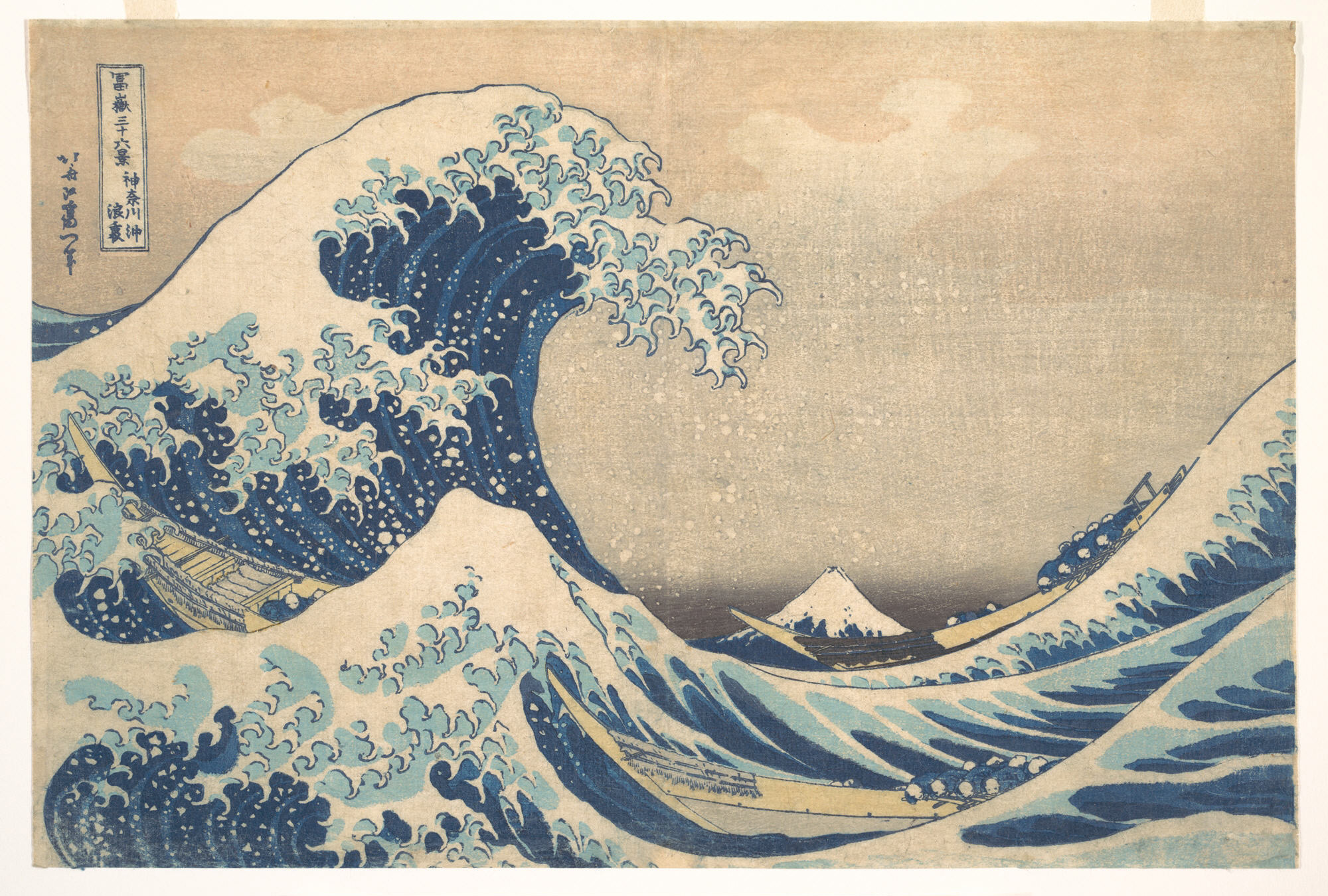 On January 1, 2019 in the United States, tens of thousands of new works will join iconic pieces such as Katsushika Hokusai’s Under the Wave off Kanagawa as a part of the public domain.
Save the date! Please join us on January 25, 2019 for a grand day of celebrating the public domain.
Co-hosted by Creative Commons and the Internet Archive, this celebration will feature a keynote address by Lawrence Lessig, lightning talks, demos, multimedia displays and more to mark the “re-opening” of the public domain in the United States. The event will take place at the Internet Archive in San Francisco.
RSVP now before the tickets run out.
The public domain is our shared cultural heritage, a near limitless trove of creativity that’s been reused, remixed, and reimagined over centuries to create new works of art and science. The public domain forms the building blocks of culture because these works are not restricted by copyright law. Generally, works come into the public domain when their copyright term expires. But U.S. copyright law has greatly expanded over time, so that now many works don’t enter the public domain for a hundred years or more. Ever since the 1998 Copyright Term Extension Act, no published works have entered the public domain (well, none due to copyright expiration). But for the first time in 20 years this January, tens of thousands of books, films, visual art, sheet music, and plays published in 1923 will be free of intellectual property restrictions, and anyone can use them for any purpose at all.
Join creative, legal, library, advocacy communities to celebrate the public domain growing again for the first time in decades, and come network with an amazing lineup of people and organizations who will help us welcome this new class of public domain works. Presenters include Larry Lessig, academic, political activist, and founder of Creative Commons, Corynne McSherry, legal director of the Electronic Frontier Foundation, Cory Doctorow, science fiction author and co-editor of Boing Boing, Pam Samuelson, copyright scholar, Ryan Merkley, CEO of Creative Commons, Jamie Boyle, the man who literally wrote the book on the public domain, and many others.
In the evening, the celebration continues as we transition to Yerba Buena Center for the Arts for the World Premiere of Paul D. Miller, aka DJ Spooky’s Quantopia: The Evolution of the Internet, a live concert synthesizing data and art, both original and public domain materials, in tribute to the depth and high stakes of free speech and creative expression involved in our daily use of media. Attendees of our Grand Re-Opening of the Public Domain event will receive an Internet Archive code for a 20% discount for tickets to Quantopia.
Welcome Kriti Godey, CC’s new Director of Engineering
I’m very excited to announce a new addition to the Creative Commons team. Please join me in welcoming Kriti Godey, who will be taking on the role of CC’s Director of Engineering.
Kriti joins our staff after four years in engineering leadership roles at Ridecell and a CTO role at CasaHop. We asked Kriti if she’d be up for writing a brief bio for the CC site. It’s pretty terrific, so I’ll share it here:
==
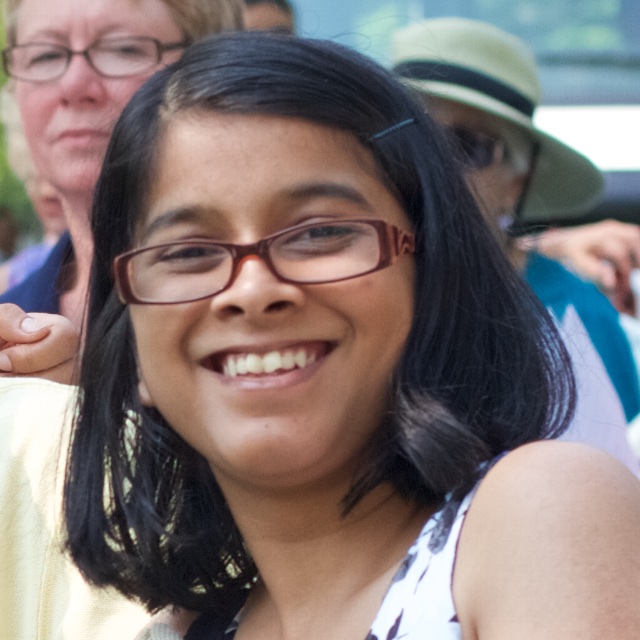
Kriti Godey (credit: Joseph Spiros, CC BY-ND)
Kriti shipped her first website when she was ten years old and has been coding ever since. Prior to joining CC, she focused on leading happy and productive distributed engineering teams at startups, and has enjoyed architecting and building both consumer-facing and enterprise software.
She is a firm believer in the value of remix culture and free software and is excited to expand its reach and accessibility through her work at CC.
Kriti grew up in southern India and moved to the U.S. to attend Oberlin College, where she majored in computer science and mathematics. She is now a proud American citizen, and lives in Oberlin with her husband and 13 overflowing bookcases.
==
I also want to thank the departing Paola Villarreal for her work as CC’s first Director of Product Engineering. It’s been my great pleasure to work with her, and I’m incredibly proud of all she has done in the position, and grateful for the team she’s helped build. CC will miss you, Paola, and we wish you great success in your new role.
CC Certificate Changes and Improvements for 2019
12/6/18 UPDATE: January 2019 courses have only seven tickets left!
Background: The CC Certificate provides an-in depth study of Creative Commons licenses and open practices, developing participants’ open licensing proficiency and understanding of the broader context for open advocacy. The course content targets copyright law, CC legal tools, values and recommended practices of working in a global commons. The CC Certificate is a 10-week online course for educators and academic librarians.
 2018 was a big year for the Creative Commons Certificate program! We beta-tested the first two CC Certificate courses for educators and academic librarians, updated our course content, licensed it CC BY, and shared it with the world; we launched nine official courses for 225 participants, and have since iterated on almost every aspect of the Certificate based on feedback from the global community. As we approach 2019, we are taking stock of 2018’s learnings and now proudly announce updates for the new year.
Our approach to the CC Certificate is one of iteration based on community needs. Each year, we will evaluate what works and what can be improved, based on participant, instructor, and broader community feedback. Thanks to your input and our own lessons learned in 2018, we are making the following changes and improvements:
1) We’re updating our pricing. Why? First, because this program has to be sustainable – our new price will ensure we cover 100% of CC’s cost of delivery, including paying all community instructors who teach, technology and content maintenance, and program expansion and updates, including reaching new audiences and new languages. CC is a non-profit, and we want this program to thrive.
Second, from our initial launch, we knew that there would be some who couldn’t afford to pay full price for the program. As promised, we are creating a scholarship program so the Certificate can be more inclusive of colleagues with less ability to pay, especially CC’s vibrant communities in the Global South. Our new price allows us to build and replenish an annual scholarship fund, offering subsidized CC Certificates to as many participants as possible. Those who pay full price for the course subsidize those who are less able to do so. We will offer at least 15 scholarships in 2019, and hope to provide more as the program grows.
In 2019 and in years to come we will continue to make the CC Certificate both self-sufficient and financially accessible for our global audience.
2) There is more community demand for the Certificate training than CC can currently accommodate. To address this, we have built and will beta-test a CC Certificate Facilitator Training starting in January 2019. Ensuring there are more well-trained and knowledgeable facilitators will allow us offer more CC Certificate courses in the future.
3) While the Certificate program has hosted participants from every global region, we have drawn more participation from the U.S. and Canada. Because the Certificate program is global, we will continue to engage a more global, diverse community by:
- Developing a scholarship program to support community members’ enrollment, particularly community members from the Global South (as mentioned above).
- Supporting translations of Certificate content. Community members have already volunteered to translate the Certificate in multiple languages, from Bahasa to Italian to Arabic. We will support translations in a responsible way, ensuring languages are aligned with course developments and annual updates.
- Developing more local case studies about copyright law and open licensing in different countries. Thanks to participants’ help, we have several case studies drafted.
- Launching in-person Certificate trainings, or “bootcamps” specialized for select groups that need CC Certification in a short time-frame.
- Assisting participants with new ways to learn and share with each other, since there is not one platform that works for everyone. For example, we learned a participant in China could only access our epub OER content (available here) rather than content on our main learning platform, Canvas. While we explore new avenues for learning and collaboration, we celebrate the ways participants are already doing this: hosting workshops and conference sessions, developing OER courses, and creating informational flyers for their institutions.
- Revising the CC Certificate must balance a global, inclusive, and iterative approach with focused, specialized expertise. While we continue to gather participant recommendations and feedback from the global community, we will also launch a CC Certificate Advisory Board of legal and instructional design experts. The Advisory Board will provide input for annual content updates and engage with participants in online course webinars throughout the year.
We are proud of the Certificate we’ve built together so far. We accept anyone interested in taking the Certificate course; our costs are as low as possible, while still offering a scholarship program and maintaining quality content and services; and the course is supporting learners beyond the certification program — several other programs are freely remixing portions of our CC BY licensed Certificate OER for their own audiences. We couldn’t have done it without the contributions of dozens of experts, CC community leaders, and over 100 beta testers from all over the world. Thank you.
We will continue offering the CC Certificate with the greatest flexibility, openness and affordability we can. As such, it is important to us to keep improving the CC Certificate course with community input.
Opportunities for your engagement
In addition to the developments mentioned above, we will explore other improvements to the program in 2019 — making the CC Certificate more inclusive and globally accessible, while ensuring self-sustainability. Have ideas for us?
- Share your ideas with #cccert on Twitter.
- Continue to make notes and recommendations via Hypothes.is.
- Use our CC BY licensed, downloadable and editable CC Certificate content, then let us know what is most useful to you.
- Sign up to take a Certificate course and engage with the growing Certificate community of participants, alumni, mentors, facilitators, and content experts. Registration for courses in 2019 is open here.
- Join us for an online Certificate overview and brainstorm session on January 8, exploring how to better deliver the Certificate and support open communities: 18:00 EST/ 23:00 UTC on https://www.uberconference.com/creativecommons.
If you cannot join, please share questions in advance. We look forward to working with you!
CC Summit registration is now open!
The Creative Commons Global Summit will take place in Lisbon, Portugal, 9-11 May 2019.
Join us for three days of dynamic programming at Museu do Oriente, with a special keynote evening event held at the historic Cineteatro Capitolio.
We’ve grown the CC Global Summit every year as hundreds of leading activists, advocates, librarians, educators, lawyers, technologists, and more have joined us for discussion and debate, workshops and planning, talks and community building. Whether you’re new to the community or a long-time contributor, the CC Global Summit is a can’t-miss event for anyone interested in the global movement for the commons.
Your Participant Pass includes:
- Access to all conference programming including workshops, talks, and keynotes (full schedule to be announced in early 2019)
- Breakfast, lunch, and snacks served onsite every day
- Evening events showcasing local Lisbon artists
Please be sure to read the event’s Code of Conduct. All attendees, speakers, sponsors, and volunteers at our conference are expected to cooperate to help ensure a safe environment for everyone.
Submit a proposal for the CC Global Summit program!
As always, the summit’s programming is built out of ideas from you. Are you an activist, artist, educator, creator, partner, community member, lawyer, journalist, or CC enthusiast? Submit a proposal for a summit session. We’re accepting proposals through December 10, 2018.
A huge thanks to the CC Portugal team for their ongoing support in co-hosting the event. We’re excited to see you in Lisbon in May!
Photo in graphic by Aurélien Maillet (aka sharkgraphic), used under CC0. Thanks, Aurélien!
EU’s proposed link tax would [still] harm Creative Commons licensors
In September the European Parliament voted to approve drastic changes to copyright law that would negatively affect creativity, freedom of expression, research, and sharing across the EU. Now the Parliament and Council (representing the Member State governments) are engaged in closed-door negotiations, and their task over the coming months is to come up with a reconciled version of the directive text, which will again be voted on in the European Parliament next year.
Article 11: The wrong solution to a real problem
A major provision that will be discussed is Article 11, the new “press publisher’s right” (also known as the link tax). Both the Parliament and Council have already approved versions of this unnecessary and counterproductive “publisher’s right,” which would require news aggregators that wish to index or incorporate links and snippets of journalistic content to first get a license or pay a fee to the publisher for their use online.
The Parliament’s version of Article 11 says Member States must adopt the new right so press publishers “may obtain fair and proportionate remuneration for the digital use of their press publications by information society service providers.”
Article 11 is ill-suited to address the challenges in supporting quality journalism, and it will further decrease competition and innovation in news delivery. Spain and Germany have already experimented with similar versions of this rule, and neither resulted in increased revenues for publishers. Instead, it likely decreased the visibility (and by extension, revenues) of published content—exactly the opposite of what was intended. Just last week a coalition of small- and medium-sized publishers sent a letter to the trilogue negotiators outlining how they will be harmed if Article 11 is adopted.
Collateral damage: those that want to share under CC
Not only is a link tax bad for business, it would undermine the intention of authors who wish to share without additional strings attached, such as creators who want to share works under open licenses. This could be especially harmful to Creative Commons licensors if it means that remuneration must be granted notwithstanding the terms of the CC license. This interpretation is not far-flung. As IGEL wrote last week,
“the Parliament’s proposal makes it clear that press publishers should receive financial compensation from search engine providers in particular when they display links to publishers’ websites. Member States, however, could now come up with the idea that this goal could be achieved most effectively if publishers could not waive their right to remuneration. Only the amount of the remuneration claim would then still be negotiable, but not its assertion.”
As we’ve said before, such a right “directly conflicts with publishers who wish to share freely and openly using Creative Commons licenses. Forcing publishers who use CC to accept additional unwaivable rights to receive payment violates the letter and spirit of Creative Commons licensing and denies publishers the freedom to conduct business and share content as they wish.”
When an author applies a Creative Commons licenses to their work, they grant to the public a worldwide, royalty-free license to use the work under certain terms. The license text specifically states, “To the extent possible, the Licensor waives any right to collect royalties from You for the exercise of the Licensed Rights, whether directly or through a collecting society under any voluntary or waivable statutory or compulsory licensing scheme.”
For example, the Spanish news site eldiario.es releases all of their content online for free under the Creative Commons Attribution-ShareAlike license. By doing so, they are granting to the public a worldwide, royalty-free license to use the work under certain terms. Other news publishers in Europe using CC licenses that could also find themselves swept up under this new provision include La Stampa, 20 Minutos, and openDemocracy. These outlets have made a conscious decision to share their works for free under Creative Commons licenses without having to jump through additional hoops of charging aggregators or search engines for displaying links and snippets to their stories. If Article 11 would be deemed an unwaivable right, would it prevent these news publishers from using CC altogether since the license would conflict with the legal requirement?
We firmly believe the author’s right to choose to share, or to seek compensation for all or some uses of their works. At the same time, the EU copyright directive must find a solution that also honors those authors who choose to share with few or no restrictions.
What can be done?
Article 11 should be deleted. Publishers already benefit greatly from the copyrights they have in their content, and don’t need an additional exclusive right to protect or exploit those rights. It’s clear that an additional right for press publishers will not support quality journalism, increase the diversity of media content, or grow the digital single market. Instead, it will negatively affect access to information and the ability for publishers to share using the platforms, technologies, and terms beneficial to them.
For years academics and public interest advocates have advocated for an easier and more effective way to promote the aims of quality journalism and the ability of press publishers to sustain their efforts without a new press publishers right. This approach was presented in the Parliament by former JURI Rapporteur Comodini, and that would rely on a presumption that publishers are the rights holders, thus making it easier for these entities “to conclude licences and to seek application of the measures, procedures and remedies.” The Parliament’s own research even recommended such an approach. This framing, which draws from Directive 2004/48/EC on the enforcement of intellectual property rights, already provides a robust legal framework for the protection of content without the negative aspects of introducing a new right.
If including some version of Article 11 is unavoidable, the Council version should be prioritised, since it already includes some protections for works under open licenses, or in the public domain. For instance, the previous Council text includes the following provision: “When a work or other subject-matter is incorporated in a press publication on the basis of a non-exclusive licence, the rights […] may not be invoked to prohibit the use by other authorised users [or] works or other subject-matter whose protection has expired.” In addition, the Council text only permits a 1 year term of protection, as opposed to the 5 year term offered by the Parliament version.
So far, the direction of the EU copyright directive reflects a disturbing path toward increasing control of the web to benefit only powerful rights holders at the expense of the open internet, freedom of expression, and the rights of users and the public interest in the digital environment. In the current negotiations, the Parliament and Council should not double down and punish Creative Commons licensors and others who want to share broadly with the world. These authors and creators have made a deliberate choice to use CC legal tools so that others may benefit. Their contributions to the commons should be respected and protected.
Authors:
Timothy Vollmer is Senior Public Policy Manager at Creative Commons.
Dr. Till Kreutzer is a lawyer, journalist, and Creative Commons Global Network Council Representative for CC Germany. He leads the Initiative Against An Ancillary Copyright For Press Publishers (“Initiative gegen ein Leistungsschutzrecht”, or IGEL).
CC Working with Flickr to Protect the Commons
Flickr is one of the most important platforms to host and share CC licensed works on the web, and over 400 million of the photos there are CC licensed – representing over a quarter of all CC licensed works on the web. When Flickr was acquired by online photography service SmugMug last year, we were excited to see that a family-owned values-driven company had purchased it.
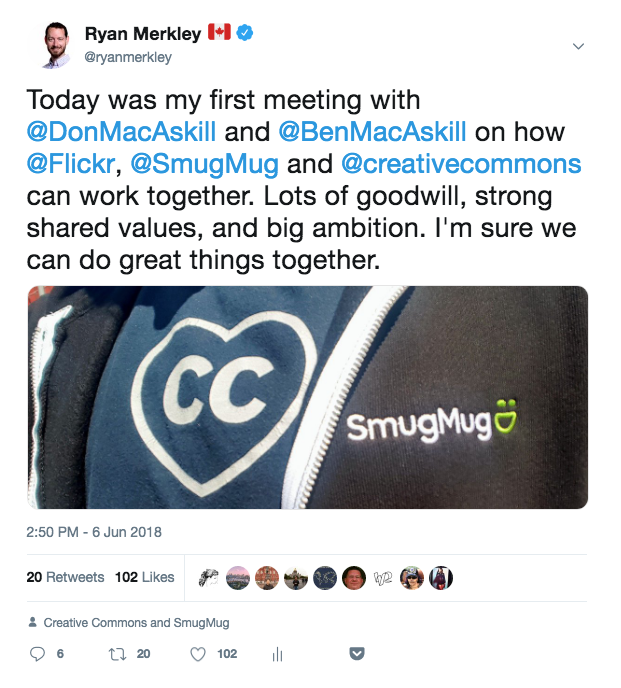
When I visited the SmugMug offices, I met a group of people with a deep passion for photography communities and a love for Flickr. They were also worried about its future after many years of neglect and a lack of a viable business model. They were committed to getting the service back on track — doing all the necessary back-end engineering, fixing things that users hated like Yahoo! login, and protecting and expanding the Commons.
For the first time in a long time, I was optimistic about Flickr and its future. I still am.
Today, Flickr announced that they will be limiting the number of photos in their free accounts to 1,000 images, and offering an extended Pro service for $49.99 a year. Users have 3 months to consider their options. Many users are concerned such a limit on free account capacity might cause millions of CC images to be deleted from the Commons. A lot of people have reached out to us directly and asked what we can do. I’m confident that together we can find solutions, if we assume goodwill and bring our collective creativity to the problem.
Creative Commons is working closely with Flickr and its parent company SmugMug to find ways to protect and preserve the Commons, and ultimately help it grow and thrive. We want to ensure that when users share their works that they are available online in perpetuity and that they have a great experience.
At the same time, I think it’s fair to say that the business models that have powered the web for so long are fundamentally broken. Storage and bandwidth for hundreds of millions (if not billions) of photos is very expensive. We’ve all benefited from Flickr’s services for so long, and I’m hopeful we will find a way forward together.
I’m glad that Flickr hasn’t turned to surveillance capitalism as the business model for its own sustainability plan – but that does mean they’ll have to explore other options. No one wants to see works from the Commons deleted, and we’ll be the first ones to step forward to help if that ever were to happen.
I have confidence in Don and Ben and the SmugMug and Flickr teams: they want to do right for the Commons, and they understand how deeply CC and the photo Commons is integrated into the goodwill that Flickr has retained over all these years. We welcome your ideas on how we can help Flickr support the Commons, and hope we’ll be able to share something with you soon.
Congratulations to the Graduates of our July 2018 Certificate Courses!
From July 16-September 23, Creative Commons hosted two Educator Certificate courses and two Librarian Certificate Courses. Participants from Bangladesh, Canada, China, Great Britain, Netherlands, Romania, Sweden, and the US engaged in rigorous readings, assignments, discussions and quizzes. See examples of the assignments that participants participants’ assignments they’ve publicly shared under CC licenses. With the course now complete, we are thrilled to announce 83 new graduates.
The CC Certificate provides an in-depth study of Creative Commons licenses and open practices, uniquely developing participants’ open licensing proficiency and understanding of the broader context for open advocacy. The training content targets copyright law, CC legal tools, as well as the values and good practices of working in the global, shared commons. The CC Certificate is currently offered as a 10-week online course to educators and academic librarians. In 2019, Creative Commons will expand offerings to include 1-week boot camps, a Certificate instructor training, scholarships, and initial translations of the Certificate into multiple languages.
Interested in taking the CC Certificate, yourself? Visit our Certificate website at the end of this month for updates! We will share new updates and open registration for 2019 courses by 31 October.
Also, stay tuned for an updated list of our Certificate graduates by the end of the year. CC kicked off five new Educator and Librarian courses with 125 participants from 14 countries on 1 October and we look forward to welcoming more Certificate graduates at the end of these courses.
We are inspired by our 83 recent graduates, and filled with gratitude for their amazing work. We congratulate them on successful completion of the Certificate, and look forward to their future open efforts!
What’s next with WIPO’s ill-advised broadcast treaty?
Six years ago we wrote a blog post titled WIPO’s Broadcasting Treaty: Still Harmful, Still Unnecessary. At the time, the proposed treaty — which would grant to broadcasters a separate, exclusive copyright-like right in the signals that they transmit, separate from any copyrights in the content of the transmissions — had already been on WIPO’s docket for several years. It’s still on the table today, and now some countries are calling for actions to finalise the agreement.
The broadcasting treaty is still harmful and still unnecessary.
The current text contains many of the same damaging provisions, such as long term of protection (possibly 50 years) and little to no support for limitations and exceptions to the right which could provide needed protections for activities such as news reporting, quotation, education, personal use, and archiving.
But the dealbreaker for CC is the fact that the treaty would essentially invalidate the permissions that users of Creative Commons grant when they share their creativity under open licenses, and instead gift new and unwarranted rights to broadcasting organizations that have added little or no value to the underlying work being transmitted. This is because the rights provided to broadcasters in the treaty would apply separately from copyright, thus permitting them to restrict how the content is shared even if the creator of the video or audio content has already released it under a Creative Commons license, or if it’s already in the public domain.
This week CC CEO Ryan Merkley presented at a seminar in Geneva hosted by Knowledge Ecology International. The event examined the broadcast treaty in relation to access to culture.
Below is an excerpt from Ryan’s talk. You can watch the entire event online (Ryan’s remarks begin at 2:05:50).
Journalists, documentary filmmakers, podcast creators and others are using CC licenses to share their works broadly, and some of this media are used by traditional broadcasters too. These creators who choose to share their works and enable some permissive uses expect their works to be broadly accessible to the public under the terms of the CC license they chose. And they should be applauded for sharing works under permissive terms so their audiences can view and use them.
All Creative Commons licensors permit their works to be used for at least non-commercial purposes. When an author applies a CC license to her work, she grants to the public a worldwide, royalty-free license to use the work under certain terms. And many authors simply want to share their creativity freely under open terms to benefit the public good. For example, educators and scholarly researchers create and share works primarily to advance education and to contribute to their field of study—not necessarily for financial remuneration.
CC has pushed back on other policy changes in the realm of IP that would downplay or break how the CC licenses work, or enclose works that should be in the public domain. I remain concerned that the current draft would have a number of negative impacts, because it grants rights that reach overtop of those of creators.
The broadcasters argue that their investment should give them this right. But this shouldn’t be the test. The same argument could be used to give Museums rights over the works on their walls (which of course they want, and which at least one museum in Germany has successfully argued for in their courts), Movie theatres a right over the light particles that pass from the projector to the screen, or Booksellers the right over the books they put on their shelves, or even the trucking company that moves the books from the warehouse to the bookstore. Promoting and delivering content should not convey rights over the content itself — whether we call it the signal or not.
One alarming element in the proposal gives rights over the broadcast signal of works that are in the public domain or openly licensed.
In no cases should the treaty give broadcasters post fixation rights in works that are in the public domain, or openly licensed. It violates the spirit and wording of Creative Commons licensing, and creators who wish to have their works travel freely without additional strings attached. Broadcasters don’t own the content, and have no rights to the content of public domain and Creative Commons licensed works.
Works in the public domain should be free of these copyright-like restrictions, as we’ve argued in other areas – such as the notion that digital reproductions of works in the public domain should also be in the public domain (and not give rise to new copyrights).
Supporters of the broadcast treaty have failed to make a compelling, evidence-based case for a separate right, to identify the specific causes and resolutions for harm, and to show likely positive impacts of the treaty. However, there is significant risk that granting this new broadcasting right will limit access to information and culture.
Broadcasters already have legal remedies available to them to combat signal theft, and copyright law covers infringement in the underlying content.
WIPO should halt the proceedings of the broadcast treaty. With each passing year, it looks more and more like a solution in search of a problem.