Help us protect the commons. Make a tax deductible gift to fund our work. Donate today!
Introducing CC Panama!
It’s been a long journey for CC Panama! As our newest official global community member, they have been growing their organization since 2014 and have emerged as a leading voice in the Central American knowledge commons. Their work spans many of the Creative Commons program areas, including open education, arts and culture, and advocacy.
The following account was written by the community to summarize the hard work it took to get this far. We’re proud to welcome CC Panama into our Global Network. ¡Bienvenidos!
Habemus Capítulo Oficial de Creative Commons en Panamá
Después de un largo camino que comenzo en septiembre de 2014, Panamá cuenta con un capítulo oficial de Creative Commons en el pequeño país centroamericano. Este proyecto comenzó a tener vida, hace dos años cuando una ingeniera especializada en Innovación y una abogada especializada en Nuevas Tecnologías se cruzaron en el camino con la misma intención: compartir conocimiento y creatividad a través de herramientas digitales, gratuitas y legales y dar a conocer en la sociedad panameña, la filosofía de la organización.
Ha sido muchas las actividades y logros que durante estos dos años, hasta el perfeccionamiento de nuestro grupo como capítulo oficial han sucedido y muchas las personas y organizaciones que han colaborado y creído en nuestro proyecto.
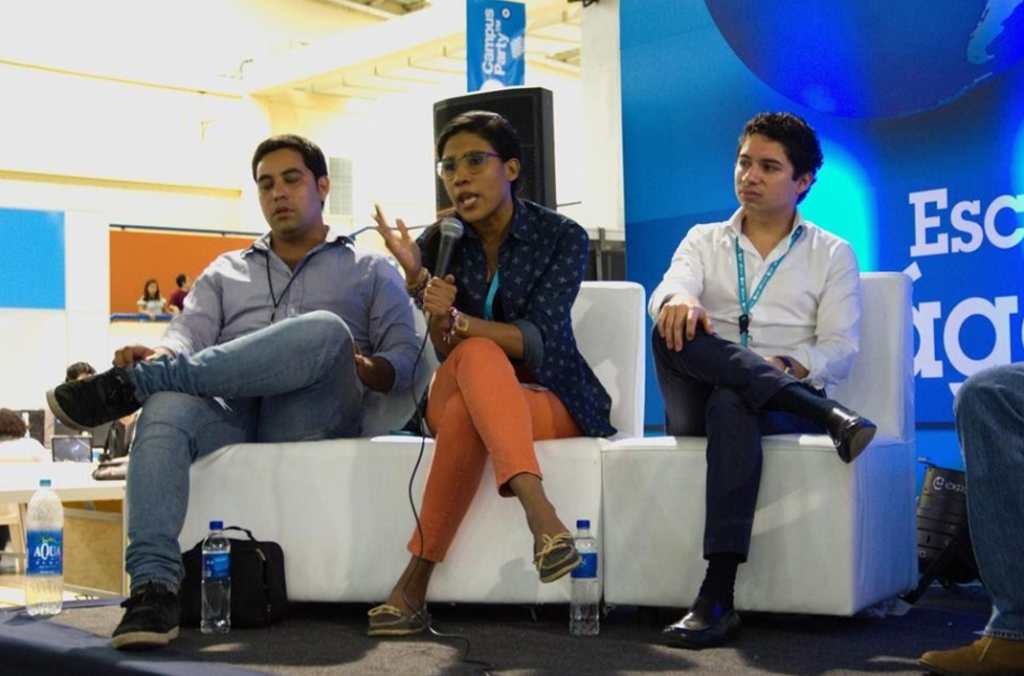
En noviembre de 2014 participamos junto a los capítulos de Creative Commons de Centroamerica (Costa Rica, Nicaragua, El Salvador y Guatema) en el Campus Party El Salvador y en el cual tuvimos la oportunidad de conocer a Ryan Merkley, recientemente a su nombramiento como nuevo CEO de Creative Commons Internacional.
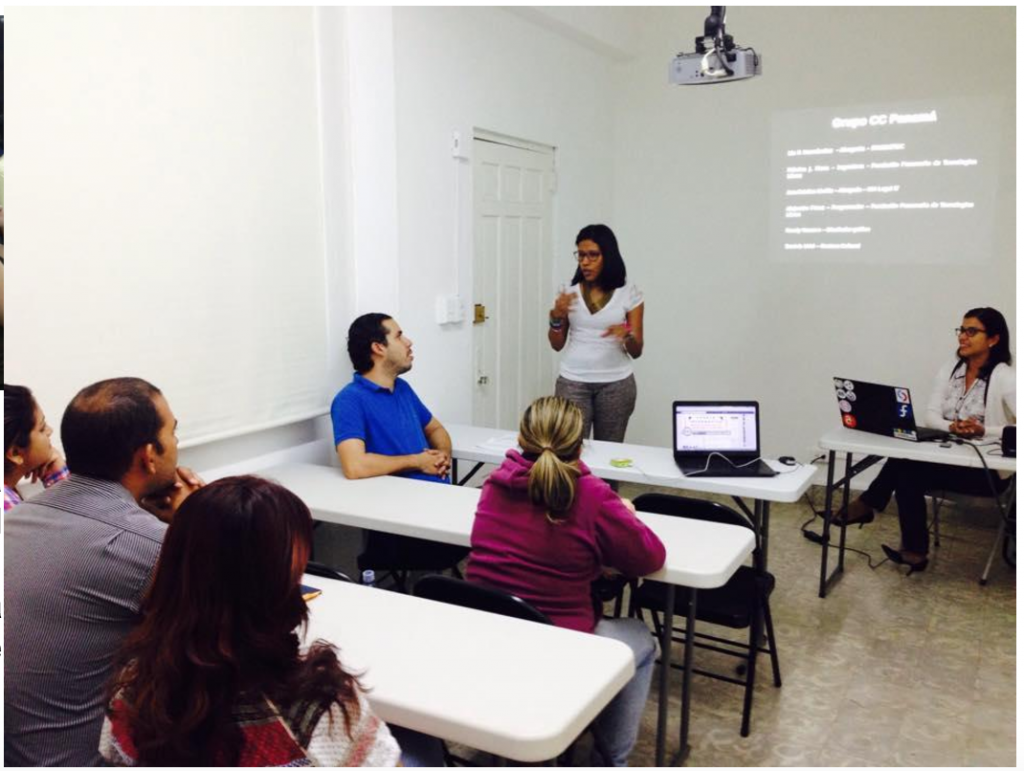
El añp 2015 estuvo muy lleno de actividades por nuestro grupo, comenzamos una serie de sesiones en centros culturales y espacios de trabajo compartido en la Ciudad de Panamá, en las cual reuniamos a gestores culturales, abogados, artistas, diseñadores gráficos y bloggers y les exponiamos un poco a cerca de ¿Qué son las Licencias Creative Commons y cómo se comen?
En esta gira por la ciudad de Panamá, conocimos a un grupo de cineastas panameños que nos invitaron a participar en un festival low cost de cine “Festival de Cine Pobre Panalandiaª y a la vez estaban en proceso de grabación de su primera película y tenían curiosidad a cerca del proceso de licenciamiento con CC de su obra, les explicamos un poco sobre el mismo y para nuestra sorpresa y unos meses después nos encontramos con que KENKE se convertiría en la primera película panemeña licenciada con Creative Commons.
Igualmente medios de la localidad como el Panamá America y La Prensa nos entrevistaron para saber más sobre nuestra filosofía de compartir conocimiento a través de herramientas digitales gratuitas y de cómo promovíamos las mismas en nuestro país.
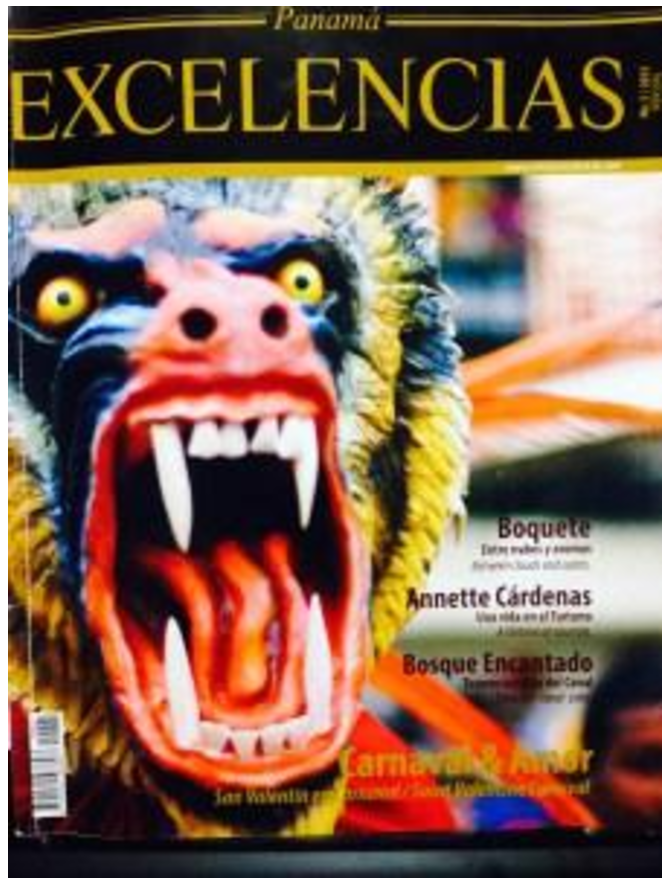
Y como no todas son historias bonitas; fue así como también tuvimos nuestra primera disputa legal, por la utlización de una foto de la Co-City Leader de ese entonces Mónica Mora, la cual subió en Flickr y fue utilizada por una revista de circulación nacional e internacional en su portada y atribuyendole la autoría a un tercero; el resultado fue una indemnización pecuniaria para la autora intelectual de la misma y una nota de rectificación en el siguiente ejemplar de la revista sobre la autoría correcta de la fotografía.
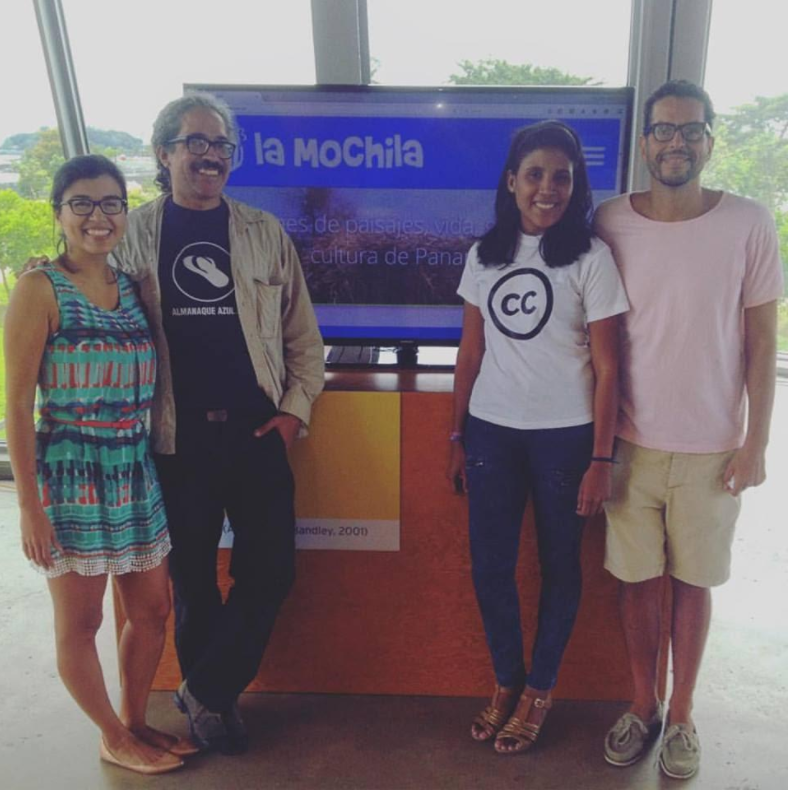
Colaboramos con una de las organizaciones ambientales más reconocidas del país “Almanaque Azul” en un proyecto financiado por el Gobierno Nacional y el Smithsonian Tropical Research Institute (STRI), en el cual se ponían en la plataforma educativa “La Mochila” y compartían licenciadas con CC una serie de fotografías bajo derecho de autor de esta Agencia estatal de los Estados Unidos y que luego de un largo proceso de negociación entre el capítulo en formación de CC Panamá y STRI fueron cedidas a licenciarse con Creative Commons.
Queremos agradecer a muchas personas que comenzaron este proyecto que por una u otra razón ya no están: Mónica Mora, Ana Cristina Muñoz, Randy Navarro, Davinia Uriel, Alejandro Pérez. A organizaciones que apoyaron nuestro eventos: Coworking PTY, Casco Station, Fundación Alemán Healy, Instituto NeoArte, Centro Cultural de España en Panamá, Casa del Soldado, MacroFest, Physical Modelos, Marie Claire Fontaine, Astrud Cordero. A las nuevas generaciones de Creative Commons en Panamá: Sandra Guerra, Nadia Ortíz y Mayra Victoria Ramos y a los creativos que acudieron a nosotros para licenciar sus proyectos con nosotros como José Jiménez Vega, Nos Gusta el Mar, Fundación Almanaque Azul, La Mochila y los que se nos quedan por fuera, esperen mucho más de CC Panamá en el 2017.
CC Tanzania’s Advocacy Training
This post from Aris Maro of CC Tanzania outlines their work in support of the Creative Commons Awesome Fund, a series of small grants designed to help commoners work on projects that make their communities stronger.
Thank you to CC Tanzania for their advocacy work in providing valuable information as representatives of Creative Commons ideals. To learn more or get involved with CC Tanzania, please visit their Twitter, Facebook, or blog.
All photos by Aris Maro, CC BY-SA.
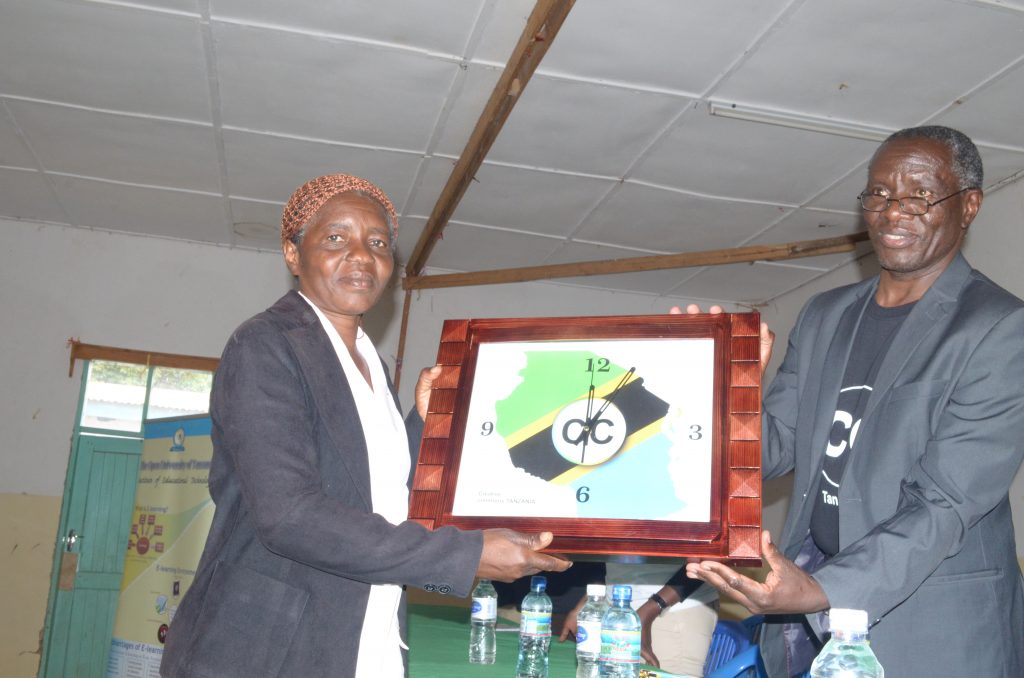
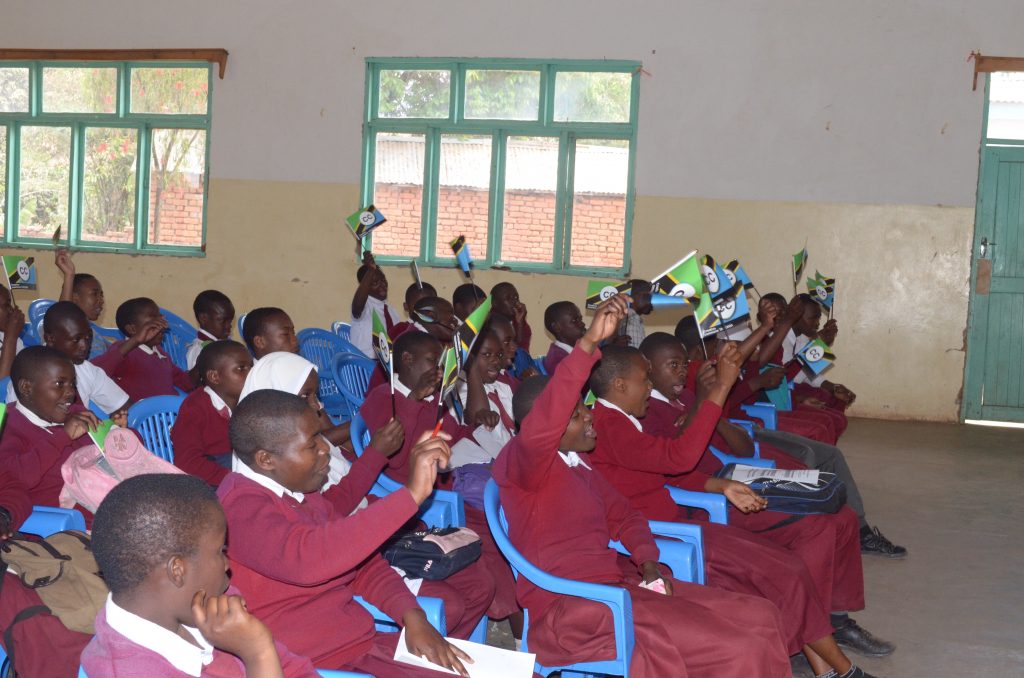
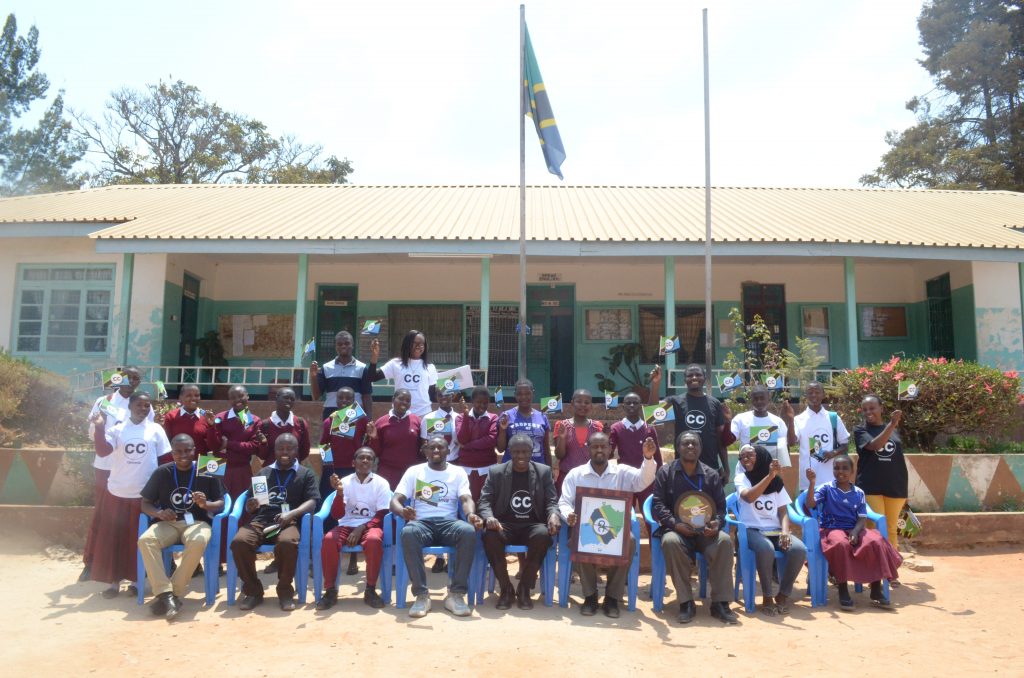
In September 2016, 30 Creative Commons Tanzania Affiliate Team members secured support from CC-HQ under the Awesome Fund and Open University of Tanzania (OUT) for an Advocacy Training to Lugalo Secondary School in Iringa region.
A 510 Kilometer drive started at OUT’s HQ Dar es Salaam, where we had a brief meeting with Prof. Deus Ngaruko; the Deputy Vice Chancellor Academic. It was a pleasure to have OUT’s Management blessings. Among other things, during the briefing, it was clear that our action had support from the university. The team assured the university management of their continued CC advocacy through the existing University networks in the country.
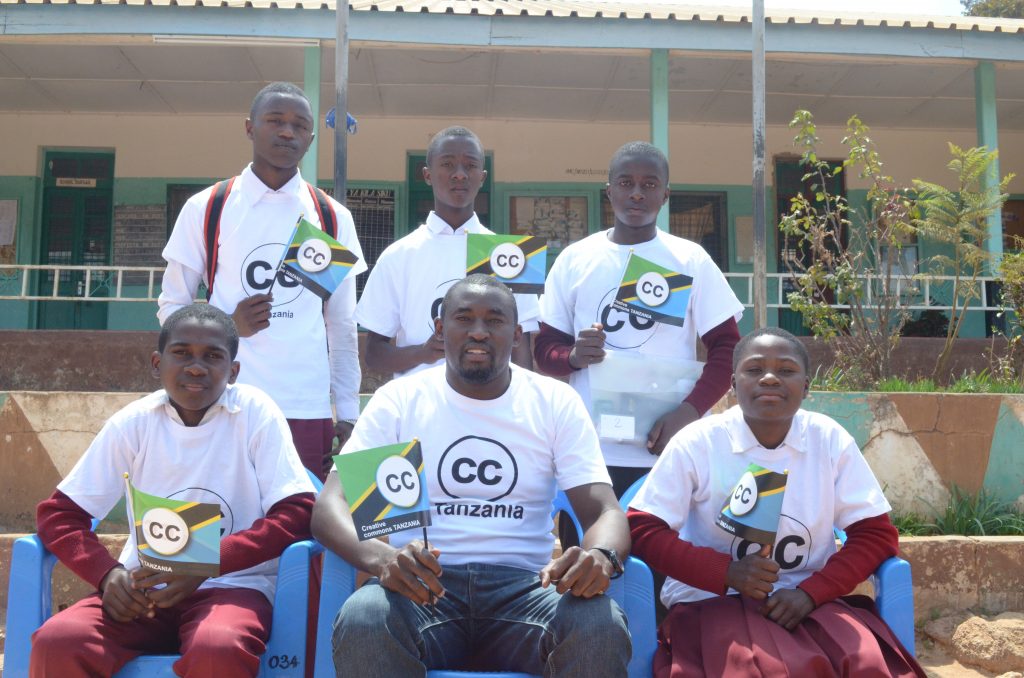
A team of six (6) Creative Commons Tanzania Affiliate members namely; Janeth Ngwilime, Ummy Ahmed, Naima Julius, Erasmus Rukantabula, Emmauel Thomas & Aristarik Maro completed their one day trip via Mikumi National Park to Iringa region by meeting two newly affiliate members Mr. Dioscory Majaliwa and Mr. Mpeli Mwankusye who were local organizers of the event. It is pleasure to have these two energetic and focused brothers to the team. The team is growing bigger every year.
Open Education and Open Government in Chile
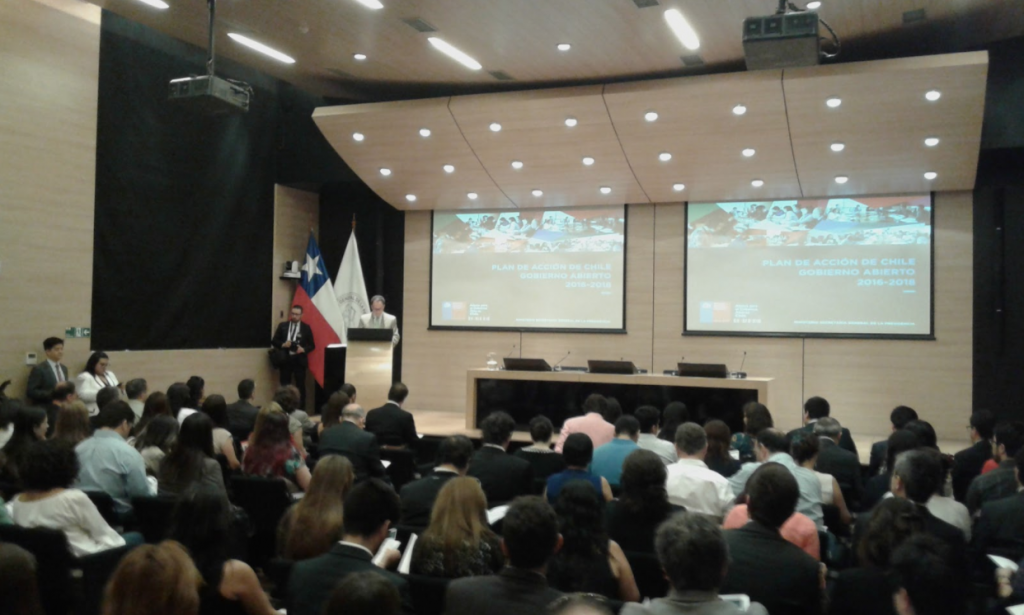
Presentation of Chile’s updated Open Government Action Plan by Werner Westermann, CC BY.
Werner Westermann is a fellow from our first Institute for Open Leadership, held in San Francisco in January 2015. He works at Library of the National Congress of Chile, and is involved in open education projects and advocacy in Chile and internationally.
The 2016 Open Education Conference (Open Ed) was an inspiring experience where I got the chance to meet individuals engaged in innovative and equitable open teaching and learning practices. I was happy to see that open pedagogy is now at the forefront of the OER movement – we see that creating and using OER is now a widely accepted way to improve educational outcomes. We also know that there’s a need to develop strong policies at all levels to promote and sustain OER efforts, especially in K-12 schools. To feed the policy rationale, more and different types of research need to be outlined, specifically those concerning efficacy and impact, which suited my contribution at Open Ed related to the ROER4D project perfectly.
Open Ed also provided the opportunity to connect with Institute for Open Leadership mentors and fellows from both cohorts. It was perfect timing to share an update on our commitments in advocating for open policy. I’ve been working with the Library of the National Congress of Chile to consider adopting an open policy.
After months of waiting, Chile released its 3rd Action Plan 2016-2018 for the Open Government Partnership (OGP). The plan outlines a commitment from the Library of National Congress of Chile entitled “Open Educational Resources for Civic Education” where the following resources will be openly licensed (CC-BY):
Digital Citizenship Competence Framework: Conceptual definition of competencies organized in dimensions, described observable performance and level of achievement of each competency.
Curricular and Extracurricular Digital Citizenship Plans composed of:
Lesson plans and digital resources for the curricular subject of History, Geography and Social Sciences for the levels of 7th and 8th grade.
Lesson plans and digital resources for an extra-curricular workshop for the development of cross-cutting fundamental objectives.
Bank of Items for Online Evaluation System: A platform for public and permanent evaluation to measure the competences of digital citizenship.
Teacher training module: Brief virtual training course (20 hrs.), designed for a self-instructional modality.
The inclusion of this open policy commitment in Chile’s OGP Action Plan is by far my biggest achievement so far in advocating for OER. I believe that the Institute for Open Leadership is a big reason for this success.
Thanks to my mentor Nicole Allen and her work, I recognized OGP as a relevant platform to promote open education policy. When I found out that the construction of Chile’s 3rd OGP Action Plan was going to be developed in part via a public consultation process, I made contact with the OGP officials in Chile related to the Secretary of the Presidency. Following the very clear pathway and recommendations set forth in the paper written by Nicole and Jan Gondol, I presented the benefits and potential for OER and Open Education and described how it made sense within the OGP framework. Initially, the OGP representatives were very skeptical. But I had a productive conference call with Jan from Slovakia and Jennryn Wetzler from the U.S. State Department, who shared with me their experiences incorporating OER into their national OGP Action Plans. After that call I had a solid plan for action.
I was invited to contribute to Chile’s OGP Action Plan with an institutional commitment, but I had doubts on the effectiveness of raising awareness about OER using this platform. Since Chile’s process only accepted institutional contributions, I decided to take the risk and engage my institution through a Digital Citizenship project I’m currently involved with. I was able to participate in the OGP roundtables, which were attended by ministries, governmental departments, and civil society organisations. At that time, the meetings were heavily oriented to open data issues related to environmental and energy concerns. But at the same time, there was some interest to explore the relation between education and open government, so I was happy to talk about the benefits and potential of OER within their broader open government framework.
The participants in the roundtable were receptive to the idea of incorporating open education commitments under the umbrella of our national OGP Action Plan. Later, the OGP convened the Ministry of Education in Chile, and I got the chance to meet and speak with high-level ministry officials in order to explain and advocate for the benefits of OER.
I could have never championed the inclusion of open education policies within our OGP Action Plan without the helpful support of the Institute for Open Leadership and the Open Policy Network. I strongly believe that the visibility of the resources committed in Chile is a strong start for ongoing OER support. On November 18, I will present the resources that we will be creating in a seminar hosted by the Council of Transparency, one of the governmental departments participating in the OGP roundtables.
At the institutional policy level, I would like to translate into Spanish the wonderful work done by IOL second-round fellows Amanda Coolidge and Daniel DeMarte, who this year drafted and released the OER Policy Development Tool. I could see this tool coming in handy with progress within my own institution, along with the already translated resources such as the Commonwealth of Learning’s OER Policy Template and Guidelines for Open Educational Resources in Higher Education. These resources can help to guide and support any institution to build a OER policy, and I can’t wait to deploy them.
There’s so much happening at the policy level in support of OER to improve teaching and learning. In 2017 there will be regional workshops in preparation for the OER UNESCO World Congress that will be held in September. Let’s keep up the fantastic work started by the Institute for Open Leadership. Let’s continue to help each other (and decision makers too) with information, educational resources, solid arguments, and useful research to make productive policy changes within our institutions and governments.
Announcing the official Polish translation of the CC 4.0 License
We are thrilled to announce our official translation of 4.0 into Polish. The translation process was time-consuming (Polish is a tricky language, believe us), but now all Polish speakers can benefit from the 4.0 licenses in their national language. The latest version has become increasingly popular in Poland (especially among public administration) since its release, but until now, we lacked translation of legal texts – not any more!
Creative Commons Poland coordinated the translation process. The translation draft was prepared by the CC Poland legal team. The draft was put to public consultation from 30 July to 31 August 2016, and at the same time translation was sent directly to the people involved in the earlier translations of CC licenses, IP lawyers, librarians and representatives of cultural heritage institutions. Blogs, social medias and mailing list were used to inform about translation process.
Thank you to the members of CC Poland involved in translation process:
Marcin Serafin – lawyer, legal lead of Creative Commons Poland, a subject-matter expert in the legal translation process. Katarzyna Strycharz – lawyer, Creative Commons Poland, coordinator of the translation process responsible for managing the process of translation and communication among team members, contact with Regional Coordinators and CC Legal. Natalia Mileszyk – lawyer, Creative Commons Poland, responsible for process of comments from CC Legal, final publication and contact with CC Legal Filip Rak – volunteer in Creative Commons Poland, legal help in translation process.
We want to also thank for invaluable help, comments, and support to Alek Tarkowski (policy advisor Creative Commons, public lead in Creative Commons Poland), Klaudia Grabowska (Open Access Lead for Creative Commons Polska) and Kamil Śliwowski (project lead of Creative Commons Poland).
Curtain up on HowlRound, the theater knowledge commons
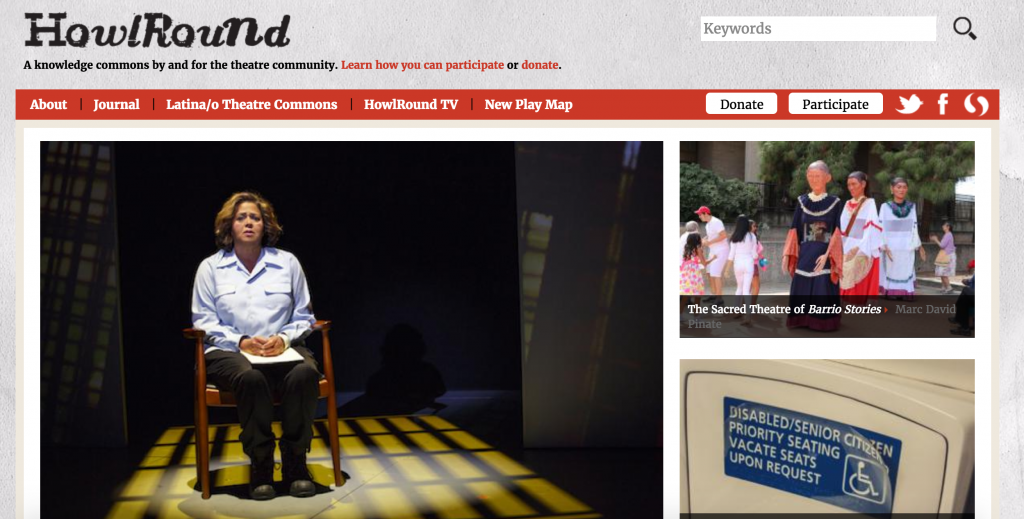
HowlRound was founded five years ago as the “knowledge commons” for the theater community to better include the voices of artists and creators working for inclusivity. The HowlRound organizers we interviewed, Jamie Gahlon, Vijay Mathew, Adewunmi Oke, and Ramona Ostrowski, exemplify the concept of the commons through their commitment to community action, creative output, and creating meaningful, lasting resources for artists and creatives working in theater and beyond.
HowlRound is licensed under a CC BY 4.0 license and run through Emerson College in Boston. They gladly welcome contributors to their Knowledge Commons.
Why a knowledge commons for the theater community? What prompted this project? Why did you decide to license the content via Creative Commons?
When we started HowlRound in 2011, the US nonprofit theatre field was suffering from an imbalance of resources and scarce and elitist access to information and knowledge. It felt like many conversations were happening in institutions behind closed doors and leaving artists out altogether. In order to know what was happening in the world of theatre outside of your own professional network, you had to be invited into elite conferences and festivals. We adopted the model of commons-based peer-production (best exemplified by Wikipedia) and the Creative Commons license as a practical way to usher in, amplify, and reveal the incredible ideas, conversations, and experiences of theatremakers across the country—no matter their previous social standing and access to resources in this microcosm. We also used commons-based peer-production and the Creative Commons license as a critique of and an antidote to the capitalistic values that many nonprofits ironically absorb as organizational behaviors: competition, creation of artificial scarcity, advancement at the expense of others, and individualistic self-advancement.
Using and promoting the Creative Commons has been a way for us to community-organize our field around shared goals and concerns around collective advancement, and collaboration that benefits the whole.
You produce a lot of content but you also host meetups, chat on Twitter, and provide other community events and actions. How do you balance the online community on your site with the in person aspects of your work?
The online platforms (the Journal, HowlRound TV, the Twitter Chats, the forthcoming World Theatre Map) and the in-person convenings amplify each other; all follow the same model of commons-based peer-production. We see our online platforms and in-person work as complementary pieces of a whole. The agendas and content are shaped and managed by the same community of people who self-elect to participate. Our role as HowlRound staff is that of community organizers, facilitators, and systems designers.
What kinds of outcomes have you seen from the commons-based approach that you take?
The democratization and disruption that these platforms have created has made highly visible space for a multiplicity of viewpoints, perspectives, and practices.
It’s been truly revelatory in terms of generating a diversity of narratives about contemporary theatremaking that have been previously marginalized and unheard. People’s stake in and care of this commons is palpable. HowlRound has helped to incubate self-organized movements for equity and community advancement (the Latina/o Theatre Commons is a great example of commons-based practice in action). An orientation towards collective resources that can benefit not just a few, but many — is now our mainstream culture and narrative for this community.
What are you most excited about currently? Any collaborations that are particularly motivating or exciting to you that are upcoming?
We are extremely excited about The World Theatre Map, a user-generated directory of the global theatre community, which will launch in mid-January 2017. Theatre artists, designers, practitioners, and administrators around the world can create profiles, see each other, and find out what kind of theatre is happening in real-time across the globe, and in their local communities. Our hope is that this map will foster connections and collaborations in the global theatre community in a way that hasn’t been done before. All in all, it’s our largest foray to date towards building a truly international knowledge commons for the theatre. It’s also a true test of the commons model—it will only be as valuable as the data and information the community puts in it.
Election resources from the Commons: A guide for Election Day
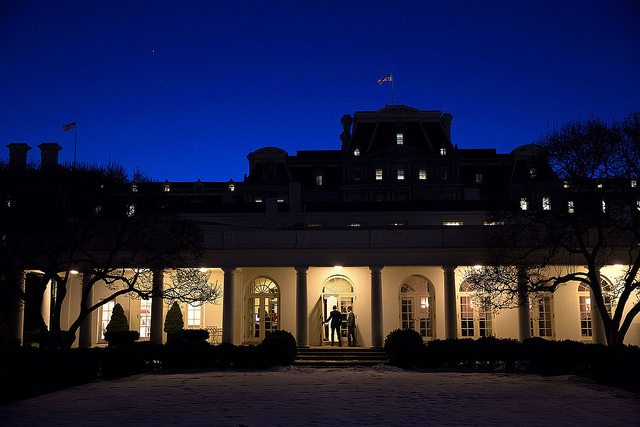
“Chuck Kennedy captured this scene at dusk as the President entered the Outer Oval Office with Shaun Donovan.” (Official White House by Chuck Kennedy) United States Government Work
In the unlikely chance you haven’t noticed, it’s Election Day in the United States. For the past few months, we’ve been sharing resources from the commons to help you get informed, get excited, and most importantly, get voting!
Below are some of our favorite election related resources from this year from the commons:
Our profile of Creative Commons political photographer Gage Skidmore
Coral Project’s open source “Tell our next president” feature to encourage voters to share their feelings about the election.
Emergency Kitten, a website that delivers a CC licensed photo of a kitten every time the page is refreshed, which is a perfect antidote to election news fatigue.
Open knowledge and intellectual freedom have been key issues this primary season. Creative Commons is proud to provide the tools to release the world’s knowledge through equitability and accessibility. We stand with the American people as they cast their votes today.
Awesome Fund workshop to promote national culture and language in the Buryat Republic of Russia
In October, CC Mongolia ran a workshop to promote national culture and language in the Buryat Republic of Russia as part of their Awesome Fund grant. A full report on their activities can be found here, and a short report by Batbold Zagdragchaa, CC Mongolia coordinator, is below.
If you’re interested in getting involved with our global community, join our Slack to find out more.
The project objective was to promote CC outreach among the national minority group Buryats, in Siberia, Russia. Buryats are ethnic Mongolians who comprise 30% of the population of the Buryat Republic. Young urban Buryats are becoming less proficient in their native language in favor of the Russian language. There is a need to promote Buryat culture, traditions and language. Using CC licenses and adopting principles of openness and sharing can enhance these activities.
There are some factors that can contribute to increasing interests and wider acceptance of CC licenses in Russia and in its Buryatia Republic. CC has been officially adapted into Russian legislation since October 2014. The official websites of the Russian President and the governmentare under Creative Commons Attribution 4.0 International, for example. In 2016, the government of neighboring Tuva Republic started using CC license in its web portals at http://gov.tuva.ru/ and http://opentuva.ru/ .
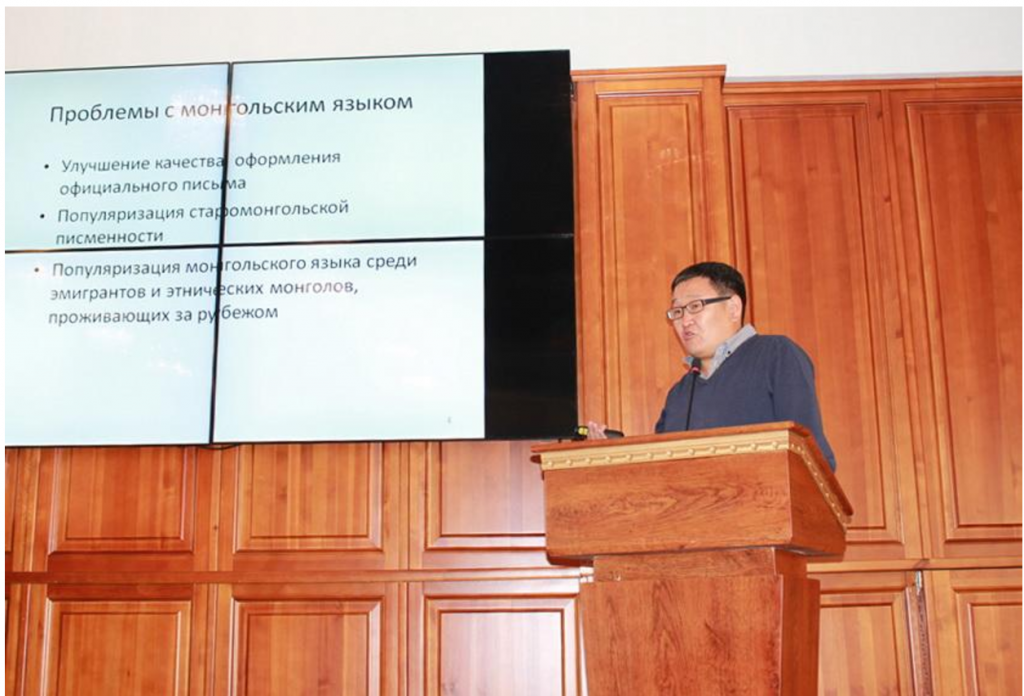
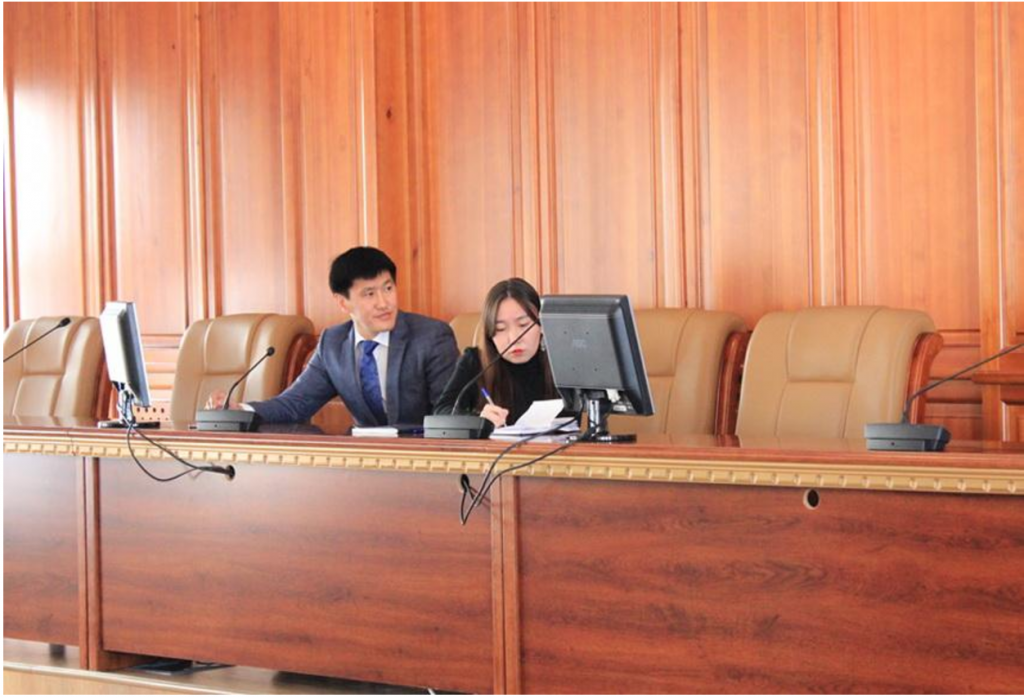
CC Mongolia organized a workshop on October 14, 2016 at Buryat State University in Ulan-Ude. Around 40 people including educators, students, web developers, and government officials participated in the event. CC Mongolia presentation comprised of two parts:
National OER program in Mongolia for 2014-2024 and its projects
CC license introduction and its use in Russia and worldwide
For the most of audience it was the first time they’ve heard about CC licenses. Several participants expressed their interest to learn more about CC licenses and their willingness to use it for their work.
During the visit, also discussions were held about future potential projects, which can use open licensing and possibilities for public and private organizations to implement an open policy.
The outcomes of the workshop are:
Raised awareness about CC licenses and principles of openness and sharing will
Promoted linguistic and cultural diversity
Potential for future partnership for joint projects
After the workshop, we will continue email communications about open access. In terms of language promotion, we hope in the future to collaborate with UNESCO affiliate institutes and preferably create a network similar to EU’s LANGOER.
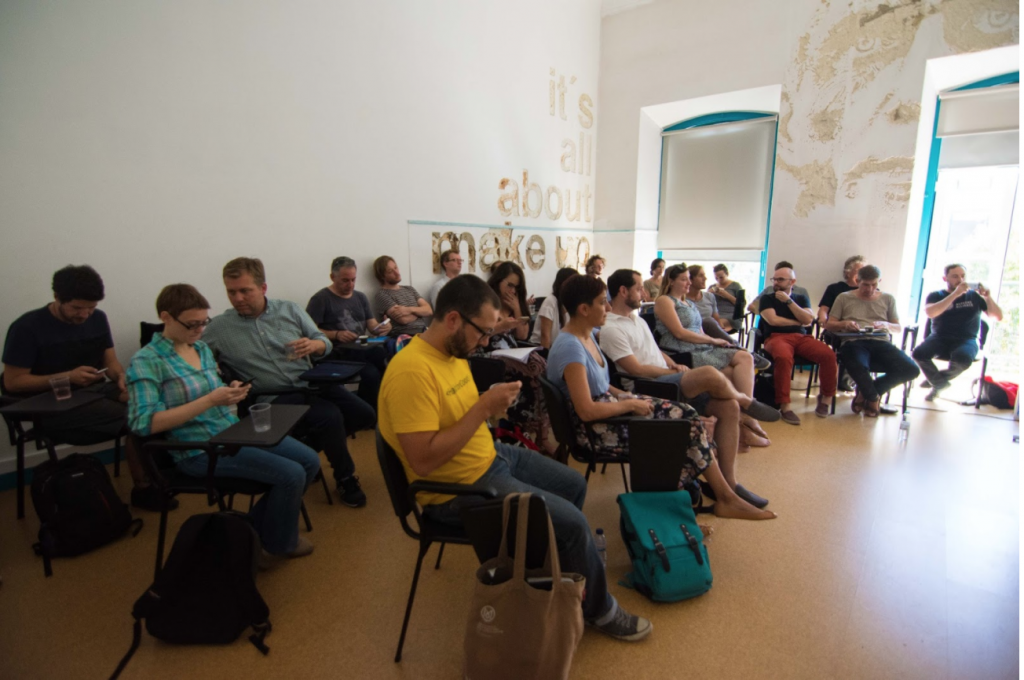
In September 2016, Creative Commons Europe hosted a meeting for our European affiliates in Lisbon, Portugal.
We would like to express our gratitude to the kind folks at Escola Das Gaivotas for hosting us, and to Teresa, Fatima, André, and Diogo from the CC Portugal team for being the best hosts ever!
What happens when you put 30 passionate commoners accustomed to meeting only online in a lovely conference venue in an historic city? Lots of talking, group updates, big plans being made, old and new issues being tackled, great projects presented, and new designs of collaboration schemes.
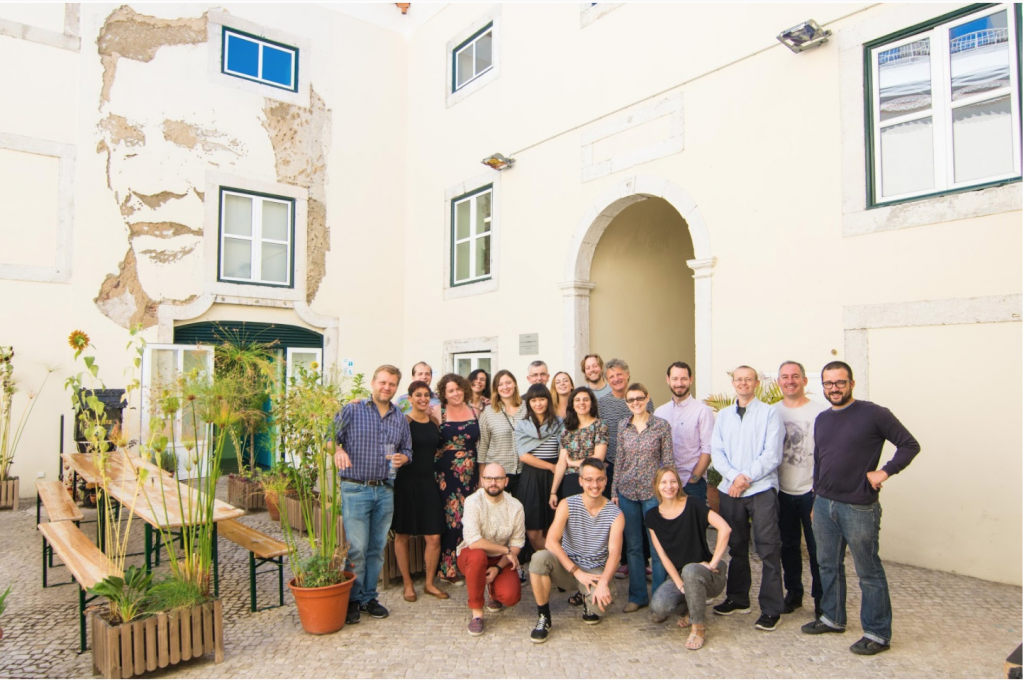
At the end of September, 30 participants from 15 different European Creative Commons teams came together for a meeting in Lisbon, Portugal. CC Representatives from the UK, France, Poland, Netherlands, Czech Republic, Ireland, Slovenia, Greece, Belarus, Ukraine, Austria, Belgium, Denmark and Romania joined the meeting, organized by CC Portugal. We were joined by CC CEO Ryan Merkley and Timothy Vollmer and Paul Stacey from CC HQ.
The whole group poses together in Lisbon. Saša Krajnc, CC BY
From this meeting, we learned that the CC affiliate network is interested (and involved) in much more than just licenses. CC teams are vital in new emerging “commons” activities, the sharing economy, 3D printing, open agriculture, open business models, and copyright reform.
Some highlights of the meeting:
The School of Rock(ing) Copyright, an information sharing bootcamp on copyright reform organized by Communia, with support from CC’s Awesome Fund. For a full report on this session, see Communia’s website. We all stand for creativity, innovation, access to knowledge, and development. Copyright laws can either boost or limit these goals, so we are actively involved with making progressive changes to copyright to benefit users, education, and the commons. Having some non-EU affiliates with us as well offered an interesting perspective on the importance of training and support on copyright reform in other regions and other languages than English.
Open business models are about allowing all actors gain a fair share (above and beyond monetary rewards) for their contribution to the commons. Exploring and supporting open business models can also work to tackle the related discrepancies that can possibly turn a flourishing commons into a closed, feudalistic environment. The use of CC can one aspect for creating open, regenerative, and distributed networks.
The kick off for the CC Certificates project raises fascinating challenges for CC in terms of education and validation of information about CC. A certification mechanism will formalize many of our efforts to teach about open, which is a challenge for a network with such a grassroots ethos. The project has a dedicated website where you can check for updates.
A ‘CC infrastructure’ session on what’s going on at tech and legal level. You can check the notes from this meeting here.
We also discussed the Global Network Strategy and next steps for our European community, which we look forward to continuing to work on over the next months, particularly as we prepare for our Global Summit in April in Toronto.
We’ll keep you updated as we continue our work for CC Europe in support of the commons. In the meantime, if you want to join the discussion, you can find us on Slack!
PS If you are wondering about the marvelous artworks in the photos, they’re by Vhils.
Making data and tools available for the world to see: Arturo Sanchez of CERN on why ATLAS uses CC0 data
According to Arturo Rodolfo Sanchez, a member of the ATLAS community and outreach team, “The large hadron collider is running now at 13 TeV. This is an energy level never seen before in a collider.” This exciting development is built on the power of open science – at ATLAS, data sharing and an open, innovative approach to information collaboration has become a fundamental part of this important scientific community.
This year, ATLAS decided to release the data from 100 trillion proton-proton particles to the public under CC0, the first release of 8 TeV data. More than 3000 scientists from 174 countries work on ATLAS, and more are joining every day. At the CERN open data platform educational portal, scientists, educators, and science enthusiasts can access the work of thousands of scientists working together to hunt for the Higgs-Boson particle and other important scientific discoveries.
Sanchez’s vision of science is open, and he believes that CERN’s is as well – working with Creative Commons, he describes a new kind of research organization built with the power of community. Though the 7000 ton ATLAS detector in the large hadron collider lives “100 meters below a small Swiss village,” the data moves far beyond the confines of the institution, providing insights and experimentation to the entire world.
This interview was conducted with the assistance of Noam Prywes, a post-doctoral fellow at Massachusetts General Hospital.
Why is open data and open science important to CERN? Why have you chosen to use CC0 for this dataset in particular?
Open Data, open software and open hardware are very important for us! It is part of our policy in the ATLAS Collaboration and the other Large Hadron Collider (LHC) experiments. This is important for us because we are a scientific community and our main goal is to look for answers as humankind, not as an institution. We are also funded by taxpayers – CERN as an organisation and facility, and the experiments like ATLAS (part of the LHC) use public sector funding.
Independently of the member country, most of them have as policy/law to publicly release any final result, publication, dataset, and conclusion that public funding research institutions generate. In ATLAS, we develop resources (datasets and tools) that can be used mainly for educational projects carrying out by ATLAS and not-ATLAS members. Of course, this is not a restriction! We don’t want to limit the use that a person (educator, scientific, artist, etc…) could have with the data.
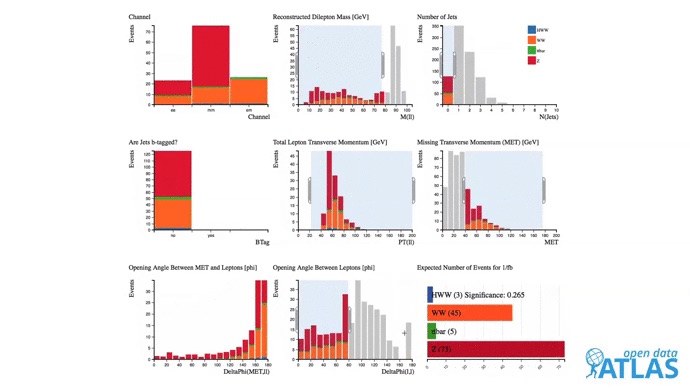
The “Histogram Analyser” allows to make data cuts and selections directly from the browser. (Image: ATLAS Experiment/CERN)
There are a lot of people out there with many different ways of thinking, so who knows what can be possible or not possible with those resources? This is why we went for the CC0 license for the datasets released by ATLAS on its Open Data project. The same has been done by the CERN Open Data project. I can complement my answer by mentioning several projects from CERN or CERN groups:
Invenio and Indico: Very successful projects born at CERN: and
Open Lab: Another training and educational project where public and private sector come together
What’s the relationship between your initiative and other open data and open access initiatives in scientific communities? How are you working together? Is there anything unique about your relationship to open access that’s different from other open science initiatives?
As you can see, the CERN community is keen on the involvement of a high number of people, countries, institutions and research fields involved. Therefore, any project that includes two or more groups working at CERN or in CERN-hosted experiments is already an international enterprise!
Let me give you the ATLAS example: we are an experiment with ~3000 members coming from more than 120 universities around the world. Many of them are senior professors in their home institutions. Thousands of students can be or are already involved in ATLAS educational, training or outreach activities. This leaves us with the possibility of having a professor in a North American university using public data to write some code to train her new master’s student. At the same time, an ATLAS college in a German university is running a complete laboratory course in particle physics using the ATLAS public data together with a combination of public software and custom code. Meanwhile, a group of Latin-American ATLAS members are presenting public seminars and running exercises for high school students using public apps and public ATLAS data.
ATLAS experiment detector under construction in October 2004 in its experimental pit; the current status of construction can be seen on the CERN website.[1] Note the people in the background, for comparison. Nikolai SchwergCC BY-SA 3.0
Coming back to your question, we are working together with other communities and sharing as much as we can! Different communities in the high energy physics (HEP) sector have meetings and conferences to share their experiences, knowledge, and research with other teams. I don’t think there is anything unique in the way we are doing Open Data and Open Source, in fact, it is this constant feedback between communities that helps to find common frameworks, platforms and even ways to develop and deploy resources. Our community is global and our audience is global, but the approach is in fact local. It is important for us is to understand the difficulties and limitations in each region: it is not the same to teach HEP to students in the United States to those in Venezuela. The languages, resources, culture, and differences in the academic systems are now part of our fine tuning when writing projects and documentation.
Since CERN is so international, how do you choose how you release data and publish research? Is open access a more acute concern because of national boundaries? What about funding sources? Are there countries that demand open access as a precondition for money? Has that influenced scientists from different locales?
The way to release data is in a worldwide common framework: on a web platform, with a lot of files to create the best documentation possible.
This last step is in fact the most difficult one, so, we run local trainings as well, with different audiences in order to get feedback and repair the holes and make the web and user interfaces better every day.
The fact that CERN is a multinational organisation with so many funding governments and institutions consolidate the openness of the research and the resources products of those. Many legal aspects are taking into account and I am do not know all the details, but the spirit is to share and be as useful as possible.
CERN is in such an individual position in terms of the science it does, so what kind of innovative measures are you taking to publicize this science? How are you highlighting the work that scientists and communities are doing with the published data?
We have been working very hard in the communication side by using every possible media out there to communicate results, activities, tutorials, and even how physicists spend their time. This is done by the CERN community and included in each of the experiments now. Our presence in social media is strong (at least for a scientific community!) and more and more people are aware of what we do and why it is important. Students around the world come to visit CERN and the experiments, and some others visit the place virtually. In the case of the data, the challenge right now is to use the power of the media and the web in order to explain how to use it. Developing easy but still powerful user Interfaces is the key! With a lot of energy and ideas we are trying to reach more people every day, even with the limited resources that we have.
I am reaching the end with the beginning of this story – the ATLAS Open Data platform. In the outreach group we are learning and developing tools and protocols that help us disseminate the data publicly, trying to prove to ourselves and the members of the experiment that there is interest to use those datasets and resources by the international community.
Our aim is getting more data out there! We want to make that data and tools available for the world to see.
OER Symposium held by affiliate team at NDU in Lebanon
Creative Commons affiliate team at Notre Dame University—Louaize (NDU) in Lebanon held a two-day symposium on “Open Educational Resources (OER): Trends and Prospects” from September 15-16, 2016 as a part of their 2017 roadmap to create awareness and cultivate openness culture within the university . The symposium highlighted the University’s strategic commitment to the integration of openly-licensed educational resources in the teaching and learning process. The occasion also marked the one-year signing of the Affiliate Agreement between Creative Commons and NDU.
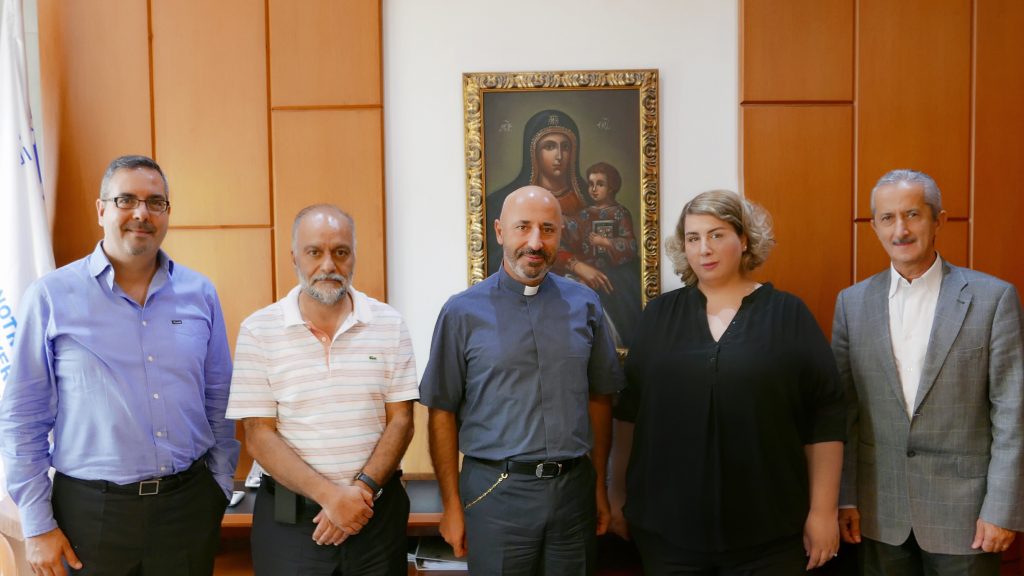
Creative Commons Regional Coordinator for the Arab World. Ms. Zarif meets NDU President Fr. Walid Moussa
To commemorate the event, NDU hosted Naeema Zarif, Creative Commons Regional Coordinator for the Arab World. Ms. Zarif met NDU President Fr. Walid Moussa, who expressed the importance of capitalizing on recent trends in open education to broaden access, foster innovation, and alleviate student textbook costs.
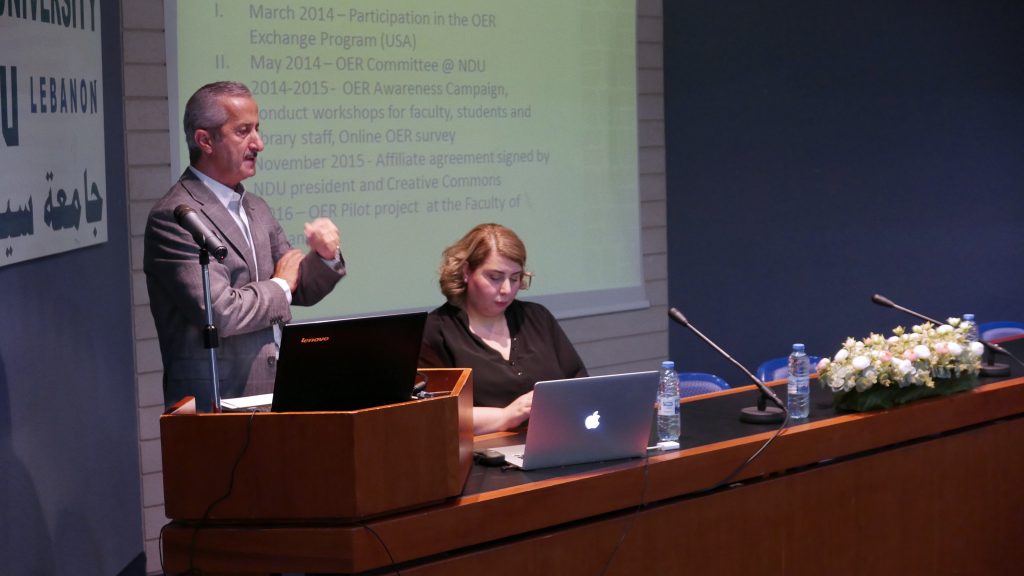
Dr. Fawzi baroud and Ms. Naeema Zarif at the OER symposium
During the symposium, Dr. Fawzi Baroud, Assistant Vice President for Information Technology, described the history of NDU’s involvement with open education beginning with his own participation in the U.S. State Department sponsored Open Book Project in 2014 and the continued collaboration with Creative Commons to create awareness and devise capacity building projects for an optimal OER culture within the university. He also traced the University’s future trajectory with regard to OER and the role it will play in advancing OER in Lebanon and the region. Ms. Zarif went on to speak about CC licenses in a panel titled “Creative Commons Licenses and the Future of Open Education in the Arab World.”
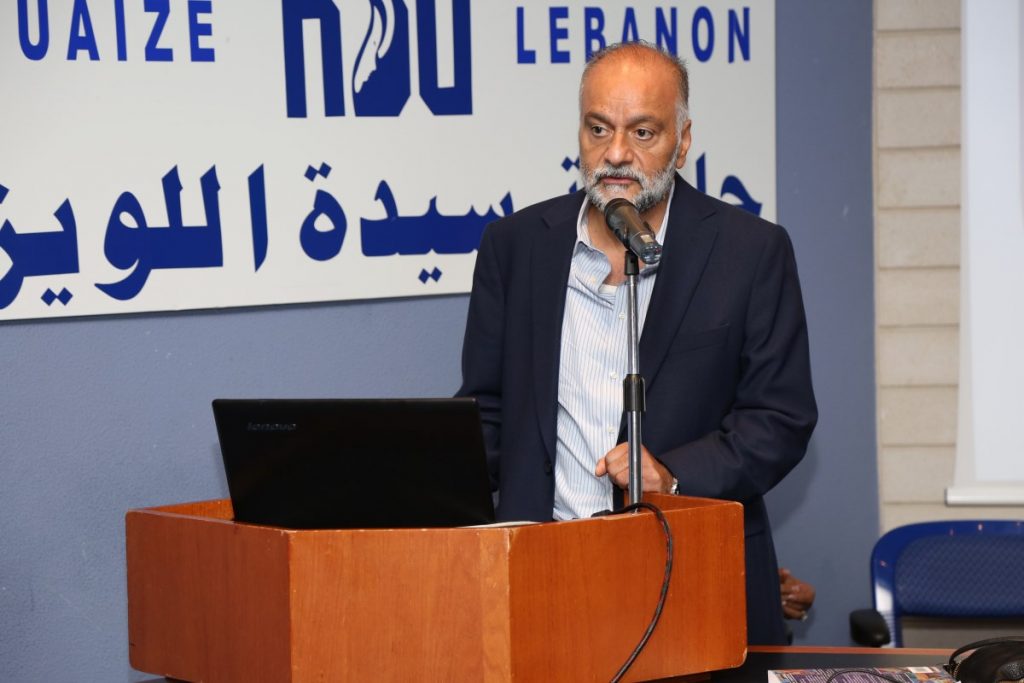
Dr. Kamal Abouchedid, Dean of the Faculty of Humanities
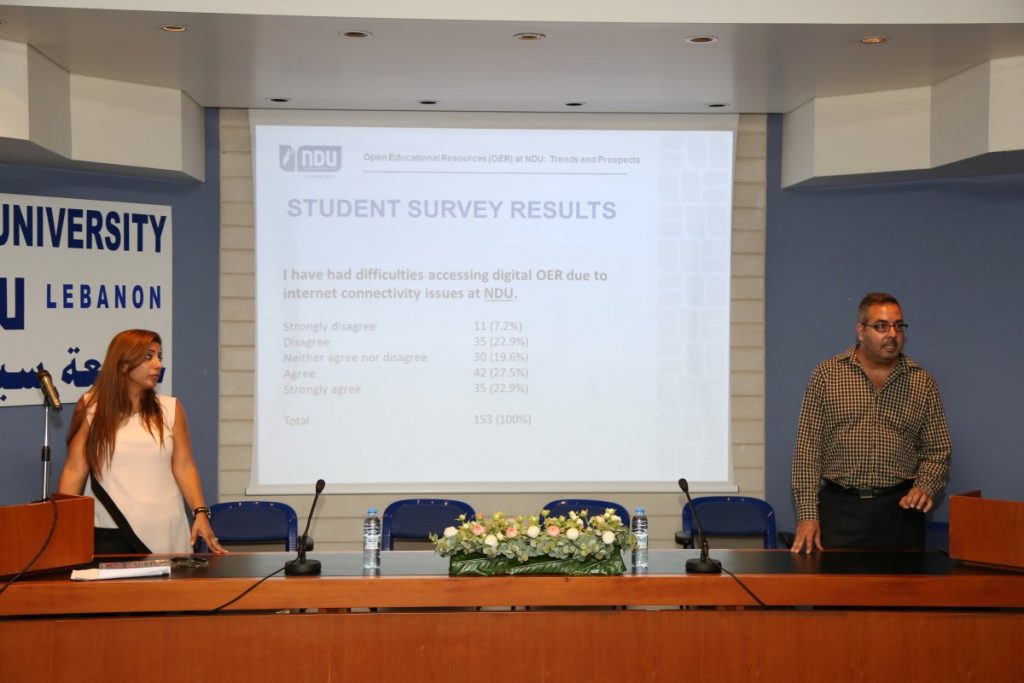
The symposium’s second day (titled “NDU Student Attitudes toward the Use of OER”) focused on the piloting of OER in a university-wide English course targeting close to 600 students in more than twenty sections across three campuses. Dr. Kamal Abouchedid, Dean of the Faculty of Humanities, highlighted the integration of OER as a strategic initiative at NDU and as a means of fostering open education.
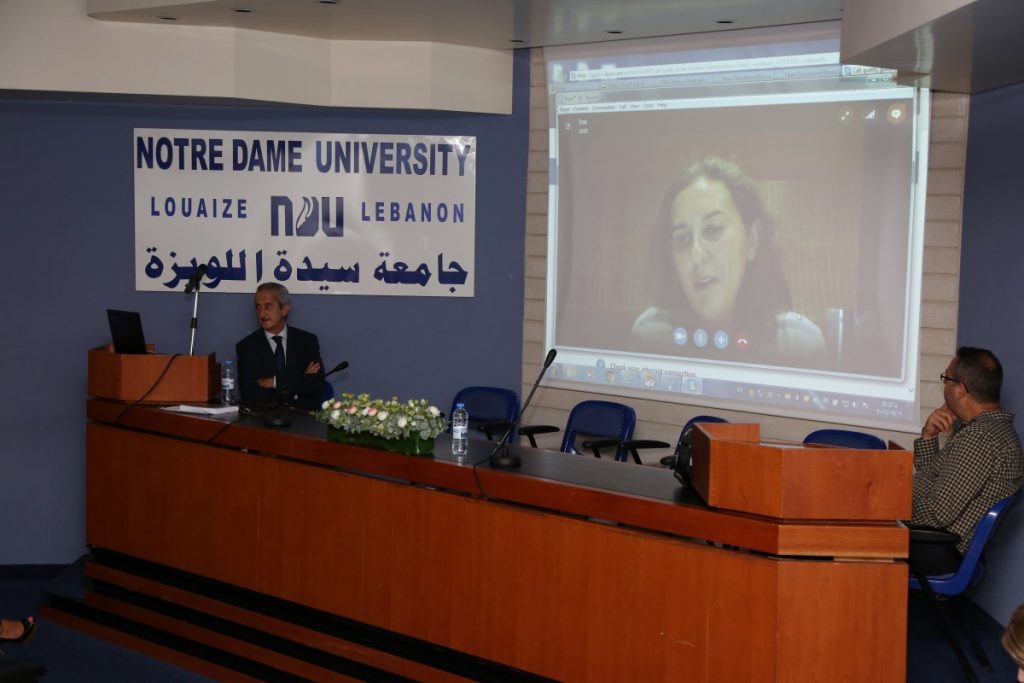
Joining the discussion from Denmark via Skype, Dr. Ena Hodzik
The design of the course was described by Dr. Sandra Doueiher, Assistant Professor and Coordinator of English. Joining the discussion from Denmark via Skype, Dr. Ena Hodzik spoke about the scholarship of OER, specifically about the issue of quality and utility in the integration of OER. Dr. Hodzik went on to explain that the student survey administered by NDU closely aligned with the major themes in the literature of OER.
Dr. Sandra Doueiher and Dr. George Abdelnour
Survey results were presented by Dr. George Abdelnour, Chair of the Department of English and Translation. The extensive survey sought student feedback on the use of OER based on general attitudes, effectiveness, quality, and learning outcomes of the resources used. By a 2 to 1 margin, he explained, students showed high levels of satisfaction and engagement with OER. The findings also showed a favorable inclination toward enrolling in courses using OER in the future.
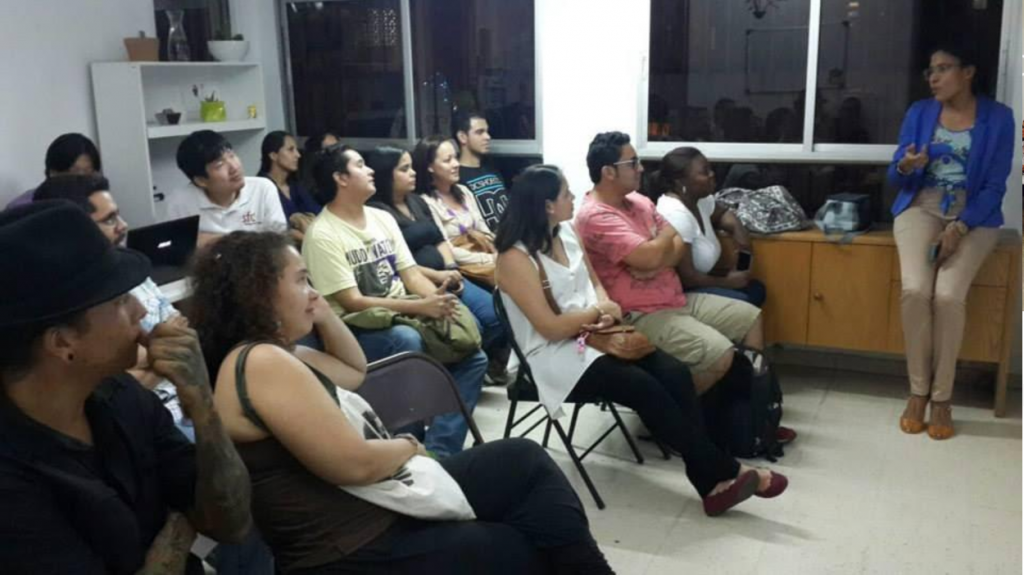 En esta gira por la ciudad de Panamá, conocimos a un grupo de cineastas panameños que nos invitaron a participar en un festival low cost de cine “Festival de Cine Pobre Panalandiaª y a la vez estaban en proceso de grabación de su primera película y tenían curiosidad a cerca del proceso de licenciamiento con CC de su obra, les explicamos un poco sobre el mismo y para nuestra sorpresa y unos meses después nos encontramos con que KENKE se convertiría en la primera película panemeña licenciada con Creative Commons.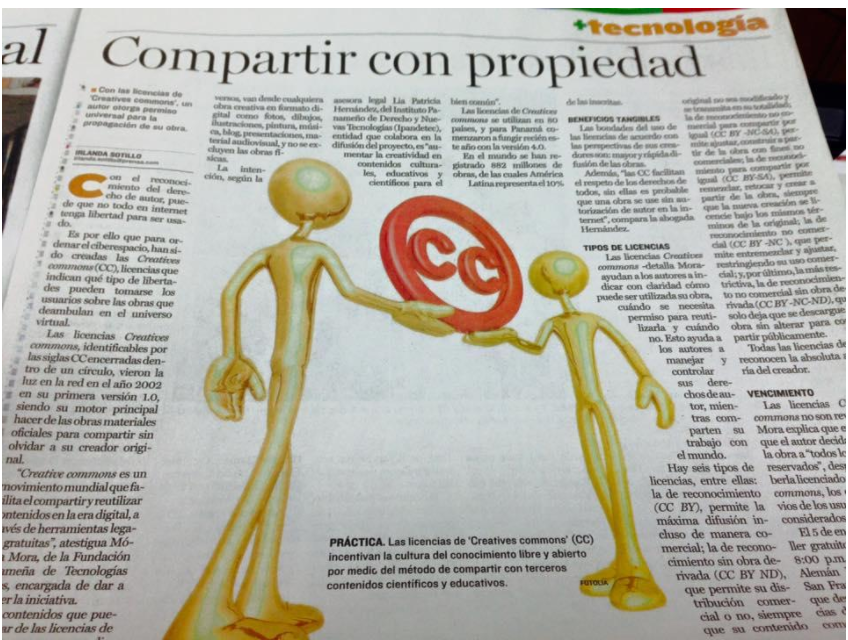
 Presentation of Chile’s updated Open Government Action Plan by Werner Westermann,
![ATLAS experiment detector under construction in October 2004 in its experimental pit; the current status of construction can be seen on the CERN website.[1] Note the people in the background, for comparison. Nikolai Schwerg CC BY-SA 3.0](https://simple.wikipedia.org/wiki/ATLAS_experiment#/media/File:CERN_Atlas_Caverne.jpg)