

In November 2025, we had the privilege of supporting and participating in Semana de la Cultura Libre (Open Culture Week) in Montevideo, Uruguay: a week-long celebration of open culture organized by CC Uruguay. Through panels, workshops, concerts, and conversations, the week offered a powerful reminder that free culture is not an abstract idea but a living practice shaped by local communities, histories, and needs.
- Read CC Uruguay’s recap on our We Like To Share community blog.
What stood out most was not only the richness of the programming but how clearly this event illustrated both the strengths and the challenges of open culture work today, especially in a rapidly enclosing digital environment.
Free Culture Is Alive—Even When the Licenses Aren’t
One of the most striking takeaways from conversations with Ileana Silva and Jorge Gemetto, who lead the CC Uruguay chapter, was how deeply DIY culture thrives in Uruguay. Artists and organizers share freely, collaborate generously, and remix constantly, often without explicitly using CC licenses.
This speaks to something important: openness as a cultural instinct often precedes openness as a legal or technical practice. At the same time, the chapter shared a recurring challenge they face in outreach: many people conflate content that is merely available online with content that is truly free and open. For example, a common response to projects like Musicalibre.uy, which curates openly licensed music, is: “Why would I need openly licensed music? I already use Spotify.”
This points to a growing need to remind people why the commons matters, even before getting into how to use CC licenses. As platforms become increasingly proprietary and extractive, user convenience can obscure a loss of agency, access, and collective ownership underneath. These topics, such as the political economy of the internet, feel especially important to continue to surface in the face of AI.
Opening the Week: Free Culture in a Time of Extraction
The opening panel, “What do we talk about when we talk about free culture? Practices and challenges,” set the tone for the week. Speakers addressed themes including:
- Cultural and data extractivism, particularly from the Global South to the Global North
- The ways AI complicates and challenges long-standing commitments to openness
- The need to defend cultural participation as a collective right
We were thrilled to use this space to introduce attendees to the Open Heritage Statement and the work of the Open Heritage Coalition (formerly TAROCH), and look forward to more engagement from Uruguay!
📺 Watch the recording: https://www.youtube.com/watch?v=2prAjdbiHLQ
Tools, Practices, and New Generations of Makers
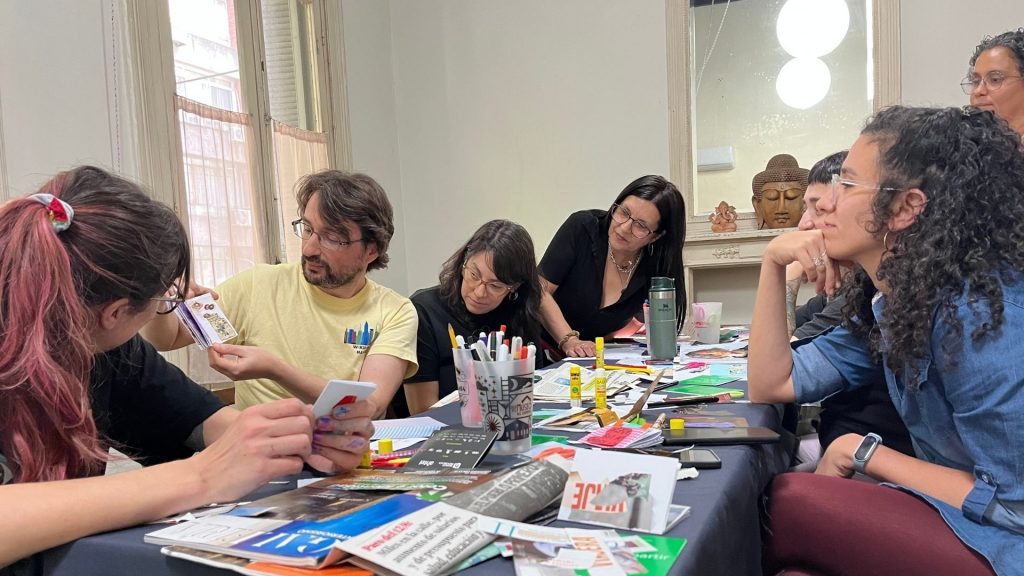
It was great to see workshops throughout the week showing the many ways people use open source tools for creative practices and for aiding research as well as demonstrating how art has always been a practice of inspiration and remixing.
One notable observation: some of the most active participants in these sessions were younger creators who used open source tools in their creative process that were not CC licenses. This raised compelling questions about how CC might further support open resources for design, publishing, and artistic production to encourage the use of digital technology in the creative process outside the scope of what AI has to offer.
Technology, Power, and Accountability
Content warning: discussions included references to genocide and mass surveillance.
One of the most powerful moments of the week came during the panel on Apartheid-Free Technology.
Panelists shared their experiences and perspectives on technologies and AI tools being used in systems of surveillance, repression, and genocide. These conversations underscored the importance of allowing CC chapters the autonomy to convene discussions that reflect their political viewpoints as they intersect with today’s technology and all of its uses.
Music, Radio, and the Commons in Practice
Live music programming brought joy and immediacy to the week. Local bands who release their music under Creative Commons licenses performed for free, demonstrating that openness is not a theoretical commitment but a practical, sustaining choice.
The relaunch of Radio Común, a CC-licensed online radio station, offers an enduring home for this work—extending the spirit of Semana de la Cultura Libre well beyond the week itself.
📺 Watch a clip from the performance: https://youtube.com/shorts/JyVbDasxiiY?feature=share
Small Investments, Big Impact
We supported Semana de la Cultura Libre with a small grant—an approach we are piloting to engage more with regional events in the community. With the help of these funds, the chapter was able to:
- Compensate local spaces and collaborators
- Pay a graphic designer
- Provide speaker stipends
- Support local musicians releasing work under CC licenses
We were thrilled to be invited to attend the event as a participant rather than a host. This allowed the chapter to center the issues that matter most to their community, while highlighting their work to CC HQ.
Looking Ahead
In the coming months:
- We will soon be sharing a framework for selecting a couple more regional events to support with a small stipend as a part of our 25th anniversary celebrations.
- The Uruguay chapter has expressed interest in making Open Culture Week a global phenomenon next year. If you are interested in participating please be in touch with them at contacto@creativecommons.uy.
We’re grateful to CC Uruguay for their leadership, care, and vision, and we look forward to building what comes next together.
Posted 10 February 2026