From Signals to Infrastructure: Strengthening the Commons for the AI Era
We recently shared an update on the evolution of CC signals. As AI systems increasingly extract value from the commons without adequate consent, attribution, or transparency, sustaining a healthy commons requires stronger governance and accountability. This reflects a shift in our approach: from expressing preferences to rebalancing power to protect the commons.
In this post, we outline our plans to build upon and strengthen CC signals in order to support our goal of sustained access to human knowledge. We do not have all the answers yet. What we do have is a framework for how we will work toward them.
Recap: What’s At Stake
When it comes to AI, copyright operates in a landscape that is uneven and often unclear. Because of this, the CC licenses, while still important, are not sufficient to address how content is used in AI systems. You can read more on this here. CC licenses also do not fully capture the range of intentions creators and data holders have in an AI-mediated world.
Across the web, creators, communities, and institutions are turning to multiple forms of defensive enclosure to restrict access. These include:
Legal (e.g. licensing), such as open access publishers recommending CC BY-NC-ND as a mechanism of control, which ACM now does, which negatively impacts human collaboration.
The problem is that these tools treat all machine use as the same, regardless of the purpose. In trying to limit large-scale extraction by AI developers, they also block public interest uses like research, preservation, and accessibility.
While our research is ongoing, there are early indications of a more fragmented and potentially shrinking commons, along with a weakening of long-standing public interest protections.
Building the Next Generation Infrastructure of Sharing
Open access through CC licenses created a spectrum of sharing. Today we need something similar for AI: a spectrum of participation, where creators and data-holding stewards are active participants in how knowledge is produced, shared, and used.
The commons we have built over the past 25 years did not emerge on its own. It was designed through legal frameworks, technical standards, and shared norms. The AI era requires the next generation of that infrastructure. We want a future where the global knowledge commons remains accessible, and where AI systems engage with it in ways that are transparent, accountable, and aligned with the public good.
Our Plans
CC is advancing several high-impact interventions as part of the CC signals framework to restore trust, strengthen participation, and embed public interest values into the AI knowledge ecosystem.
Helping People Make Informed Decisions in the Current Moment
Making Attribution the Norm in AI
Building New Tooling that Protects Public Interest Uses while Restoring Agency
Helping People Make Informed Decisions in the Current Moment
AI systems are using CC-licensed works in ways that are causing many to question whether the existing CC license suite still aligns with their goals.
These concerns take different forms: attribution that disappears inside AI systems, sensitive knowledge stripped from its original context, growing concentrations of value and power, and no clear mechanisms for reciprocity or accountability. But they share a common root: uncertainty about what the CC licenses actually mean in this new environment.
We want people who choose to CC license to do so with confidence. We also want institutions with CC licensing embedded in their policies to have a clear picture of what the licenses do and do not cover when it comes to AI. Over the next six months, we will provide sector-specific interim guidance to support CC licensors in navigating the new questions that AI raises for them. This guidance is not intended to resolve all legal ambiguity. Instead, during this period of uncertainty, we want to preserve the practice of sharing that AI is currently putting at risk, while we develop new tools and practices that address our communities’ concerns.
We will be holding a series of sector-specific virtual events to collect feedback on this interim guidance. Sign up for the CC newsletter for more information as soon as it becomes available.
Making Attribution the Norm in AI
Attribution has always been a cornerstone of the commons. It supports participation, enables transparency, and allows knowledge to be traced, evaluated, and built upon.
Today’s AI ecosystem is eroding this norm. Most generative systems do not meaningfully acknowledge the sources they rely on. As AI increasingly mediates access to knowledge, this has serious consequences: loss of provenance, reduced trust, and fewer incentives to share. The first iteration of CC signals included attribution as a preference; today we believe that attribution must be a requirement.
Our plan is to define best practices for attribution in AI contexts. AI developers often claim that attribution is simply not possible in LLMs. But this is a consequence of choices made during design, not a technical inevitability. We believe there is value in envisioning what attribution practices could look like in an AI ecosystem that prioritized them. And while there is no going back in time, we can demand attribution where it is technically possible within existing systems, such as Retrieval Augmented Generation (RAG), a method where AI systems pull from specific, traceable sources to generate responses.
Our work will involve detailing ideal attribution guidance for AI systems, end users, and creators. We will then demonstrate how attribution can be realized in RAG models. This initiative serves two purposes: building shared understanding of what attribution in AI can and cannot currently achieve, and giving creators and AI users the tools to advocate for attribution as a baseline expectation. Strengthening attribution helps ensure that knowledge can circulate widely without losing connection to the people and communities who created it.
Building New Tooling that Protects Public Interest Uses While Restoring Agency
Copyright alone cannot do this work. We believe maintaining a human-centered internet requires meaningful guardrails, upheld collectively. Our goal is to support an ecosystem that balances openness with agency, and access with accountability.
First, we are advocating for the development and usage of carefully scoped AI opt-outs that simultaneously sustain creator agency while protecting public interest uses. In an effort to address this need, we proposed additions to the IETF (the body that sets foundational internet standards) AI Preferences vocabulary that would help strike the right balance between creator agency and public interest reuse. It is essential that opt-out tooling and any related legislation protect public interest uses. This includes enabling cultural heritage institutions to preserve and analyze content, and supporting not-for-profit research and educational organizations in their work.
Second, we are doing research and development for a new tool designed to enable conditional access to openly shared collections and compilations. It will allow data stewards to set terms for accessing and using a collection or compilation that protect the sustainability of their technical infrastructure. These stewards may include libraries, archives, research institutions, data repositories, public knowledge projects, and cultural heritage organizations. Resource-heavy bulk reusers of data may be subject to more conditions, and public interest uses would be excluded entirely.
Without practical legal tools to define conditions for AI development, collections are left with blunt options: allow unrestricted extraction by AI developers, or restrict access entirely. Neither option reflects the goals of most knowledge stewards. This research and development is informed by close consultation with community members and stakeholders, such as dialogue with practitioners in the African context this past year, as well as broader explorations in the movement, such as this analysis on sharing of cultural heritage by Open Future Foundation, and the development of NOODL to rebalance power for marginalized language communities.
Many want to continue sharing their collections while ensuring that AI developers use them responsibly by respecting attribution, ensuring transparency, and meeting other safeguards aligned with their public interest missions. We want to build tooling to enable this in standardized, legally enforceable ways.
What Happens Next
The exploration of these kinds of tools requires us to look beyond copyright alone, which is a real paradigm shift for CC, and not one we take lightly. We believe that investigating the risks and benefits of legal tools that support conditional access is an essential part of stewarding the long-term health of the commons. We need to preserve access to valuable knowledge resources while ensuring that the institutions and communities who steward them remain active participants in shaping the AI ecosystem.
Here is where things stand. This month, we are convening a workshop in London to begin working through the design and governance questions that new tooling raises. Later this year, we will be seeking pilot adopters to help us test and refine the approach in practice. We will share updates as this work develops.
We have a clear plan, with these initiatives entering pilot phases within the year. Like many nonprofits, our ability to accelerate depends directly on the resources we have available. Support from our Open Infrastructure Circle has made progress to date possible, and as we mark our 25th anniversary, we have set a goal to raise $5 million to advance the next iteration of CC signals. If you are able, we invite you to support this work.
Let’s collectively build what the commons needs next.
How can Equitable Access to Heritage Help Solve Global Challenges? An Exploratory Dialogue
Introduction
How can equitable access to heritage help solve global challenges? That is the question we addressed during our Exploratory Dialogue, a major event we hosted on 29 April, 2026, at UNESCO House in Paris, France, to celebrate the Open Heritage Statement and explore its synergies with UNESCO’s priorities in tackling the most urgent problems facing the world today.
In this blog post, we set the event in its wider context, look back at some of the highlights from the discussions, report on our key takeaways, and pave the way for what comes next.
The Dialogue in Context
This Dialogue was the culmination of years of research and consultations, policy analysis, movement building, and community mobilization, as well as global advocacy efforts towards more equitable access to public domain heritage in the digital environment. You can read more about the journey that took us from shared vision to global action. A remarkable milestone, the Dialogue brought together over 100 participants, including UNESCO staff, Permanent Delegation representatives, National Commissions, cultural heritage practitioners, funders, and open heritage advocates and enthusiasts from around the world.
Our aim by convening this Dialogue was twofold. It was an opportune moment to recognize the joint efforts of the Open Heritage Coalition and its global network of ambassadors in elaborating the Open Heritage Statement, a declaration of principles anchored in our shared belief in the positive potential of equitable access to heritage. This event was dedicated to the hard work, energy, and collaborative spirit that turned shared ideals into a tangible plea to fill an enormous international policy gap. Indeed, despite open heritage’s clear potential for achieving UNESCO’s key policy objectives, there are still multiple undue, unfair barriers to access to heritage in the public domain, and the Coalition was convinced that greater awareness, mobilization, and political will were needed among UNESCO Member States.
Hence the Dialogue was also a favorable occasion to explore how access to heritage in all its forms can make a significant contribution to achieving UNESCO’s mandate of addressing global challenges. Specifically, it was a critical opportunity to sensitize UNESCO stakeholders to the relevance of the Open Heritage Statement as a foundation for further discussions across diverse areas of UNESCO’s mandate and in a cross-sectoral, transversal approach, spanning areas of heritage protection, preservation, and sharing, of course, but also access to education, to the fight against climate change, all the way to artistic creativity and cultural diversity, social inclusion, ethical artificial intelligence, and more.
Key Takeaways
The discussion brought together diverse experts from across the world and showcased various real-life examples in which equitable access to public domain heritage can make a positive impact in many of UNESCO’s priorities, in line with its mandate and in support of the fundamental right to participate in cultural life. Their perspectives helped us understand how access to heritage is vital in the digital environment as well as how unfair barriers keep impeding such access.
A resounding message united these interventions into a coherent narrative: there is an urgent need to lower the barriers that unfairly hamper access and prevent us from sustaining resilient and connected societies. Open heritage is a means to advance cultural policy goals aiming to remove unfair socio-economic barriers to access to heritage in the digital environment, in accordance, notably, with the United Nations Declaration on the Rights of Indigenous Peoples. Global collective action is now more important than ever, because without global policy alignment, the full potential of open heritage remains largely unrealized.
Future Outlook: From Dialogue to Recommendation
Sign the Open Heritage Statement
We are very proud of what the Open Heritage Coalition has accomplished. Well before its deadline, it reached its objectives of developing the Open Heritage Statement alongside a comprehensive advocacy strategy and campaign. As our movement evolves into its next phase, the Coalition is no longer accepting new members. As the new anchor point in this dynamic initiative, we encourage organizations and institutions to sign the Open Heritage Statement and join the momentum built by close to 100 signatories to date in order to show broad alignment and global support. To add your voice to the call, visit openheritagestatement.org and sign the Statement today.
Explore the Feasibility of an Open Heritage Recommendation
We call on UNESCO Member States to join the dialogue towards additional action by UNESCO to ensure equitable access to public domain heritage in the digital environment, possibly even by co-creating a new normative instrument, in accordance with UNESCO’s existing normative framework. Recently, UNESCO has demonstrated a strong commitment to open through the 2019 Recommendation on Open Educational Resources (OER) and the 2021 Recommendation on Open Science. These recommendations were game changers. A UNESCO Recommendation on Open Heritage would be the next logical step.
To achieve this, UNESCO Member States should explore the feasibility of elaborating a standard-setting instrument (a Recommendation) that would proactively promote and encourage open solutions to removing barriers to accessing heritage in the public domain, being mindful of the various governance frameworks that determine the ways in which heritage is shared and used.
We believe this Dialogue, and new initiatives to be taken in its wake, will further strengthen cooperation between UNESCO and Creative Commons, harnessing the obvious synergies and setting the stage for international discussions aiming to consolidate best practices and enshrine our common aspiration: ensuring equitable access to heritage.
The biggest reason for the gap between updates is timing. We are deliberately resisting the pressure to move quickly simply because the broader technology landscape rewards speed. Our work touches the infrastructure of the commons. That requires care, consultation, and a willingness to sit with complexity.
So we slowed down. We let the first wave of AI development crest without rushing to respond. We took the time to understand where power is consolidating, where harms are emerging, and where meaningful intervention is actually possible. We are now at a point where we believe we can act in ways that will have real impact.
This post is meant to bring you into that journey. Our destination has not changed, but the path we are taking to get there has. Come along!
From Signals to Agency
When we first introduced CC signals, the idea was relatively straightforward. We proposed a set of preferences that creators could use to communicate with AI developers, relying on shared norms to guide behavior. It reflected how CC has historically operated. For 25 years, we have worked within copyright, building tools that expand access while maintaining a balance between creators and reusers. That history shaped our instincts. We assumed that a carefully calibrated, norms-based approach would move the ecosystem in a better direction.
But as we began consulting with our community, it became clear that this approach was not enough. The feedback was direct and consistent in stating that preference signals without enforcement do not meaningfully shift power. Signals alone cannot create agency in a system that many people did not choose to participate in.
That feedback forced us to confront some of our own assumptions. For a long time, copyright has been our primary tool, and with good reason. CC licenses have enabled the sharing of tens of billions of works and have helped build a more open internet. But relying on copyright as the default lens for every problem has its limits, especially in an AI-mediated environment.
Beyond Copyright
Over the past four months, we have been reexamining what it means to support the commons in this new context.
CC licenses remain essential. They will continue to play a critical role in enabling human access to knowledge. However, when it comes to AI, copyright operates in a landscape that is uneven and often unclear. In many cases, CC license conditions do not apply to AI training. In others, they might. In some jurisdictions, broad exceptions mean that using CC-licensed works for AI development is lawful regardless of license conditions. At the same time, the presence of a CC license is often interpreted as permission to use the work in this way. That interpretation follows from how the licenses were designed; they grant broad permissions with limited conditions.
The CC licenses were not designed with the scale and growing harms caused by the dominant, profit-driven approaches to AI in mind. And CC licenses do not capture the full range of intentions creators have in this AI-mediated world. Some creators are comfortable with their work being used in AI systems; others are not, and many fall somewhere in between.
Why New Tools Are Necessary
We also explored whether updating the CC licenses themselves, in the current paradigm, could provide a solution. Versioning has helped us adapt to new contexts before. But in this case, there are two novel factors at play.
The first is structural. CC licenses were designed not to enable control beyond copyright. They are intentionally scoped to copyright and related rights, and they explicitly do not allow additional restrictions that would limit uses outside that scope.
Our current trademark policy reinforces this. If restrictions are added that limit the permissions granted by a CC license, the work can no longer be presented as CC-licensed. This reflects the critical role that standardization has played in the success of open licensing. When you access a CC-licensed work, you should be able to rely on the terms and conditions written in the license to determine what your reuse obligations are. Expanding the CC license suite beyond its original focus on copyright would represent a significant change to how the licenses operate, and it could have unintended consequences on the existing license ecosystem.
This brings us to the second factor, which is that CC licensors have such a wide spectrum of needs and values about how and whether their works are used in AI. It is possible that new tooling would better address what may be irreconcilable within the open movement: some see any tool that attempts to control AI uses that fall outside of copyright as a betrayal; others see it as an imperative.
With the future of the commons in mind, at this time we believe that the best approach is to innovate with the development of new tools, where we can test and explore more freely. The CC licenses are one part of a larger strategy needed to meet this moment, which is evolving in an undefined legal landscape, just as it was 25 years ago when the CC licenses were first developed.
The Stakes for the Commons
Our north star remains the same: sustain access to human knowledge. Today, that means more than enabling sharing. It means questioning long-held assumptions, and ensuring communities are in control of their own data. It means holding the tension that, in some cases, conditional access is better than no access. The commons needs guardrails in order to thrive.
AI systems are being built on an unprecedented scale of knowledge extraction, drawing heavily from the commons. The governance systems that made open sharing possible have not kept pace with this shift. There are limited mechanisms for attribution in AI systems, few pathways for consent, and little transparency.
When the commons weakens, power over information becomes more concentrated. Knowledge moves into private datasets and proprietary systems controlled by a small number of actors. That limits who can access, verify, and build on information. Democracies depend on broad access to reliable knowledge. Public interest AI depends on diverse, high-quality data.
A healthy commons is governed and sustained through systems that balance access with agency, openness with accountability. AI relies on the commons, not the other way around. If we want a future where knowledge is shared and where AI serves the public good, we need to ensure that the commons can thrive. This is the context in which we evolve CC signals.
Strengthening CC Signals
Our problem statement has not changed, and neither has our end goal. But what we are building to get there has.
What began as a relatively narrow, tool-focused approach has evolved into something broader and more structural. CC signals is no longer limited to signaling preferences. CC signals is about addressing the underlying conditions that have made creator preferences so easy to ignore. This shift has led us toward work that is more ambitious, and necessarily more disruptive, in confronting the real harms to the commons emerging from dominant, profit-driven approaches to AI.
Check back with us next week, when we’ll share more about the specific interventions we are building from this foundation.
Licensing Best Practices for the Sharing of Scientific Data
Today, we are sharing our newest report, Licensing Best Practices for Sharing Scientific Data. This report builds on our 2023 report Recommended Best Practices for the Better Sharing of Climate Data with the goal of extending the open data practices originally designed for climate data to other disciplines. We are thankful to our partners at the McGovern Foundation who supported our Open Climate Data project, which paved the way for this revised and updated report.
Why Open Licensing Matters for Data
Open data is central to accelerating scientific progress because it allows researchers everywhere to freely access, verify, combine, and build upon existing data without legal or technical barriers, dramatically increasing the speed, scale, and collaboration of discovery.
By encouraging adoption alongside those already maximizing open access to publicly funded data, our recommendations provide a baseline for globally interoperable and practical licensing and attribution practices. They make open data easier to access, share, and reuse with clear guidance and actionable steps. Consistent licensing reduces legal uncertainty, improves interoperability, and enables faster discovery and collaboration. Adopting these practices strengthens trust, transparency, and global scientific cooperation.
This updated report expands the scope of the original beyond climate while retaining the core principles around standard legal terms and metadata for maximized sharing and interoperability. The report and its summary version are resources that anyone who wants to publish open data can use and include guidance on both licensing and metadata.
The initial recommendations complemented existing frameworks such as the FAIR Principles, the GEO Data Sharing Principles, the WMO Unified Data Policy, and CARE Principles by filling a specific gap. The recommendations focus on open licensing clarity and embedding license information in metadata practices that support reuse, attribution, and sharing. From 2023-2025, we consulted directly with more than 30 intergovernmental, national, and academic organizations on the implementation of the recommended licenses and metadata values in their policies, platforms, and practices.
An invaluable aspect of the Open Climate Data project was the depth and quality of the partnerships we built. Our collaboration with the Group on Earth Observations (GEO) stands out in particular: as active members of the GEO Law and Policy subgroup, we were part of a truly collaborative environment, one where open sharing is not just a principle but a lived practice that directly shaped implementation of the recommendations across earth observation data producers worldwide. Our relationship with the U.N. World Meteorological Organization (WMO) has been equally important. As one of the organizations consulted early in the project, the WMO played a meaningful role in strengthening our recommendations and validating our approach. In 2025, we also had the opportunity to engage in a deep and productive collaboration with the U.N. Convention to Combat Desertification (UNCCD) on updating their open licensing policy, which helped 196 countries and the EU implement clear open-licensing practices for environmental data, enabling global land-degradation information to be legally reusable, interoperable, and accessible for research, policy, and climate action. Details about our partnership on the UNCCD open licensing policy can be read about in more detail in our corresponding case example.
Working in partnership with global governmental and intergovernmental producers of climate and earth observation data allowed us to further the following impact in the world:
Making global climate data legally open and reusable, by ensuring that major climate and environmental datasets are released under clear, interoperable legal terms so they can be freely accessed, reused, and combined worldwide.
Standardizing interoperable licensing and attribution practices across climate data systems, by embedding consistent legal terms and attribution-based metadata values into data policies, platforms, and practices across the world’s largest institutions so their data can be reliably shared, credited, and reused.
Strengthening climate research, policy, and action through better data access, by reducing the legal and technical barriers so governments, scientists, and communities can more effectively study climate change and develop solutions to the growing challenges posed by the climate crisis.
Building a durable open data infrastructure for the public good, by establishing norms that institutionalize open licensing and attribution practices across international climate data ecosystems.
Accelerating Open Data Practices Across Scientific Disciplines
As implementation increased with our Open Data Project partners, it became clear that across scientific domains, data producers, hosts, researchers, and institutions, there existed the same barriers: uncertainty about licensing, inconsistent metadata, unclear provenance, and friction in reuse, which result in less reuse and licenses being ignored by researchers. The Open Climate Data project was spent supporting data producers around the world with implementation of the recommendations across their policies, platforms, and practices. This work revealed a more universal need for practical, legally sound, and interoperable data sharing practices that are not limited to just climate data, in order to maximize open data sharing for other types of scientific data that are also intended to be made publicly available. The recommended metadata values for source link, license link, attribution statement, and rights were generally applicable as well.
Because of the ongoing collaboration in testing and refining open data licensing practices with data producing organizations, we were able to further strengthen the recommendations in such a way that they are applicable across scientific disciplines.
Licensing Best Practices for Sharing Scientific Data
For a sneak peek of our licensing best practices for sharing scientific data: We recommended the use of one of two legal terms, and the use of six metadata values that keep licensing and attribution information both human- and machine-readable.
Legal Terms Options:
The CC0 public domain dedication enables unrestricted reuse, which can be especially useful for foundational datasets or where reuse is a priority. We recommend attribution is requested when using the CC0 public domain dedication on your data, to ensure you are credited as its creator.
The CC BY attribution license is recognized by global data communities as a gold standard as the least restrictive license with only one condition: attribution of you as the creator. It is the most interoperable license and the easiest to combine while controlling the license of the resulting dataset, report, or product.
Metadata Values
Title
Author
Source Link
License Link
Attribution Statement
Rights Statement
Read our full report here and its summary version here. Please share these essential resources with colleagues and partners who are actively engaged in opening up scientific data in the public interest.
If you are looking for additional support in implementing open licensing to increase the accessibility, discoverability, and use of scientific open data, we are pleased to offer a suite of consulting services. Get in touch!
To support ongoing work in increasing open scientific data, consider making a donation.
Call for Proposals: Regional Events Celebrating CC’s 25th Anniversary
Gathering is a vital part of relationship building among and across movements, and we know we have supporters around the globe excited to get more involved in our work. Creative Commons has chapters around the world—communities of practice in a wide variety of topics from science and culture to open source—who are best suited to host local events that meet the contexts and needs of their communities and provide opportunities for in-person engagement.
As a part of our 25th anniversary celebrations, we are pleased to announce the launch of a small fund for two to three regional events in 2026 to amplify the contributions of CC communities over the last 25 years and showcase the amazing networks of open advocates around the world.
Events could include panels from experts and open access organizations in your region, workshops on how to CC license your work, discussions on current events and the challenges facing our movement, and more. Organizers may want to work with local organizations, open advocates, cultural spaces, and artists to host a series of connected activities or even a multi-day event. It may even be wise to collaborate with other local events where open advocates will already be attending to add on your own gathering. For inspiration, read about the recent CC Uruguay event.
Funding is limited. We invite CC communities globally to express interest, and we are especially interested in proposals from communities based in Africa, the Middle East, Asia, and Oceania.
Selection Criteria
Organizers must demonstrate:
An existing, engaged audience in the region
A documented track record of hosting similar events
Access to venues that can host at low cost or free of charge
A history of open advocacy in the region, with key accomplishments that can be highlighted and shared
A location that is reasonably accessible to others in the region (e.g., a central hub with a major airport)
Optional (nice to have):
Established involvement in the CC community through legacy network structures
What Selected Events Receive
Two to three proposals will be selected to receive:
Up to $5,000 USD
Organizational support and visibility as part of Creative Commons’ 25th anniversary programming
How to Apply
Please email community@creativecommons.org with a brief written proposal attached as a PDF that includes:
Your organizing team and their bios
The proposed location and venue(s)
Your target audience and expected reach
A short description of the event format and goals
An outline of how you intend to incorporate CC 25th anniversary celebrations into your event
A draft budget for the event indicating where funds are needed
Any relevant past events or open advocacy work
Deadline: May 31, 2026
Selections will be made by July 1. We’re excited to support community-driven regional gatherings that strengthen the open movement and build lasting local and regional connections. If you have questions, feel free to reach out to community@creativecommons.org.
While hosting an event takes a team of established Open practitioners, there are also ways for individuals, newcomers, and more to get involved in smaller ways by attending events, participating in discussions, and spreading the word about CC’s work. Learn more about all the ways you can participate in our celebration.
Celebrating 25 Years of Choosing to Share
Today, we kick off celebrations for CC’s 25th anniversary. Please join us throughout the rest of 2026 as we commemorate a quarter century of sharing.
A Brief Reflection
When CC was founded, the internet was at an inflection point: sharing and remixing were easier than ever, but we were stuck between the black-and-white of copyright’s default to “all rights reserved” and “no rights reserved.” The founders of CC created the CC licenses to open space between the two, where human creativity could flourish and a shared commons of knowledge and culture could power progress and work in the public interest. Through CC’s work and the dedication of our community, CC licenses now power access to tens of billions of works online and have been used to make over half of all scientific research open and accessible.
It feels apt that after a quarter of a century, the internet would be at another inflection point. AI systems are built on vast amounts of publicly available data such as research, educational materials, cultural works, and more, all shared by individuals and institutions around the world. Much of this exists because of CC licensing. However, the governance systems that enabled this sharing have not kept pace with AI. There are few mechanisms for attribution, transparency, or alignment with creators’ intentions. As a result, knowledge is being used at scale without clear accountability or reciprocity.
This creates a growing imbalance. If left unaddressed, creators may stop sharing, institutions may restrict access, and the commons will languish. This trend has already begun, and the consequences are significant: reduced access to knowledge, increased concentration of power, and weaker foundations for both democracy and AI innovation.
The good news? There is an alternative: a future where the commons thrives and remains accessible, supporting both human knowledge and responsible AI development. To get there, a few things are required:
Clear rules for the AI era: New norms and governance so shared knowledge isn’t simply extracted without credit, consent, or responsibility.
Tools that give creators agency: Ways for people and institutions to communicate how their work can be used in AI systems.
Transparency and attribution: Systems that recognize where knowledge comes from and who contributed it.
Strong public infrastructure for sharing: Legal, technical, and community systems that keep knowledge accessible while protecting trust.
The result is an AI future built on a healthy, thriving commons. Remember: AI relies on the commons, not the other way around.
Celebrating our anniversary is about recognizing the vital work of the past 25 years, and looking forward to the foundation this work has laid for the future. The CC community helped create a better internet, and now we are committed to keeping it human and ensuring it remains a place for creativity, joy, and shared knowledge.
Celebrate 25 Years of Creative Commons
Throughout 2026, we’ll reflect on CC’s legacy and envisioning the next 25 years through events, storytelling, community activities, and more. We invite you to celebrate with us—and to help shape the next chapter of the commons. We will be announcing ways to celebrate throughout the year. To get started, we invite you to:
Make a Gift
CC is a nonprofit and relies on the generosity of those who share a passion for equity, reciprocity, and openness. Help power the next 25 years of sharing with a gift today!
To commemorate our anniversary, CC is creating a zine featuring submissions from the CC community! The theme is “Remix is Resistance,” and will contain creative works that reflect how remix, reuse, adaptation, and sharing challenge power, build community, preserve culture, and imagine more just futures. Submit your own work, from a poem to a photograph to a comic-style illustration!
Find all the ways to celebrate along with us and help shape CC’s next 25 years on our anniversary page. Sign up to the CC newsletter for the latest and to keep up with the anniversary activities throughout the year.
CC Hosts Open Heritage Statement Event in Amsterdam
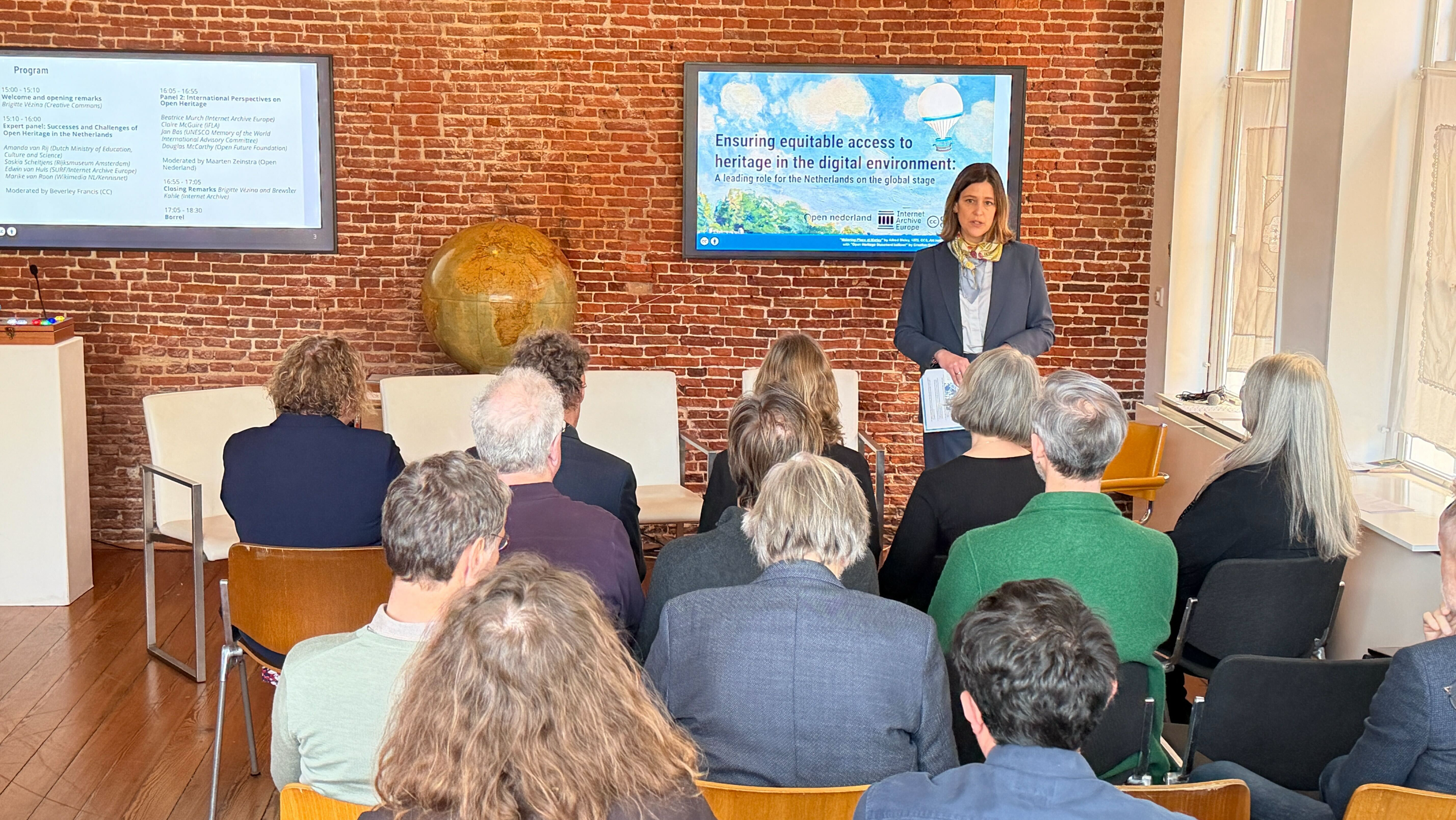
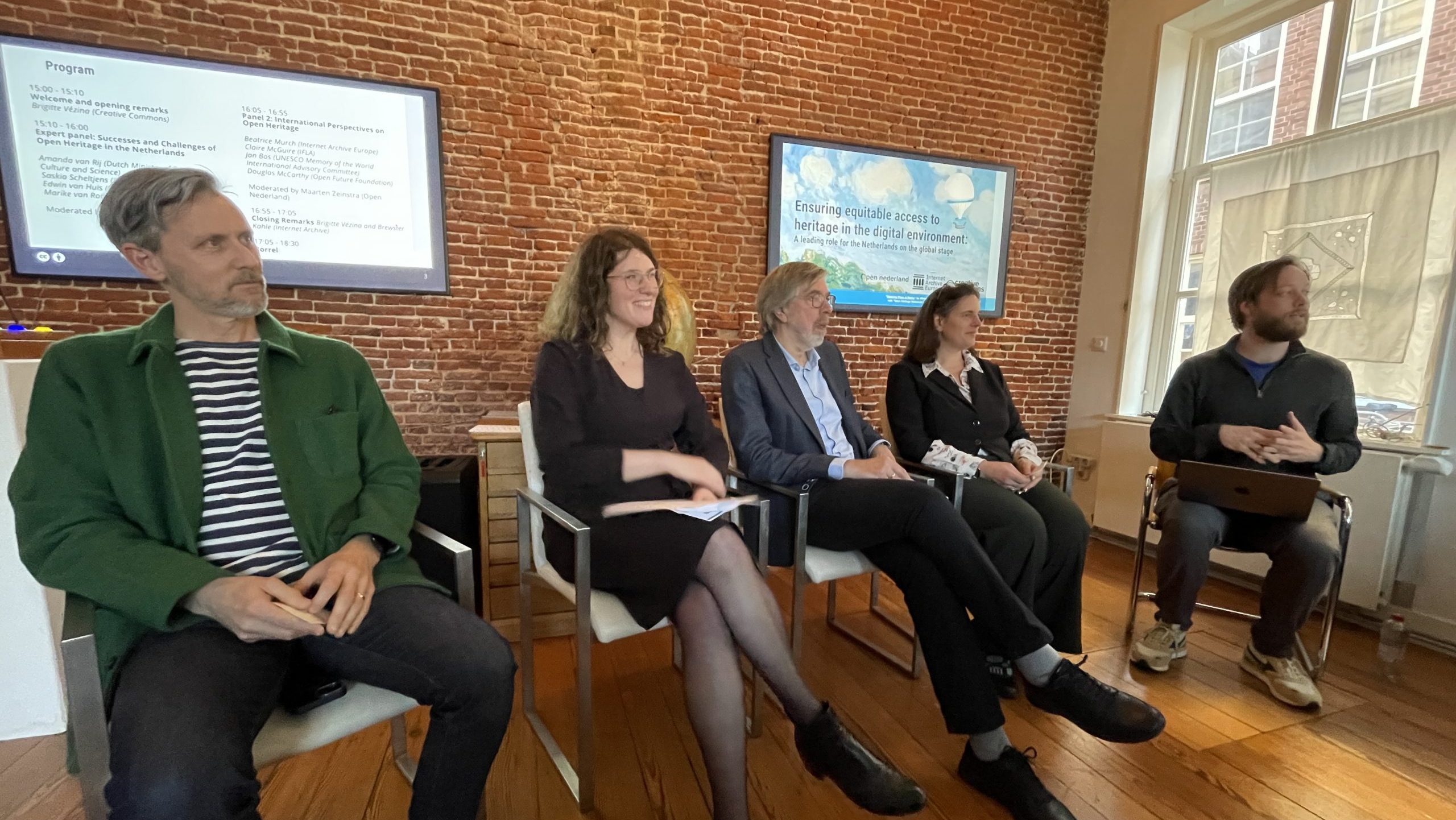
On Monday 2 March 2026, Creative Commons (CC) and Internet Archive Europe, together with the support of Open Nederland, hosted an event entitled “Ensuring equitable access to heritage in the digital environment: A leading role for the Netherlands on the global stage.” In this blog post, we offer a recap of the dynamic discussions and share why they matter for CC.
Goal of the Event
The goal of the event was to bring together key actors from the Dutch heritage sector to celebrate the Netherlands’ pioneering efforts in opening up access to heritage collections. For over two decades, Dutch cultural heritage institutions (CHIs) have set the standard for equitable access to heritage that fosters imagination, creativity and innovation while deftly navigating the pitfalls that threaten access. With open heritage gaining momentum as a way to help address global challenges, the event was an opportunity to elevate Dutch good practices to the international level.
Panel I: Successes and Challenges of Open Heritage in the Netherlands
The first expert panel, moderated by Beverley Francis (CC), highlighted various experiences with open heritage in the Dutch context.
Amanda van Rij (Coordinating Legal Policy Advisor, Heritage and Arts Directorate, Ministry of Education, Culture and Science) presented the National Strategy on Digital Heritage (in Dutch) whose aim is to make digital heritage more easily accessible to everyone. She also introduced the Netwerk Digitaal Erfgoed (Digital Heritage Network or NDE) Manifesto, a document developed with funding from the Ministry, which had already been signed by over 200 institutions across the country. She also emphasized that digitization influences how our heritage is being created, disseminated, and experienced, and pointed out that a careful balance is needed between respecting intellectual property on the one hand and the public interest of access to our collective memory on the other.
Saskia Scheltjens (Head Research Services Department and Chief Librarian Rijksmuseum Research Library, Rijksmuseum Amsterdam) gave an account of the museum’s open heritage journey, which started during a “perfect storm,” as she put it, starting with the first digitized collection in 2011 and the creation of Rijkstudio in 2012. Her key takeaway was that, defying expectations, opening access to the digital collection did not drive visitors away (the Rijks, with 2.3 million visitors a year, is the 23rd most visited museum in the world). Quite the opposite, in fact, for with free and unfettered online access (1.8 million people visit the website every year), people could build a relationship with the collection, which then became better known. 2023 saw the completion of the digitization of its entire collection of one million objects, while the last few years underlined the need for a more nuanced approach to access. For example, dealing with restitutions made her realize a collection has more cultural and societal stakeholders than was understood a decade or so ago. She concluded by noting that making information and data available online aligned with the institution’s mission, in accordance with FAIR principles, and that this requires investing in quality, structure, and coherence to ensure a successful digital transformation and to uphold the public values of a fair knowledge ecosystem. She parted on inspiring words: “Innovation requires infrastructure.”
Edwin van Huis (Member of the Supervisory Board of SURF and of the Internet Archive Europe Advisory Board) spoke about his experience working with digital heritage at the Rijksmuseum Amsterdam, Netherlands Institute for Sound and Vision, and Naturalis Biodiversity Center (today, the latter two are Open Heritage Statement signatories). He said that the Netherlands had always been at the forefront of digital openness, especially open science and gave the example of DiSSCo, a Dutch-led initiative bringing 1.5 billion specimens, 5,000 scientists, 400+ institutions and 23 countries into 1 European collection. As the first Chair of the Netwerk Digitaal Erfgoed, he called for bringing the concept to the European level for greater impact.
Marike van Roon (Member of the Wikimedia Nederland Board) talked about Wikimedia projects and the fundamental values of openness, community and collaboration that underpin the widely successful free knowledge movement. She mentioned the many partners from the heritage sector that help make heritage more accessible on Wikipedia and Wikimedia Commons. Wikimedia projects, being grassroots initiatives, tend to work from the bottom up, leveraging the experience and expertise of volunteers who are willing to contribute to open heritage.
Panel II: International Perspectives on Open Heritage
The second expert panel, moderated by Maarten Zeinstra (Chair, Open Nederland), zoomed out from the national context to explore existing international initiatives and future opportunities.
Beatrice Murch (Program Manager at Internet Archive Europe) presented the Our Future Memory campaign, supported by the Internet Archive Europe and which aims to ensure the basic rights of memory institutions are respected in the digital world. She highlighted the alignment and complementarity between the campaign and the Open Heritage Statement, mapping how the rights outlined in the campaign are reflected in the language of the Statement. With more than 80 institutions worldwide already signatories, she called on more institutions across Europe to add their voice.
Claire McGuire (Policy and Advocacy Manager, International Federation of Library Associations & Institutions (IFLA)) shared insights from her experience as a member of the Open Heritage Coalition’s Statement Workspace (the Statement’s drafting committee). She explained that the Statement addressed issues well beyond copyright to tackle barriers to equitable and meaningful access to heritage, within the wider context of access to information. She recalled that having a global shared framework could be very useful and said that the Statement had a home at UNESCO, since international policy routinely influenced national and institutional policies. Given the very fragmented landscape of open heritage and patterns of regression and backsliding due to the uncertainties brought about by artificial intelligence, the need for global harmonization and cross-border collaboration is all the greater in order to establish a supportive environment for openness. She was convinced that the Open Heritage Statement would make a difference.
Jan Bos (Chair, UNESCO Memory of the World International Advisory Committee) provided a useful overview of the Memory of the World Program, initiated at UNESCO in 1992 to focus on the protection of documentary heritage, as well as of the 2015 Recommendation concerning the Preservation of, and Access to, Documentary Heritage Including in Digital Form. He drew several parallels between the Recommendation and the Open Heritage Statement, starting with the basic principles that form the bedrock of both instruments, including public domain access and open licensing. But while the 2015 Recommendation only deals with documentary heritage, the Statement includes all forms of heritage, and constitutes, therefore, a very valuable complement.
Douglas McCarthy (Senior Open Content Specialist, Open Future Foundation), the architect, together with Dr. Andrea Wallace, of the influential OpenGLAM survey, said that the Open Heritage Statement very clearly expressed the “why” behind the need to ensure access to heritage. He said that online heritage collections are the currency of relevance, engagement and education with global audiences, with a very large majority of people never visiting physical institutions. He acknowledged the positive growth curve in access to heritage online, thanks in part to the greater legal clarity brought about by Article 14 of the 2019 Directive on Copyright in the Digital Single Market in Europe, but reminded the audience that policies and practices were extremely fragmented and confusing because of weak or nonexistent compliance regimes. He shared that about 1700 CHIs around the world had released some data openly,corresponding to roughly 100 million objects, but gave examples of prominent Dutch institutions still erecting barriers to public domain heritage by perpetuating outdated business models. In his view, driving change comes down to individuals with the leadership and vision to experiment.
Closing remarks
Brigitte Vézina and Brewster Kahle (Digital Librarian, Internet Archive) offered concluding remarks to a rich conversation. Together, they reiterated how the Netherlands is poised to help set global standards for access and use of heritage and has a unique opportunity to leave a mark on the international law stage to enable access to heritage for education, to fight climate change, promote access for people with disabilities, and encourage creativity in all its forms.
More about the Open Heritage Statement
The Open Heritage Statement is a global call to action led by Creative Commons and the Open Heritage Coalition advocating for equitable access to public domain heritage in the digital environment and calling on stakeholders to remove unfair, unnecessary barriers to enable everyone to enjoy their fundamental right to participate in cultural life and solve the world’s biggest problems. It aims to stimulate a global conversation about the need to establish international standards for open heritage under the aegis of UNESCO.
What this means for CC
This event marked an important milestone in the advocacy and movement-building efforts of the Open Heritage Coalition, building on years of community work supported by CC, including the development of UNESCO’s 2019 Recommendation on Open Educational Resources and 2021 Recommendation on Open Science. Both rely on CC licenses and public domain tools to make knowledge open.
As an official NGO partner to UNESCO (consultative status), CC works towards UNESCO’s vision where education, culture, and science are equitably shared, based on the shared belief that openness can benefit everyone, everywhere.
Creative Commons provides critical infrastructure for open sharing, but the values behind our work matter more than the legal and technical details. The Open Heritage Statement is rooted in those values, eloquently describing why equitable access to heritage matters, and then laying out a set of principles and policy actions that put those values into practice. The Statement provides us with a compass in this effort; one shared across countries and communities.
AI’s Infrastructure Era: Reflections from the AI Impact Summit in Delhi
Last month, we published a preview of what we intended to bring to the AI Impact Summit in Delhi: a focus on data governance, shared infrastructure, and democratic approaches to AI that genuinely advance the public interest rather than replicate existing power imbalances. That piece outlined our core interventions and the principles that have guided our thinking as we grapple with how to ensure openness, agency, and equity in the age of AI.
Since then, the Summit—a major global gathering of policymakers, technologists, civil society leaders, and researchers—unfolded against the backdrop of widespread calls for cooperative frameworks and measurable outcomes. For an excellent summary of the highs and lows of the Summit, take a look at this article by CC Board Member Jeni Tennison.
From CC’s perspective, what became clear in Delhi is that AI governance is shifting. The conversation is moving beyond high-level principles and into harder, more structural questions about infrastructure, stewardship, and power.
Photo by Rebecca Ross/Creative Commons, 2026, CC BY 4.0.
Data as a Leverage Point
Concerns about data capture and extraction abounded at the Summit. But alongside those concerns, a persistent theme emerged: data scarcity.
Participants repeatedly pointed to the lack of high-quality, localized, representative datasets as a fundamental constraint on public interest AI. The call for “really good data” came from startups, researchers, governments, and civil society actors alike—many working to build contextually grounded systems. Without accessible datasets, cultural representation is limited, competition falters, open-source development slows, and meaningful innovation remains concentrated in the hands of those with the most resources.
The gaps are especially pronounced across Global South languages and cultural contexts. Researchers are working to supplement large models with local norms and knowledge to address bias and misrepresentation. This is particularly urgent in sectors such as health, agriculture, climate, and development, where high-quality open datasets could unlock substantial public benefit.
There is a real tension here. High-quality open data is required to power public interest AI. At the same time, without guardrails, open data can be exposed to extraction and misuse. Communities are often presented with a false choice: open their data and risk exploitation, or close their data and risk exclusion from shaping AI systems that affect them. Addressing this tension is essential if governance frameworks are to support both individual agency and shared stewardship. In essence, we need to:
Fill existing gaps in shared governance infrastructure through collaborative frameworks and development of globally accessible tools that balance the tension between agency and access;
Uphold an understanding of data governance as something that is deeply participatory and democratic, and an absolute necessity for any AI system that becomes part of the public infrastructure, whether privately held or not;
Rebalance the power inequities in the current landscape overall, with our focus being on the data layer.
We believe that the path forward is not enclosure. It is stewardship. Governance mechanisms, interoperability standards, and access frameworks will determine who participates in the AI ecosystem and who does not. If we want AI systems that reflect diverse knowledge and lived realities, we must build the infrastructure that makes responsible openness durable.
Openness as a Method for Collaboration
At the Summit, openness was not framed as a philosophical preference. It was framed as a structural necessity and a baseline condition for equity, competition, collaboration, and democratic accountability.
But the mental models we use to think about open versus closed must evolve. Openness cannot stop at model weights. It must extend across code, data, infrastructure, tooling, standards, and usability. And, crucially, openness and guardrails are not opposites. Responsible governance is not in tension with open systems; it is what makes them sustainable.
In this sense, openness is no longer the ceiling of ambition. It is the floor.
The Implementation Gap
Despite widespread agreement on concentration risks, data bottlenecks, and the speed of AI development, there was palpable exhaustion with principles that lack implementation pathways. Participants pointed to attempts like the Hiroshima AI Process and statements from past Summits as being great in theory but missing in practice. What’s missing are durable intermediaries capable of stewarding shared resources and translating shared values into operational systems.
This is where the conversation becomes especially consequential for Creative Commons.
For more than two decades, CC has built legal and social interoperability at global scale. We have designed data governance frameworks that allow sharing of knowledge to function across jurisdictions and sectors. We have stewarded a commons model that balances openness with structure, enabling participation and mutual benefit through principles like attribution.
While debates about the limits of copyright were not central to most discussions in Delhi, there was significant interest in expanding high-quality open data, strengthening digital public infrastructure, and supporting community-led AI development—all areas deeply aligned with our expertise.
AI governance must move from principles to infrastructure. Shared, open digital infrastructure that works across borders is what Creative Commons is known for building. We believe that building the next generation of infrastructure for sharing—which would support the data layer of public interest AI—is not a departure from our mission. It is a timely extension of it and builds on the groundwork we have been laying for the past few years.
An infrastructure like this could include identifying high-impact open dataset initiatives in sectors such as health, agriculture, climate, and education to be opened up and prepared for machine reuse. It would require developing safe and trusted data-sharing models, with nuanced approaches depending on what data are being shared. This isn’t just about legal tools absent the context in which they are used; it is about comprehensive data governance mechanisms that balance openness with accountability and ensure interoperability across jurisdictions.
Collaborative Construction
As we’ve talked about before, a central challenge in AI governance is avoiding false choices. Overly restrictive guardrails risk enclosing the commons, limiting access to knowledge, and stifling innovation and scientific discovery. Yet the absence of guardrails undermines trust, enables exploitation, and erodes the foundations of openness itself. Creative Commons operates in this critical middle space.
Our interventions at the Summit focused on advancing governance frameworks that protect human agency, cultural context, and trust in information while preserving openness, access, and reuse. An AI ecosystem that serves the public interest must be standardized where possible and contextual where required, especially across diverse linguistic, cultural, and regional settings.
If the Summit made one thing evident, it is that there is readiness for partnership. Policymakers, funders, technologists, and civil society leaders are looking for institutions capable of translating shared values into durable systems.
If We Do Not Intervene
It is worth being explicit about the alternative trajectory.
If sharing of data is only driven by commercial markets and not the public interest, and if data infrastructure consolidates in the hands of a few actors, “sovereignty” risks becoming a commercial product rather than a public capacity. Cultural representation will become extractive rather than participatory. Open models may technically exist, but without access to high-quality datasets, they will struggle to compete. The language of openness could persist while the data infrastructure beneath it quietly closes. What is the value of open weights and open code when the very essence of our cultures and languages isn’t carefully and deliberately shared, through robust open datasets?
The infrastructure phase of AI governance has begun. Creative Commons intends to help build what comes next—in partnership with those who share a commitment to an AI ecosystem that is open, inclusive, and grounded in the public interest.
A huge thank you to our partners, event organizers, and co-panelists who helped to shape a meaningful engagement for CC during the Summit. We are particularly grateful for the thoughtful welcome provided by CivicDataLab, who ensured balanced dialogue and representation between those attending from elsewhere and those actively engaged on the ground in India. If we chatted during the Summit, we look forward to ongoing discussions. If we didn’t have a chance to connect, our doors are always open—send us a note!
CC Licenses, Data Governance, and the African Context: Conversations and Perspectives
Over the past year, we’ve been engaged in a series of conversations with a small group of researchers specializing in IP, AI policy, and data governance about what CC licensing means—and does—in African contexts today. These discussions began informally and continued at the AI Summit in Rwanda and later through presentations and discussions on the NOODL license, Mozilla Data Collective, the ESETHU License & Framework, and NaijaVoices.
What started as an organic exchange in various spaces has revealed something larger: a strong appetite to move these conversations into the open. At stake are not only questions about CC licenses but deeper issues of data sovereignty, equity, governance, and power in global knowledge systems. This blog post summarizes the themes emerging from those discussions and asks a broader question: how must “open” evolve to remain just, relevant, and community-centered?
A Shift
CC licenses were designed to reduce friction in sharing knowledge. For many years, CC’s focus has been on legality, access, and reuse. By all accounts, we’ve been successful in meeting these goals and objectives. But in today’s digital and AI-driven landscape—particularly in the Global South—that framing is no longer sufficient.
Across the discussions, participants raised concerns that CC licenses, especially CC BY and CC0, are sometimes (inadvertently) enabling extractive practices. African language datasets, cultural knowledge, and community-generated data are increasingly being reused in ways that benefit global institutions and corporations, while the originating communities see little agency, recognition, or return. This governance and equity issue rightly challenges some long-held assumptions about openness. When data producers are required to share their data with a specific permissive license, it introduces a potential conflict between the requirement to share and whether that specific data should be shared at all.
Key Challenges Identified
Colleagues highlighted the following challenges and concerns that are arising in their context and within their communities:
A perception gap around extractive use
CC licenses are often viewed as neutral tools, but in practice they can amplify existing power imbalances (as we know, infrastructure is not neutral!). For example, marginalized language and data communities may lack the leverage to negotiate how open resources are reused. Yes, open data can lead to communities having better access to information about where they live like air and water quality, but that same data can be used by large corporate entities to make decisions on where, for example, to build a new factory.
Equity blind spots in traditional openness
In the context of the CC licenses, openness has historically been framed as a legal condition answering the question: can something be reused, modified, or shared? But we know that openness is much more than a set of legal tools; it is a set of values, a way of belonging, a wish for a better future. As large AI models continue to train on the billions of works and datasets made available via the CC licenses in the commons without giving back and while hoarding power, communities are responding by asking for openness that also accounts for agency, consent, reciprocity, and governance.
Data Governance and the Limits of One-Size-Fits-All Licensing
One of the most challenging threads in these discussions centers on data governance, particularly for African languages and community-curated datasets.
Several tensions stand out:
Funders often mandate CC BY or CC0 for publicly funded research, leaving little room for community-specific governance models or the potential for a powerful interplay between CC licenses and community-created fit-for-purpose open licenses like NOODL.
CC licenses, by design, cannot prevent extractive reuse once content is made open.
Local languages, cultural data, and community knowledge are not interchangeable with generic datasets—but licensing frameworks often treat them as such.
Openness is not binary, and context matters. Standardization matters and can amplify efforts to make knowledge accessible but only works when paired with governance. CC has worked with major funders of research to harmonize CC BY or CC0 across funders, but this work is built around the assumption that the license terms are adequate for all data and data distribution contexts. When there is no governance, what is the cost of harmonization? This community of researchers are asking whether CC can use its influence not only to promote CC licenses and legal tools but also to validate and support alternative, community-driven approaches where CC licenses fall short.
Open resources do not exist outside systems of power. Historically, openness has favored those with infrastructure, capital, and technical capacity—often institutions in the Global North. Simply making something open does not make it equitable, accessible, or just.
If the idealized version of openness has not delivered on its promise, is it time for CC to redefine it? What role can CC play in holding space, convening dissent, and legitimizing plural approaches to openness?
Where Do We Go From Here?
These conversations are not about arriving at neat conclusions. In fact, the goal is the opposite: to resist premature certainty and instead listen, reflect, and adapt.
For us as a community, this may mean:
Being clearer about where CC licenses work and, just as importantly, where they don’t
Acknowledging the limits of license-centric thinking
Using the CC platform to amplify community-led definitions of openness
Accepting that “the new open” may be more complex, more contextual, and intentionally less frictionless
The future of open knowledge depends on trust, dialogue, and shared governance.
A special thank you to Vukosi Marivate, University of Pretoria; Chijioke Okorie, Data Science Law Lab, University of Pretoria; and Melissa Omino, CIPIT, Strathmore University; as well as members of the CC board of directors for convening these dialogues and sharing their perspectives with us at Creative Commons.
We want to know: Does this resonate with you? What are you seeing within your own context and community? We plan on continuing this dialogue throughout 2026 as we celebrate our 25th anniversary. What better time to reflect on our past contributions and challenge our thinking about the future.
Building What Comes Next: Community Engagement at Creative Commons
Over the past year, Creative Commons communities around the world have continued to show what’s possible when people come together around shared values of openness, collaboration, and care. From regional gatherings and thematic conversations to hands-on creative work, CC’s communities have remained active as the digital landscape grows more complex.
In 2025 we were focused on gathering feedback on our ongoing preference signals explorations, creating and gathering feedback on new governance frameworks for future implementation, streamlining community communication channels, and transitioning to an open source chat platform for community collaboration.
As we look ahead, we want to share how we’re thinking about deepening community engagement, strengthening connections across the network, and creating more meaningful ways for everyone to contribute to CC’s work in partnership with one another.
One theme we’ve heard consistently is that people want more clarity about how to get involved with CC and more connection once they do. In response, we’re beginning work on a set of new engagement opportunities that enable community members with varying degrees of expertise and diverse skillsets to participate in our work. We will work to support community members in getting involved, learning more, and leveling up their experience and expertise along the way, from participating in conversations to leading community initiatives.
We are excited that our new unifiedCommunity Intake Form will allow for more collaboration across interest areas and lower the barrier to entry for participating in CC’s work. Alongside this, we’ll be working to strengthen our onboarding process with more information about CC’s work as well as more opportunities to plug in and connect with longstanding efforts and leaders in the Open Movement.
Strengthening the Network
CC’s community doesn’t live in one place, and we want our engagement approach to reflect that. Over the coming months, we’ll be:
Creating best practices for chapters, a model for supporting community-driven working groups, and a workflow for volunteer translations
Researching and reaching out to adjacent movements and open communities to create more intentional bridges across the broader open ecosystem
Facilitating peer sharing and documenting best practices and effective strategies across our communities through regular sharing and more frequent communication
Supporting regional and topical groupings to share knowledge directly with one another, including experimenting with topic-based show-and-tells in place of more formal meetings
The goal is simple: reduce friction, encourage peer learning, and help communities align and collaborate on their own terms.
Supporting Communities to Tell Their Stories
As Creative Commons approaches its 25th anniversary, storytelling—especially community-led storytelling—will be central.
One part of these efforts is publishing a 25th anniversary zine which will commemorate our community’s contributions, achievements and memories over the past quarter of a century. We plan to launch the zine full of community-created work at Wikimania as part of our anniversary activities. The call for zine submissions is open until March 31, 2026. Submit your work here!
For our anniversary, we are also developing training and templates to help communities document and share their own stories through writing, visuals, or other creative formats. Our aim is not to centralize narratives but to create tools and support that make it easier for communities to speak in their own voices.
Listening, Learning, and Building Capacity
Looking ahead, we’ll continue to prioritize listening as a core part of our work. This includes conducting an annual community survey, which helps us understand what’s working, what’s missing, and where we should focus our energy.
We’re also beginning work on guidance for chapter activities, informed by what chapters are already doing well. By supporting regional and topical groups to share practices and lessons learned, we hope to strengthen the network as a whole, not by prescribing solutions but by amplifying what’s already effective.
An Ongoing Invitation
This work is iterative by design. Not everything is fully formed, and that’s intentional. Community engagement at Creative Commons isn’t about rolling out a finished product; it’s about building relationships, creating space for experimentation, and learning together.
We’re grateful to everyone who continues to show up, share knowledge, ask hard questions, and imagine what the commons can be next. More updates and more invitations to participate are coming soon.
Stay connected, and thank you for being part of this work. We’ll also be launching a new series of community office hours.