Meet the CC Summit Presenter: Alissa Bigelow
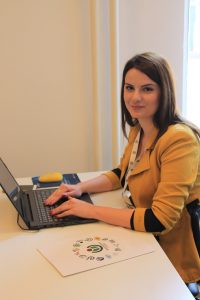
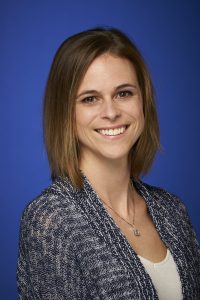 We’re back with another ‘Meet the CC Summit Presenter‘ Q&A. Next up, Alissa Bigelow, a Program Facilitator for the Ontario Extend program. In her role as a Program Facilitator, she creates engaging Communities of Practice about the Ontario Extend program and the “Empowered Educator” micro-credential to connect post-secondary faculty across the province of Ontario. These sessions focus on building community while increasing digital fluency skills, and support faculty with the selection and evaluation of emerging technologies and new pedagogical practices in online and flexible learning environments. She is also an Instructional Design Technologist in the Centre for Teaching & Learning at Georgian College. In her role as an Instructional Design Technologist, she develops, implements and evaluates several software and educational technology pilot initiatives. She is passionate about researching new and emerging technologies that will improve the student learning experience. She has extensive background and experience with the Articulate 360 Suite, H5P and Pressbooks technologies, and a strong foundational knowledge of the principles of Universal Design for Learning & Open Pedagogy.
Based in?: Barrie, Ontario – Canada
Summit Session: Building digital fluency skills and communities of practices through open access with the Ontario Extend program.
How did you get involved with Creative Commons?
I have been an avid follower of Creative Commons for several years. As someone who is passionate about Open Educational practices and resources, Creative Commons has been an incredible source of information.
What was your favorite CC Global Summit?
Toronto, 2016
Why are you an advocate for Open?
I believe education is a right that should be available and accessible to everyone. My elementary school motto was “Knowledge is Power!” and I feel very strongly that this is true. Everyone should have access to learn and make the world a better place. There are so many injustices in the world, education should not be one of them.
“Everyone should have access to learn and make the world a better place. There are so many injustices in the world, education should not be one of them.”
What is your proudest achievement?
My four incredible children! (17, 16, 13, 12)
What is the best part of what you do? What is the most difficult part of what you do?
The best part of what I do is interact and educate people about Open Education. I find knowledge about OE, OER and OP varies greatly, and there is a need to advocate for growing these initiatives. Working with closed minded folks who are stuck in their ways is definitely a challenge.
What is your favorite GIF?
via GIPHY
What tool/platform/app are you loving right now?
I love MS Teams! This app has enabled me to create community with our remote faculty throughout the pandemic. It’s great for asynchronous and synchronous interaction and group work. The integrations with other Microsoft products is incredible and it is a very powerful tool.
What’s one new trend that you think the CC community should look out for?
Open technologies to facilitate HyFlex delivery. Right now, the technologies we are using for this delivery method are quite expensive and proprietary. It would be great to see some new open source technologies that can facilitate a more broad application worldwide.
What is the biggest setback you have experienced? How did you overcome it?
I was told I’d never get into University to become a teacher with the grades I had in high school (79% average overall). Instead, I pursued a career in Computer Networking & Engineering, which led to software support in education, which led to teaching post-secondary computer networking courses, which led to my current Instructional Design Technologist position. I have not only overcome that set back, I have crushed it!
If you could only leave people with one message from your summit presentation, what would it be?
Find your comfort zone and push the boundaries. Experiment!
What was the best career advice you ever received?
The best career advice I’ve received has been in the form of support from my colleagues. I can’t narrow down one that particularly stuck out for me, but others’ confidence in my skills and abilities has been key to my successes.
What would you like to say to Creative Commons on our 20th anniversary?
Wow! Congratulations & cheers to 20+ more!
What does ‘Better Sharing, Brighter Future’ mean to you?
Exactly that. Let’s share to make a brighter future for everyone.
Whether you’re an activist, advocate, librarian, educator, lawyer, creator, or technologist, the 2021 CC Global Summit has got you covered. Join us September 20-24 for an unforgettable experience! Register here >>
Meet CC Summit Presenter: Dr. Kavita Batra
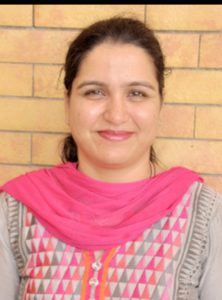
Photo courtesy of Dr. Kavita Batra
The countdown to the 2021 CC Global Summit continues! Next up in our ‘Meet the CC Summit Presenter’ series, we have Dr. Kavita Batra. An assistant Professor at Manohar Memorial College of Education, Fatehabad, Haryana India, Dr. Kavita has worked as teacher educator for the last fourteen years. She is passionate about the integration of technology in education and equipping future teachers with the knowledge of educational tools so that they can serve society in a better way.
Based in?: Fatehabad, India
Summit Session: Improving Assessment through Bloom’s Taxonomy and Rubrics
How did you get involved with Creative Commons?
Through the creation of OER under the UNESCO’s open education for better world online mentoring program
How many times have you been to CC Global Summit?
It is my very first time.
Why are you an advocate for Open?
Sharing is Caring!
What is your proudest achievement?
Releasing my first MOOC on Improving Assessment through Bloom’s Taxonomy and Rubrics.
What is the best part of what you do? What is the most difficult part of what you do?
I like teaching with the story telling method, and it is the best part of my work, but sometimes I find it a little bit difficult to animate my stories.
What is your favorite GIF?
via GIFER
What tool/platform/app are you loving right now?
I love the Padlet because my students enjoy collaborative learning.
What is the biggest setback you have experienced? How did you overcome it?
When people at administrative level don’t understand opinions on a progressive level, my positive mindset helps me a lot.
If you could only leave people with one message from your summit presentation, what would it be?
Accept and Love yourself, and keep on moving.
What was the best career advice you ever received?
I received my best career advice from my Father, “Listen to everyone, but do whatever your mind tells.”
What would you like to say to Creative Commons on our 20th anniversary?
Keep up the good work.
What does ‘Better Sharing, Brighter Future’ mean to you?
Sharing the wisdom, Radiating the Happiness…makes the world shine.
Whether you’re an activist, advocate, librarian, educator, lawyer, creator, or technologist, the 2021 CC Global Summit has got you covered. Join us September 20 – 24! Register here >>
Meet the CC Summit Presenter: Frederick Noronha
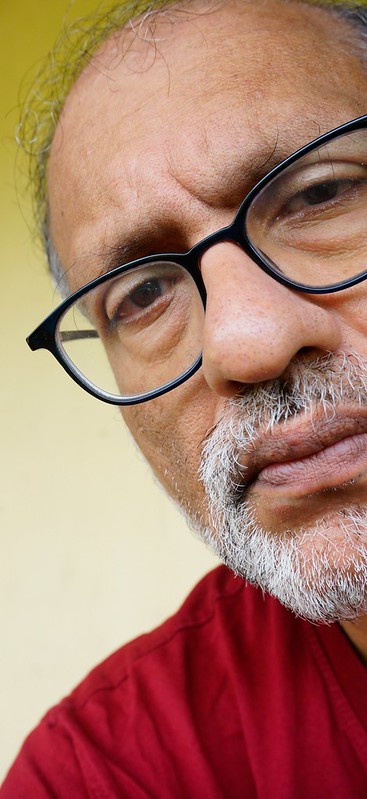
“fn” by fredericknoronha, CC BY-SA 2.0
We’re back with another ‘Meet the CC Summit Presenter’ Q&A — next up is Frederick Noronha. Frederick is a journalist, alternative book publisher, Wikipedia’s Editor of the Week in March 2020, Free Software supporter, shared 66+K photographs under Creative Commons licenses, has served on the jury of the FSF Award for the Advancement of Free Software. One of the early online networking media-persons in India, since circa 1995. Frederick’s claim to fame — a two-letter Twitter handle @fn.
Based in?: Goa, India
Summit Session: Code, Words and Ideas: Contrasting Free Software, the Wikipedia and CC
How did you get involved with Creative Commons?
By reading about it online… was already immersed in supporting Free Software, GNU, and the concept of sharable code/information/etc. As a journalist who believes that information needs to have a (positive) purpose, this comes naturally to me.
How many times have you been to CC Global Summit?
Once before, 2019, Lisbon.
In the future, what is something you would like to see at the CC Summit?
More participation by more people, perhaps digitally, so as not to widen CC’s carbon footprint, and yet also involve more in sharing such an idea with much potential. More networks across the globe at the regional and even sub-regional level.
Why are you an advocate for Open?
People are dying due to a lack of knowledge (literally). The least we can do is to share it, liberally…. We need to go beyond the concepts that have grown out of ideas from the Medieval and colonial times, more suited to meet the interests of corporations and those who control them.
“We need a more globalized perspective to take the CC ideal forward. Let’s look to traditions and thought systems from more remote parts of the globe. A stronger case to challenge the entire logic of copyright is seriously needed.”
What is your proudest achievement?
Building bridges between the Wikipedia, Free Software, Community Radio, Creative Commons, Open Access, alternative publishing, developmental communications, in my part of the globe (Goa, India… and a little beyond). Just a series of small achievements. Maybe also staying committed to the idea of sharing knowledge and information for the last 25 years?
What is the best part of what you do? What is the most difficult part of what you do?
Being able to use IT and the Internet to build alternative spaces for communication, including at the local level, thus making real theories of “development communication”, alternative journalism, etc. Finding out that the day has only 25 hours!
What tool/platform/app are you loving right now?
GNU/Linux, which I would support even if it was a worse option, purely on ideological grounds. WhatsApp: politically very incorrect for sure, but a useful tool for building very focused and often very useful micro networks in this corner of the globe. Email and Mailman, a fantastic tool for building wider networks, despite its limitations compared to Instant Messangers of today, and being used since 1995. Tonnes of Free Software — LyX to produce books, jstar to write articles in, GIMP for editing images, Inkscape for creating posters, etc.
What’s one new trend that you think the CC community should look out for?
We need a more globalized perspective to take the CC ideal forward. Let’s look to traditions and thought systems from more remote parts of the globe. A stronger case to challenge the entire logic of copyright is seriously needed.
What is the biggest setback you have experienced? How did you overcome it?
See life more in terms of learning experiences rather than “setbacks”. But the incorporation of some parts of the “free knowledge” movements, and sustained attacks on their leadership (from Assange, to Stallman), the use of “predatory journal” logic to systematically hit out at Open Access, and the stranglehold attained by proprietorial software over Open Source has been a painful reality for someone watching these “movements” from close quarters for long.
If you could only leave people with one message from your summit presentation, what would it be?
This is an idea whose time has come; work harder to take it forward. Find the hack(s) to attain that.
What was the best career advice you ever received? What was the worst career advice you ever received?
BEST: Follow your heart; do what you love. WORST: Don’t take part in students’ protests, that’s only for the rich kids.
What would you like to say to Creative Commons on our 20th anniversary?
Great going. Work to expand. Create more regional affiliates. Having a single institutional member/organization in a huge country doesn’t make sense. Find new ways to make the idea more catchy and easy-to-spread. Network more closely with other parallel movements that work to make knowledge/code/information free. Concepts could be made simpler to appeal to many more. We are still touching only a very tiny part of our potential… Yours is a powerful idea (with scope for improvement, of course).
Haven’t had a chance to register for the 2021 Global Summit yet? Register here >>
Meet the CC Summit Presenter: Gorana Gomirac
Our next feature in the Meet the CC Summit Presenter’ series is Gorana Gomirac, GLAM Manager at Wikimedia Serbia. Gorana was born in 1996 in Belgrade, Serbia, but because of her roots, she always says she comes from Lika. Because of her origins, Gorana realized the importance of preserving culture, and the importance of its digitalization and proud presentation to the world. The GLAM (Galleries, Libraries, Archives and Museums) program is an important part of the Wikimedia movement, and an indispensable part of it is free content, as well as CC licenses, which we encounter every day. Through its GLAM program, a program of cooperation with cultural institutions, over 11 thousand files on Wikimedia Commons have been released. Cultural institutions have been given the opportunity to present the content they possess without fear that their copyright will be endangered, and at the same time the freedom to present that content to the whole world. In this way, their visibility and their possibilities in preserving the digital cultural heritage have been raised. Her wish is to work tirelessly on the digitization of cultural heritage. She is passionate about preserving culture, traditions and customs.
During her session, she will present the ways in which Wikipedia Serbia cooperates with cultural institutions, how they have established good relations, how they have educated them about the importance of CC licenses, but also their perspective before and after using CC licenses on the Internet. She hopes to see you in as many numbers as possible at her session!
Based in?: Belgrade, Serbia
Summit Session: CC as an indispensable part of the GLAM
How did you get involved with Creative Commons?
As part of Wikimedia Serbia.
How many times have you been to CC Global Summit?
This is my first time!
In the future, what is something you would like to see at the CC Summit?
The very concept of this year’s Summit is great. In the future, I would like to hear a lot of new people who will share their experiences with CC licenses, but also experienced licensees who will share their knowledge with newcomers.
Why are you an advocate for Open?
Because without Open knowledge, humanity would not be the same. Let’s share knowledge, experiences, contents, so that the whole world can get involved.
“Without Open knowledge, humanity would not be the same. Let’s share knowledge, experiences, contents, so that the whole world can get involved.“
What is your proudest achievement?
Educating employees in cultural institutions about the importance of free content, their willingness to participate in our projects, and to continue sharing content with the world when our activities are over. Pointing out how important it is to fulfill the mission of open knowledge, to present our activities and achievements with full enthusiasm, and thus motivate people to get involved.
What is the best part of what you do? What is the most difficult part of what you do?
The best part of my work is when I present to the community what we have achieved, what we have digitized, and when I see how many things have been improved on Wiki projects thanks to cooperation within the GLAM program. When I see how the articles have been improved, how many new articles have been written, but also how many people want to get involved in the improvement process, when we present our mission and activities to them. While the most difficult part of my job is when we fail to reach certain people or cultural institutions, when they are completely closed-minded and do not give us the opportunity to point out the importance of our activities.
What is your favorite GIF?
What tool/platform/app are you loving right now?
https://outreachdashboard.wmflabs.org/ which makes life easier. 🙂
What’s one new trend that you think the CC community should look out for?
The readiness of cultural institutions to digitize their content because they have become aware of the importance of existence on the Internet due to the pandemic.
What is the biggest setback you have experienced? How did you overcome it?
Our biggest seatback was in March 2020, when the entire country (Serbia) closed. Curfew has been introduced, all institutions, except health, police, shops and pharmacies, have been closed. We had to quickly adapt to remote mode, completely online activities, and find a way to make it interesting to the community. Then, we had to adapt to the remote way of maintaining our projects. After a year and a half, we can say that good communication and understanding are the key to solving the problem. We listened well to what the community wants, what are the problems of cultural institutions with which we cooperate, how our Wikipedian in residence can perform its activities, what we can do in a situation if COVID-19 is infected… The key was good communication, readiness for adjustment, the desire to continue the activity, and that giving up was never an option for us.
If you could only leave people with one message from your summit presentation, what would it be?
Attend and you will hear about adaptation and survival skills! 🙂
What was the best career advice you ever received? What was the worst career advice you ever received?
The best was – love your job and you won’t have to work a single day, and the worst – it’s just a job, don’t bother.
What would you like to say to Creative Commons on our 20th anniversary?
Thank you for doing activities and fighting for free content around the world. 20 years of your existence have made huge changes!
What does ‘Better Sharing, Brighter Future’ mean to you?
It gives hope and confidence that over time, the content will be shared even more, and that cultural, religious, and prejudices of every other type will be broken.
Join us from wherever you are for the 2021 CC Global Summit, which takes place 20-24 September! Register here >>
Meet CC Summit Presenter: Subha Das Mollick
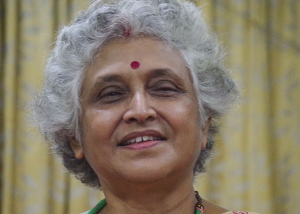
Photo courtesy of Subha Das Mollick
Next up in our ‘Meet the CC Summit Presenter’ series, Subha Das Mollick tells us what she’s looking forward to at the summit. Subha, a media teacher and documentary filmmaker, has explored various subjects in her films. A post graduate in Physics, she switched over to media after more than ten years of teaching Physics at the undergraduate level. She has been the head of the Film Studies and Mass Communication Deptt. at the St. Xavier’s College, Kolkata, and nurtured the twin departments at their stages of infancy. She has also been the head of the Media Science Department at iLEAD Institute. She has been the principal instructor for two online courses on the SWAYAM Platform. Presently, she is a visiting faculty at Maulana Abul Kalam Azad University of Technology, Viswa Bharati University and Aliah University. As the founder secretary of Bichitra Pathshala, she has been developing the pedagogy for effective use of moving images in teaching learning designs.
Her recent independent productions “Calcutta Sonata” and “Dwelling in Travelling” have been critically acclaimed in the festival circuit and bagged some prestigious awards. Her film “Promising Plastic Polymers” won the Bronze Beaver Award at the 9th National Science Film Festival organized by Vigyan Prasar, and also a special award at the Eco Art Contest organized by American Centre and SAFE. She is also an avid writer. Her recent publication is Schools of Kolkata: Weaving Magic in Education (Volumes I & II), Published by Sampark.
Based in?: Kolkata, India
Summit Session: THE MEDIA GAME: A media literacy project for school students
How many times have you been to CC Global Summit?
This will be my first time.
In the future, what is something you would like to see at the CC Summit?
I would like CC to facilitate the sharing of resources between people of the same profession.
Why are you an advocate for Open?
Unless knowledge is made open, the world will not be flat. It will not be a playground of equal opportunities.
“Open sharing will brighten everybody’s future. The giver will be gratified, the receiver will be grateful.
What is your proudest achievement?
When my students excel in their respective professions, I can say proudly, “Look, so-and-so has been my student”.
What is the best part of what you do? What is the most difficult part of what you do?
As far as filmmaking is concerned, the best part is scripting, and the most difficult part is executing the script.
What is the biggest setback you have experienced? How did you overcome it?
The biggest setback I faced was not getting international funding for a documentary film on the Indo-Bangladesh border after pitching twice at the international forum. It made me realize that my craft was not of international standard. Eventually, I made the film with my own funds, and I tried my best to improve my craft.
If you could only leave people with one message from your summit presentation, what would it be?
“Consume your media with more than a pinch of salt.”
What was the best career advice you ever received?
Best advice: “When you show a rough cut to your client, make it as finished as you can”.
What would you like to say to Creative Commons on our 20th anniversary?
Welcome to adulthood. Let us continue to grow together.
What does ‘Better Sharing, Brighter Future’ mean to you?
It means that open sharing will brighten everybody’s future. The giver will be gratified, the receiver will be grateful.
Secure your spot at the 2021 CC Global Summit taking place September 20-24! REGISTER HERE >>
Meet the CC Summit Presenter: Laura Santana
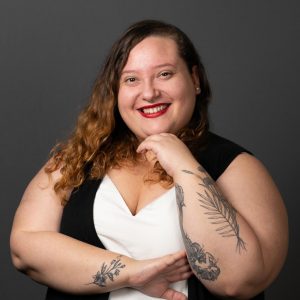
Photo courtesy of Laura Santana
Meet Laura Santana — joining us as presenter at this year’s 2021 CC Global Summit (September 20-24). Laura is a librarian from Latin America and holds a Master’s degree in Information Science from the University of São Paulo, Brazil. She is a researcher in the field of Information & Culture, and specialist in User Engagement and Customer Experience. She has been advising educational and governmental institutions across the Americas for 10 years, with international scientific publishers in the areas of Technology and Healthcare. Currently, she works with the British Medical Journal to implement education technologies, in particular with initiatives aimed at advancing scientific research on COVID-19. Laura is now supporting the UNESCO Institute for Lifelong Learning’s Library in literacy programs for emerging countries.
Based in?: São Paulo, Brazil
Summit Session: The role of digital repositories in shaping Open Education strategies in Latin America.
How many times have you been to CC Global Summit?
This is my second time attending the CC Global Summit. I was amazed by the network of people I met during my first attendance, and how my presentation about OER resonated with researchers from other parts of the world!
Why are you an advocate for Open?
I truly believe the path to equality is through Open. We need to guarantee access to data, information and knowledge to every citizen of the world.
“We can only achieve equality and social justice in the world by sharing resources, knowledge and experiences. It is together that Humanity will achieve its greatest potential!”
What is your proudest achievement?
Over the past 7 years, I have been directly involved in the medical education of over 40,000 healthcare professionals across Latin America. I’m proud of this achievement because through education, we can promote better patient care and make the world a healthier place.
What is the best part of what you do? What is the most difficult part of what you do?
Listening to people’s stories and diverse backgrounds brings me such an incredible perspective of the world. The most difficult part is accepting my desire to help people can only come to one extent, even though I wished I could do so much more.
What is your favorite GIF?
via GIPHY
What tool/platform/app are you loving right now?
I’m loving Figma and Jamboard because of its potential to drive collaboration and explore creativity, especially during times we can’t be collaborative in person.
What’s one new trend that you think the CC community should look out for?
Definitely how evidence-based information should be at the forefront of every decision-making, especially when it comes to policy development.
If you could only leave people with one message from your summit presentation, what would it be?
Embrace the Open. Collaboration is the key to achieve the development of not only the Latin American region, but the Global South as a whole.
What would you like to say to Creative Commons on our 20th anniversary?
It’s thanks to the Creative Commons initiative and team, information has been democratic over the past 20 years! Congratulations!
What does ‘Better Sharing, Brighter Future’ mean to you?
We can only achieve equality and social justice in the world by sharing resources, knowledge and experiences. It is together that Humanity will achieve its greatest potential!
Join us from wherever you are for the 2021 CC Global Summit, taking place 20-24 September! Register here >>
Want to know more about this year’s Summit presenters? Discover all the ‘Meet the CC Summit Presenter’ Q&As here>>
Meet CC Summit Presenter: Suzanne Wakim
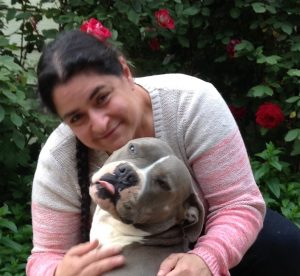
Photo courtesy of Suzanne Wakim
Are you joining us at the 2021 CC Global Summit (September 20-24)? There are only three weeks to go. Up next in our ‘Meet the CC Summit Presenter’ series, we’re excited to introduce you to Suzanne Wakim. Suzanne is Coordinator for Distance Education and Student Learning Outcomes at Butte Community College. She is also a biology instructor who has designed and developed over a dozen biology courses in multiple modalities for multiple institutions. She is a Course Facilitator for @ONE (Online Network of Educators); a Project Facilitator for the ASCCC OER Initiative; and a Certificate Facilitator for Creative Commons. She has created online educational resources for the Open Learning Initiative, OpenStax, Nature, Discovery Education, and co-authored the most adopted Biology textbook in LibreTexts. She conducts nationwide trainings on topics including Universal Design for Learning, Adaptable Course and Assessment Design, Open Pedagogy, Accessibility, and Online Course Design.
Based in?: Paradise, CA, USA
Summit Session: Strategies for Assessing and Adapting OER for Inclusion
How did you get involved with Creative Commons?
I don’t remember. My journey into the world of Open has been circuitous. But, I vividly remember my first time participating in the CC EDU meeting. I had never been in such a global space (with folks from almost all continents). That was when I knew I wanted to be “all in” with advocacy for OER.
How many times have you been to CC Global Summit?
Last year was my first, and I was lucky enough to get to volunteer too!
In the future, what is something you would like to see at the CC Summit?
Guided discussions and opportunities to brainstorm as a group. Loosely moderated because I do better with structure.
Why are you an advocate for Open?
Everyone deserves access to information – financial gatekeeping is wrong. Everyone is worthy of participating in the global commons – we are better together.
“We are all in this together, and we each have something valuable to bring to the table. When we collaborate, we will find ways to make the future better for everyone.”
What is your proudest achievement?
I recently began facilitating for the CC Certificate, and I am still giddy from being selected.
What is the best part of what you do? What is the most difficult part of what you do?
I help faculty build engaging and accessible online classes and open educational resources. That’s both the best part and the most difficult part!
What is your favorite GIF?
What tool/platform/app are you loving right now?
Mentimeter. It helps keep my presentations engaging and can help lighten heavy topics.
What’s one new trend that you think the CC community should look out for?
How can we (the creators of content) work together to improve our collective resources? There are many slightly different editions of some resources, and it would be great to have a place where the authors of different versions can collaborate on a master collection of versions. This isn’t so much a trend to look for, but one I want us to begin ?.
If you could only leave people with one message from your summit presentation, what would it be?
If we want students to feel that they belong in our class, they need to see themselves in our content and materials.
What was the best career advice you ever received? What was the worst career advice you ever received?
I was in a research PhD program and found that I prefer teaching to research. The best advice was a mentor who told me that I can teach at the Community College level with a Masters, and that the extra years of experience would outweigh the difference in degrees. That one discussion set me on a different path to where I am now – and I am forever grateful. The worst advice was that “real scientists do research”. That made my decision to go into teaching all that much easier.
What would you like to say to Creative Commons on our 20th anniversary?
Thank you for all the amazing work you do to advance the equitable sharing of information ?
What does ‘Better Sharing, Brighter Future’ mean to you?
We are all in this together, and we each have something valuable to bring to the table. When we collaborate, we will find ways to make the future better for everyone.
Haven’t had a chance to register for the 2021 Global Summit yet? Register here >>
Meet the CC Summit Presenters: Flor de Fuego and Naoto Hieda

Photo courtesy of Flor de Fuego and Naoto Hieda
The 2021 CC Global Summit (September 20-24) is fast approaching, only 3 more weeks to go. Up next in our ‘Meet the CC Summit Presenter’ series, we have a fantastic duo — Flor de Fuego and Naoto Hieda. Florencia Alonso’s art practice as Flor de Fuego investigates digital image and media related to live coding, animation, video and the Internet. She produced full-dome live coding projects at the planetariums in Buenos Aires and Bogota, and at Domo Lleno 2019 with Iris Saladino. She was part of Mutek Montreal with Amplify DAI. With Francisco Raposeiras, they form a duo “c0de p03try” exhibited at JSAmsterdam Nation Conference, Experimental Video Festival Pumpumyachkan (Peru), and the International Conference on Live Coding (Ireland). As part of CliC (Collective of Live Coders), she participated in + CODE in Buenos Aires, and other live coding events, and as a VJ. Alonso actively collaborates in the development of Hydra, software created by Olivia Jack, giving talks and workshops in Argentina. A professor at the Faculty of Fine Arts of the UNLP, she is currently doing her thesis in Plastic Arts, and is associate of the Chair of Photography and Digital Image at the Faculty of Fine Arts.
Naoto Hieda is a Japanese artist based in Cologne, Germany. They challenge the current paradigm of productive coding to speculate its new form, namely post-coding, through their neurodiverse perspective and live coding experiences. The duo co-founded Hydra community meetups at venues including NODE20 (Germany), and presented hybrid media installation GlitchMe at CODAME (US).
Based in?: La Plata, Argentina ; Cologne, Germany
Summit Session: Glitch Vacations
How did you get involved with Creative Commons?
We use CC licenses, and also Naoto presented at the CC global summit 2020.
How many times have you been to CC Global Summit?
Second time
What was your favorite CC Global Summit?
It’s gonna be this one ?
In the future, what is something you would like to see at the CC Summit?
Workshop sessions — to create something together!
What is the best part of what you do? What is the most difficult part of what you do?
The best part: we enjoy the process of working together (often funny).
The difficult part: we have to finish working and go to sleep.
What is your favorite GIF?
What tool/platform/app are you loving right now?
Hydra (live coding environment) – we use it a lot for creating visuals and for the upcoming performance.
If you could only leave people with one message from your summit presentation, what would it be?
“Glitch me”
What was the best career advice you ever received? What was the worst career advice you ever received?
Flor: Stop dividing discipline as if it’s a slice of pizza (best advice).
Flor: don’t wear a skirt with trousers (worst advice).
There are only 3 more weeks until the 2021 CC Global Summit, taking place virtually from September 20-24. Haven’t had a chance to register for the 2021 Global Summit yet? Register here >>
Open Minds Podcast: Matt Mullenweg of Automattic
Hi folks! We are back with a new episode of CC’s podcast, Open Minds … from Creative Commons!
On this episode, CC’s Director of Product, Anna Tumadóttir, sits down with Matt Mullenweg. Originally from Houston, Texas, Matt is the co-founder of the open-source blogging platform WordPress, the most popular publishing platform on the web, and the founder and CEO of Automattic, the company behind WordPress.com, WooCommerce and Jetpack.
As an advocate of distributed work, Matt set out to change the way folks work at Automattic. With more than 1,100 employees working from more than 62 countries, it is an entirely distributed company with no physical headquarters.
“I have found throughout my career, the more I’ve given away, the more I’ve gotten back.”
Matt is a long-time supporter of Creative Commons, and earlier this year, we announced that CC Search, the search engine we built for openly licensed content, had found a new home at WordPress.org.
Please subscribe to the show in whatever podcast app you use, so you don’t miss any of our conversations with people working to make the internet and our global culture more open and collaborative.
Meet the CC Summit Presenter: Houcemeddine Turki
 We’re back with another ‘Meet the CC Summit Presenter’ Q&A — next up is Houcemeddine Turki. A long-term Wikimedian, Houcemeddine has contributed to Wikipedia and sister projects since 2009. He is also an open science advocate promoting the use of free licenses, like Creative Commons Licenses, in research and code publishing among Tunisian research scientists for years. He is concerned about the spread of information about the usefulness of free computer resources to develop real-life computer applications at a low cost, from the perspective of science policy and scholarly research. As a Wikimedian, Houcemeddine was among the first members of Wikimedia Tunisia User Group in 2014, serving as GLAM and Education Coordinator for the affiliate between 2018 and 2019 as Vice-Chair of the group since 2019. Moreover, he was involved as a member of the Programme Committee of the WikiIndaba Conference, the Premier African Conference of Wikimedia Community, in 2018 and 2019. Furthermore, he currently serves as a member of WikiIndaba Streering Committee, of Wikimedia and Libraries User Group Steering Committee, and of Wikimedia Foundation Affiliation Committee. “In real life”, Houcemeddine is a medical student and research assistant at the University of Sfax, Tunisia. He is affiliated to the Data Engineering and Semantics Research Unit, a local research structure that focuses on the development of knowledge-based systems based on freely available computer resources.
Based in?: Sfax, Tunisia
Summit Session: Creative Commons and Computer Programming
How did you get involved with Creative Commons?
As a contributor to Wikimedia Projects, I have always been in contact with Creative Commons Licenses, and I have been familiar with them for a long time. Effectively, the Creative Commons Licenses opened ways to spread Wikipedia and sister projects across all continents. Such an outcome encourages me to get involved in sharing knowledge about free licenses in my own country. I believe this can improve the quality and visibility of our local research and development. That is why I have worked with other individuals to create a research unit that interests in free licenses. Thankfully, we succeeded in co-founding this research unit as part of the University of Sfax, a major university in Africa. We look forward to defining research policies that are motivated by common free licenses.
How many times have you been to CC Global Summit?
This is the first time I made it to the CC Global Summit.
In the future, what is something you would like to see at the CC Summit?
I would like to see more experiences about the adaptation of Creative Commons Licenses to support specific open applications. This can be inspiring for us as a developing world to develop our usage of CC Licenses.
Why are you an advocate for Open?
There are a lack of resources that can be used for the development of computer applications in Africa, particularly in Tunisia. Without freely available databases and codes, the enhancement of computer science research in my underdeveloped continent will be impossible.
“We cannot stand as a worldwide community without open sharing.”
What is your proudest achievement?
My most important achievement is to share open resources with international research communities. I was honoured to introduce many research scientists to Wikimedia Projects and help them get involved with Wikimedia Research.
What is the best part of what you do? What is the most difficult part of what you do?
The best and most difficult part of what I always do is that I succeed to publish research papers in highly referred journals with the support of Wikimedia Community. This requires high-level research skills, as well as advanced knowledge of Wikimedia Projects. As well, this requires a long-term commitment, as revising research outputs is time-consuming and exhausting. However, this is worth it.
What is your favorite GIF?

Thomas Shafee, CC BY 4.0, via Wikimedia Commons
What tool/platform/app are you loving right now?
Wikidata is currently the most promising knowledge base. I really love it because it hosts many communities as part of its open ecosystem. Nowadays, many people contribute to it on a daily basis and reuse its core knowledge in useful applications thanks to its CC0 License and flexible data model.
What’s one new trend that you think the CC community should look out for?
The current trend I have observed is there are efforts to create a distributed architecture to host license information for products and outputs. Such a technology (e.g. Blockchain) can be useful to show copyright information for items when preserving creators’ privacy. I think the CC Community can benefit from such architectures to keep track of the services using Creative Commons Licenses and to efficiently spread them around the world.
What is the biggest setback you have experienced? How did you overcome it?
The biggest setback I always experience is the issue of license compatibility. I overcame it by reading lots of technical documentation about this issue. However, this was not easy for me, and I do not see that many people would be very comfortable in doing this.
If you could only leave people with one message from your summit presentation, what would it be?
Creative Commons Community should involve more people from different disciplines. Specialized people are the most skilled people that can point the main legal concerns in their field of interest.
What was the best career advice you ever received? What was the worst career advice you ever received?
The best career advice I have ever received is to get involved in the talk groups of CC-related communities in social networks. I have learned a lot from active people there. You can have information not just by directly asking useful questions, but also by reading the discussions of other active participants. I did not receive bad advice. Even the worst advice can be useful to learn what does not effectively work, and to adjust thinking skills.
What would you like to say to Creative Commons on our 20th anniversary?
Thank you Creative Commons for supporting the open sharing of valuable resources that help many communities develop their projects and get interesting outcomes.
What does ‘Better Sharing, Brighter Future’ mean to you?
It means a lot to me. We cannot stand as a worldwide community without open sharing. The Global North needs socioeconomic and cultural information about developing countries to develop and sell their products, and have significantly higher incomes. The Global South requires specialized datasets about detailed ground knowledge to build their knowledge-based systems.
Join us from wherever you are for the 2021 CC Global Summit, which takes place 20-24 September! Register here >>