From Shared Vision to Global Action: Paving the Road to the Open Heritage Statement
In part 1 of this series, we explored the barriers that continue to limit access to heritage in the public domain, and in part 2, the benefits that open heritage can unlock. These blog posts point to a clear conclusion: progress so far has been important, but unsustained. For open heritage to flourish, we need a shared global commitment.
The way forward? The launch of the Open Heritage Statement, a collective call to action developed by the TAROCH Coalition (Towards a Recommendation on Open Cultural Heritage) under the leadership of Creative Commons (CC). The Statement crystallizes years of dialogue, experimentation, and cross-border collaboration into a unified vision. It highlights obstacles, affirms openness as a guiding principle, and calls on governments, policymakers, and cultural heritage institutions (CHIs) to work with UNESCO on a global framework to ensure equitable access to heritage. The Open Heritage Statement is a call to action to ensure our collective heritage remains the foundation of our shared humanity.
👉 The Statement will be launched publicly during a Creative Commons webinar on Tuesday, 14 October at 14:00 UTC. Register today.
👉 If your institution or organization would like to be part of a global movement that is helping shape the future of open heritage, apply to join the TAROCH Coalition.
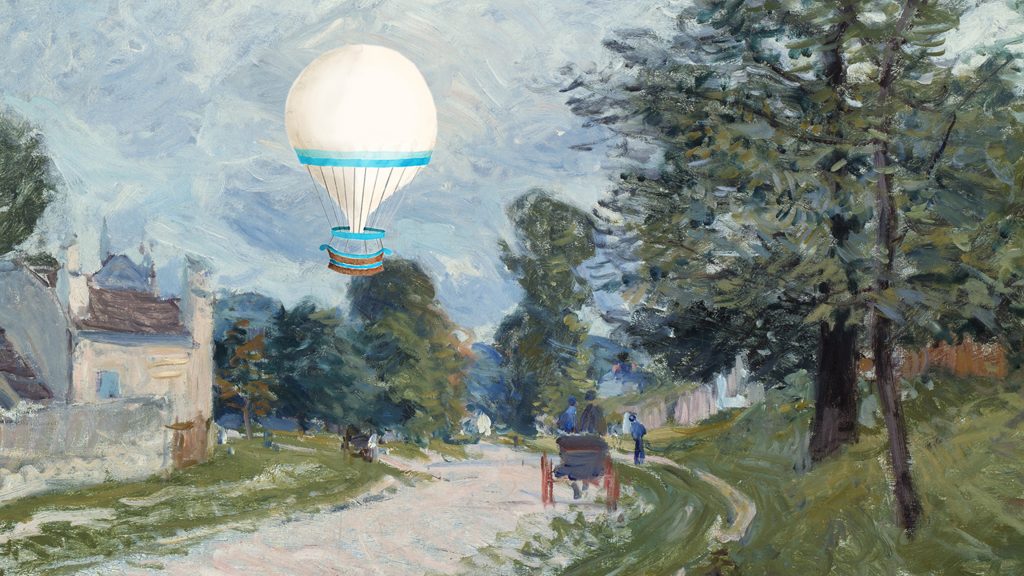
“A Turn in the Road” by Alfred Sisley (1873), CC0, Art Institute of Chicago, remixed with “TAROCH balloon” by Creative Commons/Dee Harris, 2025, CC0.
The (Under-Realized) Potential of Open Heritage
To understand our present, we need to know our past: our memories, our history, our heritage. Over the last two decades, pioneers of open heritage — institutions like the Metropolitan Museum of Art, the Rijksmuseum, Paris Musées, the Smithsonian, and many more — have shown the world the value of sharing digitized public domain collections openly. Taken together, these successes give us a glimpse of what is possible, from sparking new narratives across diverse contexts, nurturing collective memory, advancing digital equity, and inviting people to transform yesterday’s heritage into today’s creativity and tomorrow’s innovation. Their leadership inspired a vision: a future where the world’s heritage is equitably accessible by everyone.
But these success stories of open heritage remain the exception, not the rule. The vast majority of CHIs still face serious obstacles to openly sharing their digital collections and lack the support to open up confidently, be it in Chile, India, Nigeria, or Brazil. Legal uncertainty leading to copyright “anxiety,” fear of lost revenue, resource constraints, economic questions around open licensing, and misconceptions about what “open” really means continue to hold many back. Above all, the absence of international guidance encouraging open policies, tools, and practices puts our shared heritage at risk of being locked away forever. The result is a fragmented global landscape with pockets of equitable access within vast stretches of inaccessibility.
The numbers speak for themselves. The Open GLAM Survey, which has gathered data from nearly 1,700 CHIs across 55 countries, documents close to 100 million openly licensed or public domain digital objects. This reflects the fact that only ~1% of the world’s CHIs have open policies.
The potential of open heritage is enormous, but without a shared international normative framework to support CHIs in going open, this potential will remain unrealized. The need for alignment, across regions, institutions, and states, is urgent.
From Vision to Coalition — A Brief History of TAROCH
Recognizing this gap, CC began convening the global open culture community around a simple but powerful belief: when people can equitably connect with heritage in the digital environment, they can learn from it, build upon it, and keep it alive for future generations. With support from the Arcadia Fund starting in 2021, we published An Agenda for Copyright Reform (2022) and a Call to Action to Policymakers. We organized a Roundtable in Lisbon (2023) to assess global challenges and explore the need for a new UNESCO instrument for open culture. The turning point came in Lisbon in May 2024. Nearly 50 experts, activists, and institutional leaders gathered for the Open Culture Strategic Workshop and together charted a new path toward the official launch of the TAROCH Coalition in November 2024.
TAROCH is now an international coalition of more than 60 organizations across 25 countries. Membership is extensive and diverse, reflecting the global nature of this endeavor. Through international working groups and local advocacy circles, Coalition members collaborate on targeted policy engagement to empower CHIs with shared open standards and clear opportunities for international cooperation.
A Recommendation on Open Heritage, or other standard-setting instrument, would be the next logical step, complementing the existing instruments and catalyzing global cooperation on a key priority for UNESCO: ensuring equitable access to heritage in the digital environment to activate the universal right to participate in cultural life.
What’s Next? Introducing the Open Heritage Statement
Over the past months, the TAROCH Coalition has collaboratively drafted the Open Heritage Statement, turning local efforts into a global call. The Statement is a shared articulation of values, challenges, and priorities to close the global gap in access to heritage. It consists of two parts: a Preamble, situating the issues in context and outlining values and principles; and Articles, proposing policy solutions to lower barriers and unlock the potential of open heritage.
In October, we will publish the Open Heritage Statement and invite governments, institutions, organizations, policymakers, and advocates to sign or support the Statement. By joining our voices under the banner of the Open Heritage Statement, we can raise awareness about the importance of open heritage as a key means to turn the vision of the 2022 Mondiacult Declaration of culture as a global public good into action.
👉 The Statement will be launched publicly during a Creative Commons webinar on Tuesday, 14 October at 14:00 UTC. Register today.
👉 If your institution or organization would like to be part of a global movement that is helping shape the future of open heritage, apply to join the TAROCH Coalition.
New Community Chat Platform: Moving from Slack to Zulip
Creative Commons is making an important change: we are transitioning our community chat from Slack to Zulip. After considering three platforms—Matrix, Discourse, and Zulip—and gathering input from the community, Zulip came out as the clear favorite.
Why Zulip?
Aligned values: The Zulip project values resonate with Creative Commons’ commitments to openness, transparency, and community-driven spaces.
Better features for collaboration: Zulip offers a broad set of tools that make it easier to coordinate across time zones and languages. Its powerful threading system is especially suited to global, distributed communities.
Moving to Zulip is not just a platform change—we are also taking this opportunity to strengthen our outreach and engagement process. We’d like to warmly invite everyone who sees themselves as part of the CC global community to join us on Zulip. This is the first step in fostering broader community collaboration within all of CC’s community spaces.
Join now! To join CC on Zulip, please complete the Creative Commons Community Intake Form. This form will help us ensure a safe, transparent, and welcoming environment.
You may also choose to opt in to our community mailing list
Step 2 – Review
Applications will be reviewed by the CC team to ensure they meet the above criteria.
Approved applicants will be added to our community list, Zulip (if requested), and the mailing lists (if requested).
Applications that don’t meet the criteria will not be approved.
Transitioning from Slack to Zulip
Current CC Slack users are asked to make the move to Zulip by filling out the intake form. If you are not currently on the CC Slack, no problem! Simply fill out the intake form so that you can join the CC community on Zulip.
Timeline
Week of September 15: Zulip registration is now open. CC Slack signup is closed and redirected to the Zulip signup.
October 17: CC Slack is shut down.
What’s Next
As we’ve been discussing on the blog, the current Creative Commons Global Network (CCGN) membership process has been dormant for a number of years. We want to ensure that our community spaces are welcoming to everyone who sees themselves as part of the CC global community, regardless of existing CCGN membership. This is the first step of many!
We’re excited to take this step together. Zulip will give us a sustainable, values-aligned space to connect, collaborate, and grow as a community. If you are new to Zulip, you can get started with this helpful beginner’s guide.
Join Zulip now and share what you’ve been working on in the open movement!
The Benefits of Open Heritage in the Digital Environment
Introduction
This is the second post in a three-part series leading up to the launch of the Open Heritage Statement in October. In part 1 of this series, we examined how so much of our shared digital heritage remains locked away, despite the fact that heritage in the public domain belongs to the public, and should be free for anyone to access, reuse, and breathe new life into it. In this post, we turn to the benefits of open heritage, showing what becomes possible when barriers are removed and heritage in the public domain is openly accessible. In our final post, we will preview the Open Heritage Statement and how it aims to shape an international framework under UNESCO’s auspices. You can join our global call for equitable access to public domain heritage in the digital environment. Mark your calendars for the Open Heritage Statement Launch on 14 October, 14:00 UTC. Register in advance for this webinar.
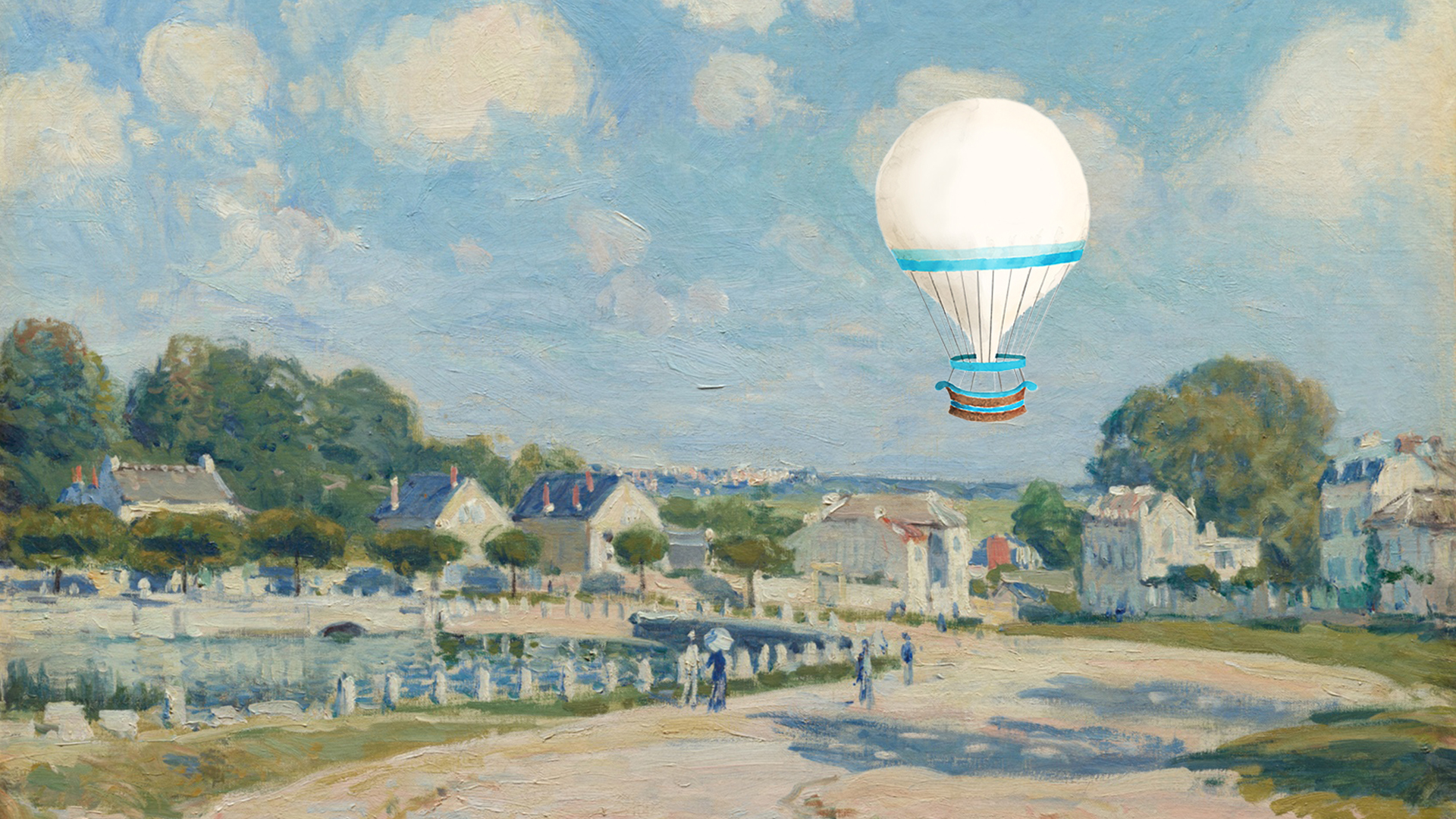
“Watering Place at Marley” by Alfred Sisley, 1875, CC0, Art Institute of Chicago, remixed with “TAROCH balloon” by Creative Commons/Dee Harris, 2025, CC0.
Open Heritage and Contemporary Creativity
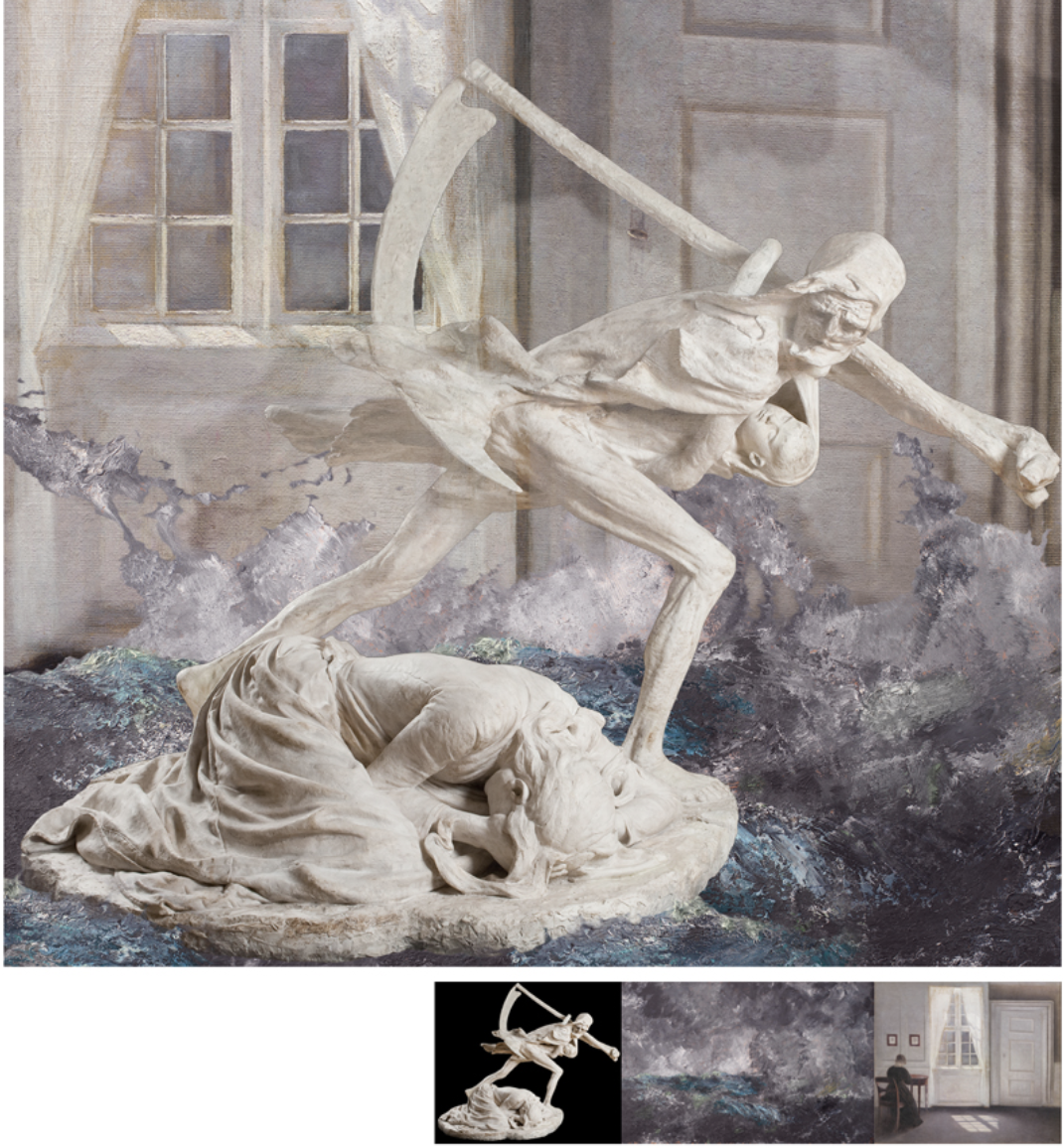
Apollo or Venus in your living room? This is the proposition made by Denmark’s Statens Museum for Kunst (SMK) upon openly sharing its vast collection of 3D models of sculptures. With SMK’s open files of digital reproductions of sculptures in the public domain, anyone can 3D-print a sculpture of Roman gods Apollo or Venus and use it to create a new object to decorate the living room, among many creative endeavors.
In this blog post, we highlight some examples of the benefits of open heritage and show what becomes possible when barriers are removed and heritage in the public domain is openly accessible.
When cultural heritage institutions (CHIs) like the SMK openly share their public domain collections in the digital environment, their mission to make heritage available to all really comes alive. Open heritage can prompt curiosity, unlock creativity, spark imagination, spur artistic experimentation, and nurture the contemporary art scene. It allows artists, creators, designers and creative entrepreneurs to have a fresh take on our shared heritage. Open heritage is essential if we want people to be able to interrogate humanity’s cultural record, participate in cultural life, and enjoy the arts without barriers and on equitable terms.
Europeana’s GIF IT UP annual competition is another great example of creative remixing and storytelling made possible by open heritage. Every year in October, people from around the globe create new GIFs from openly licensed heritage material and share them with the world.
It is also fascinating to see artist Amy Karle leveraging Smithsonian 3D scans of a fossilized Triceratops skeleton (the first “digital dinosaur”) to create sculptures consisting of “novel evolutionary forms based upon extinct species to explore hypothetical evolutions through technological regeneration.” And for the romantics among us, Germany’s Coding da Vinci produced a playful “dating app” matching users with portrait paintings digitized by the Augustinermuseum (Städtische Museen Freiburg).
Open Heritage’s Ripple Effect Across Society
Increased creativity is not the only benefit of open heritage. In particular, open heritage can also contribute to heritage preservation and increased visibility. For example, in 2021, the Wellcome Collection in the UK announced its images had passed 1.5 billion views on Wikipedia. Open heritage also helps enhance student engagement and learning: the Wikipedia in School project in Denmark integrated open heritage resources directly into school curricula, making education more interactive and culturally relevant. It can also accelerate scientific research to address global challenges like climate change. CHIs can amplify the scientific value of their heritage collection and foster cross-border collaboration among researchers. The butterfly story mentioned in part 1 of this series is a clear illustration of the value of open heritage for scientific progress.
From advancing cultural rights and digital equity, to fueling education and scientific research and discovery, open heritage generates ripple effects across society. And as the world faces multiple challenges, open heritage is all the more critical if we want to sustain resilient, free and democratic societies, strengthen fundamental freedoms, and foster the production of new solutions to the world’s biggest problems.
However, as we explored in part 1 of this series, so much of our shared digital heritage remains locked away, despite the fact that heritage in the public domain belongs to the public, and should be free for anyone to access, reuse, and breathe new life into it. Equitable access to heritage is not just a means to enjoy culture as a global public good; it is also a social and economic imperative.
A Global Call for Open Heritage
To support open heritage at scale and protect access to public domain heritage for future generations, we need global alignment. This October, the TAROCH Coalition (Towards a Recommendation on Open Cultural Heritage) will publish the Open Heritage Statement, a collaborative declaration that sets out shared values, challenges, and priorities for closing the global gap in equitable access to heritage. The Statement will enshrine the principles that underpin equitable access and identify concrete actions to lower barriers, enabling open heritage to nurture creativity and shape sustainable futures for all. The Statement is designed to support UNESCO’s ongoing work on cultural rights, digital transformation, and knowledge sharing for sustainable development, reinforcing its founding commitment to the free flow of ideas.
Register today for the launch of the Open Heritage Statement on 14 October, 14:00 UTC to learn more about our global call for equitable access to public domain heritage in the digital environment. Once released, the Statement will be made available for governments, institutions and organizations to sign and promote, laying the groundwork for a future international framework on open heritage.
What is “Openness” in the Context of Heritage?
Openness entered the world of heritage in the early 2000s. Open access in the context of heritage materials means heritage (and associated metadata) is as broadly accessible as possible and it is shared and reused (including commercial use and modification) by anyone for any purpose, at no cost to the user and free from unnecessary copyright restrictions.
Open heritage is achieved by leveraging the vast potential of digital tools and technologies in enhancing access, protecting the public domain from erosion, and encouraging the use of open licenses and tools, such as Creative Commons licenses and public domain tools, to clearly communicate how heritage materials can be accessed and reused. A central tenet is that faithful digital reproductions of public domain materials must stay in the public domain.
It’s important to note that openness is relative, nuanced and contextual. Open heritage does not aim to force access to heritage that was never meant by its community holders or traditional custodians to be shared, let alone openly shared.
Openness is a means to an end, and not an end in and of itself. It is a means to remove unfair barriers to access and use of heritage, so people can equitably connect and engage with heritage in the digital environment and together build and sustain a thriving commons. It is a pathway to achieve heritage-related goals, such as preservation, safeguarding, transmission, access, representation, and participation.
There are also legal and ethical factors to consider when making heritage open: data protection (protection of personal or confidential information), privacy, and cultural sensitivities around heritage, among others, as well as respect for Indigenous heritage and Traditional Knowledge. In sum, there may be legitimate reasons not to openly share heritage.
This blog post is an adaptation of this pre-print manuscript, where you can discover many more examples of the benefits made possible by open heritage.
We’re kicking off a three-part series leading up to the launch of the Open Heritage Statement in October.
The Statement, developed by the TAROCH Coalition (Towards a Recommendation on Open Cultural Heritage), under the leadership of Creative Commons, is a collaborative, community-fueled initiative calling for equitable access to heritage in the public domain. It represents the shared values, principles, and challenges of more than 60 individual organizations and institutions across 25 countries and 13 global networks that represent multiple organizations, and sets out priorities for advancing openness at a global scale.
Over this series, we’ll explore:
The obstacles that stand in the way of equitable access to heritage in the digital environment;
The meaning of open in the heritage context and the benefits of equitable access, from sparking creativity to advancing human rights, and;
The Open Heritage Statement itself, and how it aims to shape an international framework under UNESCO’s auspices.
Join our global call for equitable access to public domain heritage in the digital environment. Mark your calendars for the Open Heritage Statement Launch on 14 October, 14:00 UTC. Register in advance for this meeting.
—
In 2022, the United Kingdom’s Natural History Museum reported that scientists had applied computer vision to over 125,000 of the museum’s collection of digitized images of butterfly specimens dating back hundreds of years and found that insects are changing due to climate change—hotter years produce bigger insects. The Museum explained: “…open access digitized collections … allow scientists from all over the globe to be able to more easily use collections, can accelerate research in a more collaborative way than ever before.”
For anyone promoting open access to heritage collections in the digital environment, the fact that digital images of butterflies made openly accessible thanks to CC0 could help us understand and address climate change—one of the greatest challenges of our times—was incredibly exciting.
This example is representative of the transformative potential of open access to heritage. It shows how making the heritage collections of cultural heritage institutions (CHIs) (such as museums, archives, and libraries) equitably and openly accessible and reusable online, by anyone for any purpose, can bring immense benefits to society. It is telling of how open access epitomizes the dual mission of CHIs of both preserving heritage in the public domain and enabling their users to harness it for the public good.
Unfortunately, not all experiences are as positive as this butterfly story. Douglas McCarthy and Andrea Wallace humorously reported at the Icepops 2022 conference on the £179 fee a museum charged to download a reproduction of a public domain painting by 18th-century artist William Hogarth, turning open heritage into gated access. The same year, German puzzle manufacturer Ravensburger was sued in court by a museum in Italy for the unauthorized use of the images of Leonardo da Vinci’s Vitruvian Man (a famous drawing dated c.1490) on a series of puzzles.
As these contrasting examples show, the possibility of accessing and reusing heritage is vital to a creative and innovative society. Open access to heritage enables human progress well beyond the confines of art and culture. Unfortunately, this is all too often compromised by a slew of unnecessary barriers—from incorrect copyright claims over digital reproductions, to technological locks, all the way to prohibitive access fees (and more). As a result, people still face obstacles that prevent them from meaningfully connecting with their heritage. Critical pieces of our shared memory remain out of reach for the communities they represent and for the people eager to build bridges across them.
To help remove these barriers and contribute to equitable sharing of heritage worldwide, a small number of trailblazing institutions, like the UK’s Natural History Museum, the Metropolitan Museum of Art, the Smithsonian Institution, the Rijksmuseum, and other pioneering institutions have adopted open access policies, practices, and tools that harness Creative Commons licenses and public domain tools to release digital heritage objects for broad access and fresh reuse, demonstrating the real-world benefits of open sharing.
But despite growing digital capacity, motivation, and best intentions, for the near totality of the world’s CHIs, providing open, equitable access remains a challenge—only about 1% of institutions share heritage as open access. Without an international framework providing clear guidance on how to implement open policies and practices, many institutions are left unsure of what is possible or even where to begin. This is the gap the TAROCH Coalition aims to close by harnessing collective effort for global change.
The Problem: Unnecessary Fences around Public Domain Heritage
Heritage in the public domain should be available for anyone to access and reuse for any purpose, without copyright permission. Yet in reality, the public domain is often fenced off from the public by a swath of barriers preventing both stewards and users from fully and equitably enjoying heritage in the public domain. These barriers are of a legal, technological, financial, and geographical nature, among others. Below we outline some of the most prevalent barriers we see when it comes to CHIs and enabling open access to public domain heritage.
Wrongful Copyright Claims
CHIssometimes restrict access to public domain heritage by erecting legal barriers around it. They do so by claiming an overlay of copyright over faithful digital reproductions of the heritage in their collections. This includes asserting copyright over digitized reproductions and applying (restrictive or open) copyright licenses to limit reuse. For example, as we reported in 2019, the Neues Museum in Berlin released a 3D scan of the 3,000-year-old Nefertiti bust from ancient Egypt under a CC BY-NC-SA license (wrongfully implying an underlying copyright in this digital reproduction).
Pseudo-Copyright Exclusivity
In certain countries, CHIs lean on their country’s cultural heritage laws to prevent copyright-compliant use. This raises another type of legal barrier: by invoking cultural heritage protection laws, institutions may claim a “pseudo-copyright” requiring permission and imposing a fee, thus preventing further use of public domain heritage. By looking at real-world examples, we notice that these laws can achieve the opposite of what they were intended for: to protect and enhance cultural heritage and promote the development of culture. These laws should not restrict prosocial creative reuses.
Contractual Restrictions
Sometimes, CHIs enforce terms and conditions (or terms of use) on their website that restrict reuse of digital heritage. These terms and conditions will often prohibit commercial uses even though this is allowed under copyright law. These terms function as contracts and can mislead users into thinking copyright restrictions apply where they do not. This erodes the integrity of the public domain.
Technical Blocks
Further to the above contractual barriers, some institutions use digital rights management (DRM) and technological protection measures (TPMs) or make available their heritage files with watermarks, as low-resolution files only, or in inaccessible formats. This limits how public domain heritage can be accessed and reused and ends up harming scholarly research and cultural participation. For example, a study in Pakistan “revealed that contents preserved with Sindh Archives & Antiquities on local heritage were shared with Sindh Archives & Antiquities watermarks only. […] From an Open GLAM perspective, the watermarks on digital collections prevent citizens from using and reusing heritage collections and therefore, limit collection outreach.” As Professor Melissa Terras put it back in 2014, “all I want is a clear, 300dpi image. It’s no use saying «this is in the public domain!» if you only provide 72dpi”.
Low Accessibility for People with Disabilities
Unfortunately, public domain heritage is often not available in digital files that allow for the creation of accessible formats for people with disabilities, including print disabilities. This digital exclusion disproportionately affects blind and visually impaired people, as well as those with cognitive and motor impairments. People are thus disempowered from creating versions of heritage materials in accessible formats that meet the needs of everyone.
Economic Barriers
Finally, making heritage in the public domain available to the public requires significant resources, and many CHIs are under pressure to monetize their collections to offset funding shortfalls. Several CHIs charge the equivalent of hundreds of dollars per image for access to digitized public domain works. These fees create barriers for educators, researchers, and smaller cultural creators, particularly outside the Global North. While financial sustainability is important, unreasonable paywalls undermine the public benefit of digital access. As the Creative Commons-funded report “Open Licensing Models in the Cultural Heritage Sector” recommends, institutions should develop economic models for revenue generation that go hand in hand with the open ethos.
The Impact of Barriers on Equitable Access to Heritage
As the above overview of diverse barriers confirms, when CHIs fail to enable equitable access, many important elements of our shared heritage remain locked away, out of reach. And heritage that is inaccessible is at risk of being forgotten, its meaning and context lost, and its transmission to future generations jeopardized. This has repercussions on entire communities of artists and creators, educators, students, scholars, and researchers, as well as members of the public, who lose opportunities to understand, learn, and create with heritage. This also reflects poorly on CHIs: it undermines their public-interest mission of providing universal access to their collections in the digital environment and opens the door to the erosion of cultural diversity, the widening of the digital divide, the weakening of intercultural dialogue, and the loss of shared narratives that connect us to our past and inspire our future.
The barriers that fence off our shared heritage are real, but they are not insurmountable. We believe there is a unique window of opportunity to unlock its full value and place it at the heart of what matters now.
In our next post in this series, we’ll look at these benefits in action, from advancing human rights and education to sparking creativity and scientific discovery, and why they make the case for global alignment even stronger. We will uncover how openness is key to building a future where everyone can connect with, use, and build upon our shared memory.
What’s to Come
Join us. This October, the TAROCH Coalition (Towards a Recommendation on Open Cultural Heritage) will publish the Open Heritage Statement, a collaborative declaration that sets out shared values, challenges, and priorities for closing the global gap in equitable access to heritage. The Statement will enshrine the principles that underpin equitable access and identify concrete actions to lower barriers, enabling open heritage to nurture creativity and shape sustainable futures for all.
The Statement is designed to support UNESCO’s ongoing work on cultural rights, digital transformation, and knowledge sharing for sustainable development, reinforcing its founding commitment to the free flow of ideas.
Once released, the Statement will be open for institutions and organizations to sign and promote, laying the groundwork for a future international framework on open heritage.
As we’ve been talking about on the blog, we are intentionally seeking ways to reengage with the global community, which will likely entail making changes to the current CC Global Network (CCGN). We recently surveyed the CC global community to help inform next steps.
We received nearly 100 responses from over 40 countries, and we’re so grateful for the insights and ideas you shared. Here’s a snapshot of what we learned from you—and how we plan to respond.
What We Learned About You
We heard from respondents throughout the globe, though most were based in North America and Europe. This is not surprising, as most of our team is based in the U.S. and Canada, and CC has historically focused on U.S. and European copyright policy. We heard from respondents from outside of these areas that they would like to see CC diversify and deepen our engagement in other regions across the globe.
When we asked about the languages you use in your community organizing, Spanish, French, and Italian were the top non-English languages listed. Several respondents also mentioned working across all six official UN languages: Arabic, Chinese, English, French, Russian, and Spanish.
In terms of how you connect with Creative Commons, 80% of you identified as supporters or followers. The next most common affiliation was as CC Certificate alumni—an encouraging sign of ongoing engagement from those who’ve taken the course. Notably, nearly 1 in 5 respondents are new to the CC community, underscoring the importance of creating clear and accessible entry points for newcomers to CC and the open movement.
What You Value About the CC Community
One of the most valued ways CC supports the community is by providing clear, accessible information on open licensing, copyright, and CC’s licenses and tools. These resources help guide creators, students, and institutions in making ethical and legally sound decisions around sharing.
Beyond tools and resources, many of you highlighted the importance of a supportive global community of practice. Several also expressed nostalgia for earlier phases of the CC network, when coordination around localized license porting provided a clear structure for deeper engagement among legal and policy experts.
What Support You Need
When asked what CC should prioritize to support the open movement globally, your top request was for us to stay focused on our mission and maintain the core tools that power open sharing.
You also encouraged CC HQ to shift from leading community activities to enabling them. Rather than managing engagement from the top down, you asked us to provide the scaffolding—toolkits, engagement pathways, and meaningful opportunities to contribute both locally and globally. You want to see local chapters and communities revived, regional events supported, and leadership empowered at the grassroots.
What Role You Want CC to Play
You’ve called on us to play a stronger role in facilitating meaningful collaboration—locally, regionally, and globally.
Some of you also asked that we convene more communities of interest, and that we improve our communication with you through regular newsletters, events, and updates.
Transparency in governance and opportunities for participatory decision-making also came through as key priorities.
Finally, many of you expressed the desire for CC to take a more active stance in relation to AI.
How You Want to Connect
What we heard most clearly is your desire to be more connected with each other—to share stories, collaborate, and learn across regions. You’re interested in more events, both in person and virtual.
When asked what kind of non-financial support would be most helpful, the top response was “opportunities for training or skill sharing.” There’s strong interest in regional coordination, localized resources, and peer-to-peer mentorship opportunities.
Listening More, Engaging Meaningfully
Much of what we heard echoes feedback we’ve received in the past: frustration with top-down decision-making, and a desire for more meaningful listening and engagement. We know we have room to grow, and we’re committed to doing the work to build stronger, more equitable relationships across our global community.
We also know that when community members feel recognized, supported, and heard, they’re more likely to contribute actively. We’re excited to continue building mutual trust and collaboration—especially as we approach our 25th anniversary as an opportunity to reconnect.
On Funding
It’s not surprising to see continued requests for more financial support. The financial landscape is challenging for many nonprofits, and we continue to actively fundraise to support CC’s initiatives. At this time, our goal is to approach funding decisions on a year-by-year basis. We intend to be transparent about where funding may be available in the coming years and not over-promise where we aren’t able to deliver.
What’s Next
We’re thrilled to announce that we’ll be launching a new community chat platform to replace Slack very soon! Stay tuned for more details on how to join and engage—this chat space will be created for regional and thematic collaboration across our communities.
We’re continuing to work on plans for updating our membership and governance structures and creating new ways to engage with CC and other community members.
A new community newsletter is also on the way—sign up here to stay in the loop.
AI and the Commons: A Reading List
What effect are large AI models having on the digital commons and how should we respond? As part of our work to support creators and stewards of content to adapt to the unfolding AI future, we’re sharing some of the writing and ideas that are shaping our thinking.
Here at CC, we have the goal of defending and sustaining the digital commons in the face of developments in artificial intelligence.
We’ve recently introduced a new framework, CC signals, to offer a new way for stewards of large collections of content to indicate their preferences for how machines (and the humans controlling them) should contribute back to the commons.
As we develop our approach, we’re taking inspiration from the work of our partners, community, and other stakeholders. We’re particularly interested in efforts to understand:
How AI scrapers are reshaping the web
Copyright, labor, surveillance, and resistance
The effects of a new economy of data licensing
Emerging ideas for more ethical AI and consensual data governance
We’re reading (a lot!) on these topics, to help ensure that CC signals become part of a diverse set of solutions for protecting the commons in the unfolding AI future. Here’s some of the writing that’s shaping our thinking:
Legal frictions for data openness: Reflections from a case-study on re-use of the open web for AI training – Ramya Chandrasekhar https://hal.science/hal-05009616v1
We’d love for you to read and learn alongside us, share your thoughts, and contribute other articles and resources to this list! Connect with us on LinkedIn, Bluesky, or Mastodon.
We Asked, You Answered: How Your Feedback Shapes CC Signals
In June we kicked off a public feedback period on our proposal for CC signals. CC signals is a preference signals framework designed to sustain the commons and ensure the continued sharing of knowledge in the age of AI.
The goal is to give holders of large datasets a way to set criteria for how their data may be used within AI training models. To give an example, a dataset holder may wish to require that any AI training that uses their data gives credit back to the original source (e.g. attribution), or that the resulting AI model is open. Like the CC licenses, CC signals builds on the idea of ‘some rights reserved’ and that creators and knowledge holders deserve meaningful choices in how their work is used. You can learn more on our website.
Since our kickoff event, we have been listening closely to feedback. We heard from hundreds of creators, librarians, technologists, legal experts, and open advocates. We asked for feedback and you delivered! Your voices – supportive, skeptical, frustrated, or curious – are essential in shaping how CC signals develops. We’d like to summarize what we heard and how this feedback is being incorporated and addressed.
What We Heard
Across the conversations, several themes emerged:
Concerns that CC is prioritizing AI companies over creators. A recurring concern is that CC signals seem to give legitimacy to AI training without doing enough to protect creators.
Confusion and disagreement about the CC licenses and AI training. We heard frustration that the CC licenses are not being interpreted or enforced in ways that some creators expected.
Strong calls for opt-outs. Many wondered why the draft CC signals did not include an opt-out option.
Asking politely for AI developers to give back in exchange for datasets is not enough. We heard doubts that CC signals would work in practice, given the widespread evidence of AI companies ignoring copyright, licenses, and even technical protocols like robots.txt.
Broader critique of AI’s role in society. There is a spectrum of views on AI across the CC community. Many of you stand firmly at the anti-AI end. For these voices, no technical framework, like CC signals, feels adequate without stronger laws and regulations.
We haven’t been clear on who this tool is meant to serve and the use cases it is meant to address. Naturally, the needs of an individual creator, like an artist, are quite different from those operating at an institutional or collective level. We heard loud and clear that CC signals, as currently conceived, does not meet the diverse needs of individual creators.
Requests for clarity. Many asked for more details about implementation and interoperability, including our long-term vision for CC signals as part of our broader mission.
We understand how deeply personal these issues are for many of you, especially artists and creators who feel their work is being taken without consent and are looking for ways to fight back. That frustration is real, and we take it seriously.
What We’re Doing Next
✔️Improving clarity around CC’s position. We know many of you are worried that CC has “taken sides” or is being influenced by AI companies.We want to be clear: the driving motivation of CC signals is to defend and sustain the commons by developing practical tools for knowledge holders. Going forward, we will aim to clarify our guiding principles and positions in ways that translate to product decisions.
✔️Strengthening messaging and education. We are committed to expanding resources on how the CC licenses and CC signals could interact, examples of how signals could work in practice, and deeper dives into questions of copyright within the AI landscape. If you haven’t already, take a look at our legal primer on understanding the CC licenses and AI training. The better informed the CC community is about AI and the commons at large, the more effective we can be as a community to defend the commons.
✔️Clarifying the use cases for CC signals. This phase of CC signals is designed to serve large and open dataset holders, not the individual creator. Your feedback helped us recognize that this focus was not easy to square with our decision to leverage technical protocols used by anyone with a website. As a result, the target audience for CC signals was not clear. As we decide on next steps in product development, we plan to focus on specific use cases to put our goals and objectives into practice.
✔️Deepening global engagement and inviting stakeholders into product development. We plan to continue conversations with diverse audiences to inform the future of CC signals through an iterative process. The rest of this year will be focused on exploring and testing possible integrations of CC signals with pilot adopters. From this, we hope to extrapolate findings as we explore wider adoption of CC signals in the future.
✔️ Maintaining transparency in development. Our GitHub repository will stay open and up to date. We are creating a roadmap that will be shared publicly and will provide consistent updates (either on the blog or via a virtual town hall) on our progress. This feedback loop is not over; it will be built into how CC signals will evolve.
Looking Ahead
The future of the commons depends on tools that reflect shared values of openness, fairness, and agency. We know many of you remain skeptical.
CC signals is not final. It is an experiment in building a new layer of choice in an age where the rules are rapidly shifting. We will keep listening, adjusting, and collaborating until we arrive at something that genuinely serves the commons.
Thank you to everyone who took the time to write, question, challenge, and support us. Please stay engaged. Together, we can ensure that Creative Commons continues to stand where it always has: with the community, for the commons.
Creative Commons Becomes an Official UNESCO NGO Partner
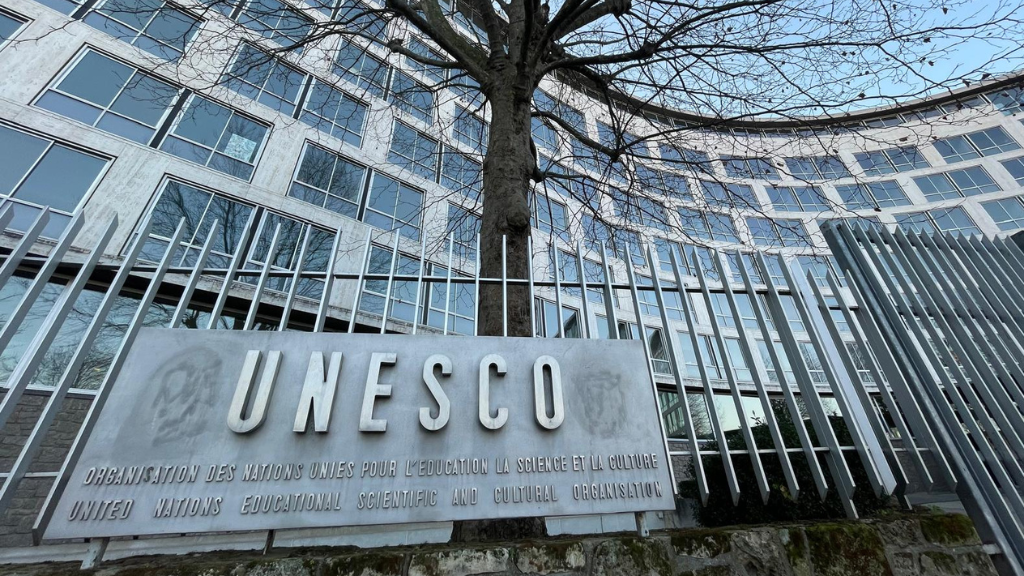
We are proud to announce that we are now established as an official NGO partner to UNESCO (consultative status). UNESCO stands for “United Nations Educational, Scientific and Cultural Organization” and is the UN’s specialized agency that aims to foster international cooperation in the fields of education, science, culture, and communication.
This new, formal status is an important recognition of the synergies between our two organizations and of our shared commitment to openness as a means to benefit everyone worldwide. As an official NGO partner, Creative Commons (CC) will now have the opportunity to contribute to UNESCO’s program and to interact with other official partner NGOs with common goals. In particular, we look forward to:
Participating in UNESCO meetings and consultations on various subjects core to CC’s mission. This will give us a seat at the table to advocate for the communities we serve and share our expertise on openness, the commons, and access to knowledge.
Participating in UNESCO’s governing bodies in an observer capacity. This will enable us to deliver official statements on matters within our sphere of expertise and contribute to determining UNESCO’s policies and main lines of work, including its programs and budget.
Taking part in consultations about UNESCO’s strategy and program and being involved in UNESCO’s programming cycle. This will give us opportunities to communicate our views and suggestions on proposals by the Director-General.
Becoming an official partner is a testament to our rich and long-standing collaboration with UNESCO over the past 24 years. Over this time, CC and our community have developed trusted relationships with UNESCO staff and Member State representatives, yielding many opportunities to engage and collaborate effectively.
As we continue to advance TAROCH, we know that the role of open solutions in removing unfair economic, legal, technological, and sociocultural barriers to access heritage, while fostering creative reuse and telling the stories of our shared humanity, is more important than ever.
Looking Ahead
We look forward to the exciting new opportunities for strategic collaboration on the horizon.
With Mondiacult 2025, the world’s biggest cultural policy conference, taking place soon, we look forward to assisting UNESCO in delivering on its key priority of “ensuring equitable access to heritage,” as indicated in the Mondiacult 2025 concept note. CC’s efforts through TAROCH to remove barriers, support interoperability, and create and share heritage with open licenses and tools can strengthen equitable access to heritage. Once heritage is accessible, we collectively have the opportunity to build more connected, resilient, and sustainable societies. Make sure to join us at our Mondiacult virtual side event on September 17, 2025.
Recommended Licenses and Tools for Cultural Heritage Content
The CC licenses and public domain tools are a simple and effective way for CHIs, such as museums, libraries and archives, to make heritage materials (and associated metadata) open. Navigating the right license or tool can be tricky, but if you remember only one thing, it’s that faithful digital reproductions of public domain materials must stay in the public domain — no new copyright or related right applies to the digitized version.
Many people can benefit from open access to cultural heritage in a variety of ways and for a variety of purposes — from creators seeking inspiration to researchers discovering new interpretations, all the way to cultural heritage institutions (CHIs) connecting with more audiences, and the general public making sense of the world we live in. In our report What are the Benefits of Open Culture? A new CC Publication, we show how, by removing any distance between people and heritage, openness gives rise to a multitude of connections with, about, or through cultural heritage.
The CC licenses and public domain tools are a simple and effective way for CHIs, such as museums, libraries and archives, to make heritage materials (and associated metadata) open so that they can be shared widely for the broadest possible access, use and reuse (including commercial use and modification), free of charge, and with no or few copyright restrictions.
Navigating the right license or tool can be tricky, as CHIs may share a wide range of different types of materials. But if you remember only one thing, it’s that faithful digital reproductions of public domain materials must stay in the public domain — no new copyright or related right applies to the digitized version. Public domain materials are materials that are no longer or never were protected by copyright.
This is a position that Creative Commons (CC) has been championing for years as part of our Open Culture Program. In other words, no new copyright (or related right) should arise over the creation of a digitized “twin.” Europeana and the Communia Association, among many other open culture organizations, share this position. It is also aligns with Article 14 of the 2019 EU Directive on Copyright in the Digital Single Market, which states that: “when the term of protection of a work of visual art has expired, any material resulting from an act of reproduction of that work is not subject to copyright […]”.
It’s also important to remember that digital reproductions of public domain works cannot be CC-licensed, since CC licenses can only be used with in-copyright content. Instead, we recommend using a CC public domain tool, putting the digital reproductions squarely and unequivocally into the public domain. This not only conveys clear information about the public domain status of the materials, it also contributes to the thriving, blooming commons of knowledge and culture that we need to address the world’s most pressing problems.
Some CHIs might want to get credit for sharing heritage from their collections. It is not good practice to use a license in this case. Instead, there are different ways to encourage users to refer back to CHIs, as we explain in Nudging Users To Reference Institutions When Using Public Domain Materials. The guidelines offer a fresh and innovative approach to prompting users to reference the institution when using public domain materials and present various design ideas to instigate behavioral change. They address key questions, including:
How can institutions nudge users to reference them?
What information should be included in a reference statement?
What would a nudge look like in practice?
How to organize the data needed to implement these ideas?
Regarding metadata, we strongly encourage that it be dedicated to the public domain using the legal tool Creative Commons Public Domain Dedication (CC0). Data is largely made of highly factual content that is considered uncopyrightable, but uncertainties might remain. The CC0 waiver places all data squarely and unequivocally in the public domain worldwide and clarifies that data reuse is not restricted by copyright, related rights or database rights — those rights are all surrendered. CC0 can support maximizing the reuse of data, with benefits including:
enabling others to validate, replicate and put the data to new uses
facilitating enhanced collaboration and enrichment
increasing transparency
speeding the discovery and understanding of solutions to planetary and societal needs.
For materials created by the CHIs and protected by copyright, we recommend CC BY-SA 4.0, CC BY 4.0 or CC0 1.0 to enable maximum dissemination and reuse.
For different types of content, we recommend different CC tools or licenses to achieve optimal engagement and reuse, as summarized in this table:
Type of content
Recommended licenses or tools
Digital reproductions of public domain works (works that are no longer or never were protected by copyright)
Using CC licenses and public domain tools to share cultural heritage materials unlocks vast potential for open culture to blossom in the cultural heritage sector. By offering enhanced legal certainty, CHIs have the ability to engage more deeply in the open culture movement and make their vast collections openly accessible to everyone.
Thanks to everyone who attended our CC signals project kickoff last week. We’re receiving plenty of feedback, and we appreciate the insights. We are listening to all of it and hope that you continue to engage with us as we seek to make this framework fit for purpose.
Some of the input focuses on the specifics of the CC signals proposal, offering constructive questions and suggesting ideas for improving CC signals in practice. The most salient type of feedback, however, is touching on something far deeper than the CC signals themselves – the fact that so much about AI seems to be happening to us all, rather than with or for us all, and that the expectations of creators and communities are at risk of being overshadowed by powerful interests.
This sentiment is not a surprise to us. We feel it, too. In fact, it is why we are doing this project. CC’s goal has always been to grow and sustain the thriving commons of knowledge and culture. We want people to be able to share with and learn from each other, without being or feeling exploited. CC signals is an extension of that mission in this evolving AI landscape.
We believe that the current practices of AI companies pose a threat to the future of the commons. Many creators and knowledge communities are feeling betrayed by how AI is being developed and deployed. The result is that people are understandably turning to enclosure. Eventually, we fear that people will no longer want to share publicly at all.
CC signals are a first step to reduce this damage by giving more agency to those who create and hold content. Unlike the CC licenses, they are explicitly designed to signal expectations even where copyright law is silent or unclear, when it does not apply, and where it varies by jurisdiction. We have listened to creators who want to share their work but also have concerns about exploitation. CC signals provide a way for creators to express those nuances. The CC signals build on top of developing standards for expressing AI usage preferences (e.g., via robots.txt). Creators who want to fully opt out of machine reuse do not need to use a CC signal. CC signals are for those who want to keep sharing, but with some terms attached.
The challenge we’re all facing in this age of AI is how to protect the integrity and vitality of the commons. The listening we’ve been doing so far, across creator communities and open knowledge networks, has led us here, to CC signals. Our shared commitment is to protect the commons so that it remains a space for human creativity, collaboration, and innovation, and to make clear our expectation that those who draw from it give something in return.
Our goal is to advocate for reciprocity while upholding our values that knowledge and creativity should not be treated as commodities.
Our goal is to find a path between a free-for-all and an internet of paywalls.
Copyright will not get us there. Nor should it. And we don’t think the boundaries of copyright tell us everything we need to know about navigating this moment. Just this week, Open Future released a report that calls for going beyond copyright in this debate, on the path to a healthy knowledge commons.
This is the beginning of the conversation, not the end. We are listening. From what we have heard, CC signals, or something like it, is the best practical mechanism to avoid the dual traps of total exploitation or total enclosure, both of which damage the commons. We have shared our current progress because we want to learn how to design it to meet your needs. We invite you to continue sharing feedback so we can shape CC signals together in a way that works for diverse communities. In the months ahead, we’ll be providing more detail about how CC signals are developing, including key themes we are hearing, along with the questions we are exploring and our next steps.
 Apollo or Venus in your living room? This is the proposition made by Denmark’s Statens Museum for Kunst (SMK) upon openly sharing its vast collection of