Help us protect the commons. Make a tax deductible gift to fund our work. Donate today!
Red Alert for Net Neutrality
Today Creative Commons is joining dozens of organisations in the Red Alert for Net Neutrality. The action calls on individuals to contact Congress with phone calls, emails, and tweets in support of the upcoming Senate vote on a Congressional Review Act resolution to block the FCC’s repeal of net neutrality.
The Congressional Review Act (CRA) is a mechanism that gives Congress the power to reverse federal regulation by passing a resolution of disapproval. The CRA action must be taken within 60 legislative days of enactment of the regulation, and must meet a simple majority. Today Senator Ed Markey (D-MA) submitted a petition to force action on the measure, and a Senate vote could be taken as early as next week.
There are already 50 Senators lined up in favor of blocking the FCC’s repeal of net neutrality, but 51 votes are needed for the resolution to pass. Winning the Senate vote on the CRA will be essential for building momentum for the fight in the House. And advocates want to put net neutrality front and center with Congress and make them weigh in on this critical issue, especially considering the upcoming 2018 midterm elections. According to a December 2017 poll, 83% of respondents supported keeping the net neutrality rules, including 75% of Republicans, 89% of Democrats, and 86% of independents. Thousands of businesses already signed a letter to support the CRA to save net neutrality.
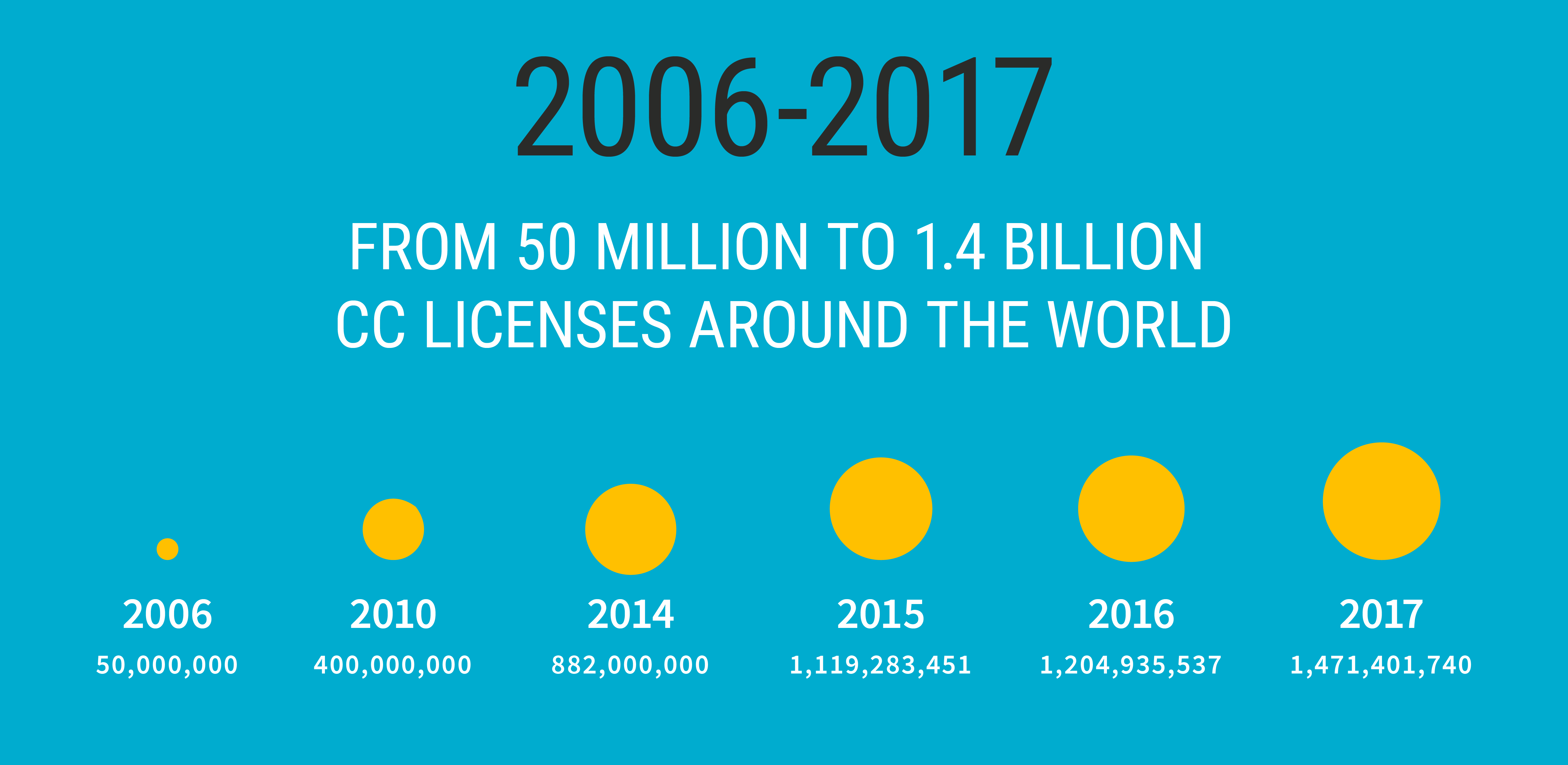
There are over 1.4 billion CC-licensed works online, shared freely with anyone with access to the internet. We advocate for a strong digital commons of creativity and knowledge, but open content is only one piece of the puzzle. The open internet is central to so many aspects of everyday life—from accessing education and news, communicating with friends and family, enjoying diverse entertainment like movies and music, and collaborating on global projects like Wikipedia.
Several lawsuits are making their way through the courts, and states have been introducing their own bills to protect net neutrality. But now is the time to reach out to your Senators and tell them to support the upcoming CRA resolution to block the FCC’s repeal of net neutrality.
The FCC’s repeal of net neutrality is opposite of what the public wants. Instead of dismantling the rules, we should be protecting and extending reasonable consumer protections that kickstart creativity, fuel innovation, and improve access to information online.
A Transformative Year: State of the Commons 2017
At this year’s Global Summit, board chair Molly Van Houweling emphasized that Creative Commons’ vision was not necessarily limited to the internet, but instead acts in support of the creative spirit that is enabled by the internet. As we announce a landmark 1.4 billion works under Creative Commons licenses with this year’s State of the Commons report, we are celebrating that creative spirit – the people and communities who work to enable the large scale global movement for the Commons.
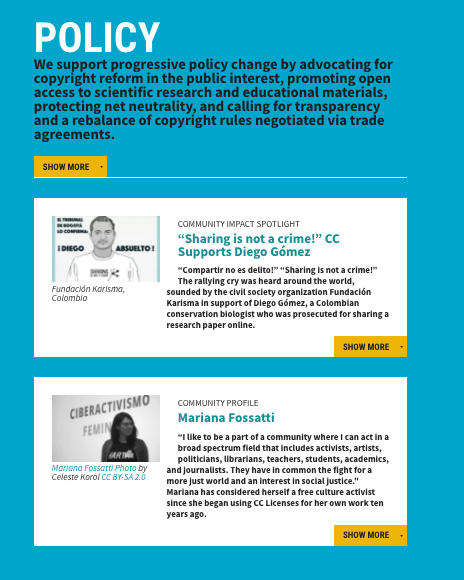
While Creative Commons provides tools and programs that enable sharing on the web – the licenses, legal work, and resources that we build and steward – that work is driven by a global community that works to enable a world that is more open and collaborative. Supported by our new community-driven network strategy, we provide support to projects and people with events, grants, and solidarity work on campaigns like Compartir no es Delito! (Sharing is not a crime!) and the fight for Net Neutrality.
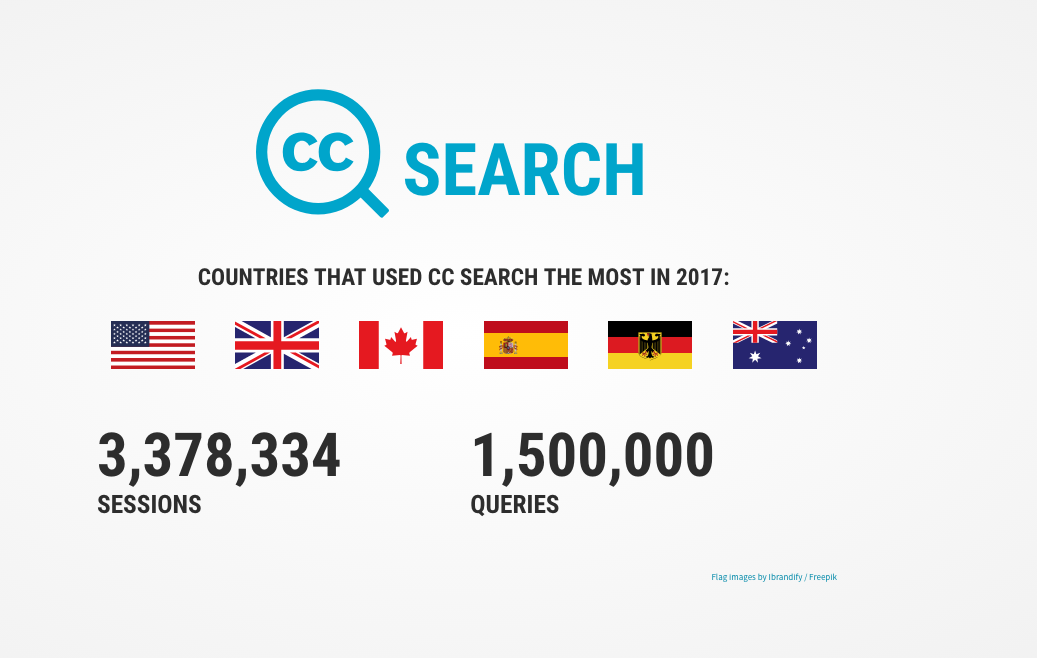
People, projects, and programs make up the bulk of this year’s report, but the data also supports our vision of a more creative, open world. 1.4 billion works is 200 million more than last year, and that growth has accelerated compared to the previous two years. To provide concrete examples: The Metropolitan Museum released 375,000 pieces of content under CC0 in February 2017. PLOS counts 7,000 editorial board members and 70,000+ volunteer peer reviewers to release 200,000 pieces of content. Wikipedia, one of our closest allies and partner in the “Big Open”, hosts 42 million freely licensed pieces of content. Our search tool has responded to 1,500,000 queries, and our website has been visited 50,000,000 times. And that’s only a part of our impact.
From our growing tech team to our usability initiative, we’re working smarter than ever to fulfill our organizational mandate of building a “vibrant, global Commons built on gratitude.” In order to compile this year’s report, we put out a call to our network to ask which people, country teams, and projects are making the biggest impact around the world. From Razan Al Hadid’s work to revive CC Jordan to Scann’s continued work for the public domain in Argentina, the Creative Commons community is made up of individuals working for a better world. (The fact that almost all the profiles are of women is just a happy accident for the UnCommon Women who carry the movement.)
By uplifting the stories of our friends and colleagues, we’re demonstrating what happens when communities champion each other’s work, and how we model the world we want to see. The report’s data is always fun, but it belies the depth of the humanity that underscores the commons.
As I’ve said before, “Creative Commons is made of people,” and this report tells their stories. Thank you again for all your support, and be sure to share out your impressions with the hashtag #sotc.
CC Summit Builds Momentum for Strengthening Author Rights; Global Rights Back Resource Announced
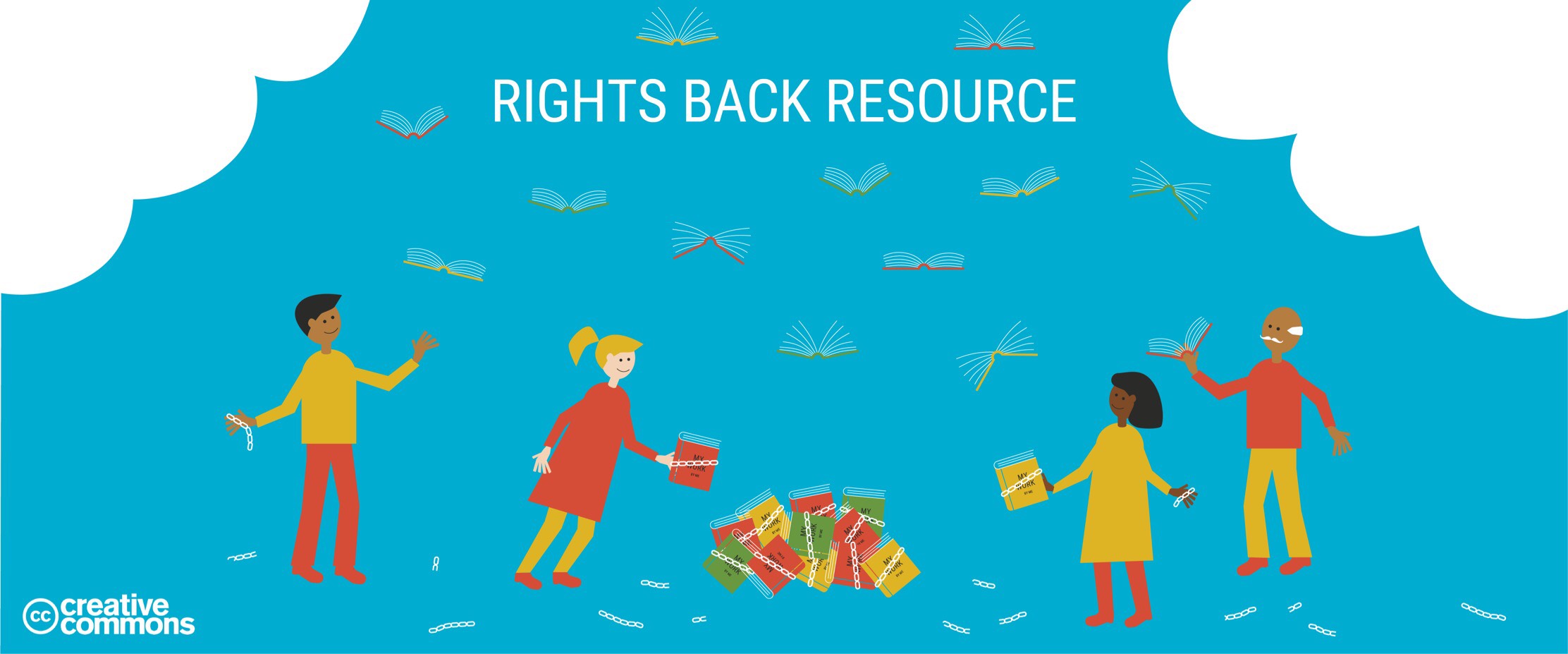
The Creative Commons 2018 Global Summit in Toronto brought together a diverse group of stakeholders to explore strategies for increasing author choices for managing their copyright, and included the announcement of the new Creative Commons Rights Back Resource (beta) that will provide authors worldwide with information about how to regain copyright previously assigned away.
Vanessa Proudman, Director of SPARC Europe, framed the workshop looking at the current context, goals and challenges with rights management. She shared ten prerequisites for making open the default, and talked of how the community might best enable open for academics and readers. Among other highlights, she provided an overview of funder and government mandates for open access and identified key goals and challenges to enable open.
Brianna Schofield, Executive Director of Authors Alliance, highlighted and explained existing legal tools that help authors make sound publication decisions and regain control of their works, sharing thoughts on the value of doing so in support of authors making their works available in the ways they want. She explained the complicated nature of termination rights that authors have in the United States and resources that Creative Commons and Authors Alliance have developed to help them navigate those provisions. Michael Wolfe, formerly of Authors Alliance and now at the University of California, Davis, gave a live demonstration of how the www.rightsback.org termination of transfer tool can help authors determine whether they have reversionary rights.
Diane Peters, General Counsel of Creative Commons, described CC’s work in open access in support of a more vibrant and usable commons. She focused on work, generously funded by Arcadia, a charitable fund of Lisbet Rausing and Peter Baldwin, to develop improved authors addenda that authors can use to retain some rights to their scholarly articles when submitting to traditional, non OA publishers. She also announced the launch of a new legal tool under development and funded by Arcadia, the Rights Back Resource (beta). Authors and those who support them such as librarians will be able to consult the resource to understand reversionary and termination rights around the world.
Session attendees then broke into three working groups to conduct deep dives, exploring three important areas: knowledge gaps and what authors should know if they want to help change current open access practices by retaining rights; existing and future advocacy tools and campaigns that can affect real change in the OA ecosystem; and strategies for overcoming publisher obstacles to author tools. A complete list of resources, speaker presentations, and notes from the breakout working groups may be found here.
What’s Next
The three organizations plan to continue coordinating their respective efforts on new and existing legal tools, outreach, education and advocacy. This will include focusing on tangible ways to push ahead on ideas generated during the CC Summit session.
Creative Commons also welcomes contributions to the new international Rights Back Resource (beta). We need experts to identify and contribute information about reversionary and termination rights around the world. Our goal is provide a comprehensive resource where authors can learn about rights they may have to retake control over publication rights to their works that they previously assigned away. Please join CC in this effort and contribute information here.
We are also working on updates to the Scholars Copyright Addendum Engine and the addenda templates found there. An open questionnaire will be published soon with the goal of learning more about the needs and preferred terms of addenda to be used by scholars, authors and academics.
Thank you to everyone who participated in our Summit session! We look forward to seeing your contributions.
It’s a Recap of Recaps: Notes, Photos, and Blog Posts from this year’s CC Summit
Here’s a roundup of recaps (or a recap of recaps? ?) of this year’s CC Global Summit and tracks. Did you write about your experience? Take photos? Take notes? Let us know and we’ll add them to the post.
While the EU copyright reform teeters on the edge of turning into a complete disaster, last week the European Commission published a proposal for a revision of the Directive on the reuse of public sector information (PSI Directive), and a recommendation on access to and preservation of scientific information. Both of these documents are a part of a package of measures aiming to foster a common data space in the EU. Both are welcome additions, as they offer proactive steps to improve the re-use of public sector data and scientific research across Europe.
Revision of the Public Sector Information Directive
The PSI Directive first came into effect in 2003 and required EU Member States to make public information and resources that they produce and collect reusable to the greatest possible extent and was broadened in 2013. The Commission has already released a recommendation on using Creative Commons licenses such as CC BY and the CC0 Public Domain Dedication to share public sector information.
The revised proposal released last week would further expand the PSI Directive. The update would increase the availability of data by bringing new types of publicly funded data into the scope of the directive, including data related to transportation. It would also push to increase business opportunities by encouraging the publication of dynamic data via application programming interfaces (APIs), as opposed to publishing data in static and difficult-to-use formats such as PDFs. These are welcome changes.
Of particular interest is the expansion of the Directive to cover research data. According to the proposal, research data is defined as “documents in a digital form, other than scientific publications, which are collected or produced in the course of scientific research activities and are used as evidence in the research process, or are commonly accepted in the research community as necessary to validate research findings and results.” The question of whether to expand the Directive to cover scientific research results was included in the public consultation by the Commission last year. We agreed that research resulting from public funding should be available free of charge and with unrestricted reusability. But since there’s several ongoing policies related to open access to research, we urged the Commission to ensure that policy efforts to improve access to publicly funded scientific research are complementary—and not in conflict with—each other.
A final important addition in the new proposed revision is a clarification that where databases fall under the scope of the PSI Directive, the public sector body responsible for the database may not use the Database Directive to prevent or restrict the reuse of documents. (Elsewhere we’ve argued that the sui generis protection in the Database Directive should be deleted altogether).
New recommendations on access to and preservation of scientific information
Another interesting communication released last week was the Recommendation on access to and preservation of Scientific Information. In the document, the European Commission reinforces the notion that access to and re-use of publicly funded research is a “crucial ingredient in advancing science and benefiting society,” and that “scientific information resulting from public funding should be accessible and re-usable with as few restrictions as possible.” We agree. The results of publicly funded scientific research should be made available under permissive open licenses (such as CC BY), or even put into the worldwide public domain using a tool like CC0.
The Commission recommendations call on Member States to:
set and implement clear policies for the dissemination of and open access to scientific publications resulting from publicly funded research,
ensure that research funding institutions responsible for managing public research funding and academic institutions receiving public funding implement the policies,
set and implement clear policies for the management of research data resulting from publicly funded research, and
set and implement clear policies for reinforcing the preservation and re-use of scientific information (publications, data sets and other research outputs).
Both the revised proposal for the PSI Directive and the new recommendations to promote access and preservation of scientific information are steps in the right direction to expand the re-use of public sector data and scientific research across Europe. They signal a push from the Commission to further integrate these related policies. It will be important that these policies are implemented with care and in consultation with stakeholders to “ensure the coherence and the complementarity between EU open access and open data policies.”
The Commons will unlock our country’s creative potential
CC BY-NC-SA
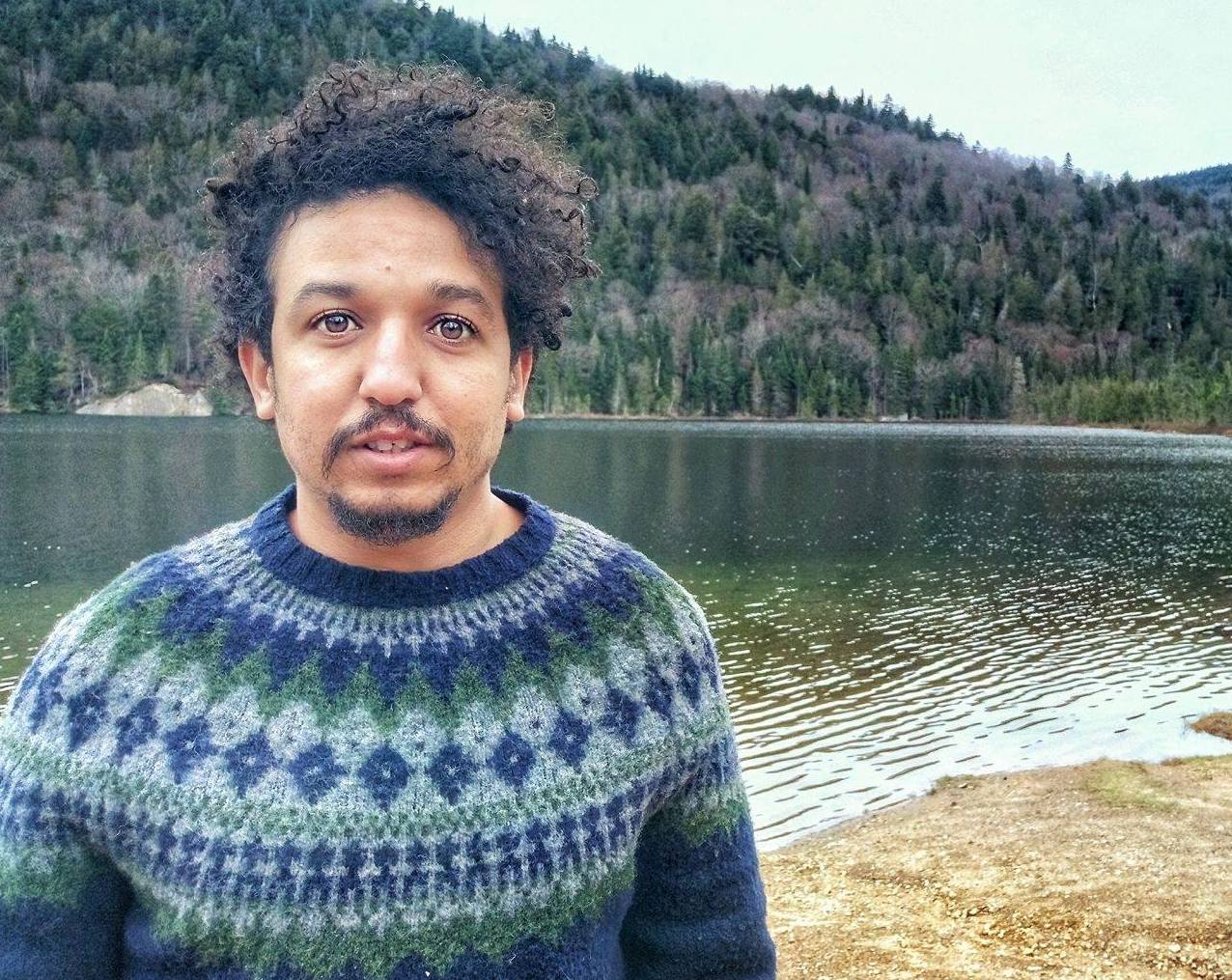
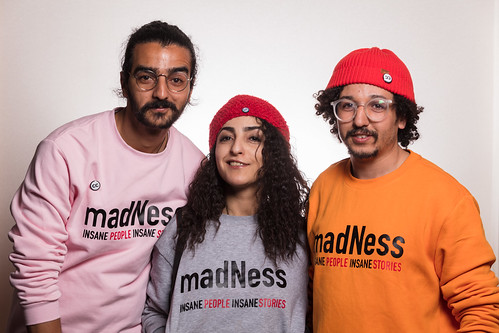
Mohamed Rahmo on how copyright reform will boost Morocco’s creative industries. Mohamed Rahmo is the catalyst for Morocco’s Creative Commons chapter and President & CEO of madNess, a non-profit dedicated to promoting creative industries and innovation. Here’s an edited transcript of Mohamed’s story:
The work we do as an NGO is to advocate on behalf of creative industries. We’re all about creativity for social impact. Our vision is to make Morocco a powerhouse in creative industries like graphic design, visual design, video making and video games, and to be a spotlight for creative industries in the world.
Mostly we work with creative people that quit their job and want to start freelancing, but are unsure how. We work with these people to structure their work, and we also have a large database of employers that need these people, like agencies or publishers, so that we can connect them together.
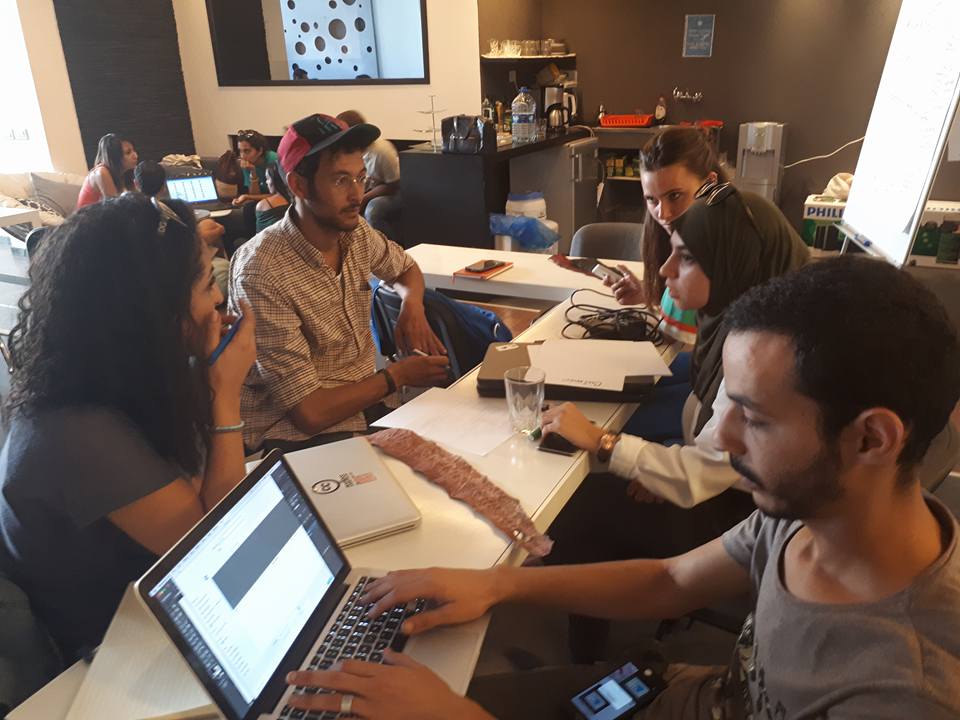
A workshop at the Bidaya social incubator in Casablanca, bringing together videomakers and social entrepreneurs
The other focus of our organization is advocacy. Here in Morocco the copyright act hasn’t been updated for 30 years, which is a shame. We want to advocate about the copyright act, because it’s directly related to creative work.
Take music, for example. If you want to print a CD here in Morocco, you have to pass through a crazy process of copyright. You have to pay a lot of money. A lot of people that want to make music here are very poor; even if they have the money to record, they don’t have the money to pay the copyright.
If they are able to choose Creative Commons licensing, and Creative Commons becomes legal here, we are going to have a revolution in the content industry. Our goal for the next two years is to pass a law to organize Creative Common as a part of the general scope of copyright.
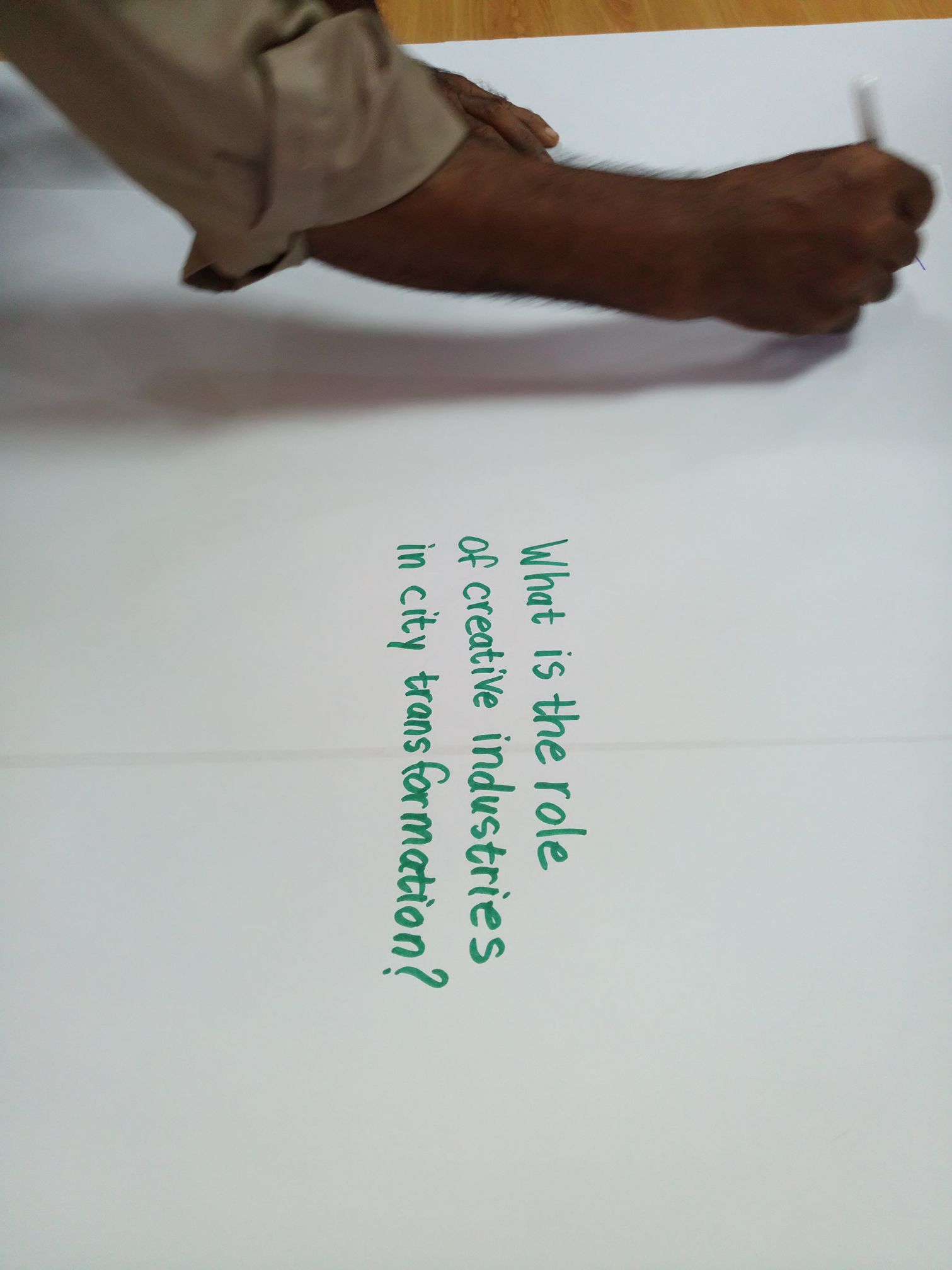
madNess workshop exploring creative industries and green cities
Hacking the consumer mindset
We created a project called CCCC, “Creative Commons Content Creation.” We wanted to host a day where everyone would come together and start creating creative or free licensing or content, and then put it online for free under Creative Common licensing.
We want to “hack the mindset” of people and transform them from passive to more productive, in a way that’s respectful to their life and means of production. And to educate people about Creative Common in a practical way. Our hope is that this will help make our advocacy work and passing copyright reform easier.
The real success is to use Creative Commons to change the mindset of people.
Last year, one of the interesting things that happened for me at the Creative Commons Summit was learning about how others were able to pass laws or challenge copyright policies. And also to share ideas and curriculum. We received help from the New York Public Library, which gave us a curriculum for 3D printing workshops. That’s exactly what we need as an organization that designs education programs: to see how other people do it for copyright or open education.
“The culture of fun”
What is it to share content through the Commons, and what is it to manage common things? We live in a common world. The city is the best invention or innovation humans ever came up with. Now we see how awareness around managing cities is rising. The future of the Commons and a common culture and common world and common philosophy — people are more aware about it.
When you advocate for Creative Commons, you advocate for a direct transformation of your society. You push people to a culture of sharing and a culture of open. If we increase the number of people who share or are involved in sharing — even if they just share a smile with people in the morning when they go out — that means a huge change in society. That’s the impact of the Creative Common on my personal life and my work in general.
This is for me the biggest trait of the commons, though it may sound like a hippie answer: to love other people, to try to understand other people, to share. I come from the belief that the more we are thankful, the more we receive. Whenever I give to someone something, whether it’s material or ideas, the more I receive.
And: it’s fun. I am an advocate of the culture of fun. I love fun. I love to have fun, because when you love what you do, and it’s fun, necessarily there will be a good result, because you enjoy doing your work.
“Build the Commons, so it is better for all”: CC Global Summit 2018
Like a Creative Commons event, this post will open and close with gratitude.
Thank you to everyone who attended, participated, tuned in, and raised their voices in support of the Commons this April, whether it was in Toronto with 435 other commoners or online through the stream and social feed.
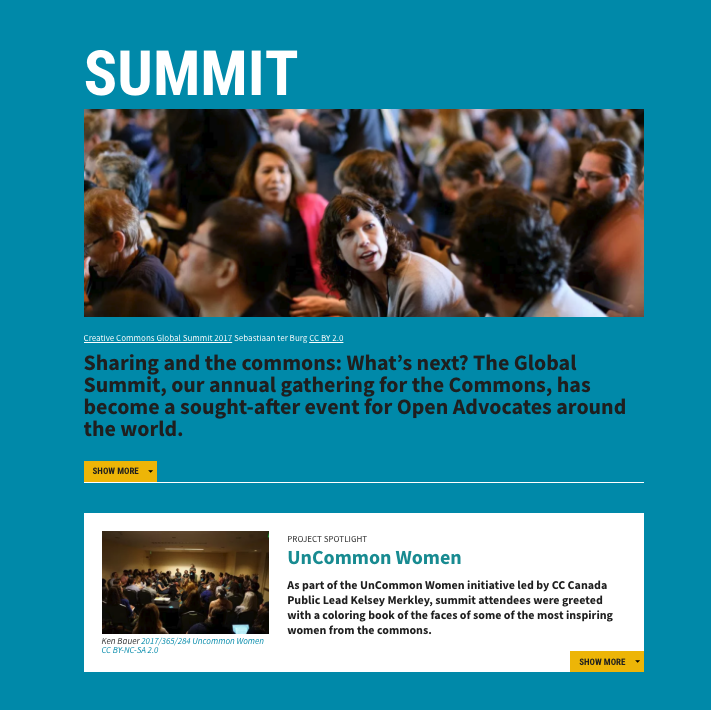
From April 13-15, Commoners gathered for workshops, discussions, seminars, and plenaries about the future of the Commons, the network, and what’s next for our community of sharing. Through snow, raining ice, and bitter cold, we kept warm at the Delta Hotel with a full agenda and the collective excitement of seeing each other, many of us for the first time in a year. (Did we mention we’ll be in Lisbon next year?)
The Summit opened with a packed breakfast for Summit newbies – more than 100 people came to eat and meet newcomers to the CC Community every morning. Arriving to find this year’s Uncommon Women coloring book on their seats and a snazzy new pin in their swag bags, attendees sipped their coffee as they enjoyed a variety of CC items.
Like last year, the opening session began with an invocation by Whabagoon (Patti Phipps-Walker), an Ojibway indigenous elder, who recognized the tribal roots of the land and said “Miig-wetch” (thank you) for our gathering place. Later that day, one of our most popular sessions discussed indigenous cultural heritage and intellectual property and its challenges and futures. In a charged panel, practitioners and academics discussed the historic harm to traditional knowledge and the concept of “sharing” and discussed alternative forms of cultural heritage demarcations, such as Traditional Knowledge (TK) labels.
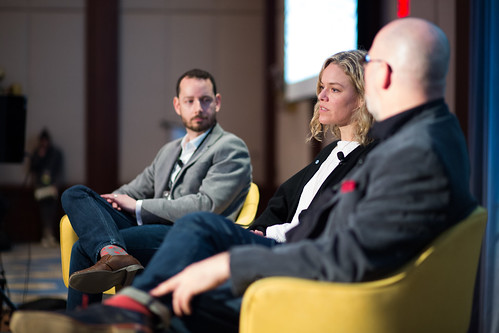
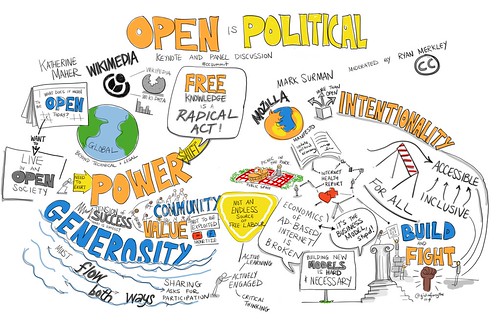
Wikipedia Executive Director Katherine Maher’s keynote and discussion on Friday asserted that free knowledge is inherently radical. She encouraged our communities to “lean into our values and our value,” and “build for the world we want to have.” Her keynote was a call to action for our communities to come together as a community of practice, resisting enclosures of knowledge and leaning into our collective power. “To be truly equitable, we need to acknowledge that the work is political,” she said. While for some, Open is a hobby or interest, for those at the margins, it can be inherently risky and difficult, a sentiment echoed by second keynote speaker Chris Bourg on Saturday.
In the discussion that followed, Maher discussed the future of the “Big Open” movement with Ryan Merkley, CEO, and Mark Surman, of Mozilla. All focused on the need for the Open Internet as an antidote to the current, broken system of ad-based and surveillance economies. For Open movements, the pull of enclosure and corporate utilization of the commons without giving back represent what the speakers called “the tension of success.” “We need to make sharing reciprocal,” said Maher, bringing the discussion to the need for governance and full community participation. “Participation must be active, not exploitative. We’re building the commons for everyone, not just those who are already in it,” she said.
Another highlight on Friday was the presentation of the first set of data from our annual State of the Commons report. These graphics, commissioned from designer Amy Collier, represented a sample of the full report designed by Affinity Bridge, which will be released this month.
Many participants attended the Uncommon Women session, where women leaders and allies in the movement discussed inclusivity and the need for more diverse voices in the movement. The Uncommon Women coloring stations throughout the event provided necessary connection and relaxation as well!
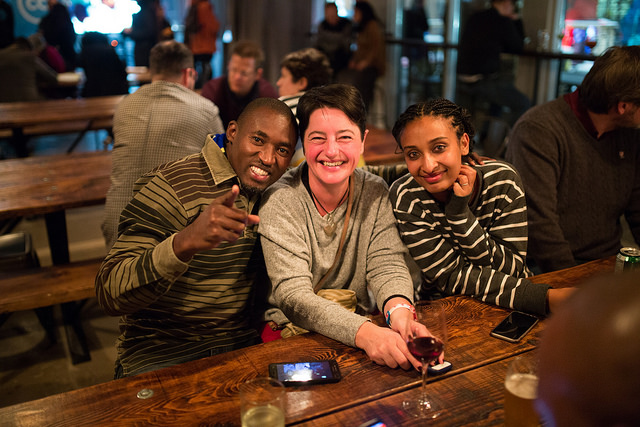
Throughout the Summit, more than 60 participants shared their stories at our podcasting popup “Humans of the Commons.” In a specially outfitted space, participants were interviewed by our partners at Loup about their experiences in the movement, their work, and their communities.
— Loup Design & Innovation (@listening_loup) April 15, 2018
The Future of the Network
During the Summit, our platforms, working groups, and network leaders met to discuss the future of their work. In the next year, the network will focus on recruiting, creating strong local teams, collaboration, and governance. In order to build collective, dispersed power, the network’s working groups and platforms in Open GLAM, Copyright Reform, Open Education, Community Development, Translation, and Communications met to discuss their future and next steps.
Great session on the future of the CC global network with @atarkowski@nicsuzor@claudio@ryanmerkley and others. Most valuable takeaway for me to think about change and new members as additive, not substitutional. #ccsummit
On Saturday, Jennryn Wetzler, our new Assistant Director of Open Education, opened up registration for the Creative Commons Certificate program this summer. From her blog post: “The CC Certificate provides an-in depth study of Creative Commons licenses and open practices – helping you become an expert in open licensing and the Commons. The program is offered both as a 10-week online course starting in July 2018 as well as a week-long, in-person bootcamp in 2019. In keeping with our values, we will openly license (CC BY) the Certificate content – making downloadable and editable file formats available for informal learning from our website by July 2018.”
Excited about new project from @creativecommons: CC Certificates for educators & librarians. Also looking to make course content available CC-BY for informal learning 🙌🙌https://t.co/PSYmkI8brb#ccsummit
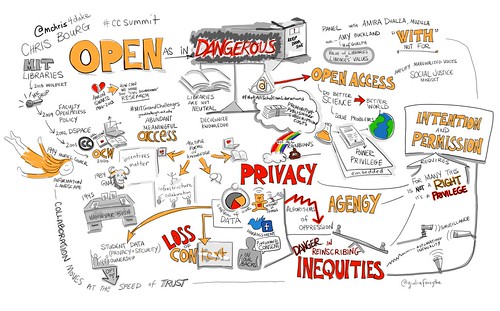
MIT Library Director Chris Bourg’s wide-ranging keynote and discussion “Open as in Dangerous,” discussed the need to address the “dangerous” parts of our movements in Open, echoing Maher’s assertion that free knowledge is a political act. “The best librarians are radical,” she said, and not only have libraries “never been neutral,” they “have the potential to be agents of decolonization and social change.” Social justice was a key message in Bourg’s talk, which emphasized the need for open access to knowledge to produce better research, ultimately making the world a more just place. “Individuals who have access to knowledge can lead better and more empowered lives,” said Bourg. In her conclusion, she discussed how online risks mirror real world structural inequalities in their uneven distribution among those with less societal power. “’Open as in Dangerous’ is about loss of control, of privacy. For marginalized people especially, the very danger of being open is the danger of being targeted for abuse,” she concluded.
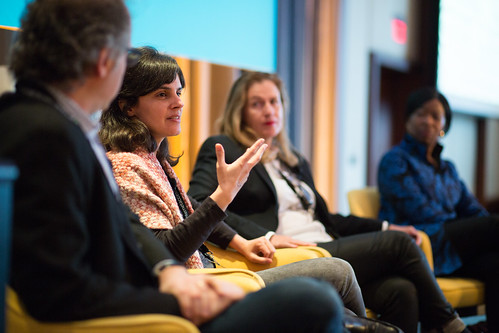
In the panel discussion that followed, Amira Dhalla of Mozilla, Amy Buckland of University of Guelph, and Bourg discussed the balance of Open, privacy, and sharing. Discussing the need to deemphasize dominant discourses in order to focus on meaningful collaborations that challenge hegemonic structures, the speakers emphasized relationships in subjects like web archiving, privacy, and decolonization in open projects. Intentionality was a key focus for the speakers, who come to Open from a variety of backgrounds. The conclusion of the discussion emphasized the need to build trust into systems, recognizing histories of oppression and colonization that continue to impact the structures of power that exist today.
“Out of that defeat, you were born”
The packed room for Lawrence Lessig’s talk “From Unlocking Free Culture to Reviving American Democracy” listened, rapt, as he outlined his career from copyright to representational democracy. For Lessig, the Eldred defeat was the catalyst for his years of work on the role of big money in government and law, and his founding of Creative Commons in the process.
Like copyright, asserted Lessig, the fight for a more representational government is a fight for integrity. Unlike copyright, people are already convinced – the common view in the United States is that government is nonrepresentational. “Keep your values in sight,” concluded Lessig, after discussing his role as “digital Cassandra” in 2001 and the community’s failing of Aaron Swartz, Creative Commons co-founder. After a moving and inspirational talk, the audience’s appreciation of Lessig’s years of work to end systemic corruption was apparent as they rose in acknowledgment and support.
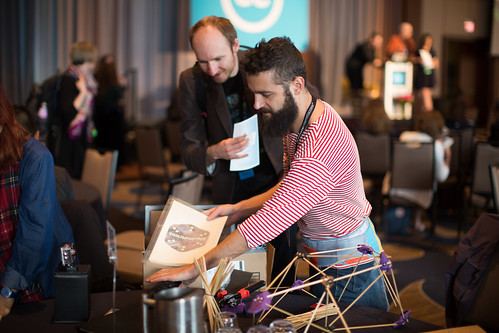
Makers at the CC Summit found their kin at the Open Bazaar, a space to meet and greet projects from around the commons. From Open Textbooks to 3D printing, projects from around the world were represented as part of the meet and greet format.
— lil (library innovation lab) (@HarvardLIL) April 13, 2018
Party for the People (of the Commons)
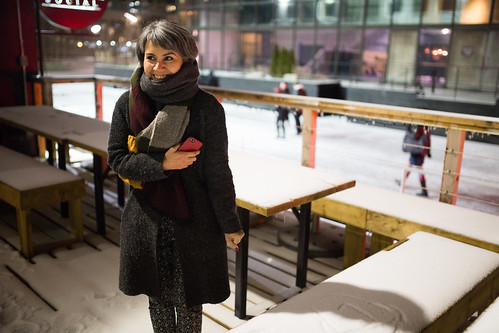
At Boxcar Social, a hip bar on Toronto’s waterfront, Summiteers braved the snow and joined our Commons People Party, a welcoming space where they could warm up with wine, whiskey, and good company. The party featured a screening of Vincent Moon’s Hibridos, the multimedia documentary based on Moon’s travels in Brazil. Read an interview with the filmmaker.
“Cultural goods are not treasure troves to be locked up by the people who can afford them.”
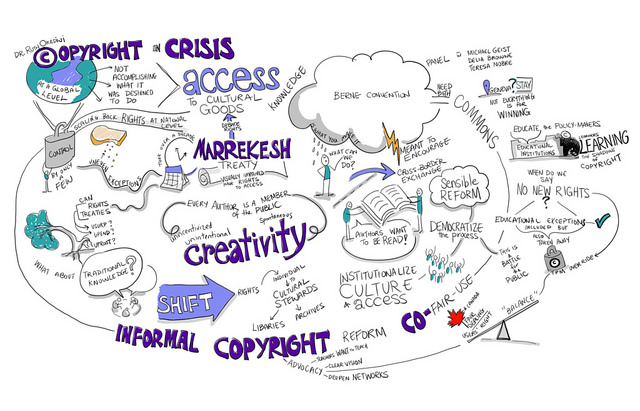
Professor Ruth Okediji, Jeremiah Smith, Jr. Professor of Law at Harvard University and Co-Director of the Berkman-Klein Center, gave the final, resonant keynote of the Summit, focusing on her work for a more just international copyright system. Dr. Okediji stressed the need for better policy to open up resources for equality internationally. She discussed her work on the Marrakesh Treaty, a copyright exception to support individuals with visual impairments, and connected it to the need for expanded exceptions and limitations and a better global copyright policy.
Copyright, she claimed, has become a means of control by the few to dictate the access of the many. “Authors want to be read,” she asserted, and said that the use of copyright as a means of control is “troubling.” In the panel discussion that followed, Dr. Okediji discussed the future of copyright with Teresa Nobre, CC Portugal Legal Lead, Michael Geist, Canadian Research chair at University of Ottawa, and Delia Browne, Australian National Copyright Director. In the discussion, they talked about the need for sustained engagement with copyright policy. In the words of Dr. Okediji, “We don’t win just by showing up at the end.” Copyright as a tool to empower citizens and create power through access was a theme in the discussion, which brought together some of the most important lawyers working on exceptions and limitations today.
“The most fitting way to do justice to the legacy of Bassel Khartabil and his family, is to lift up the voices of those like him.”
On Sunday, we announced the inaugural recipients of the Bassel Khartabil Free Culture Fellowship and Memorial Fund with our partners. After a statement from filmmaker Dana Trometer, a friend of Khartabil’s, the fellowship was awarded to Majd Al-shihabi, a Palestinian-Syrian engineer based in Beirut whose work focuses on oral history and the digitization of public domain Palestinian maps. The Fellowship was presented alongside three inaugural Bassel Khartabil Memorial Fund grants, awarded to Egypt-based The Mosireen Collective, and Beirut-based organizations Sharq and ASI-REM/ADEF Lebanon (Arab Studies Institute-Research and Education Methodologies / Arab Digital Expressions Foundation).
After the presentation of the awards, award-winning filmmaker Yasmin Fedda screened part of her upcoming film Ayouni, still in production, which will focus on the more than 10,000 disappeared people of Syria, including Khartabil. The film’s footage tells the tragic story of Khartabil and his wife, human rights lawyer Noura Ghazi, who has been fighting for justice since his disappearance in 2012.
“Realizing the full potential of the creative spirit that is demonstrated by the internet”
Over lunch, participants enjoyed a “fireside chat” on the past and future of Creative Commons with Molly Van Houweling, Lawrence Lessig, and Claudio Ruiz.
As usual, the creativity of our community was on full display at this year’s Summit. From the whimsical swag to the gorgeous window displays of our community’s photos, we lit up the commons through photography, video, and even live theater – the Summit concluded with a performance of CC Portugal’s “Copywrong” play.
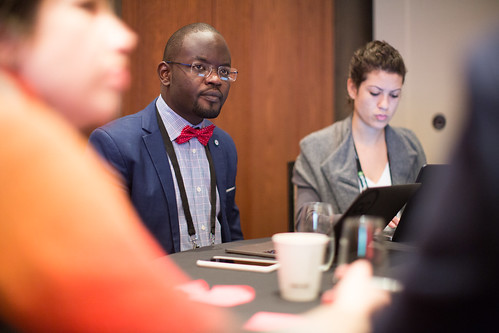
Photographer Sebastiaan Ter Burg’s openly licensed photos capture the faces and moments that made the Summit shine.
To close with gratitude, thank you. Thank you to the 435 attendees from 64 countries, the 192 speakers, the 26 volunteers, the staff, the programming committees, the sponsors, and the Commoners who traveled a collective 1.56 million kilometers to join together and share in our community. Until next year in Lisbon!
So much gratitude for everyone at the CC Global Summit this weekend. See if you can spot yourself in this video of great #ccsummit moments by @ter_burg. https://t.co/F71OlFPAOz
All photos linked to source, most photos CC BY, Sebastiaan Ter Burg, except Keynote Drawings by Giulia Forsythe, CC BY and CC0
Mexican Senate passes changes to copyright law that would censor content online
Digital rights organisations in Mexico are sounding the alarm after the Senate approved changes to the copyright law that would censor information online. The measures would allow for the preemptive removal of content without having to prove that a copyright infringement has actually taken place.
Yesterday the Senate approved the modifications to the Federal Copyright Law, with 63 votes in favor, 11 against, and 23 abstentions. The Senate voted with little internal discussion, and without the knowledge of or input from civil society organisations or the public.
Essentially, the changes to the law would permit courts—without holding a trial—to preemptively remove online content which is suspected to be an infringement of copyright, or even to seize equipment such as servers and routers that facilitate access to allegedly-infringing material.
This practice is unjustified and harmful to freedom of expression. Luis Fernando García from R3D noted that the approved changes “clearly constitute a measure of prior censorship, in violation of article seven of the Mexican Constitution.” In addition, the law seemingly contravenes Article 13 of the American Convention on Human Rights (ratified by Mexico), which establishes that freedom of expression “shall not be subject to prior censorship” except for in specific circumstances—which does not include enforcement of copyright.
This is a very troubling development, with potentially massive negative implications to both access to information and due process of law. We’ll continue to work with our partners in Mexico to monitor and act on this issue.
Organizaciones de la sociedad civil en México han hecho sonar las alarmas después de que el Senado aprobara cambios a la ley de derecho de autor que podría permitir la censura en línea. Estas medidas permitirían la remoción preventiva de contenido sin tener que comprobar que ha ocurrido una violación al derecho de autor.
El día de ayer, el Senado aprobó las modificaciones a la Ley Federal del Derecho de Autor con 63 votos a favor, 11 en contra y 23 abstenciones. El Senado votó con muy poco debate de por medio y sin el conocimiento o la participación de las organizaciones de la sociedad civil o del público.
En esencia, estos cambios permitirían a las cortes, sin juicio, eliminar de forma preventiva contenido que, se sospeche, estaría violando el derecho de autor. Incluso permitiría el decomiso de equipo de cómputo como servidores y ruteadores que hayan sido utilizados en la supuesta infracción.
Esta forma de actuar no tiene justificación y es dañina para la libertad de expresión. Luis Fernando García, de la organización R3D comentó que los cambios aprobados “constituyen claramente una medida de censura previa, en violación al artículo séptimo de la Constitución Mexicana”. Así mismo, la ley parece contravenir el Artículo 13 de la Convención Americana de Derechos Humanos (ratificada por México) la cual establece que la libertad de expresión “no deberá estar sujeta a censura previa” a excepción de en ciertas circunstancias dentro de las cuales no se encuentran las infracciones al derecho de autor.
Este es un evento muy desafortunado que tiene implicaciones muy negativas hacia el acceso a la información y al debido proceso. Continuaremos trabajando con nuestros colaboradores mexicanos para monitorear el progreso de esta situación.
56 organisations tell EU legislator to delete the absurd link tax
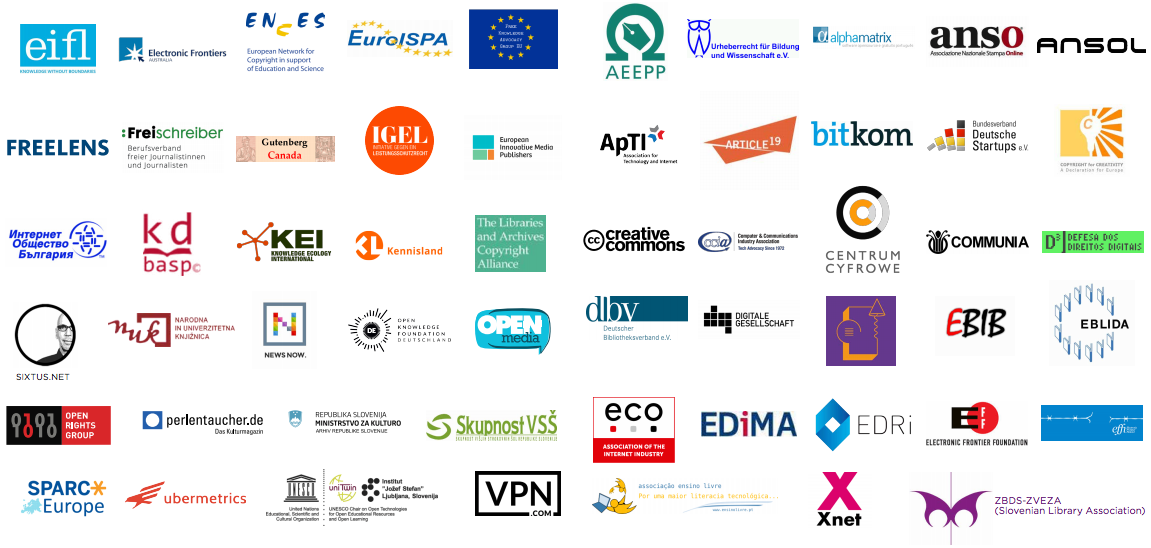
Creative Commons and 55 organisations sent a letter to the head of the European Parliament’s legal affairs committee, MEP Axel Voss, urging him to remove the harmful and counterproductive press publishers right from the EU copyright reform docket.
Last month, we wrote about the proposal floated by Voss that would take the already-harmful press publishers right and make it even worse. This new right, laid out in Article 11 of the draft Directive on Copyright in the Digital Single Market, would introduce an additional right for news websites to extract fees from news aggregators for incorporating short snippets of—or even linking to—their content. Voss’ proposed changes assert that press publishers will receive—whether they like it or not—an “inalienable right to obtain an [sic] fair and proportionate remuneration for such uses.” This means that publishers will be required to demand payment from news aggregators. Such an inalienable right directly conflicts with publishers who wish to share freely and openly using Creative Commons licenses. Forcing publishers who use CC to accept additional unwaivable rights to receive payment violates the letter and spirit of Creative Commons licensing and denies publishers the freedom to conduct business and share content as they wish.
In addition, Voss proposed to expand the scope of beneficiaries of Article 11 to cover not only press publishers, but also news agencies. This could have the effect of inappropriately granting copyright-like protection to facts and compilations of basic information.
The coalition letter reinforces the pervasive danger to access to information, the right to link, and the development of a free and pluralist press.
Voss’ proposal must be rejected, and Article 11 should be deleted. An additional right for press publishers won’t support quality journalism or grow the digital single market. Instead, it will negatively affect access to information and the ability for publishers to share using the platforms, technologies, and terms beneficial to them.
A Thank You to Everyone Who Supported Diego and Open Access to Knowledge
In December Diego Gómez was finally cleared of the criminal charges levied against him for sharing an academic research paper on the internet. The Tribunal de Bogotá—the Colombian appellate court—affirmed the lower court’s acquittal.
Gómez is a scientist from Colombia who had been criminally prosecuted for the last three years for sharing an academic paper online. When Diego was a student in conservation biology, he had poor access to many of the resources and databases that would help him conduct his research. He found and shared an academic paper so that others could read and learn from it. Gómez didn’t get permission to reshare the article, and subsequently was prosecuted for copyright infringement. He faced up to eight years in prison, along with a substantial monetary fine.
A global campaign—Compartir no es Delito (Sharing is not a Crime)—has been supporting Diego since 2014 – The campaign is now complete. But it’s important to recognize the incredible efforts of everyone involved. First, thank you to Diego for his courage and perseverance during the legal case against him. He continued to stand and fight under immense pressure, including financial uncertainty and the possibility that he would have to serve a prison sentence. Second, thank you to the incredible civil society organisations that immediately jumped into action to organise and collaborate in defense of Diego, and to show their support for open access to research. These efforts were led by the Colombian digital rights organisation Fundación Karisma, with support from groups including Derechos Digitales, Electronic Frontier Foundation, SPARC, Creative Commons, and many others. Finally, thank you to the journalists, op-ed writers, crowdfunding supporters, and hundreds of individuals around the world who shared Diego’s story with friends, family, and the world through writing and social media.
Diego’s case is over, but surely it won’t be the last time overzealous rights holders try to leverage copyright to suppress the sharing of scientific research meant to be shared with the public for the good of everyone. As we’ve said again and again, instead of prosecuting students for sharing knowledge, governments and communities should be encouraging the free exchange of scientific information by reinforcing positive norms around scholarship and collaboration, promoting open access to research, and eliminating out of control copyright penalties that serve no reasonable public interest purpose. Furthermore, we should encourage our governments to boost national legislation that promotes the release of public funded research results as open access.
Thank you to Diego, and everyone who has supported this campaign and movement. You can read more about Diego’s case here, and learn about open access here.

 Vanessa Proudman, Director of SPARC Europe, framed the workshop looking at the current context, goals and challenges with rights management. She shared
  Brianna Schofield, Executive Director of Authors Alliance,