Help us protect the commons. Make a tax deductible gift to fund our work. Donate today!
Everything really is political
Everything is political
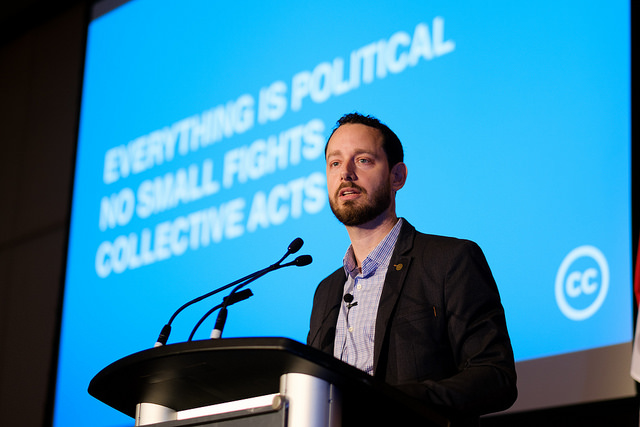
With these welcoming words, Creative Common’s CEO Ryan Merkley confirmed I was in the right place. It was my first time at the global Creative Commons summit, and though I knew a bit about Creative Commons, this was my first adventure into meeting and learning from the community.
Image by Sebastian Ter Burg, CC BY
The open data community that I’m part of has a lot of overlap with the Creative Commons space. Not just because we both talk about licenses for data or content, but moreso due to our community’s enthusiasm to use tech and data and information to further our shared values – chief amongst them, a belief that open is better.
In Canada we’ve got great momentum going in terms of applying this belief to how our government works. Code for Canada has recently launched, we’ve got a new chief digital officer in Ontario, and adoption of the Open Data Charter at the federal and provincial governments. Cities across Canada are showing renewed focus on their open data plans. So how to build on this momentum of openness?
By increasing our political action. Many of us have a handle on how tech and systems work, how they can be open, how they can be applied – and yes, we’ve got lots of opinions on it all too. As a community, we need to show up more to support our governments in their work to do tech right.
When I needed a jolt of inspiration in doing this work a few years back, I watched the Internet’s Own Boy, a documentary about Aaron Swartz, in Lawrence Lessig’s words, “one of the early architects of Creative Commons”. To help share this inspiration and keep the discussion moving along, we’ll be hosting a joint movie night, put on by the Toronto Public Library, Creative Commons Canada, and the Open Data Institute of Toronto – details will be shared as we have them.
Aaron had a fierce political belief in the power of opening up information. It’s on us as a bigger and broader open community to think strategically about what we can do politically to make sure this happens. I’m excited for our communities to continue to converge and collaborate and I’m grateful for the summit experience that confirmed another global community of people keen to do this work.
Bipartisan Legislation Would Ensure Open Access to Government Data
In the United States, there are two bills making their way through Congress that would require all government data to be made available in open and machine readable formats by default. The OPEN Government Data Act has been introduced in both the House of Representatives (H.R. 1770) and the Senate (S. 760). The bill would ensure that federal government data is “open, available, discoverable, and usable to the general public, businesses, journalists, [and] academics.” The legislation would codify the Obama administration’s 2013 Executive Order.
Along with the Data Coalition, Creative Commons and a group of over 80 organisations wrote to the House and Senate asking for their continued support:
First and foremost, this legislation would institutionalize the federal government’s commitment to open data and allow the United States to remain a world leader on open data. Second, adopting a policy of open by default for government data would ensure that the value of this public resource would continue to grow as the government unlocks and creates new data sets. Third, a firm commitment to providing open data as a public resource would encourage businesses, non-profits, and others to invest in innovative tools that make use of government data. And, according to the Congressional Budget Office’s review of the 2016 unanimously passed Senate bill, taking these steps would not have a significant impact on agency spending.
Another bill—the Preserving Data in Government Act of 2017 (S. 960)—has been introduced in the Senate. Similar to the OPEN Government Data Act, this bill acknowledges the importance of publishing data in open and machine readable formats. It focuses on ensuring that federal government data sets be adequately preserved for long term access and use.
The introduction of the bills are a breath of fresh air within a political environment that has jeopardized access to government data on topics such as climate change. The bipartisan support for this legislation demonstrates that sharing publicly-funded data under open licenses and in machine readable formats can be an important tool to improve access and reuse of data for both the public and private sectors.
As a Copyright and Digital Scholarship librarian, I spend a lot of time talking to people about the rights they have to the things they create, and as an active member of the open community, I often find myself encouraging others to apply Creative Commons licenses to their work. For these reasons, I was thrilled to have the opportunity to attend and speak at the Creative Commons Global Summit in Toronto. I was looking forward to meeting a community of individuals committed to openness connected through a tool that facilitates openness in scholarship and art,but I also was new to the idea of the commons, and I was drawn to the summit partially through a deep curiosity. What – or who – made up the commons? How did they work? And how could I make my way into the heart of the open movement?
But I was also wary of this environment – a microcosm of open superheroes that could easily turn into a Batman vs. Superman situation. When you have devoted your career to advocating for a cause, it can be inspiring to see how others achieve similar goals. But it can also be difficult to be open to ways others achieve those goals, especially when they conflict with your own modus operandi. On the other hand, these events can create a self-congratulatory echo-chamber, where people are unable to engage in a meaningful and critical discourse that helps to generate meaningful, future-oriented action. At events that gather smart, hard-working, and dedicated advocates, striking this balance can be tenuous.
The Creative Commons Global Summit has set a gold standard for this balance. From the moment a smiling volunteer handed me a name-tag, I felt warm, welcome, and safe in this space. Even before the opening remarks, I met and connected with brilliant people both within the Western library world that I was familiar with, but also people from outside of libraries and academia, and people from all over the globe. So rarely can an organization succeed at creating an aura of effortless inclusivity. From the Women of the Commons colouring book under every chair, to the unveiling of New Palmyra, every action taken by the organizers was brushed with these undertones. It was unspoken but evident in each action.
This commitment to inclusivity made Ashe Dryden’s keynote all the more powerful. She began with primer on time travel –light and accessible – then she dug a little deeper. As she spoke about the importance of bringing in new voices to open, about giving people an opportunity to express themselves and to shape this space, she not only empowered every person in attendance who did not feel they had a voice in the community to speak, but the also mandated those with a voice to take a breath, step back, and listen. Her talk enabled us all to be individuals, and allowed us to feel like we are the commons. I came to Creative Commons looking for an in, but the door was always open.
Lively Discussions at the CC Summit Author Salon
Andrew Malcolm is an author and a freelance communications specialist. His creative writing is published on his website, along with his author bio.
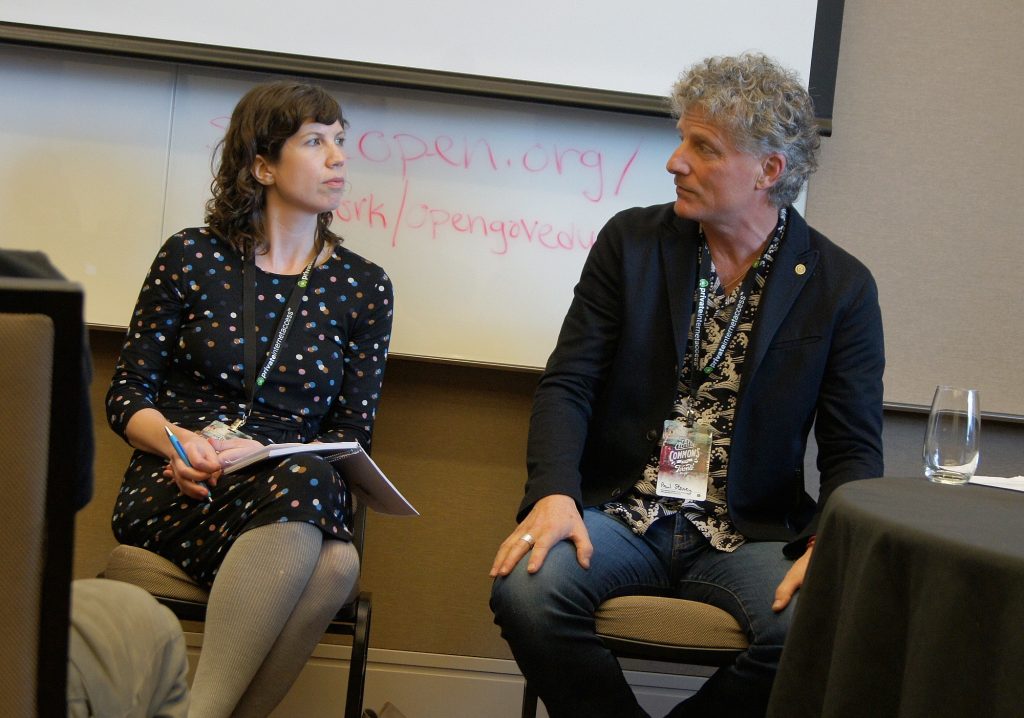
When I walked into the large ballroom to attend the author salon, I was pleased to find the attendance was modest enough that we could sit with all three authors in a circle and have a discussion that, as Paul Stacey described at the end of the session, “Felt more like a podcast than a workshop.” With each question igniting long conversations, and the discussions ultimately illustrating shared objectives and processes behind the three books, we all walked away happy to have the lively dialogues recorded, if not on our computers, at least in our memories.
The authors of the three books, Paul Stacey and Sarah Pearson, Maira Sutton, and Matt Thompson write about the commons, sharing, and economic models for working open. While Stacey and Pearson’s book Made with Creative Commons was the only one completed and in the hands of every attendee, all three authors shared intimately about their process as creators. Paul began the salon and said, “We started writing a book about open business models that were successfully earning profits, but as we interviewed entrepreneurs, creators and organizational leaders using CC licenses, we were surprised to find that our initial framework for understanding their success was misguided. Yes, they were earning profits, but that was never the objective of the work – their objectives were always something more socially conscious, and their earnings were meant to sustain the pursuit.”
Maira Sutton, talking about sharing cities, said she hoped to see the same diversity of objectives take the place of profiteering in our economies. As Manager of Community Engagement at Shareable, she campaigns to promote sharing and solidarity economics, and is working with them on a book called “Sharing Cities: Activating the Urban Commons” – a collection of case-studies and policies that exemplify commons-based sharing services.
Matt Thompson, a Mozilla Fellow, also introduced his book as one that advocates for a change in the way people work, though some specifics were still coming together: “My book is called Working Open: And I’ve had about a million ideas for a subtitle, but nothing solid yet.” All three projects seemed to bring surprises in the research that changed the author’s own understanding of what their work was illustrating, so a constantly shifting subtitle was understandable. Matt is interviewing people who are part of the most exciting open source projects and writing about how they are exemplifying the power of collaboration.
Needless to say, I was thrilled to have a chance to speak with authors who are working on the leading edge of a new era in publishing and licensing, but our conversation quickly turned to the biggest challenge each author faced – overcoming resistance to change.
Maira said, “What we want to do is convince cities to create policies that regulate the sharing economy so that they’re more conducive to community organizations, non-profits and coops. Still today most people think of companies like Uber and Airbnb when they think of the sharing economy, but their profit only objectives are proving to be bad for fairness, equality, and even safety for both providers and customers.”
Matt asked Maira, “Do you find city counsellors and policy makers are resistant to changing the rules to accommodate grass roots movements instead of companies?” This is how we know when an author salon is going well – when the authors start asking each other questions.
“Yes, but once we can point to other projects that are successful, they become much easier to convince. They’re just trying to make decisions that are best for the city, but it’s difficult for policy makers to decide to do anything new themselves. Once you can show that other cities have adopted policies and projects that work, that bring real value to their citizens, then it’s easy to get them on board,” she responded.
Matt said, “That’s what I find with many of the business leaders I’ve interviewed. The idea of working open, of revealing all their companies’ secrets and inviting outsiders in, really scares them. But they’re starting to notice that working open is actually creating the best possible products, that Wikipedia really is the best knowledge resource ever created. And despite GM and other large corporations investing heavily into developing the best self-driving cars, it’s OSVehicle’s open source platform for Edit that’s set to lead the way for the industry.”
The three books advocate to different audiences: Paul and Sarah’s to creators and organizations that could benefit from applying Creative Commons licenses to their products, Matt’s to business leaders who would benefit from creating open-work environments, and Maira’s to civic leaders who could create true sharing cities. Despite the disparate audiences, by the end of the session a commonality emerged – it’s examples and case studies that are most effective at changing minds and showing the value of commons-based approaches.
There are already people and organizations around the world working to ensure that the global economy is driven by something more than profits and growth. But they’re still the minority, and if that’s ever going to change, clearly we need to keep looking for those who are on the leading edge of social justice movements and telling their stories. Those stories can show leaders that objectives based in achieving equal rights to housing, food, knowledge, a sustainable environment and all our hopes for social change are already driving people to innovate and create with far more originality and ambition than ever before.
Creative Commons Summit 2017: Coming together as a community of gratitude and sharing
Gratitude brings lasting transformative change and greater well-being to communities through providing recognition, reflection, and grounding. Creative Commons focuses on uniting a community of makers in gratitude, and this year’s CC Global Summit was reflective of this focus as well as our renewed organizational mission “to build a vibrant, usable commons powered by collaboration and gratitude.”
From April 28-30, nearly 400 commoners gathered in Toronto, Canada in support of the commons for three days of connecting, collaboration, and debate. The summit outlined some big, audacious goals for the commons, and the community showed its enormous capacity to rise up to meet them. Together we completed the network strategy discussions to grow our movement, began designing collaborative platforms for shared global action, had hundreds of vital discussions on copyright reform, technology, education, science, and so much more.
As facilitators of the summit, we sought to maintain an inclusive, inviting space for our participants as well as thrill and delight our community and friends. While the sessions were certainly informative, other projects like the Se Oye Libre radio station, which streamed live during the summit and provided interviews and music all day, were a fun and invigorating glimpse into the incredible work our communities are doing around the world.
What makes the Creative Commons community unique is its diversity of scope and geographic breadth. From artists to activists to copyright wonks, there was truly something for everyone at the summit. In addition, through collaboration with projects like Virtually Connecting, our major scholarship program, and Gender Avenger, we encouraged participation from around the world from a variety of perspectives.
In this spirit, we opened the summit with an invocation to gratitude and an opening of the space from Whabagoon Walker, an Ojibway indigenous elder who taught us the word “Meg-wetch,” giving thanks to all around us. Deb Matthews, Deputy Premier of Ontario shared Ontario’s plan for becoming “open by default” and the government’s role in facilitating the move. Her invigorating talk was followed by David Lametti, Parliamentary Secretary to the Minister of Innovation, Science and Economic Development, who encouraged openness as part of a balanced copyright regime in Canada.
Creative Commons CEO Ryan Merkley’s opening speech outlined three main tenets in order to guide the summit and the community’s course: Everything is political, no small fights, and collective acts. These statements are at the core of his vision for Creative Commons and help us perpetuate a culture of openness. In order to underscore the importance of gratitude, Ryan also revealed a new bronze CC pin that is not for sale, but rather given as a gift to people who are promoting a culture of gratitude in the community.
Other highlights of the opening session included an unveiling of a project by CC Canada Public Lead Kelsey Merkley called “Uncommon Women,” a coloring book of illustrations of some of the women who are most important to us as an organization and network. In addition, Jane Park announced the release of the 2016 State of the Commons, our largest annual report yet. Our thanks to all the translators, volunteers, and community members who participated in this project.
After admiring the tetrapylon, participants came back for a presentation that celebrated the conclusion of the development of CC’s new Global Network Strategy from Board Chair Molly van Houweling, Ryan Merkley, Evelin Heidel (Scann), Delia Browne, Alek Tarkowski, and Claudio Ruiz. With the strategy now complete, the hard work of community implementation begins.
Scann’s discussion of diversity was particularly important to the discussion as she encouraged participants to rethink their privilege and enable new global voices in the community.
After lunch, participants broke out into to a number of sessions in the five tracks: Usable Commons, Community and Movement, Policy and Advocacy, the Future of the Commons, and Spheres of Open. Highlights from these sessions included our Awesome Funded project “Copywrong,” which discussed copyright in performing arts spaces, an overview of Anna Mazgal’s research into what makes Creative Commons communities work, Paula Eskett’s talk on CC for education, and Maira Sutton’s talk on Sharing Cities, a new initiative from Shareable. Jesse von Doom from CASH music also ran a popular session on CC in the arts community.
Deep discussion of the copyright of the moonwalk going on here at copywrong #ccsummit
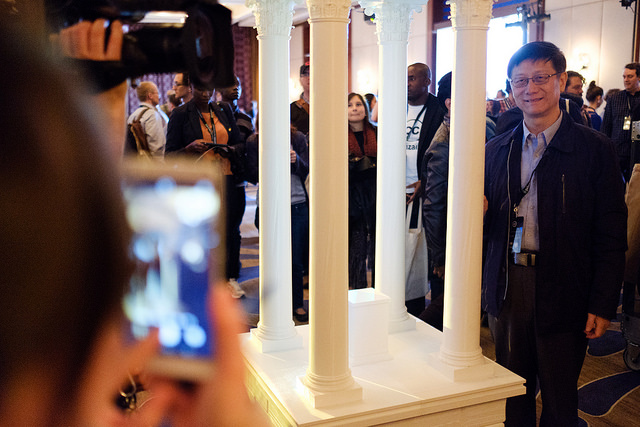
We ended the day with a surprise talk from Barry Threw of #NEWPALMYRA on creative reuse in cultural heritage and community autonomy through digital openness. Matthew Fielder of re:3D closed out the day by demonstrating how his team built the tetrapylon over 800 hours with the Gigabot 3D printer. Fielder’s talk also focused on how his company emphasizes social good, community, and openness for innovation.
Even our breakfasts were active – the Summit Newbies breakfast led by Simeon Oriko attracted a new form of summit self-expression: self-portraits!
Not used to selfies yet but that was awesome breakfast session with Klaudia Grabowska and @SimeonOriko and all newcomers to #ccsummitpic.twitter.com/R25TxyUskI
Among the many exciting sessions at the summit, one highlight for participants on Saturday was the joint publisher’s session on three CC licensed publishing initiatives for early readers around the world. Saturday morning also included a session from Kelsey Merkley on making a living while working open, one on text and data mining, and one on CC’s role at the World Bank.
Before lunch, we had our first keynote from diversity activist Ashe Dryden called “Time Traveling: A Primer,” which discussed why compassion and sharing is more important than efficiency in building a better world. Dryden discussed the importance of intent and positivity in our communities as we struggle to reconcile the future of tech. Dryden emphasized “sustainability” and inclusivity” in communities and she drove the point home through an entertaining and often humorous talk. Oh, and there were also buff shark people.
During lunch, the filmmaker Robin McKenna graciously stopped by to screen early footage from her film GIFT, based on the Lewis Hyde book The Gift. McKenna spoke beautifully about the gift cultures around the world and shared some thoughts with Ryan Merkley about her journey to filmmaking.
After lunch, Sarah Pearson and Paul Stacey presented the first copy of their book Made with CC to the Toronto Public Library in a presentation with Pam Ryan, representing the largest library system in the world. Next, we heard a keynote by Sarah Jeong, a lawyer and journalist who Sarah Pearson of CC claimed has “The rare gift of being both very funny and a lawyer.”
Sarah Jeong’s incendiary talk “This is the way the world ends” was a fitting complement to Ashe Dryden’s future-forward talk. In her talk, Jeong outlined the issues with the current media landscape, which privileges clicks over meaningful content, encouraging participants to “fight against the monopolization of speech that exists purely for economic gain.” Creative Commons, in her estimation, “helps fight against the monopolization of our channels of speech that exist solely for economic gain.” She concluded by asserting that “Creative Commons is a way out… it’s not a hobby, it’s a moral imperative.”
Still buzzing from Sarah’s keynote, we heard talks about kickstarting a copyright platform for CC, continued Virtually Connecting, and enjoyed a vibrant “Messy Market” for creators and CC enthusiasts alike! Read more about Virtually Connecting on our blog.
Another highlight of the afternoon was the Made with Creative Commons author discussion, where Sarah Pearson and Paul Stacey discussed their process as collaborators with Ryan Merkley.
After an entire day of activities, we just couldn’t get enough, so we ended the evening with a rad party from the listener supported nonprofit dublab and international DJs Basic Soul Unit and Invisible City.
Some highlights from the Sunday morning talks included a discussion on CC’s legal infrastructure with Diane Peters in order to kick off a collaboration for legal initiatives around the world. The same set of talks also brought us a discussion on teaching 3D printing as a means of teaching entrepreneurship with the New York Public Library and Shapeways.
After the break, we had talks from Laura Hilliger, who discussed community-based design at Greenpeace and the importance of community collaboration as well as from Capture Canada and Unsplash, two Canadian platforms revolutionizing photography.
Our last keynote block opened with Ana Garzón Sabogal, a free culture activist and educator in Colombia in conversation with María Juliana. Sabogal spoke about her work in post-conflict zones in Colombia and advocating for openness through storytelling and coalition building.
Our final keynote was Hillary Hartley, Chief Digital Officer of Ontario, a last-minute keynote addition who definitely delivered! She spoke of the lessons she learned at 18f while leading a team for digital services delivery for the United States Government. In a compact, smart talk called “Transforming Government Through Openness,” she encouraged the audience to “lead by example” to transform digital spaces. Hillary’s talk discussed how “thinking like a designer” and creating an open door policy can lead to big, transformative change.
— antischokke@mastodon.social (@antischokke) April 30, 2017
Our final few blocks of talks included sessions on patent reform, user rights, usability, and Latin American Communities. It also included a series of platform discussions on Big Thinking about the Commons, Open GLAM, and Open Education.
In the spirit of the commons, we the CC Global Summit ended with gratitude: for our event coordinators, to our staff, for our affiliates and volunteers, and finally for ourselves. Together we made this happen, and we couldn’t have done it without all of our friends and supporters.
Mainstreaming OER in Latin America and The Caribbean
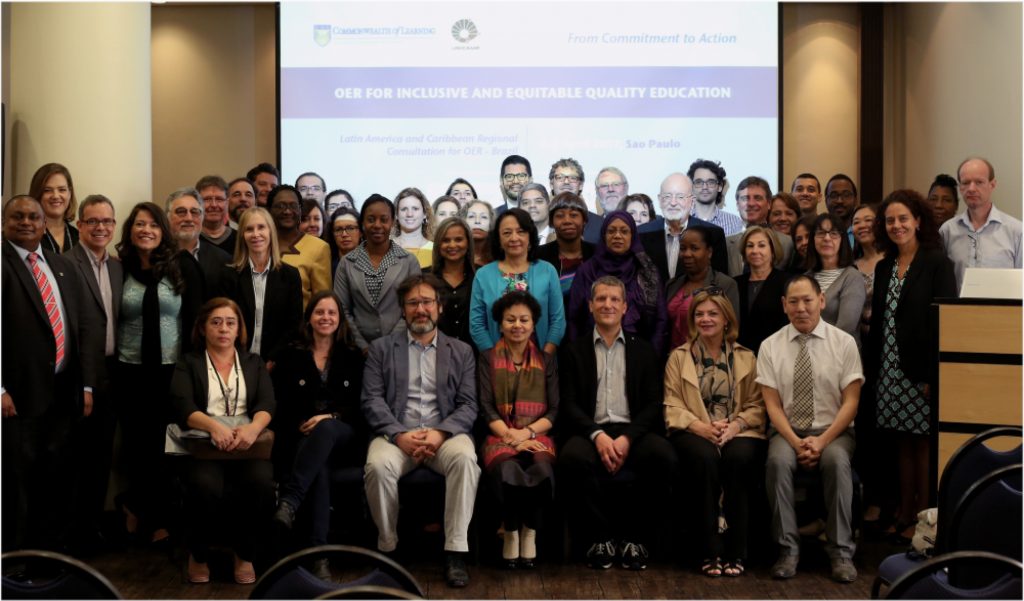
Participants at the Latin America and Caribbean Regional Consultation on Open Educational Resources. Photo by the Commonwealth of Learning, CC BY 4.0
The fifth Regional OER Consultation for the Latin America and Caribbean region was held in Sao Paulo, Brazil on 3rd-4th April. The event was in preparation for the 2nd OER World Congress that will be held in Ljubljana, Slovenia in September of this year. The meeting was organized by the Commonwealth of Learning (COL), alongside partners UNESCO, University of Campinas, the Government of Slovenia, and made possible by the generous support of the William and Flora Hewlett Foundation. The event brought together 31 government officials and key education stakeholders from 18 countries to discuss concerns and issues for mainstreaming OER to support inclusive and equitable quality education.
The opening session was launched by President and CEO of COL, Prof. Asha Kanwar, and Joe Hironaka, OER Programme Specialist from UNESCO Paris. There were also remarks made by Brazilian officers demonstrating why Brazil is the most vanguard country on OER policy in the region. The Brazilian Ministry of Education announced that it will soon discuss a federal bill where all educational resources would be made available under open licenses. Meanwhile, the Secretary of Education of the São Paulo local government talked about the 2012 state bill that required all educational resources funded by the public to be openly licensed and outlined the challenges to promote innovation and a new education culture of sharing and knowledge building.
The technical sessions began with the presentation of Prof. Kanwar, who emphasized that COL believes that learning must lead to sustainable development as outlined in Sustainable Development Goal 4 (SDG4). It was argued that early reports revealed that many countries would fall behind the 2030 target to achieve the Sustainable Development Goals. As such, innovative approaches are instrumental to achieve both speed and scale. In addition, she stated that OER has a tremendous potential for increasing access and mitigating the cost of quality education.
Prof. Kanwar presented an overview of the surveys to governments and educational stakeholders currently in progress to provide a context for detailed deliberation. These surveys show a significant interest for developing national OER policies throughout publicly-funded programmes and projects that promote flexible learning that increases access, efficiency, and quality of educational resources. Alongside the potential benefits, the barriers to mainstreaming OER relate to insufficient access to quality content, lack of users’ capacity, lack of appropriate policies, changing business models, and language and cultural barriers.
OER UNESCO Chair and local host from the University of Campinas, Tel Amiel, followed with remarks that Latin America and the Caribbean is at an early stage regarding the adoption of OER. Although many of the countries in the region do show high use and practices of digital resources like remixing and open licensing, he pointed to two main reasons why there is delayed uptake: lack of visibility, and a lack of mobilization/articulation. There is a challenge to expose more and better OER initiatives within the region like the higher education open textbook initiative LATin, funded by the European Commission that gathered 12 countries, 9 from Latin America, or TEMOA, a knowledge hub and multilingual catalog of OER for Mobile Learning. EducAR, the national repositories of digital resources for K-12 education in Argentina, is the first repository to include an institutional OER policy (adopting the CC BY-NC-SA license) for most of the resources. This should be an example for other Latin American countries, specially being a member of Latin American Network of Educational Portals RELPE and the Iberoamerican Network for Educational Repository Usability RIURE.
Regarding mobilization/articulation, the OER initiatives of the region need to be better identified, for example through a project that maps OER activities as the OER Worldmap, where only two countries (Chile and Brazil) have “champions” to upload OER data. Again, Brazil leads the way with the recently launched Iniciativa Educaçao Aberta, kickstarted by the UNESCO Chair at UNICAMP, and the Educadigital Institute, which brings together productions, academic research, publications, repositories, distance-learning, and other projects in Brazil.
The OER UNESCO/ICDE/COL Chair, Rory McGreal, highlighted one of the biggest educational challenges for all countries: by 2025 there will be an increased demand for learning from 98 million new students. To meet this demand there would be a need to establish 4 traditional universities per week, an impossible task, so it’s urgent to develop and deploy new forms of teaching and learning to meet this tremendous future demand.
Even as we begin to address this incredible challenge, we face tremendous opposition from the traditional copyright industries. Mr. McGreal gave a brief history that copyright (or similar notions of it) going as far back as the 6th Century have attempted to restrict access to information and knowledge. But he advocated that copyright should be a tool to build the right balance between the “encouragement of learning” to society and the rights of authors and creators. OER, understood as technology-enabled, open provision of educational resources for consultation, use and adaptation by a community of users, clashes against the currently-unbalanced copyright rules. Copyright law frustrates potential new educational uses of copyrighted works, such as remixing to create a new resources, adaptation to varied learning contexts, extraction to remove assets, localization and translation to other languages or reuse/repurpose of the resources. Copyright is an obstacle to assemble or “deboning” OER in courses, especially for e-learning settings, further complicated by digital rights management (DRM) and restrictive digital licenses.
I work at the Library of National Congress of Chile, and followed with the challenges related to designing and implementing an OER policy. Presenting two real cases from Chile, a frustrated experience with personalized web-based platforms and the corrupted/poor quality public textbook market, I highlighted the first challenge for OER policy is to approach today’s educational challenges with specific, pragmatic, sustainable solutions at different levels guided by the OER principles and open practices. The necessary condition to shape OER as a response to educational challenges is OER capacity building for all education stakeholders.
Regarding capacity building, a major initial task is to advocate for the benefits and potential—and also address risks and barriers—of openness in educational processes for teaching and learning. This focus on the outcomes of the educational process is part of a maturity of the process of how openness impacts education, where as 5 or 10 years ago the focus was on infrastructure, licensing, and creating a volume of resources. There is a growing body called “Open Educational Practices” and “Open Pedagogies” emerging through the use of digital technology, a true reflection on how openness catalyses innovation. As we advocate for the massive potential of OER, we also have the opportunity to correct partial or misleading notions about “openness”, as there is still much confusion related on what openness is and how it relates to education.
Another issue around capacity building for stakeholders is to support them with resources and tools for OER Policies, such as COL’s Guidelines for Open Educational Resources for Higher Education, the Institutional OER Policy Template, the OER Policy Development Tool, the OER Policy Registry, and other excellent resources for college and university governance officials. UNESCO’s OER Country Policy Template is a tool that articulates the goals of the policy, outlines the purpose and rationale of the policy, and provides information on why the policy is necessary and what it will accomplish. Another venue for information sharing and action is the Open Policy Network (OPN), whose mission is to foster the creation, adoption and implementation of open policies and practices by supporting advocates, organizations and policy makers. The OPN is responsible for the Global Open Policy report that tracks the spread of open policies around the world with a systematic overview of open policy development, as well as the Institute for Open Leadership that trains new leaders on the values and implementation of openness in licensing, policies, and practices.
Research is also today an important asset for OER advocacy and policy-making. There is a growing body of evidence and recommendations on the process of adoption and impact of the use of OER in educational settings, with initiatives like the PhD student GOGN network, the OER Research Hub from the UK Open University, the Open Education Group in the U.S. Increasingly pertinent to developing and emerging countries is the Research on Open Educational Resources for Development ROER4D, a evidence-based research project from 26 countries in South America, Sub-Saharan Africa, Middle Asia and Southeast Asia, with the objective to improve educational policy, practice, and research in developing countries by better understanding the use and impact of OER.
The final issue around capacity building for all education stakeholders is the need to build a compelling and encouraging narrative about the benefits and potential of OER. A good example is the Open Washington OER Network that features videos of grassroots reports from the field, end-user practices in the use and impact of OER, and policy videos with interviews with experts in various areas of OER. These are woven into a series of multimedia presentations on Open Education policy strategy, implementation, and vision.
I closed by exploring the Open Government Partnership as a platform to advocate for OER policy, especially as countries begin to include education in their action plans. I highlighted initiatives from Chile and Brazil working to do this.
These presentation were followed by exciting and thoughtful group discussions with all the participants to focus on concrete action, such as strategies for mainstreaming OER and exploring national OER practices to tackle SDG4. Also drafted was a list of commitments that will to added to and synthesized for the global report leading up to the World OER Congress.
Sharing a lost city: An innovative collaboration with re:3d and the New Palmyra project
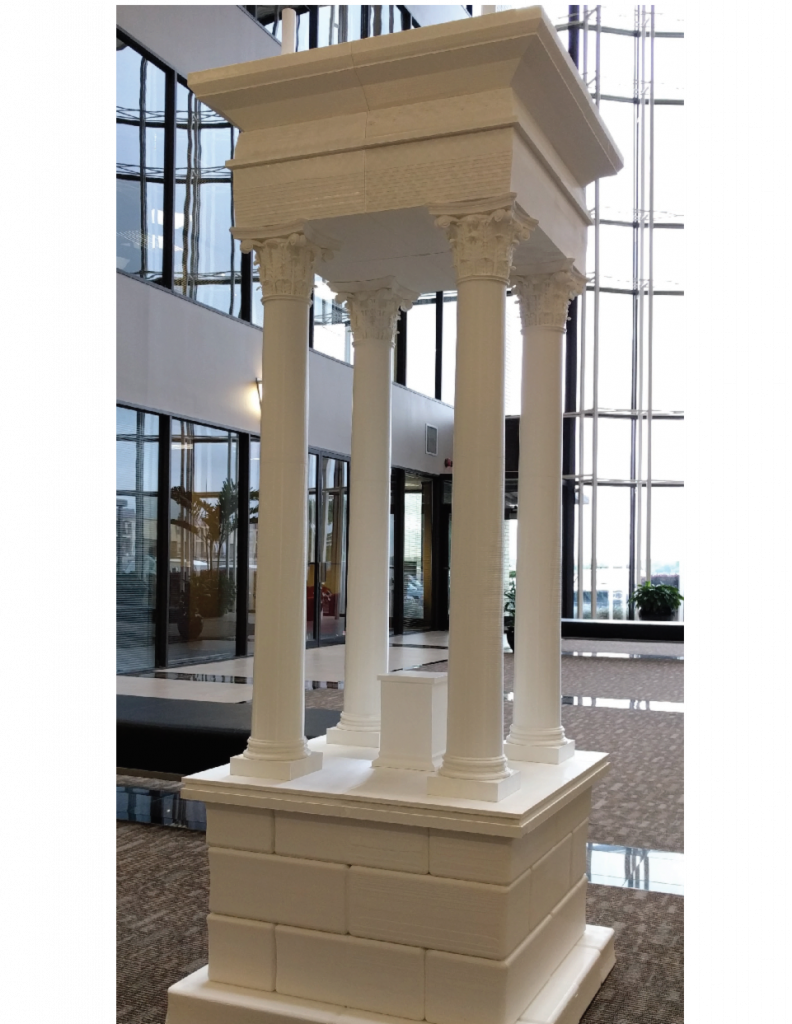
Together with re:3d, an Austin-based 3D printing company, and the #NEWPALMYRA project, a community platform dedicated to the virtual remodeling and creative use of architecture from the ancient Syrian city of Palmyra, Creative Commons has produced a 200 pound, 7.5 feet tall 3D rendering of one of the Palmyra Tetrapylons. This rendering will be on display at the Creative Commons Global Summit in Toronto, CA from April 28-30, bringing the commons to life through the work of its community.
This large-scale rendering is one of the four quad-column pylons, or gateways, that would have marked a central place in the city. Palmyra is a desert oasis, a UNESCO world heritage site, and is considered one of the most important global archaeological sites. Since 2015, large sections of Palmyra have been destroyed by ISIL and many of its precious artifacts lost or sold on the global market.
The #NEWPALMYRA project was begun in 2005 by CC Syria leader Bassel Khartabil, a Palestinian-Syrian open source software developer, educator, and free culture advocate. Working with the publisher Al-Aous and a team of artists in Damascus, Khartabil began remodeling the endangered ruins of Palmyra in 3D until 2012, when he was unlawfully imprisoned by the Syrian government. Much of this work was never published, though Bassel was committed to its free dissemination and use. In 2015, Khartabil was sentenced to death by the Assad regime. His whereabouts remain unknown.
A nonprofit founded by Bassel’s family, friends, and community, #NEWPALMYRA is freeing Syrian culture digitally, providing agency and advancement for the Syrian people through cultural heritage and digital preservation. Khartabil’s visionary work ignited a community that stands for transparency, openness, and free culture and continues to grow via the remix, reuse, and sharing of his foundational work.
In the words of Ryan Merkley, Creative Commons CEO, “Creative Commons wanted to bring the commons to life for its 2017 Summit in Toronto. CC brought Austin-based re:3D together with the #NEWPALMYRA project team. The Gigabot, re:3D’s spectacular printer, renders massive models at commercial quality. Together, we produced a huge replica of one of the models of Palmyra: the Tetrapylon.”
re:3D began with a digital 3D model of Palmyra provided by the #NEWPALMYRA team and transformed the digital into the physical using their Gigabot printer, which uses a rope-like filament resembling hot glue to precisely build the model layer by layer. Each layer is between .2-.6 mm thick, depending on layer of detail. The entire structure was assembled from 25 separate pieces with an internal wooden frame for support. It weighs 91kg and took about 800 hours to print.
As an in-kind sponsor of our Global Summit, re:3D Inc. participated in the project pro-bono, including the development, design, printing, and shipping of the final model to Toronto, Canada. re:3D is a full service socially focused additive manufacturing company based in Houston, Texas USA.
Creative Commons would like to thank re:3D and #NEWPALMYRA for their collaboration on the project and commitment to the global commons. Follow us on social media for pictures of the display on our Twitter,Facebook, and Instagram.
Ryan Merkley presenting at CC Summit, Photo by Jennie Rose Halperin, CC BY
`
Our biggest report yet: State of the Commons 2016
Today marks another milestone for the commons: the release of the 2016 State of the Commons, our annual deep dive and celebration of the global community working to further collaboration, creativity, and access to creativity and knowledge.
This year’s report goes beyond data and metrics to focus on the people that power the commons in every region of the world. These stories illustrate how our movement is growing and evolving, driven by people who choose to share. The commons continues to grow, with the total number of CC licensed works now at 1.2 billion in 2016, including the increased use of licenses that invite remix, commercial use, and collaboration – up to 65% of all content shared this year.
TL;DR: 2016 was our biggest year yet. From incredible sharing of 375,000 public domain works with the Metropolitan Museum of Art to our massive Global Summit, we’re seeing CC communities organize around renewed focus on movement building, free culture, policy reform, sharing, and global collaboration powered by gratitude.
The commons is the largest collection of free and open knowledge in the world. In order to bring you this report, we’ve partnered with a handful of the hundreds of platforms that provide CC licensing to bring you more data and user spotlights in a new and attractive format.
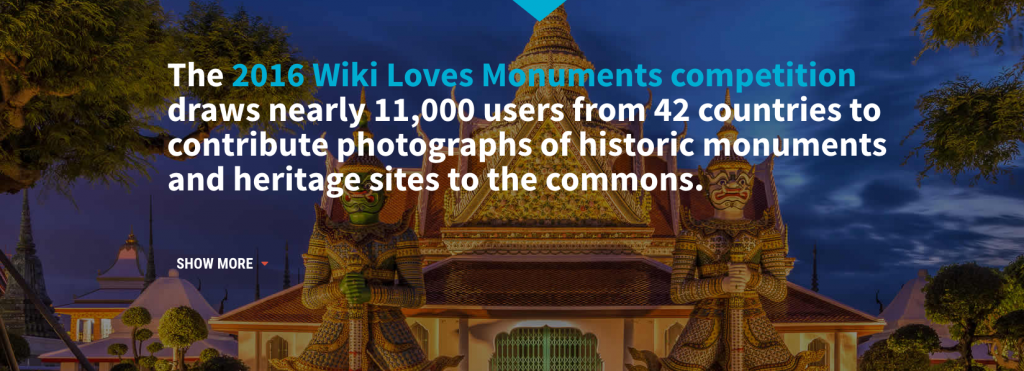
In October, we issued a Call for Submissions that asked our community to report on their favorite projects from the commons this year. These impact stories were beyond what we could have imagined: we heard stories of portals that use open data to predict and plan for earthquakes in New Zealand, a citizen-led civic data portal in El Salvador, a series of medical photographs that surfaces the untold struggle for independence against Portuguese colonial rule, and the “world’s most beautiful slideshow” of historic monuments submitted by over 10,000 Wikipedians. These examples, only a few of the many, tell the vibrant and life-altering stories of the people behind the commons.
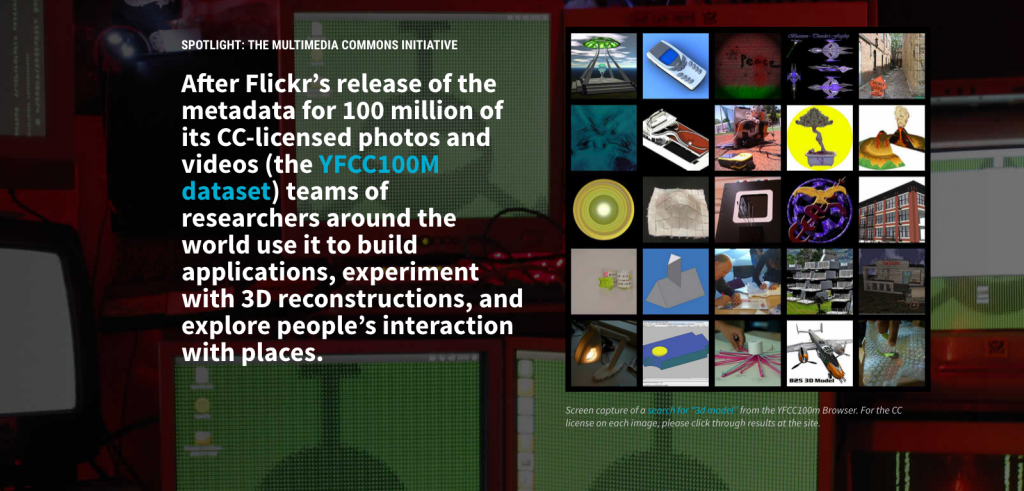
Highlights from our partners include the Freeharmonic Orchestra, a group of 12 musicians who met in a virtual room on the Free Music Archive to produce the most collaborative album ever. From our friends at Flickr comes the Multimedia Commons Initiative, where teams of researchers around the world utilize the epic 100 million image dataset to build new applications and explore people’s interaction with places.
With the CC0 public domain dedication tool, we’re actively stewarding and helping grow the public domain, with 92.9 million public domain works to date. CC0 has served a diversity of purposes, this year most notably supporting the release of 375,000 digital works into the commons from the Metropolitan Museum of Art. CC0 has also supported photographers on emerging platforms such as Unsplash, which now hosts a robust community of photographers “giving their work away for free” and gaining exposure and acclaim in the process.
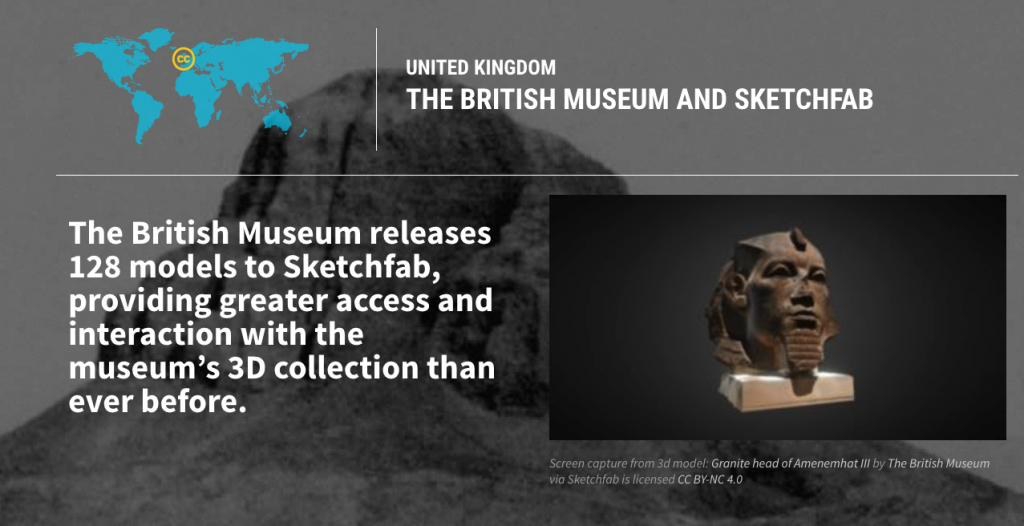
These stories also echo the work we’ve been doing in areas like 3D printing, usability, and global community building. A spotlight on the British Museum, which released 128 models of sculptures from the Roman and Egyptian periods on the 3D design sharing platform Sketchfab and a tale of remix and community among the more than 1.5 million CC licensed objects on Thingiverse is proof that our community is front and center, and it’s working together better than ever.
Lastly, the report itself was translated by 30 volunteers into a dozen languages as part of our efforts to make our community more accessible to international communities.
Like everything else, we truly couldn’t have done it without you. Thank you so much for your support in 2016 and beyond. Read, excerpt, share, and tweet the report at http://stateof.creativecommons.org with the hashtag #sotc.
How Can The Commons Stay Relevant? Let’s Talk GLAM.
Imagine a Vilhelm Hammershøi painting printed out and hung over your fireplace, a 3D printed sculpture in your garden, or maybe a party that mixes Spotify playlists with an opera singer performing romantic songs in front of the newly acquired Friedrich’s painting. Sounds like something John Lennon dreamed up in the song “Imagine?” These are actual examples of a museum keeping up to date and using technology to its advantage.
SMK Friday at the SMK Museum, Copenhagen, Ida Tietgen, CC BY
Engaging with users: a closer look at the strategies of GLAM institutions
After almost 30 years of “the modern internet” and ten years of “Internet 2.0,” we already know that technology won’t open all the doors. As GLAM (Galleries Libraries Archives and Museums) practitioners our objective is clear: how can we make sure people stay connected to knowledge and heritage, and become inspired by it? How can technology be our ally?
Heritage institutions improve accessibility and access to knowledge, art, and culture. . In addition to access, they also provide the inspiration and building blocks for further innovation and creativity. How can the (digitised) commons serve as the means to both heritage institutions’ and their audiences’ ends? What are the different institutional strategies and user behaviours related to them? What works and what doesn’t in delivering access, use and reuse? To what extent are CC licenses already promoting this? And, last but not least: why?
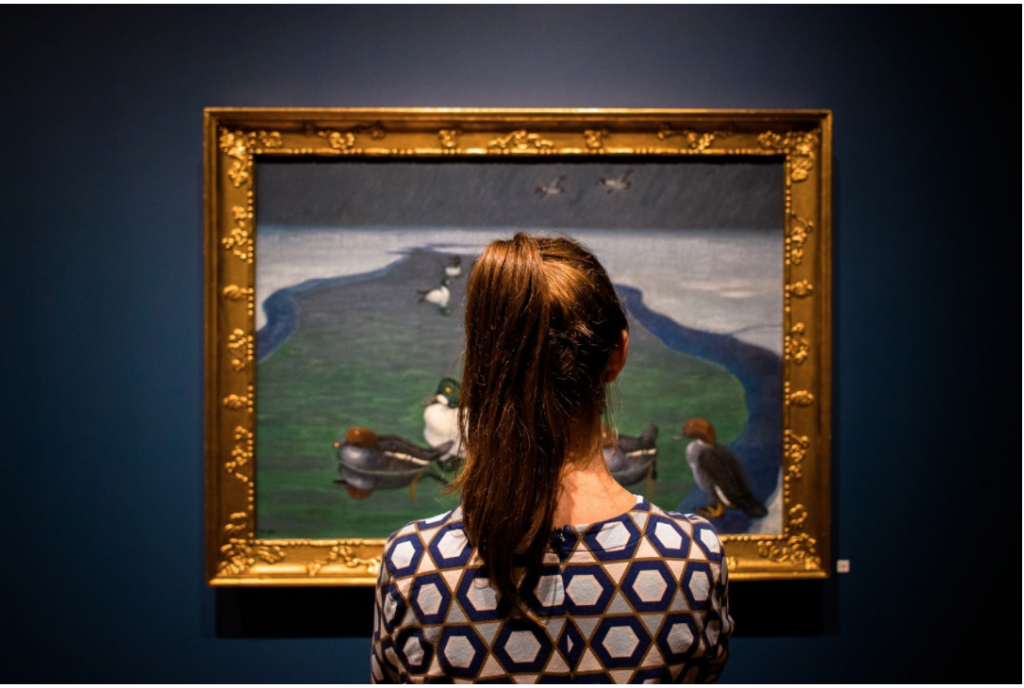
Alicja Peszkowska gets up close with Johannes Larsen’s ‘Hvinænder i en våge’, 1899, picture by Jonas Heide Smith, Watching the Watchers, CC BY
We are going to address these questions during our Creative Commons Summit 2017 session. The idea behind the session is to shift the conversation from the abstract ideas and values to the actual institutional strategies and user behaviours. Our implicit hypothesis is that the only way for the commons to stay relevant over time is for increased usage. The context of who and how they can be used is, on the other hand, ever-changing. There are no absolute responses. The research that has already been done in a field will serve as a point of reference and a context for studying particular examples. We propose to explore the examples of how GLAM institutions successfully engaged the users basing on their (different) behaviours, rather than assumptions or declarations. And we welcome participants’ own reflections on both the present, and future, of heritage institutions’ use of open licenses to deliver creativity and innovation.
Meet CC: Voices from our Global Summit Scholarship Recipients
Nearly a quarter of the participants coming to the Creative Commons Global Summit in Toronto, CA from April 28–30 are scholarship recipients. They are representatives from a variety of communities and issues, including free and open culture, copyright reform, GLAM, open education, and global information systems. They represent every CC world region, with the majority coming from Africa, Asia-Pacific, and Latin America.
Of the 95 scholarship recipients, 23% are from Africa, 18% are from Latin America, 29% are from Europe, 18% are from Asia-Pacific and 6% are from the Arab World. In addition, we’ve nearly doubled our scholarship numbers this year both in terms of community participation and organizational funding. This is a big investment for CC, and we’re proud to support our community members to help them join the conversation.
Through our scholarship program, we are creating a healthy community by recognizing and engaging with gender, cultural, and geographical diversity in order to fulfill our organizational mission of a vibrant commons and community. As you’ll see, the diversity of the scholarship recipients extends beyond geography in order to provide opportunities to summit first timers as well as CC veterans and moves the community conversations beyond licenses toward advocacy, art, law, education, usability, and growth of the commons.
Creative Commons believes that providing pathways to participation is crucial to our goal of lighting up the commons and we’re proud to support so many participants from our Global Community. Below, read about some of the ways our community is looking forward to engaging during the summit and beyond.
Lia Hernandez, CC Panama Legal City Leader
I am almost ready to attend the CC Global Summit in cold Toronto. I am so excited because its my first global summit and I am looking forward to meeting all of you in real life.
Christian Villum, CC Denmark
As always, I look forward to the summit in order to reconnect with the global community and have important discussions that help drive forward the expansion of the global knowledge commons. Specifically I am excited to be part of a few of the sessions around new open business models because I believe this to be a cornerstone in building the future that we want.
Cherubim Mawuli Amenyedor, CC Ghana
I’m excited about the summit because I will get to meet, share and learn from equally passionate and knowledgeable community members working tirelessly to explore the future of the Commons and sharing for users, creators and activists.I’m grateful to CC for providing the needed platform to free-up the results of creative work for re-use, sharing and collaboration. I believe this will help me unlock Africa’s creative potential in the digital economy.
Leslie Chan, University of Toronto Scarborough Usually I have to travel to attend conferences of this scale, and it is a nice change to welcome the world to Toronto instead. I am committed to ensuring that the Web will continue to be inclusive and open to diverse knowledge making and sharing, and I am looking forward to meeting so many like minded folks and to share experience. I will be speaking on Lessons from Failures in Open Advocacy and how I would do things differently on Sunday morning April 30.
Dimitar Dimitrov, Wikimedia Brussels
I have always believed that instead of several parallel movements we are one big free and open movement. I am particularly excited to meet the great girls and guys who are actively working on freeing up creativity and knowledge in Africa.
Paula Eskett, CC New Zealand
I’m most excited about the amazing speaker lineup and connecting and learning from the other Summit participants, but can’t deny the obvious excitement of traveling to the other side of the world too!
Last year I was so lucky to be part of IOL2 — a life changing learning experience, and I’ve recently joined the CC Aotearoa New Zealand Advisory Panel as an education representative.
As a professional librarian I see CC and Open as integral to the sustainability and future focused thinking of all libraries regardless of sector, and strongly believe in libraries providing equitable access to information and spaces to create and share new knowledge.
I’ll be delivering a session Friday 4pm : Preloading not backfilling : Preparing our children for a life of Open.
Mohamed Rahmo, CC Morocco
I’m excited about the summit because I will meet my open counterparts from all over the world. I’m from Morocco and I have an idea for all the people of the CC community in the world — I would like to launch a global content creation day, and I will advocate about the copyright policy back home so I want to learn from the other people. Back home we will also start a series of workshops to educate people about CC.
John Weitzmann, CC Germany
I’m excited about the CC Global Summit because it is most important and inspiring to meet many of the fantastic people in the network in person. My connection with the CC idea is based on the fact that such legal tools are simply necessary as long as the defaults of the law continue to hinder exchange and sharing.
Bastian Greshake, Germany
I’m super excited to finally meet all of the commoners again, as we’re not getting the chance to meet in person that often. I’m involved as I’m running a website that uses Creative Commons to enable research by putting genomes into the public domain. While I’m a strong believer in all things open*, my professional background makes me especially interested in the Academic Commons, that’s why I’ll be facilitating a session on “Towards the Scholarly Commons” on Saturday from 2:30–3:30PM.
Kayode Yussuf, CC Nigeria Tech Lead
I am a member of the CC Africa . School of Open team, I was a member of the CCSummit program committee and I plan and execute CC Nigeria’s projects.
I am excited to attend the Global Summit because I’d get the opportunity to meet with community members in real life. I am also looking forward to seeing the CCSummit program play out. The committee did a lot of work, making calls, sharing documents across several times zones to put the program together. As one of the committee members put it — this will be the best summit ever.
Carlos Guerrero, Hiperderecho, Peru
I’m really excited about the summit because it’s a big opportunity to share experiences and to enhance the ecosystem of CC. I’m especially enthusiastic about the work on my region; Latin America. Nos vemos ahí!
Clint Lalonde, CC Canada
I have been involved with the CC community for a number of years through my work with Open Educational Resources, and believe that the work of CC is vitally important in empowering people to fully maximize the affordances of new and emerging digital technologies. This will be my first CC Global Summit and, while I am looking forward to connecting with others working in the OER space, I am very excited at the opportunity to connect and learn more about the burgeoning Platform Co-operative movement and am happy to see the connections being made between the CC community and this exciting new movement.
Yi-hsuan Lin, CC Taiwan
I am mainly in charge of the license translation/localization issues. I’m excited to participate in the summit and I’m looking forward to networking with others who have reconciled 4.0 license issues.
Thanks for CC HQ for providing me this great opportunity to participate 2017 CC global summit!
Aristarik Maro, Public Lead CC Tanzania
I’m so excited about the 2017 summit because I’ll get to meet community members from different parties of the world, some of who I have been communicating with online in real life!! & some of which are new to me but hoping to hook up and network. I am thankful to CC for the support especially the establishment of the countries’ affiliate teams where we network. I’ll participate in most interesting sessions and use CC communication tools to support the Global Movement in my country.
Maxwell, economics student and open textbook advocate at University of Victoria
I got truly involved with CC while working with a professor to develop an open textbook for microeconomics. I’m excited about the summit because I’ll get a chance to immerse myself in the CC environment and learn about the many aspects it has beyond just open education! I’m involved with CC because I see the potential it has to make education more innovative and more accessible.
Marcela Basch, Buenos Aires
I can’t wait to get to Toronto and meet the amazing global CC community. I run El plan C, a digital magazine on collaborative economy, free culture and commons, with special focus on Latin America. The future of the commons and collaboration is one of my main areas of interest, so I’m eager to participate on that track and be able to discuss with people who’s been thinking about that from other points of view, geographically and culturally speaking. Almost at the end of the meeting I’ll be hosting a session on this topics, “What is exactly a commons oriented initiative and how could it be sustainable?”, on Sunday 4pm. Spoiler: I don’t really have answers yet, but I hope we could think it through together.
Shahadu Sadik, Wikipedia Ghana
I am an editor on Wikpedia, a blogger and a technology enthusiast. I love open education.
I am super excited to be a part of this year’s Creative Commons Global Summit in Toronto Canada. I just can’t wait to meet people from across the globe to share and discuss issues relating to Creative Commons and its sister projects.
Megan Beckett, CC South Africa Public Lead
I’m passionate about advancing access to education and life changing learning experiences in my country. CC tools and licenses have been an integral part in enabling the far reaching impact of the work we’ve done at Siyavula Education in OER collaborative development and communities of practice. I’ve also recently joined CC South Africa as the Public Lead. I’m really looking forward to the Summit to be inspired, to learn and to engage with CC and openness more broadly in the international community, whilst finding out what works for others locally.
Elizabeth Oyange, Copyright Associate for Aga Khan University (global), based in Nairobi, Kenya
I look forward to attending the CC Summit for a broader perspective on the various program areas, the keynote speeches and meeting like-minded CC’ers from all corners of the world. This community involvement and networking will allow us to disseminate current views and CC information and hopefully contribute our institutional insight.
Calú (Carlos) Raul Correa Loyola, CC Ecuador
I don’t believe in copyright lottery, obstacles to science and knowledge access, and old-fashioned ways to create. I’m very excited to attend CC Summit because we can push forward all Internet potential, driving a new era of development, growth and productivity. I would like promote this potential in my country, sharing and applying this ideas on widespread arenas with my partners and colleagues.
Guido Gamba, CC Argentina
I’m looking forward to the summit and to meet fellow colleagues from the commons all around the world. I’ve been involved with the network for quite some time already–in fact, this is not my first global summit! Regardless, I’m excited and anxious as if it was my first one. I believe that CC is a vivid example that things can be done otherwise, in a more just and fair way, and it’s always thrilling to meet with so many people people who feel the same way. I’ll be participating in two sessions: “Faces of the Commons: How Can the People of Creative Commons Change the World?” (Friday 13:30h) and “Building a Culture of Appreciation for the New Global Network” (Saturday 16:00h). I hope to see you there!
Sviatlana Yermakovich, CC Belarus
I am excited to go to Summit and meet people who share the idea of the commons. I am a cyber_designer who shares creativity under CC licenses (making swag for our affiliate) and teaches people to use them. I believe that the CC philosophy lets the commons be in balance with the personal.
Hilman Fathoni, Creative Commons Indonesia (CCID), Legal Lead
Working as CCID’s Legal Lead (License Consultant) is my first job after I graduated from law school and it gives me bunch of opportunity to challenge myself on innovating the way we spread knowledge about open licensing and social function of copyright in Indonesia. I’d like to learn more about the innovations on spreading ‘open’ ideas and also exchange ideas or even collaborate with people from other communities that I’ll get to meet at this Summit.
Dare Pejic, CC Slovenia, Public Lead
In 2010 I first got involved with CC. At first it was learning by osmosis and through work with the much appreciated website culture.si, an online encyclopedia of cultural production in Slovenia run by Ljubljana Digital Media Lab (Ljudmila). CC made me aware that individual creativity was initially in the domain of commons and general knowledge. Much of its potential is being commodified and CC gives some of the power to change that back to authors and creators. As my last global summit was in Warsaw way back in 2011, I look forward to get familiar with examples of best practices from around the globe, meet other affiliates and get to know the latest developments firsthand.
Aleck Ncube, CC Zimbabwe
I am excited to be attending the CC 2017 Summit as it enables me to meet and network with community members. The CC system is not very active in Zimbabwe and I would like to learn more about the CC approach so that I can engage the Zimbabwean content creators to embrace the system. I am currently a Doctoral Researcher at the University of Cape Town. I have presented papers at several conferences, seminars, workshops and symposia in Zimbabwe and abroad and have also been associated in an advisory capacity with several national institutions on Intellectual Property Rights Issues.
Valentina, ApTI Romania, CC legal lead
I can’t wait to get together with like-minded people who are dedicated to transforming the very core of our society by advocating for a more open, transparent, responsible, vibrant & innovative environment! I’m sharing my experience with localizing a series of animated videos in different languages during the Messy Market on Saturday (29 April) so please drop by the booth between 4-6pm at Parkdale Room.
Dr. Roshan Karn, Director of Open Access Nepal
I am excited about the summit because I recently formed the CC affiliate in Nepal and I really look forward to meet my peers and experts to advocate and work on CC licenses in a more effective way. As a medical doctor, these licenses have given liberty and more visibility to my work. I will be a speaker in the OpenCon panel discussing about my work in the field of OA.
Freyja van den Boom, Researcher and Project Manager Future TDM
As you can see I am super excited to be joining you all again in Toronto. I do artistic and academic research and love to talk about legal stuff and disruptive digital technologies especially data and AI related developments. I am currently doing socio-legal research for Open Knowledge International on data sharing and we have a session on Saturday at 09:00. What better way to start your day with a discussion on Text and Data mining!
Hildah Nyakawa, Executive Director at Jamlab, CC Kenya
I’m excited about the summit because I’ll be able to meet and interact with fellow Open Education contributors and enthusiasts.
I have been hosting School of Open sessions here in Kenya and at the summit I’ll be co-hosting a session with P2PU on Learning Circles on Saturday from 11:30 am to 12 noon.
Kristina Alexanderson, CC Sweden
I’m excited about the summit because I’ll get to meet other Creative Commoners and a community that loves open 🙂 I like CC because it provides me the tools to free my creative work and an infrastructure to find open content that I can share and remix.
Savithri Singh, CC India Public Lead
It’s a great opportunity to interact with members of a like-minded community. Look forward to sharing, and learning how to handle various issues that arise while trying to promote openness among educationists.
Emmanuel Malongo, CC Tanzania, Education & Technology
I am grateful for the opportunity and I’m looking forward to attending the Global Summit event and meeting commoners. I love and enjoy Creative Commons movements. Volunteering and sharing has been great motivation for my career exposure and development.
Peter Leth, CC Denmark
Changing the mind set of country and a school system takes time – which the first 8 years in Creative Commons have taught me. Still when my patience is low or I am about to give up, I find new energy when talking with you CC-folks. I have been active as an educational advisor in Creative Commons and look forward to talk education and openness with you later this week.
Nasir Khan, CC Bangladesh
I am a big fan of Creative Commons – the idea of CC and the great people who believe in this. It is a great opportunity for me to get involved with the awesome projects and initiatives under CC. Recently I heave been working with the government of Bangladesh on establish an open policy for open data portal of Bangladesh (http://data.gov.bd). I am interested in attending the Community & Movement and The Future of the Commons track related sessions. I was a fellow of IOL first session and attended the Global Summit in 2015 and Asia Pacific regional summit in 2014 & 2016. It was always exciting to discuss in person with the people who are connected via online. When CC volunteers came to a place to discuss something great always happens!

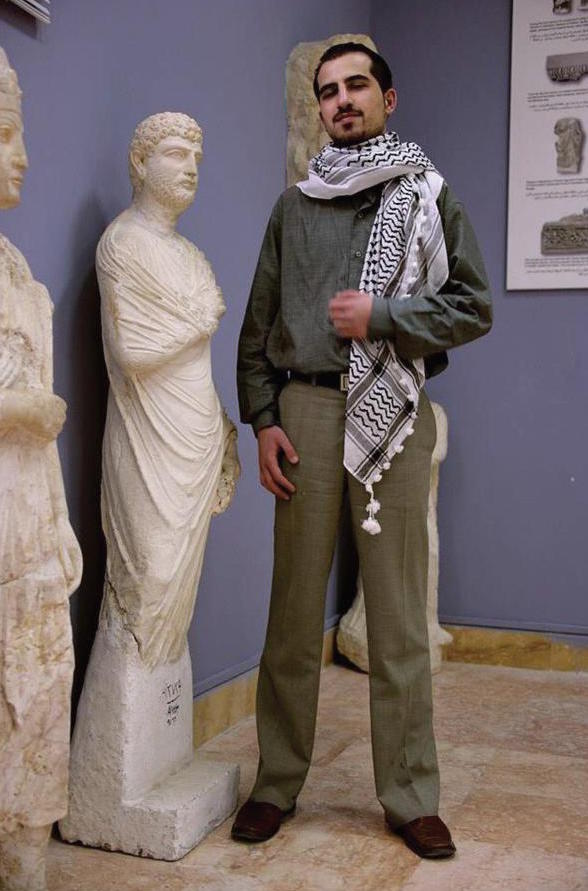 The #NEWPALMYRA project was begun in 2005 by CC Syria leader Bassel Khartabil, a Palestinian-Syrian open source software developer, educator, and free culture advocate. Working with the publisher Al-Aous and a team of artists in Damascus, Khartabil began remodeling the endangered ruins of Palmyra in 3D until 2012, when he was unlawfully imprisoned by the Syrian government. Much of this work was never published, though Bassel was committed to its free dissemination and use. In 2015, Khartabil was sentenced to death by the Assad regime. His whereabouts remain unknown.
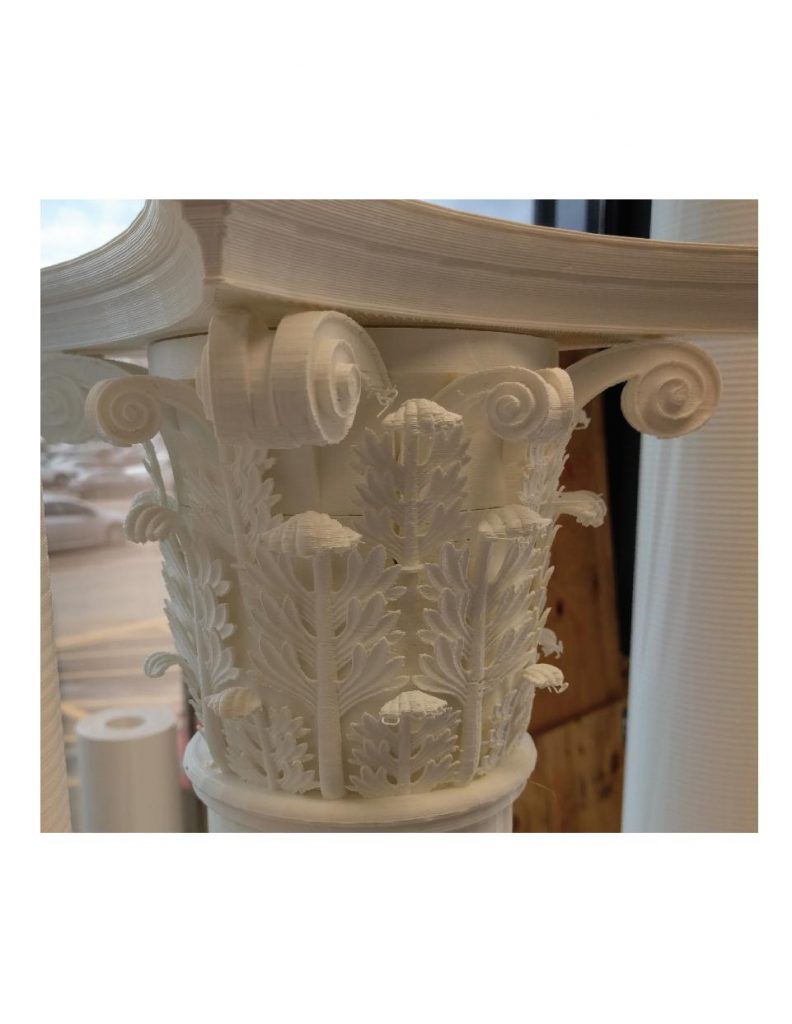 In the words of Ryan Merkley, Creative Commons CEO, “Creative Commons wanted to bring the commons to life for its 2017 Summit in Toronto. CC brought Austin-based re:3D together with the #NEWPALMYRA project team. The Gigabot, re:3D’s spectacular printer, renders massive models at commercial quality. Together, we produced a huge replica of one of the models of Palmyra: the Tetrapylon.”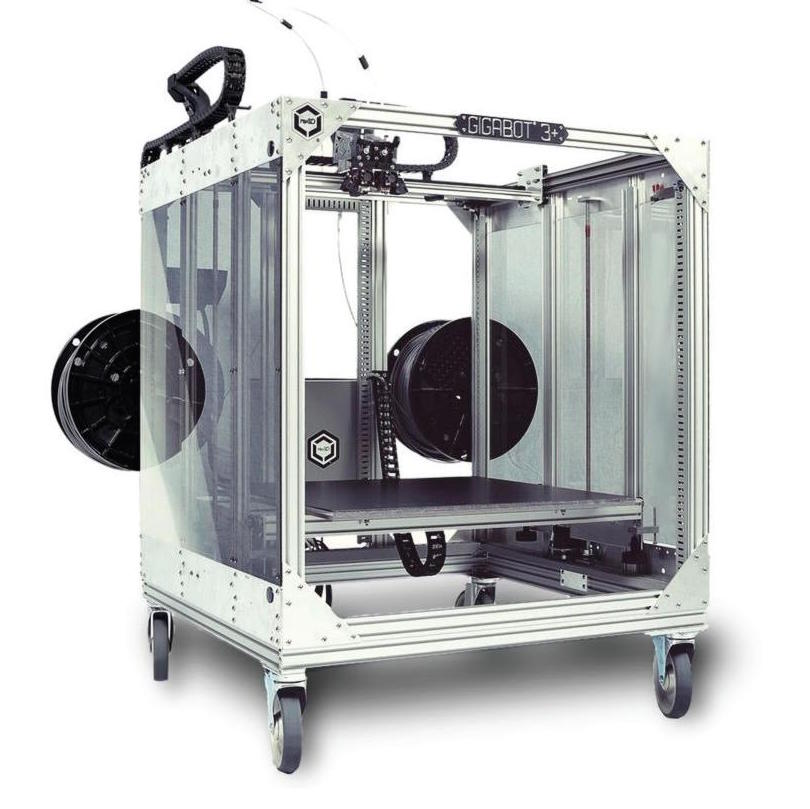
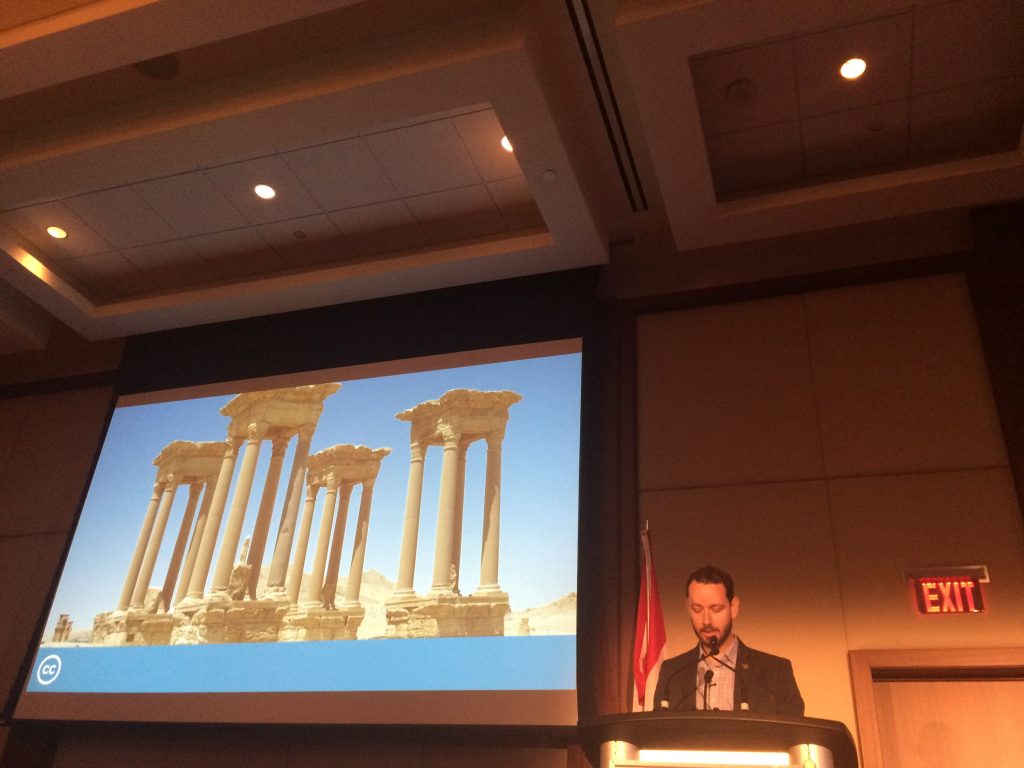

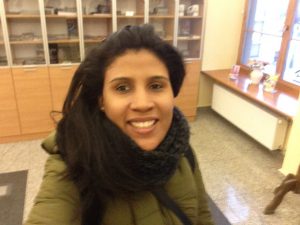 Lia Hernandez, CC Panama Legal City Leader
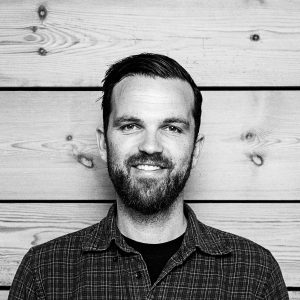 Christian Villum, CC Denmark
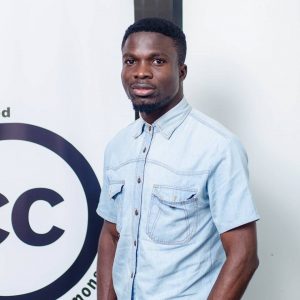 Cherubim Mawuli Amenyedor, CC Ghana
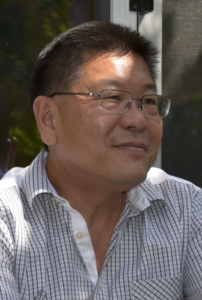 Leslie Chan, University of Toronto Scarborough
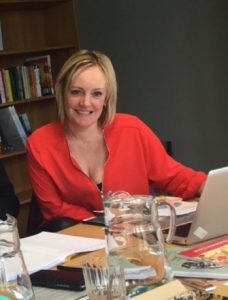 Paula Eskett, CC New Zealand
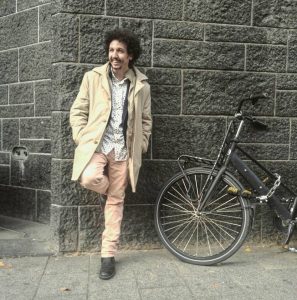 Mohamed Rahmo, CC Morocco
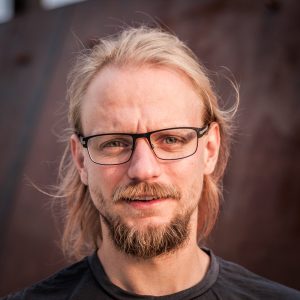 Bastian Greshake, Germany
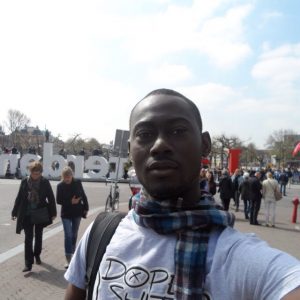 Kayode Yussuf, CC Nigeria Tech Lead
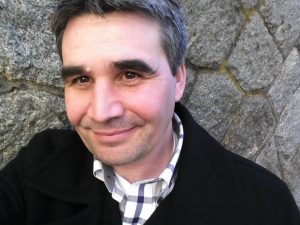 Clint Lalonde, CC Canada
 Yi-hsuan Lin, CC Taiwan
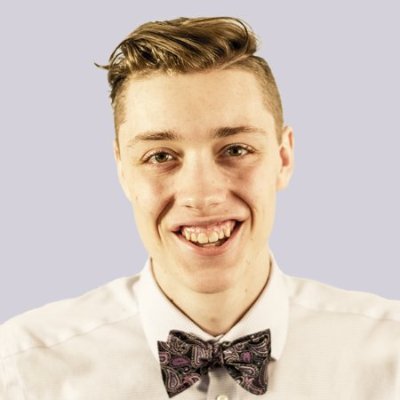
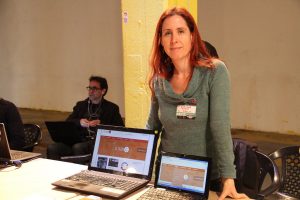

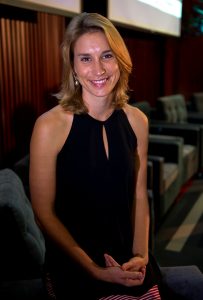
 Elizabeth Oyange, Copyright Associate for Aga Khan University (global), based in Nairobi, Kenya
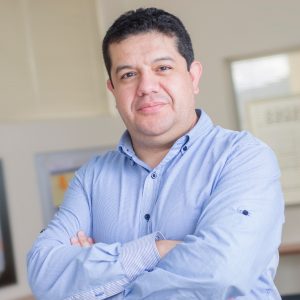 Calú (Carlos) Raul Correa Loyola, CC Ecuador
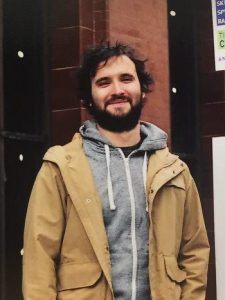 Guido Gamba, CC Argentina
 Sviatlana Yermakovich, CC Belarus
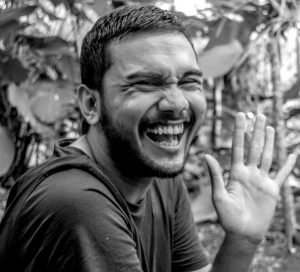 Hilman Fathoni, Creative Commons Indonesia (CCID), Legal Lead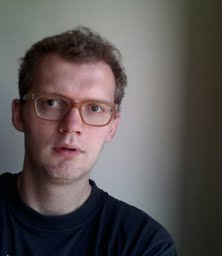
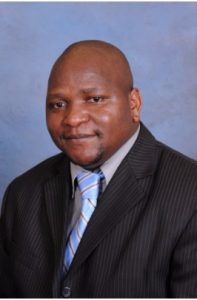 Aleck Ncube, CC Zimbabwe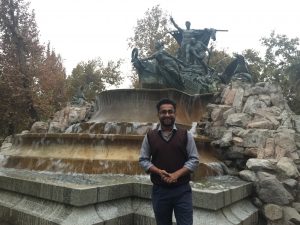

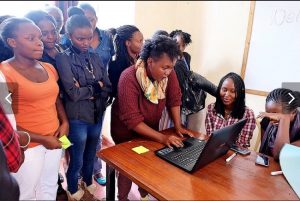 Hildah Nyakawa, Executive Director at Jamlab, CC Kenya
 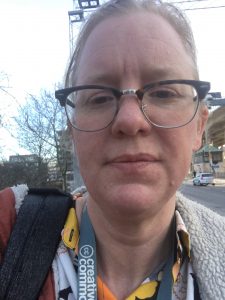 Kristina Alexanderson, CC Sweden
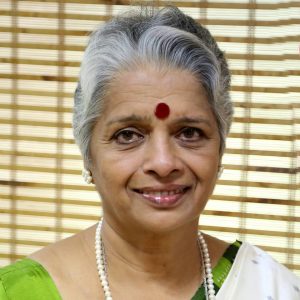 Savithri Singh, CC India Public Lead
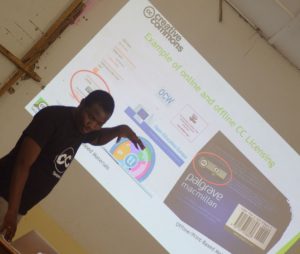 Emmanuel Malongo, CC Tanzania, Education & Technology
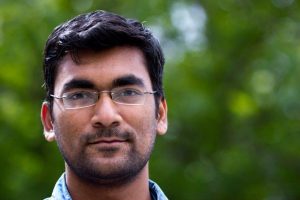 Nasir Khan, CC Bangladesh