Last Updated: May 2, 2019 This Privacy Policy (“Policy”) explains the information collection, use, and sharing practices of Creative Commons Corporation (“CC”, “Creative Commons,” “we,” “us,” and “our”). This Policy is incorporated into and part of Creative Commons Master Terms of Use (“Master Terms”) located at https://creativecommons.org/terms. Unless otherwise noted on a particular website or…
We’re happy to announce that our collaboration with the American Library Association (ALA) to create the print companion to the CC Certificate has finally come to fruition! The book, Creative Commons for Educators and Librarians, is now published under CC BY and offers an additional way to access the openly licensed CC Certificate content. It’s…
In just over a year, we’ll celebrate our 20th anniversary—and although this is the perfect time to reflect on our history, we’re also looking to the future by improving our products and services in order to serve you better. With that in mind, we’re excited and proud to announce that we’ve been awarded an Amazon…
The term “global commons” usually brings to mind the biosphere’s natural resources that everyone shares and benefits from, like water or air. But the global commons is also home to what’s called the noosphere—all the resources and artifacts created by human reason and scientific thought, such as music, art, language, and research. Creative Commons has…
The UNESCO Open Educational Resources (OER) Recommendation was unanimously adopted on November 25 by 193 UNESCO member states at the 40th UNESCO General Conference. This milestone offers a unique opportunity to advance open education around the world. Why does it matter? This Recommendation is an official UNESCO instrument that gives national governments a specific list…
To date, the CC Certificate has only been available in English. However, thanks to the incredible efforts of CC Global Network members, the CC Certificate course content (e.g., readings, articles, etc.) is being translated into multiple languages. In particular, we are proud to highlight the work of CC Network members in Italy and Saudi Arabia.…
This is part of a series of posts introducing the projects built by open source contributors mentored by Creative Commons during Google Summer of Code (GSoC) 2019. Ahmad Bilal was one of those contributors and we are grateful for his work on this project. WordPress is one of the top platforms for creators on the…
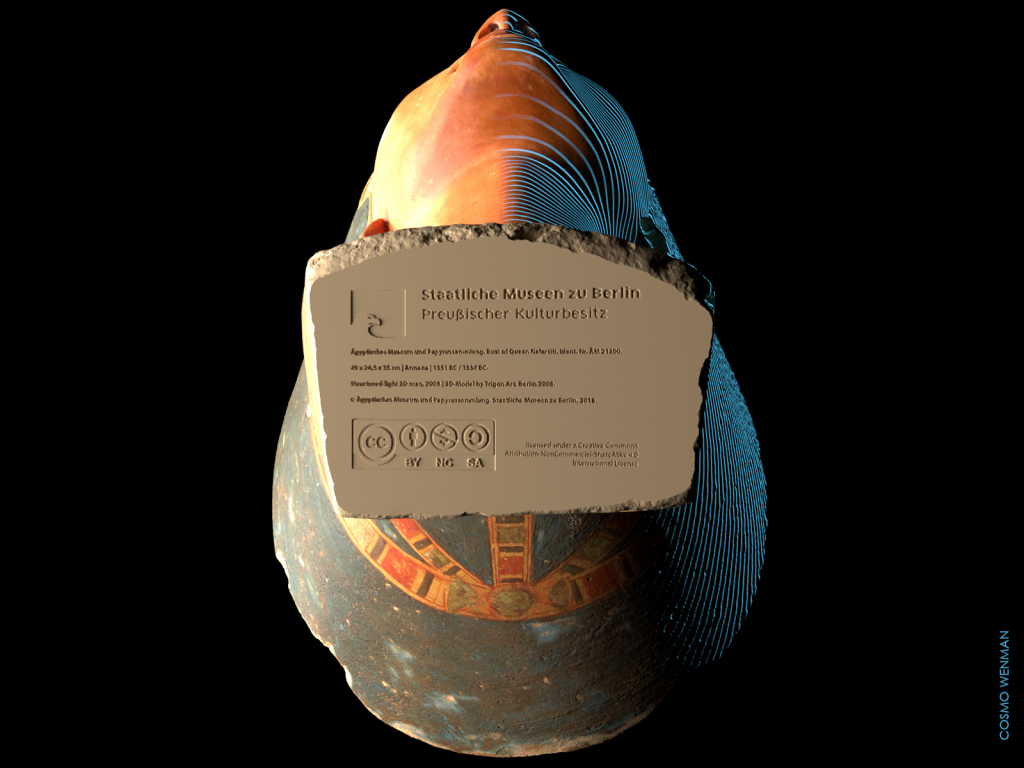
It has come to the attention of Creative Commons that there is an increased use of CC licenses by cultural heritage institutions on photographic reproductions and 3D scans of objects such as sculptures, busts, engravings, and inscriptions, among others, that are indisputably in the public domain worldwide. A recent example is the 3000-year-old Nefertiti bust…
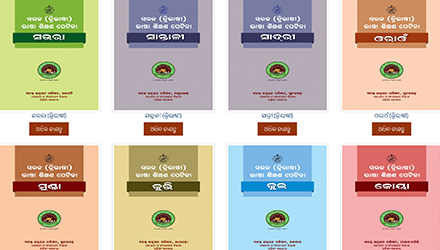
When governments choose to use Creative Commons licenses to preserve and share cultural knowledge, like Indigenous languages, it illustrates how our licenses can help create a more accessible and equitable world. Recently, CC India’s Global Network Representative (GNC) Subhashish Panigrahi brought to our attention that the Indian state of Odisha licensed 21 dictionaries—in all 21…
A key principle of the open movement is that the power of information relies on its accessibility. As researcher and activist Bushra Ebadi expressed to us recently, “Access to information is intrinsically tied to the right to know and the right to exist.” We often receive stories from around the world illustrating how Creative Commons…