A few weeks ago, the Italian Ministry of Culture issued its National Cultural Heritage Digitization Plan 2022-2023 – Guidelines for the acquisition, sharing and reuse of digital cultural heritage reproductions. While the Plan is welcome as an important step towards the digital transformation of cultural heritage institutions (CHIs), it risks nonetheless restricting, rather than increasing,…
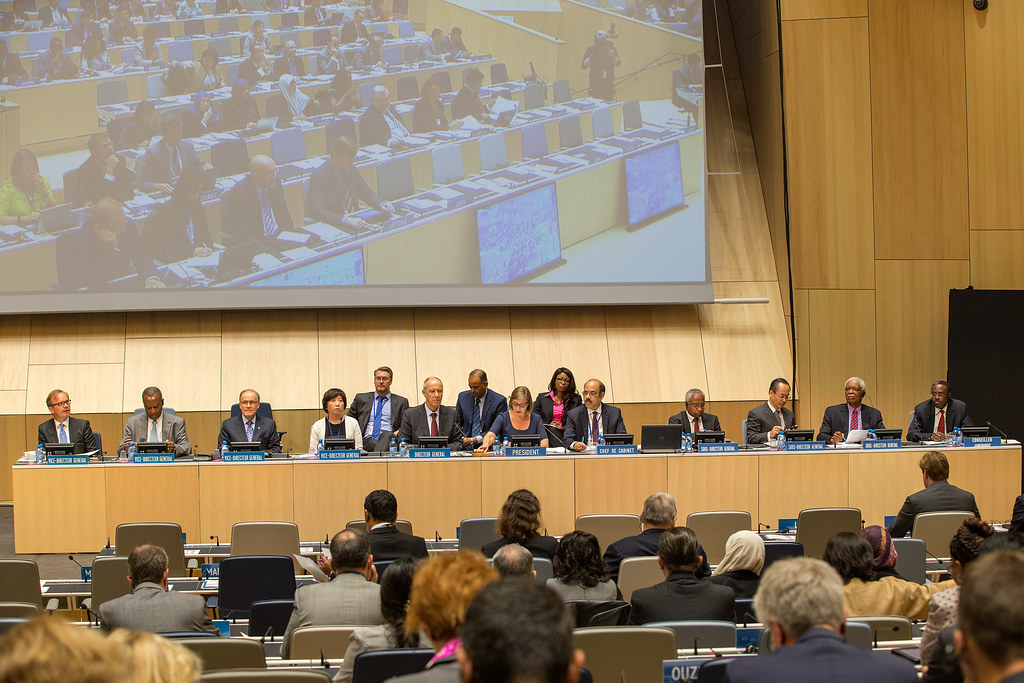
From 9 to 13 May 2022, Creative Commons (CC) participated in the 42nd session of the World Intellectual Property Organization (WIPO) Standing Committee on Copyright and Related Rights (SCCR) in Geneva, Switzerland. In this blog post, we look back on the highlights of the SCCR/42 week. Super happy to represent @creativecommons at @WIPO #SCCR42 #copyright…
Yesterday, China blocked the ad-hoc accreditation of the Wikimedia chapters of France, Germany, Italy, Mexico, Sweden, and Switzerland as official observers to the Standing Committee on Copyright and Related Rights (SCCR) of the World Intellectual Property Organization (WIPO). Previously, China rejected the Wikimedia Foundation’s application for observer status to this UN agency. The WIPO SCCR…
The Declaration for the Future of the Internet envisions advancing the free flow of information and protecting human rights. Creative Commons is committed to better sharing for a brighter future. This includes an open, global, interoperable, reliable, and secure internet. Today, at a hybrid ministerial meeting organized by the White House’s National Security Council, over…
Today, the Court of Justice of the European Union (CJEU) delivered its long-awaited and highly anticipated judgment in Case C-401/19. The case addresses the Polish challenge regarding compliance of Article 17 of the 2019 Directive on copyright and related rights in the Digital Single Market 2019/790 (CDSM) with fundamental rights. In short, the court ruled…
After several years of debate and intense, final negotiations lasting into the night, EU legislators reached a political agreement on the proposed Digital Services Act (DSA). DSA will regulate digital services that act as intermediaries – online platforms like social media and marketplaces – and their role of connecting consumers with goods, services, and content.…
Creative Commons (CC) applauds the landmark agreement reached late last week by EU legislators on the Digital Markets Act. Given the increasingly prominent role large ‘gatekeepers’ play in the daily lives of citizens and companies, CC believes it is important that a robust legislative and regulatory framework is in place to ensure a fair and…
CC welcomes the adoption of this comprehensive report by the AIDA special committee with strong, cross-party support. On Tuesday, the European Parliament’s (EU) Special Committee on Artificial Intelligence in a Digital Age (AIDA) adopted its final recommendations for a Roadmap, laying the groundwork through 2030. This Roadmap concludes that artificial intelligence (AI) has enormous technological…
Last Friday, United States (US) senators Thom Tillis (R-NC) and Patrick Leahy (D-VT) introduced the “Strengthening Measures to Advance Rights Technologies (SMART) Copyright Act of 2022.” Their bill proposes to have the US Copyright Office mandate that all websites accepting user-uploaded material implement technologies to automatically filter that content. We’ve long believed that these kinds…
On 23 February, the European Commission published its proposal for a Data Act – new rules on who can use and access data generated in the EU across all economic sectors. The Data Act is the second legislation in the EU’s data strategy and is in line with the Open Data Directive. As promised by…