Stay informed. Sign up for CC’s newsletter.
The United Nations Convention to Combat Desertification (UNCCD), established in 1994, unites governments, scientists, policymakers, the private sector, and communities to mitigate the effects of desertification, land degradation, and drought. Through land protection and restoration, the Convention promotes global action to restore and manage land for the sustainability of humanity and the planet and advances land stewardship to provide food, water, shelter and economic opportunity to all people.
Openly sharing data on land degradation and drought between the 196 countries who are parties to the Convention is key to advancing scientific knowledge around desertification. Every four years the UNCCD gathers this data and publishes aggregated reports under a Creative Commons license. The report includes a recommended set of reusable external global datasets to support countries that may not yet have their own national data production capabilities. However, without clear license policies and practices, UNCCD partners and stakeholders, as well as international researchers, who wanted to access the data face unnecessary barriers to building upon this existing scientific knowledge.
As part of the Open Climate Data project with the generous support of the Patrick J McGovern Foundation, Creative Commons presented a webinar about the open sharing of climate data. Following this webinar, the UNCCD approached CC to help streamline and refine their use of CC licenses and build a stronger foundation for sharing.
Goal
Through this project, CC put legal and licensing principles into practice at scale, helping the UNCCD move from aspirational commitments to operational change that built a foundation for openness and the exchange of knowledge.
Our collaboration with Creative Commons has strengthened our approach to open data sharing by raising awareness among countries on the importance of making nationally reported data accessible for reuse by the UNCCD and partners, helping to tell a more compelling story of the worsening land degradation and drought crises. Creative Commons licensing standardises global data sharing and, with its practical support, has given us greater confidence to advance a model that balances the interests of data providers and users while enabling stronger synergies through shared data with, among others, the United Nations Convention on Biological Diversity (CBD).
—Brian O’Connor, UNCCD Programme Officer
Challenge
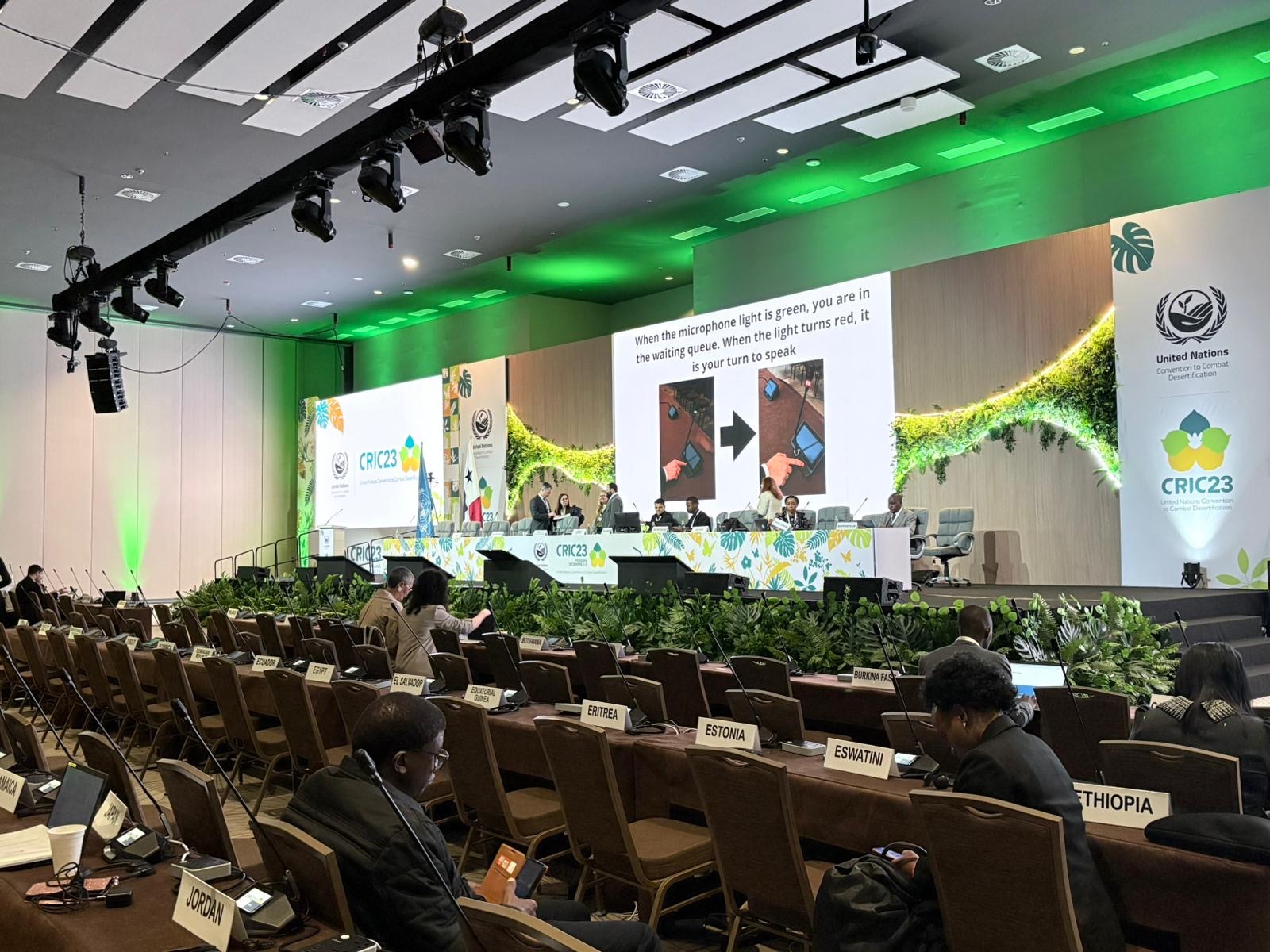
With 196 countries using a shared reporting platform, turning data‑sharing goals into policy, platform features, and practice was more complex than a simple policy update.Understanding how different CC licenses interact, particularly around attribution and compatibility, was complex enough to require hands-on consultative sessions with the Secretariat and delegates from 21 countries across six continents. Putting open sharing principles into practice at scale required redesigning workflow steps, updating explanatory language, and building in the technical ability to select CC0 and CC BY licenses directly in the portal where they were previously unable to provide adequate licensing guidance for Country Parties.
Our Work
Together with the secretariat, CC explored how different CC licenses work in practice, focusing especially on attribution and license compatibility for enabling confident reuse of nationally reported data in aggregate form. As we deepened our understanding of UNCCD’s needs and the scope for policy improvements, we identified the need for refined language in their open data policy and clearer licensing guidance for Country Parties. Previously, Country Parties had limited licensing guidance when uploading to UNCCD’s platform. We contributed updates to the explanatory language, redesigned workflow steps, and implemented platform functionality for selecting the CC0 tool and CC BY license to make it as easy as possible for open licenses to be applied.
The two licensing options recommended were:
CC0 (Universal Public Domain Dedication) with attribution requested to credit the country Party as the data creator, it enables unrestricted reuse and is particularly useful for foundational datasets like land cover and land degradation assessments.
CC BY (Creative Commons Attribution) is the least restrictive license with only one condition – attribution of the creator – and is globally recognized for interoperability, enabling datasets to be combined easily while controlling the license of the resulting products.
These options maximize interoperable sharing, reduce uncertainty around reuse and sharing, and mirror best practices adopted by the UN World Meteorological Organization, the Group on Earth Observations, UNESCO, and the European Commission.
During the project, we made sure to align with UNCCD frameworks, specifically Decision 16/COP.11 (paragraph 9), which requests that data and information from the reporting process be available and accessible to all, especially at national and local levels, and Decision 17/COP.11 (paragraph 14), which directs the Secretariat to develop a UNCCD data access policy, ensuring that innovations submitted as best practices are protected while promoting accessibility and openness.
After the project’s completion, the prioritization of attribution on their sharing platform (the UNCCD Data Dashboard) is already showing meaningful long-term impact, as the UNCCD employs clearer provenance practices that enable more confident reuse. Environmental data from nearly every corner of the world can be legally open and interoperable, and in turn can be accessible and reused with clear attribution, enabling local research and planning without legal ambiguity or technical barriers.
UNCCD’s updated guidance now directs their Country Parties to use CC0 or CC BY on country data submitted for aggregate reporting. They are aware of our recommendation to ensure the metadata schema reflects CC licenses and attribution as that work continues. This is laying the technical groundwork for deeper interoperability across future reporting cycles.
This project exemplifies why enabling licensing and easily reusable data matters. It empowers countries and communities to conduct research, strengthens global collaboration, and lays a foundation for lasting impact in combating land degradation, desertification, and drought. With tremendous thanks to the UNCCD, our guidance helps ensure critical public data is shared openly and credited appropriately, supporting global efforts toward Land Degradation Neutrality and SDG Target 15.3.
It has also laid the groundwork for future enhancements as UNCCD looks toward transforming its reports into more accessible and interoperable data repositories, including future integration with other Rio Conventions and the broader global climate data ecosystem.