Established in 2002, the CC licenses make it possible for everyone around the world to share knowledge, creativity, and culture, legally and freely.
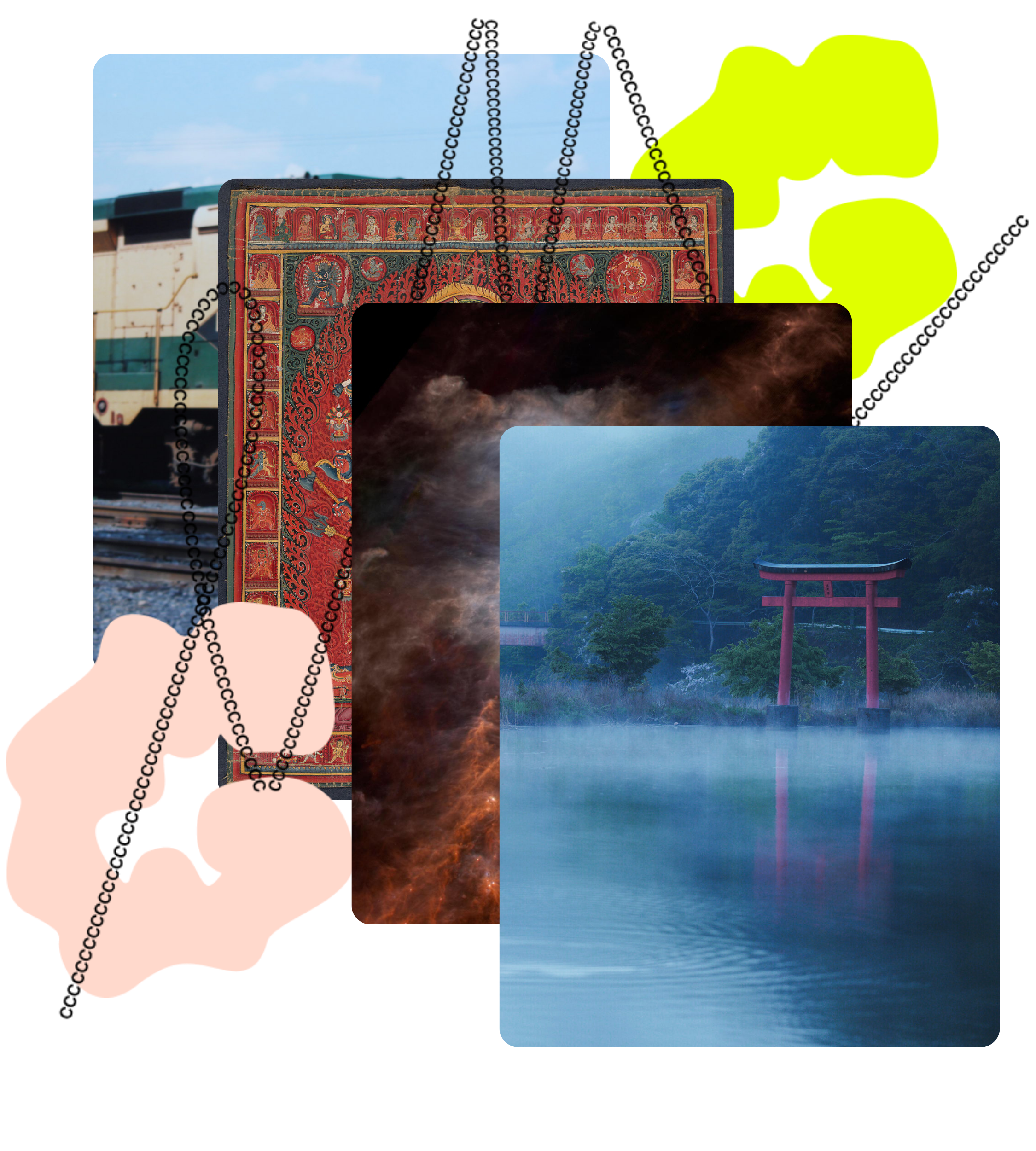
Back to front: "Reading Lines 5513 (EMD GP30)" by Gary Todd, here cropped, is marked with CC0; "Chakrasamvara with His Consort Vajravarahi," here cropped, is in the public domain; "Ionized Carbon Atoms in Orion," here cropped, is in the public domain; "Misty Awakening" by Liza Chan, here cropped, is marked with CC0.
Established in 2002, the CC licenses make it possible for everyone around the world to share knowledge, creativity, and culture, legally and freely.
CC licenses are a global digital public good and part of the essential infrastructure that makes sharing online possible. Today, there are tens of billions of CC-licensed works across the internet, spanning education, science, culture, and art, and more.
CC licenses do more than function legally—they express values. The CC icons, now recognized around the world, represent openness, collaboration, and participation. For example, the CC logo is so ubiquitous it is part of the permanent design collection at The Museum of Modern Art in New York!
Like the public infrastructure we rely on every day – such as roads and public schools – the legal and technical infrastructure behind CC licenses requires ongoing maintenance, updates, and support. Unlike most public infrastructure, however, CC licenses are not funded by taxes or user fees. As a public good, they depend on the support of the community that relies on them.
In the age of AI and mass scraping of openly licensed content, we haven’t seen the kind of reciprocity that’s necessary to sustain the infrastructure of the commons beyond our licenses. We’re currently exploring frameworks to provide licensors with more granular control over machine usage of data.
Become a patron of the commons by donating to Creative Commons.
Donate Today
Without CC licenses, copyright offers only two extremes: “all rights reserved” or “no rights reserved.” That doesn’t reflect the many ways creators want their work to be shared.
Creative Commons licenses offer a standardized, legally-sound way to grant permission in advance, so that creators can clearly communicate how their work may be used, without negotiating individual permissions every time. This enables access to knowledge by offering a “some rights reserved” option for content that would otherwise be closed off.
Most creators share a basic belief: that knowledge and creativity grow through sharing, not locking it away.
There are six different license types, listed from most to least permissive here:

This license enables reusers to distribute, remix, adapt, and build upon the material in any medium or format, so long as attribution is given to the creator. The license allows for commercial use. CC BY includes the following elements:

This license enables reusers to distribute, remix, adapt, and build upon the material in any medium or format, so long as attribution is given to the creator. The license allows for commercial use. If you remix, adapt, or build upon the material, you must license the modified material under the same or a compatible license. CC BY-SA includes the following elements:

This license enables reusers to copy and distribute the material in any medium or format in unadapted form only, and only so long as attribution is given to the creator. The license allows for commercial use. CC BY-ND includes the following elements:

This license enables reusers to distribute, remix, adapt, and build upon the material in any medium or format for noncommercial purposes only, and only so long as attribution is given to the creator. CC BY-NC includes the following elements:

This license enables reusers to distribute, remix, adapt, and build upon the material in any medium or format for noncommercial purposes only if attribution is given to the creator. If you remix, adapt, or build upon the material, you must license the modified material under the same or a compatible license. CC BY-NC-SA includes the following elements:

This license enables reusers to copy and distribute the material in any medium or format in unadapted form only, for noncommercial purposes only, and only if attribution is given to the creator. CC BY-NC-ND includes the following elements:
The deeds and legal codes of the CC licenses are translated into over 45 languages.