Celebrate 25 Years of Creative Commons! As we mark a quarter-century of empowering creators and keeping knowledge free, your support helps us build the next 25 years of the global commons. Help us kick off our end-of-year giving campaign early! Donate today!
The commons belongs to everyone and no one.
It is composed of the gifts of nature, including the coalescence of human creations. The knowledge commons is the amalgamation of our creative instincts, a shimmering web of art and discovery. Every work we make is superimposed atop those that came before it, using tools that our ancestors made possible. What a beautiful thing it is to make visible the gardens of our inner worlds, to witness those of others, and to care for them all together.
At some point in history, powerful people decided to build walls around the gardens in our physical and intellectual realms of perception, using the Law to guard them. These gardens that were fed by public and natural resources then became the domain of the ruling class. The Law eventually named this theft of public resources “property”; “intellectual property”, even. Property-centric legal systems justify their existence in part with arguments of justice and collective welfare, all the while impeding those aims by prioritizing the interests of people with the most “property rights”. The Law is a part of what many refer to as “the system”: an interwoven collection of oppressive institutional powers that shape how society operates and how we perceive it, and that cause alienation and division.

The commons is resistance.
It is reclaiming our power, community, and dignity. Creative Commons (CC) exists because of a history of pushing against unfair intellectual property policies. The resulting CC licenses illustrated how to build and sustain alternative modes of sharing centered on the common good, enabling creators to grant usage permission while retaining some control.
The Law makes examples out of those who push back against unfair enclosure. Namely, Aaron Swartz—a brilliant young activist** and an early architect of CC—faced severe federal prosecution for downloading paywalled academic articles at scale. Public resources are drained by such cases and subsequently used to line the pockets of the prison industrial complex instead of ensuring our neighbours’ needs are met. And yet, at the same time as the law vigorously upholds its purported ideals of property protection, it also subverts them for systemic gains.
Take, for example, policymakers’ hand-waving around creators’ concerns about their work (CC-licensed or otherwise) being used by tech giants for generative AI without permission, attribution, or reciprocity. Large-scale copying by major tech companies has met far less institutional resistance than it did for Swartz; in a twist of tragic irony, Swartz was in the same Y combinator class as OpenAI CEO Sam Altman. Amidst the chaos of the AI arms race, the tech industry has been treated as more valuable than creative and knowledge ecosystems, with nary a tech CEO being apprehended by federal prosecutors.
The commons is not about unfettered access alone; it is about ensuring we can all benefit from its fruits, and that can’t happen if they are spun into poison. For some to win it all, others must lose everything and then some. I believe a crucial element of openness is ensuring that everyone can access this wonderful pool of knowledge, no matter their sociopolitical situation–this means more privileged people should not use the commons in ways that worsen the circumstances of those with less.
AI companies have used works in ways that many creatives concerned with the public interest do not support. For example, in 2019, reporting revealed that IBM had used CC-licensed photos from Flickr in a facial recognition dataset. Facial recognition and related biometric databases have been documented in Israel’s surveillance and targeting of Palestinians, and many creators who share openly did not intend for their work to contribute to that. I certainly don’t, and it pains me to see works of beauty and joy warped into evil. To say naught of other well–documented concerns about generative AI in particular, including its environmental impact, labour exploitation, cultural and cognitive erosion, privacy violations, inextricable performance issues, inflated hype*** detracting from socially beneficial research, and its reinforcement of systemic bias.
The commons is an affirmation of communal care.
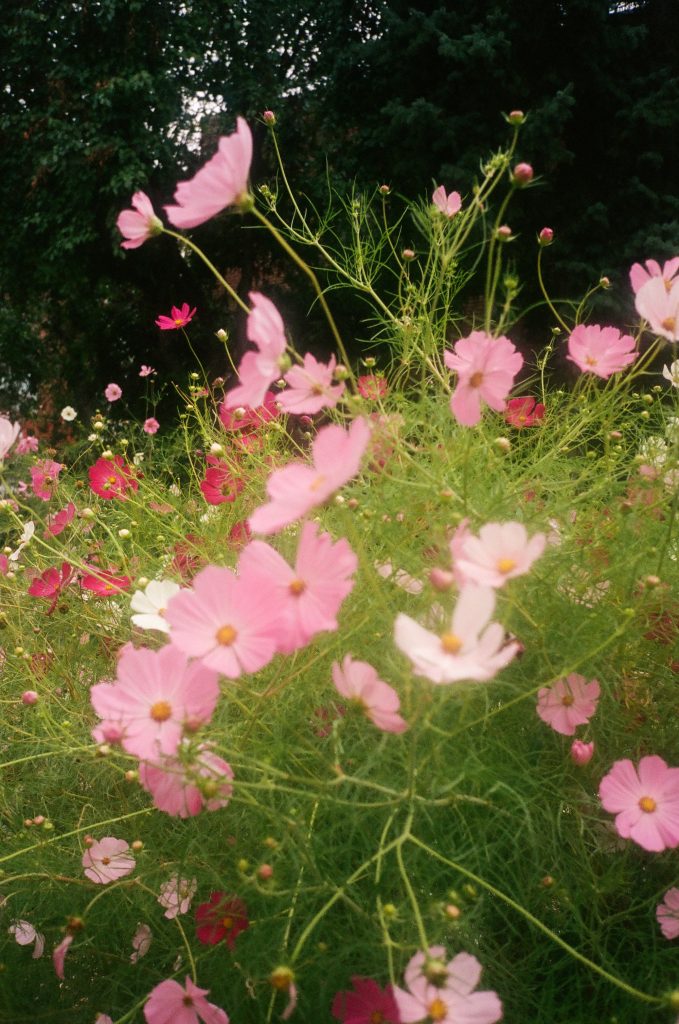
It is a conscious decision to push back against enclosure and extraction. When we contribute our works to the commons, we’re doing it for the love of the game; opening the doors to our worlds such that we may expand our collective horizons. Translating our experiences into different mediums, collecting our observations and allowing others to build on them, leading to wondrous new creations in turn. It is to say: “Hey, check out this cool thing that I made. You can use it to make something cool too. Just let people know that I made it, and maybe also let them do the same with your work, so we can uphold this magnificent swirling cycle of creativity.”
While the term “the commons” doesn’t translate neatly into every language, conceptually, it is universal. I’ve always cared a lot about creativity and about equity, and so for me, working to protect the commons means ensuring that its contents and benefits reflect as many communities as possible. Given the predominance of English-language and Global North content, our digital commons is far from representative of the whole world. I believe that uses of the commons should be considerate of how to improve the lives of people globally, enabling more people to learn from and contribute to it.
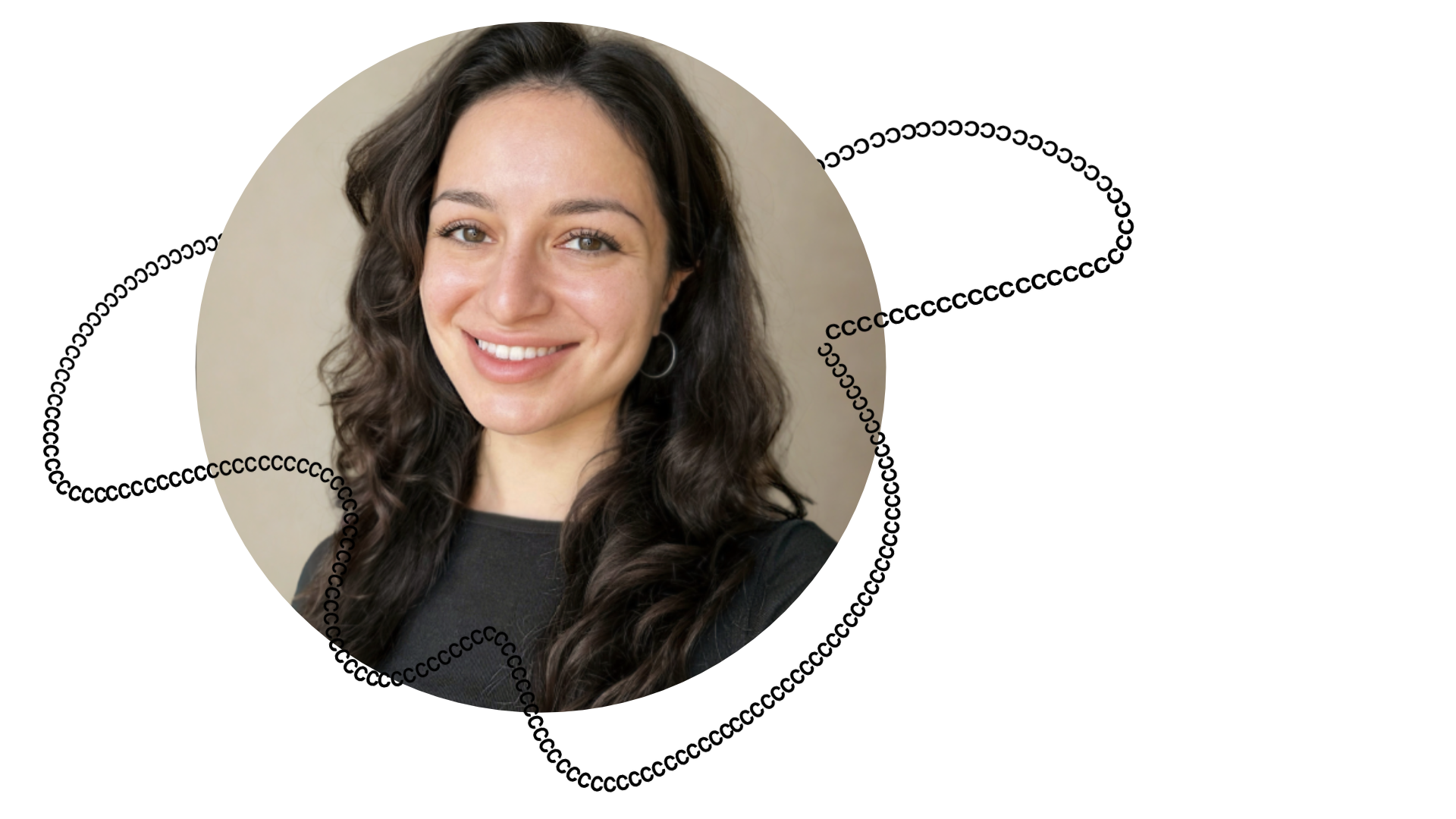
I am a creative person working in service of the public good, and every fork I’ve turned onto in life has shaped my approach to the commons. Through my position as Copyright and AI Counsel at CC, I’ve been blessed to focus on the kind of lawyering I find most interesting; not simply implementing the law as it is, but rather, shaping its functions into something new. Beyond my job, I’m a writer, photographer, performance artist, and community organizer/facilitator. These pursuits all fold into my identity as a cultural worker, echoing the following ethos from Toni Cade Bambara: “As a culture worker who belongs to an oppressed people, my job is to make revolution irresistible”. My family is from the Kurdistan region of Iraq, so I grew up with an innate sense of the unfairness of borders, imperialism, and cultural erasure. I do not–and cannot–limit myself to one particular place to provide my skills, nor do I shy away from critiquing the status quo. I do cultural work everywhere I can, and it all stems from the core impulse of bettering the world around me.
My dream is to see more intersectional uses of the commons and subsequent developments of technology that serve people over profit. I love art, technology, and everything they have to offer, especially the way they connect us more deeply to each other. I am consistently awestruck by feats of human imagination and collaboration that merge ideas and inventions into novel spectacles and tools. We are constantly in a state of becoming and undoing, with creation moving through and around us, a flow far more powerful than anything people can do to stop it. Every bit of the commons is a piece of the universe finding a way to express itself, ever expanding and glimmering.
* Other colloquialisms include Big Brother, Babylon, the man, etc.
** Relatedly, see Understanding Power and Manufacturing Consent by Noam Chomsky for seminal works that influenced Swartz’ understanding of power structures.
*** The dominant narrative of large general-purpose AI systems is overshadowing use-specific, ethically built and deployed AI tools. The arms race to so-called “artificial general intelligence” positions this outcome as inevitable, and contributes to fear-mongering to prop up national interests and the profit motive. This has led to the misallocation of resources and obfuscation of public-interest AI research, with investment instead being funneled into harmful proprietary models. Smaller, targeted AI systems can address real-world problems without the extractive footprint of scale at all costs, and without intentions of supplanting worker power.