Celebrate 25 Years of Creative Commons! As we mark a quarter-century of empowering creators and keeping knowledge free, your support helps us build the next 25 years of the global commons. Help us kick off our end-of-year giving campaign early! Donate today!
How can we give the people and organizations that share and make collections of knowledge and creativity available in the commons a meaningful way to encourage reciprocity from AI developers?
This question is central to Creative Commons’ ongoing development of CC Signals, a framework of legal tools and guiding norms designed to encourage reciprocity in how AI systems use shared knowledge.
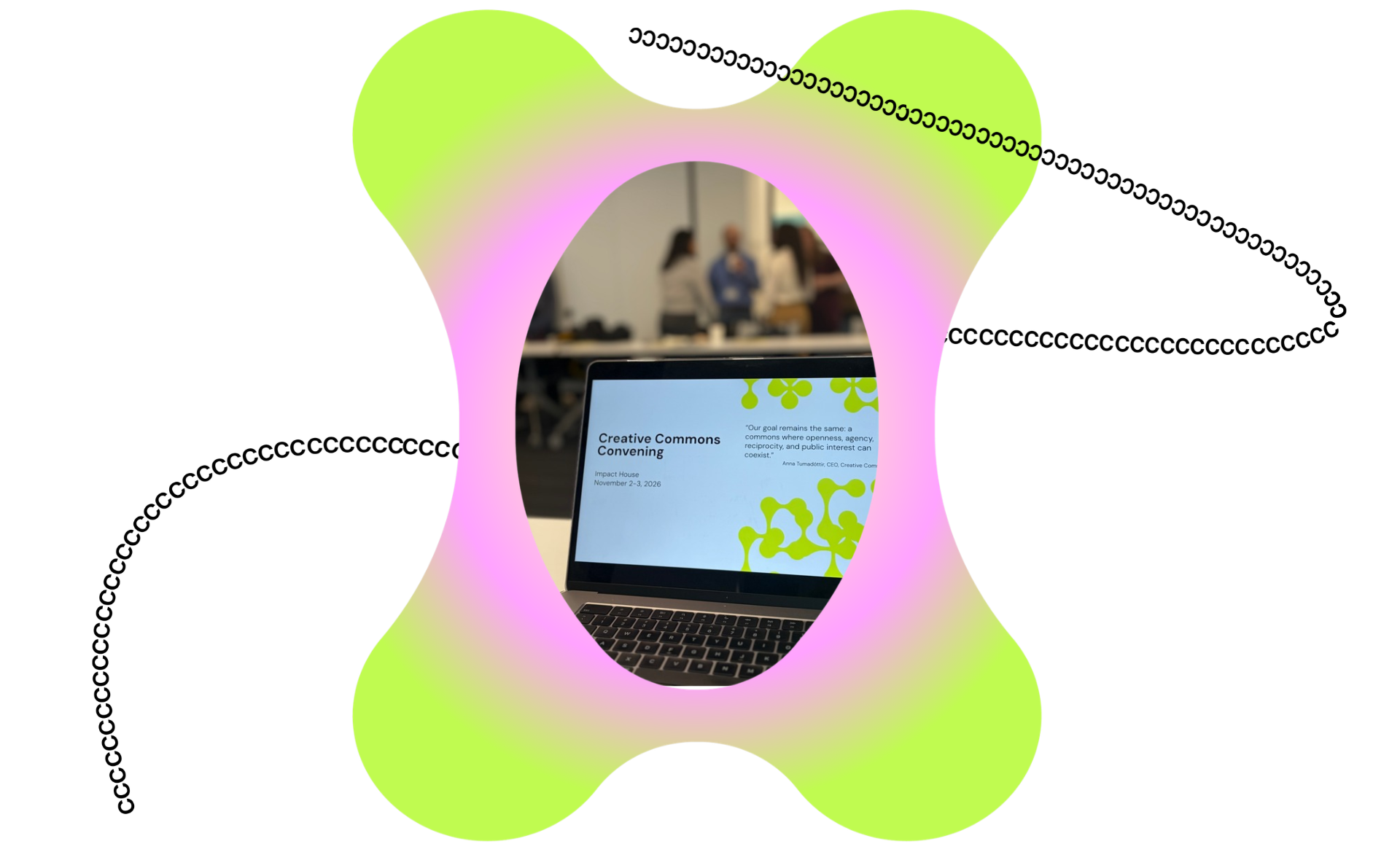
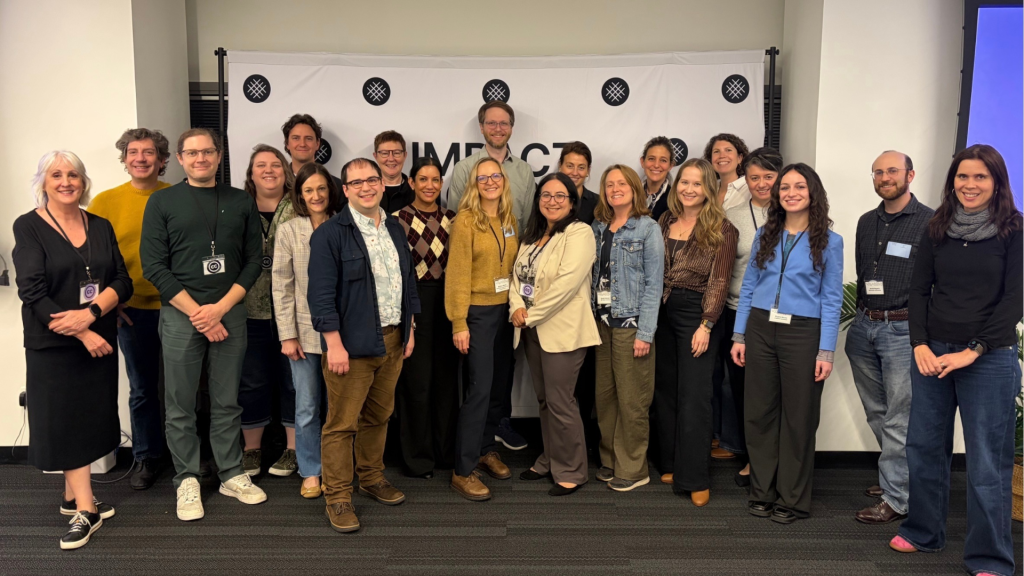
On November 2-3, Creative Commons convened a group of open knowledge organizations in Chicago to advance this work. Building on earlier conversations and workshops with legal, policy, and technical experts, the two-day gathering focused on refining the first CC Signals legal tool and preparing for the release of an alpha version in early 2027.
The gathering brought together several organizations exploring early adoption of CC Signals, bringing perspectives from open journalism, scholarly publishing, education, and cultural heritage. Participants included representatives from the Wikimedia Foundation, The Conversation, Cambridge University Press and Assessment, MIT Open Learning, Munch Museum, and Civic News Company.
We are grateful to these organizations and others helping shape the first iteration of CC Signals. Their participation and feedback will be essential as we move toward testing the public alpha version and explore how the tool can support organizations providing bulk access to their collections. We also thank the MacArthur Foundation for its generous support of the Chicago convening.
Building on community conversations
Over the past few years, Creative Commons has engaged with experts and the open community around the world to explore how sharing can continue to serve the public interest as AI changes the ways knowledge is accessed and used. As the technology has advanced and our understanding has deepened, we’ve adapted our approach while remaining steadfast in our commitment to protecting and growing the commons.
In July, we shared takeaways from a workshop in London, where participants examined how CC Signals could evolve from a framework expressing preferences into legally enforceable tools. Those discussions explored a possible middle ground between unrestricted machine access and complete enclosure, aiming for approaches that would introduce guardrails on AI systems in ways that support and sustain the commons.
Since then, CC has conducted the first phase of an ongoing needs assessment with stewards of large, openly shared collections to better understand the challenges they face and what they need from a new tool. These organizations invest time and resources in maintaining collections and the infrastructure that makes knowledge accessible, and high-quality collections are critical for AI to be useful. Large-scale automated access—mostly by commercial AI developers—places unsustainable demands on those resources, raising questions about how to support open sharing.
These findings are helping shape our approach to CC Signals: a standardized contract that organizations can use when offering bulk access to their collections, such as through an API or a dataset download. While our initial work focuses on stewards of CC-licensed and public domain materials, CC Signals could be used by any organization providing bulk access, regardless of how the underlying content is licensed. Starting with these stewards allows us to test and refine the approach, understand its impacts, and apply what we learn more broadly.
Why should AI developers give back?
The commons has always been built on reciprocity. People share knowledge, creativity, and resources so that others can learn from them, build upon them, and contribute something in return. This cycle of sharing creates benefits that extend far beyond any individual contribution.
But the commons doesn’t sustain itself. Behind the knowledge we access freely are people and institutions investing time, expertise, and resources to create, organize, preserve, and make it available to others.
AI is changing that relationship. Developers can draw on enormous amounts of shared knowledge, often without maintaining visible connections to sources or contributing to the people and infrastructure that make them available. The large-scale access also imposes significant costs on the institutions stewarding these collections. Over time, this risks weakening the trust, incentives, and capacity that make open sharing possible.
A central theme in Chicago was how to preserve that cycle of reciprocity in an AI ecosystem. How can we ensure that the benefits of shared knowledge accrue to everyone, with particular care taken for the people, communities, and institutions that contribute to it?
One important part of that conversation was rethinking how we use the word “attribution” in the context of AI.
Attribution has always been fundamental to Creative Commons licenses. It recognizes the people behind creative works and helps others discover and build upon them in ways that acknowledge existing works and their creators. But AI systems work differently. With current large language models operating as “black boxes,” it generally isn’t possible to trace a particular training source to a specific generated response.
We’ve explored these challenges in greater depth in our March 2026 Attribution and AI Outputs issue brief and our July article, Attribution in the Age of AI.
That’s why we’re introducing the concept of SourceConnection, a CC Signals component that builds on the principle of attribution as a form of reciprocity, helping maintain connections between AI systems and the collections they use.
Rather than treating attribution in AI as equivalent to attribution under CC licenses or to the moral right of attribution (or right of paternity) under copyright law, SourceConnection takes a different approach. As part of the CC Signals contract, it would require participating AI developers to disclose, transparently, which collections they used for training and provide references to sources when AI systems use outside sources to help answer questions, even in situations where copyright law may not require attribution from the underlying license.
Alongside SourceConnection, the concept of ShareBack explores how commercial AI developers in particular can give back to the commons they benefit from. As Anna Tumadóttir explored in her recent post, A Principled Approach as the Sands Shift, reciprocity can take many forms. We have contemplated possible conditions for a future version of this tool that stewards could choose to include, such as requiring scoped-in users to share back access metrics, modified datasets, and/or financial contribution.
Together, these ideas reflect a larger ambition for CC Signals: to encourage AI development that recognizes the sources of shared knowledge, supports continued participation in knowledge production and sharing, and contributes to the commons from which it benefits.
Creating new options while preserving openness
For Creative Commons, the challenge is to make these expectations legally enforceable without undermining the openness that has allowed knowledge to be shared and reused around the world.
As our thinking has evolved in response to challenges brought about by AI, we’ve recognized that openness and meaningful conditions are both important to sustaining the commons. The task is how we can give people and institutions greater confidence in sharing and how to protect the public-interest uses that make the commons valuable.
CC licenses remain essential, but copyright licensing alone cannot address every question AI raises about transparency, reciprocity, and sustaining access to knowledge and the commons.
That’s why we’re developing a separate, contract-based legal tool for organizations providing a service to facilitate bulk access to collections. This approach will allow stewards to establish certain conditions for access at scale without changing existing CC licenses.
The Chicago discussions helped us examine how those conditions might work in practice, including how to avoid unintended consequences for research, preservation, accessibility, and other public-interest uses. These considerations will remain central as we refine the tool with early adopters.
From discussion to alpha testing
The Chicago convening marked an important step in moving CC Signals from concept toward practical implementation. Building on the conversations in London early this year and the first phase of the needs assessment that followed, participants helped identify opportunities and challenges that will inform the alpha version of the legal tool. The public alpha will initially focus on SourceConnection, while ShareBack requirements remain under consideration for future iterations.
CC is continuing to invite early adopters to test implementation of a public alpha version of the CC Signals legal tool in 2027. Alongside this work, the next phase of the needs assessment will involve broader research and analysis, including in-depth interviews and feedback from more stewards in the commons. It will also include vetting the legal tool with experts in law and policy.
If you’re an organization that stewards CC-licensed or public domain collections and want to participate in early adoption and/or the needs assessment process, please get in touch by emailing info@creativecommons.org.
The work is still evolving, but our principles guiding it remain consistent. We want to give people and institutions greater agency over how they share knowledge and participate in the AI ecosystem, engrain reciprocity in those who benefit from the commons, and continue to safeguard public access to knowledge. Together, these commitments help create the conditions for a thriving commons.
For more information about CC Signals, download this information brief.