Celebrate 25 Years of Creative Commons! As we mark a quarter-century of empowering creators and keeping knowledge free, your support helps us build the next 25 years of the global commons. Help us kick off our end-of-year giving campaign early. Donate today.
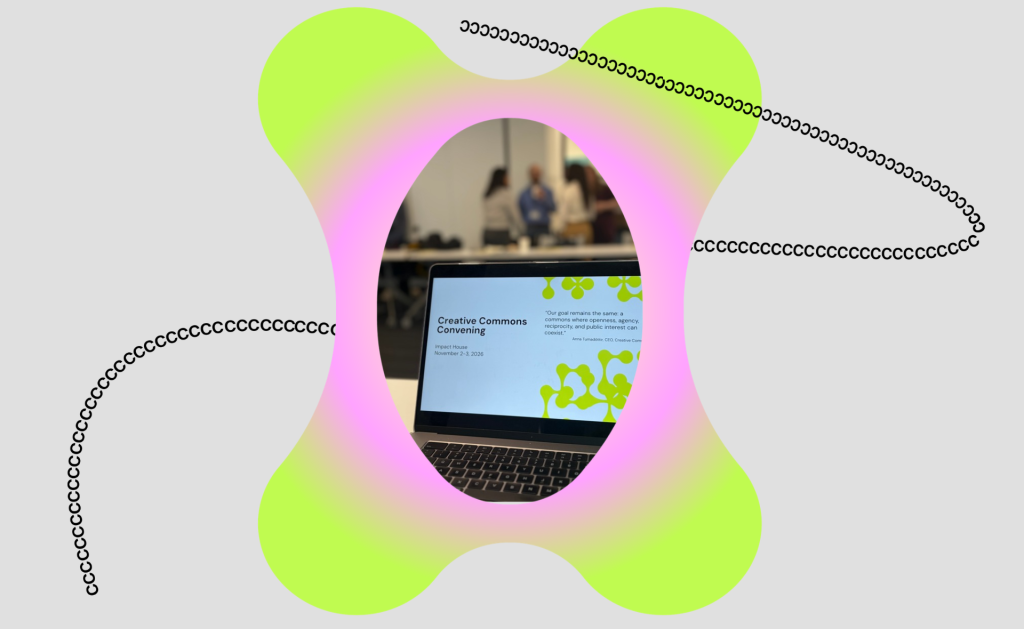
On November 2-3, Creative Commons convened a group of open knowledge organizations in Chicago to advance work on CC Signals. Building on earlier conversations and workshops with legal, policy, and technical experts, the two-day gathering focused on refining the first CC Signals legal tool and preparing for the release of an alpha version in early 2027.
Creative Commons has been exploring questions around artificial intelligence for a long time: how this profound technological shift might affect people’s motivations to share, whether the intentions behind sharing work before AI became mainstream still hold when we consider how those works are being used now, and how we sustain a thriving commons when the fundamental bargain of the open web has shifted.
In this post, we outline our plans to build upon and strengthen CC signals in order to support our goal of sustained access to human knowledge. We do not have all the answers yet. What we do have is a framework for how we will work toward them.
It’s been a while since we last shared an update on CC signals and our work around AI and the commons. Over the past several months, we’ve been deep in research, in conversation, and in active collaboration with communities, policymakers, and practitioners. We took the time to understand where power is consolidating, where harms are emerging, and where meaningful intervention is actually possible. We are now at a point where we believe we can act in ways that will have real impact.
At Creative Commons, we’ve long believed that binary systems rarely reflect the complexity of the real world—nor do they serve the commons very well. The internet, like the communities that built it, thrives on nuance, experimentation, and shared stewardship. That’s why we’re continuously working to introduce choice where there has been little, and to advocate for systems that acknowledge the diversity of values and needs across the web.