Help us protect the commons. Make a tax deductible gift to fund our work. Donate today!
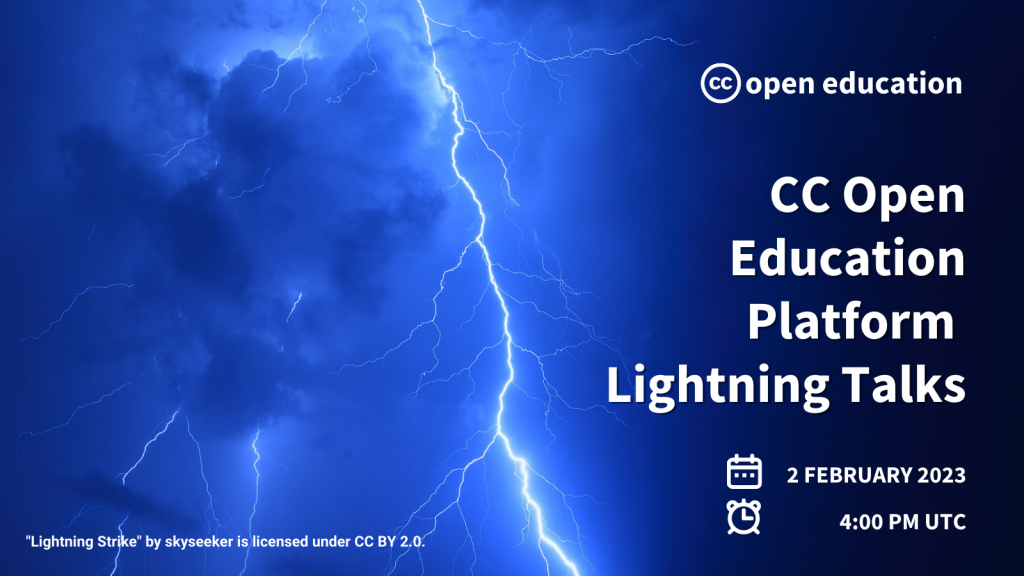
CC Open Education Platform Lightning Talks: Join us on 2 February 2023
The Creative Commons Open Education Platform community welcomes you to our Lightning Talks, or seven-minute presentations on specific updates or stories in open education.
Kicking off our Lightning Talks series for 2023, presenters will highlight: open educational resources (OER) as tools for social justice, work/life balance, climate change and the United Nations Sustainable Development Goals (SDGs). Presenters will also focus on particular platforms, such as LibreTexts and Curationist, which provide technical advancements for open education. Learn more about the presentations below.
Ravon Ruffin, Educational Programs Manager at MHz Foundation. Ruffin is also CEO and co-founder of the creative studio and arts incubator Brown Art Ink.
Amanda Figueroa, Community Director at MHz Foundation. Figueroa is also the co-founder of Brown Art Ink.
Summary: This session will be an overview and exploration of the Curationist platform, a digital open access tool for publishing materials found in the Creative Commons and public domain. This tool brings together arts and culture communities to find, share, collaborate, and reimagine cultural narratives. Curationist is a response to the urgent call for decolonial methodologies within curation, education, and art, and will exist as a vital resource within openGLAM, OER, and Indigenous data sovereignty.
LibreTexts 101: Building the Textbook of the Future
Speaker: Delmar Larsen, Professor of Chemistry at the University of California, Davis, and Founder and Director of the LibreTexts project.
Summary: Larsen will provide a topical overview of the LibreVerse – the suite of tools and technologies to advance the building and usage of OER textbooks, assessments, and other activities. The overview will include a discussion of the Libraries, ADAPT homework system, jupyter, Commons&Conductor, SOLO, bots and more. The key approach to the LibreVerse is to build and use technology to advance specific goals and avoid its limitations. Hence, a multi-goals effort like LibreTexts requires a multi-technology platform – the LibreVerse.
Using Machine Translation Algorithms to Effectively generate Non-English language OER Textbooks
Speaker: Delmar Larsen, Professor of Chemistry at the University of California, Davis, and Founder and Director of the LibreTexts project.
Summary: Larsen’s presentation will outline recent efforts of leveraging the centralized corpus of OER textbooks hosted on the LibreTexts platform toward a greater global impact. Larson will also discuss the implementation and impact of two approaches in building non-English language OER textbooks via modern machine translation algorithms. Key to these approaches is recognizing that while modern machine translation algorithms have developed significantly over the past few years, and they are still 90-95% perfect, their implementation makes them far more useful to students than the alternative human implemented translation effort at 100% implemented at a limited scale and with significant costs.
Integration of Values and Ethics in OER for Climate Change and the SDG’s
Speaker: Dr Suma Parahakaran is head of the Faculty of Education at Manipal Globalnxt University in Malaysia and serves as a Visiting Professor at the American University of Sovereign Nations. She was also part of the task force for training teachers to integrate Values and Ethics into the Curriculum content for the UNHABITAT water education project.
Summary: This presentation will highlight options for collaborative OER for learning communities.
OER as a Social Justice tool, the case of digital accessibility
Speaker: Nicolas Simon, Associate Professor of Sociology in the Department of Sociology, Anthropology, Criminology, and Social Work at Eastern Connecticut State University.
Summary: By being cost-free, Open Educational Resources (OER) are electronically available for all students. The economic inclusion of all learners is the first step toward social justice. Another step is to use OER, which are specifically digitally accessible to include all types of learners. By using OER, we educators can promote and teach about digital accessibility. Then we can invite our students to use digital accessibility in the creation of new OER. In this sense, OER are good opportunities to advocate for inclusion, diversity, equity, accessibility, and social justice.
Get the Balance Right: Using Mindfulness OER for Intentional Work and Life Practices
Speaker: Dr. Carolyn Stevenson is currently a full-time faculty member and faculty advisor for Purdue University Global, School of General Education, Department of Professional Studies, with over 23 years teaching and administrative experience in higher education at both the undergraduate and graduate level. She completed her Ed.D. from Roosevelt University, M.B.A. from Kaplan University, M.A. in Communications from Governor’s State University and B.A. in English from Northern Illinois University.
Summary: This session will discuss using mindfulness OER to foster a health work/life balance. The session will also provide participants with resources and will include a brief meditation exercise.
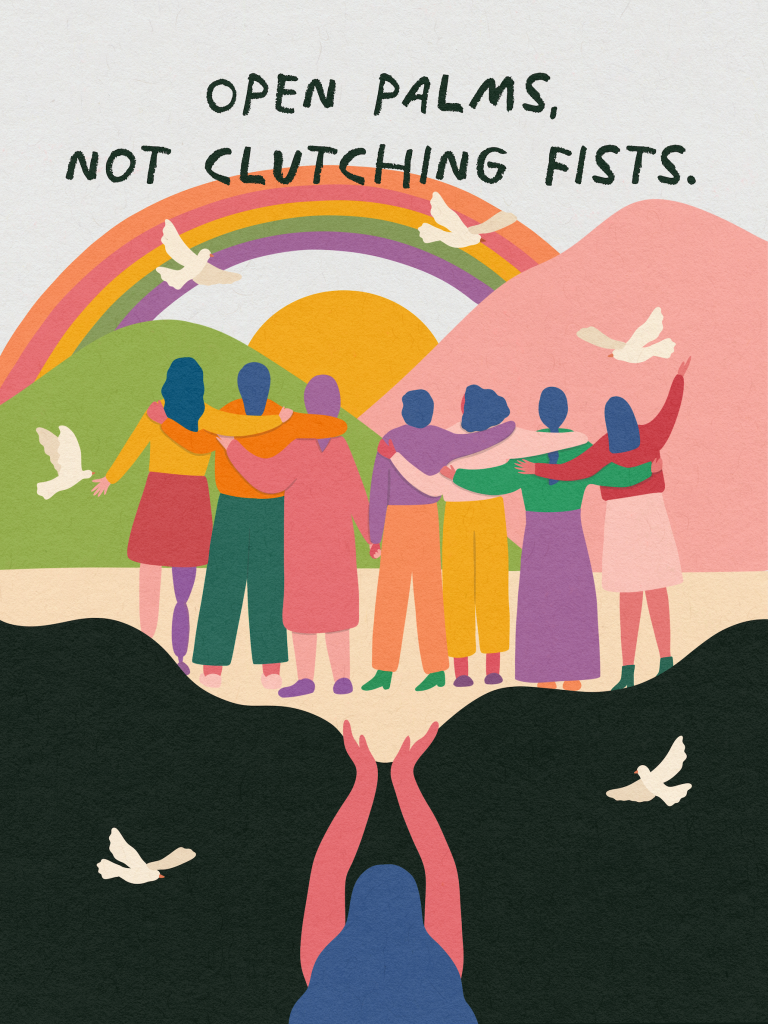
CC’s #BetterSharing Collection | January: Open Palms, Not Clutching Fists
As part of #20CC, last year we joined forces with Fine Acts to spark a global dialogue on what better sharing looks like in action. Our #BetterSharing collection of illustrations was the result — we gathered insights from 12 prominent open advocates around the world and tasked 12 renowned artists who embrace openness with transforming these perspectives into captivating visual pieces available under a CC license.
Each month throughout 2023, we will be spotlighting a different CC-licensed illustration from the collection on our social media headers and the CC blog. For January, we’re excited to showcase “Open Palms, Not Clutching Fists” by illustrator and visual artist, Burcu Köleli. The piece, licensed under CC BY-SA 4.0, was inspired by a quote from Maria Popova, founder and editor of The Marginalian (formerly Brain Pickings):
“Never forget that an open palm is a greater platform of power than a clutching fist.”
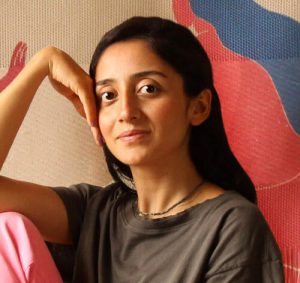
Meet the artist:
Photo courtesy of Burcu Köleli
Burcu Köleli is a passionate intersectional environmentalist and feminist. Her work, which includes digital illustrations and gouache paintings, is driven by activism, human relationships, and daily life. Believing in the power of art to create change, Burcu uses her talents to communicate social and environmental issues. She aims to create inclusive artwork that celebrates nature and women, while spreading joy.
The full #BetterSharing collection is available on TheGreats.co to be enjoyed, used and adapted, and then shared again, by anyone, forever. View the full collection >>
Aparta la fecha: la Cumbre Global de Creative Commons 2023 llegará a la Ciudad de México
La Cumbre Global de Creative Commons volverá a ser un evento presencial este 2023, y esta vez se llevará a cabo en una de las ciudades más imponentes y llenas de cultura del mundo: ¡la Ciudad de México! Del 3 al 6 de octubre de 2023, nos reuniremos en el Centro Cultural Universitario Tlatelolco de la Universidad Nacional Autónoma de México para compartir abiertamente ideas y contribuir en la creación de un futuro más brillante para el movimiento de intercambio abierto (open sharing movement). Este maravilloso evento se logrará en colaboración con Creative Commons México y esperamos que puedas asistir a lo que será una experiencia inolvidable.
La Cumbre Mundial de Creative Commons no podría llegar en un mejor momento: nunca antes los bienes comunes de interés público habían sido más importantes, más grandes y mayormente esenciales para resolver los principales desafíos mundiales y ayudarnos a las personas a llevar vidas más gratificantes y significativas. El tema de la Cumbre se alinea con nuestra estrategia de 5 años, “Compartir mejor para un futuro más brillante” (Better Sharing, Brighter Future), estamos muy entusiasmados de explorar un intercambio contextual, inclusivo, justo, equitativo, recíproco y sostenible en una de las principales ciudades de América Latina. El programa de la Cumbre Mundial de Creative Commons incluirá conferencias magistrales, paneles, sesiones comunitarias, talleres, trabajo en red, arte y música.
Los 6 temas de la cumbre serán:
Ciencia/Clima: abogar por cómo la investigación abierta y los datos juegan un papel fundamental para abordar los desafíos globales.
Educación: destacaremos el trabajo de quienes crean oportunidades y abogan por un acceso más equitativo a los recursos educativos.
Cultura: discutiremos cómo la preservación, el acceso, el intercambio, el uso y la reutilización de la cultura son ingredientes esenciales de sociedades prósperas y resilientes.
Periodismo: abordaremos los desafíos críticos que enfrentan los periodistas, creadores de contenido y narradores; además exploraremos cómo los bienes comunes abiertos pueden fortalecer el ecosistema de los medios.
Mejor internet (Web3, Datos, IA, Política): explorando cómo podemos trabajar todas las personas juntas para lograr un “mejor Internet” y lo que eso significa en el mundo actual de tecnología emergente y un ecosistema de Internet que cambia rápidamente.
Arte y tecnología emergente: abordaremos problemas actuales que afectan a las y los artistas y personas creadoras a nivel mundial, y exploraremos oportunidades en la sección transversal de creatividad, acceso abierto y tecnología.
La Ciudad de México aparte de ser una de las 10 ciudades más grandes del mundo, es una gran mezcla de culturas donde puedes encontrar un equilibrio perfecto entre tradición y modernidad. La Cumbre será la oportunidad perfecta para explorar sus hermosas calles, historia y arquitectura además de variada e incomparable gastronomía mientras aprendes de las personas expertas en el ramo de la tecnología, te relacionas con otros profesionales y contribuyes al Movimiento abierto (Open Sharing Movement).
CC reconoce que el idioma puede ser una barrera para la conexión y la comunicación en nuestra comunidad global. Para la Cumbre Global 2023, CC publicará comunicados importantes tanto en inglés como en español, y estamos investigando cómo apoyar mejor tanto en inglés como en español en el programa de la Cumbre.
¿Le gustaría a tu organización formar parte del futuro de la creatividad y la colaboración digital? ¡Únete a nosotros como patrocinador en la Cumbre Global Creative Commons 2023 en la Ciudad de México! Estamos buscando patrocinadores para hacer posible este evento intercultural y apoyar nuestro trabajo en Creative Commons. Además, tu patrocinio apoyará el Programa de Becas, que permitirá la expansión de oportunidades de representación globales durante la cumbre y dentro del Movimiento Abierto (Open Sharing Movement) ¿Interesado? Comuníquese con Kat Drew al correo: kat@creativecommons.org para explorar oportunidades de patrocinio.
Para tener una mejor idea de lo que se puede esperar de la Cumbre Global CC en la página de nuestra última cumbre en persona en Portugal 2019: blog y presentaciones.
Agenda del 3 al 6 de Octubre en tus calendarios y suscríbete a nuestra lista de correo electronico, síguenos en las redes sociales (Facebook, Instagram, LinkedIn y Twitter) o únete a CC en Slack para mantenerte al día sobre información, becas, el comité de organización y sugerencias de propuestas para la cumbre. ¡Estamos felices de verte en la Ciudad de México para una experiencia inolvidable!
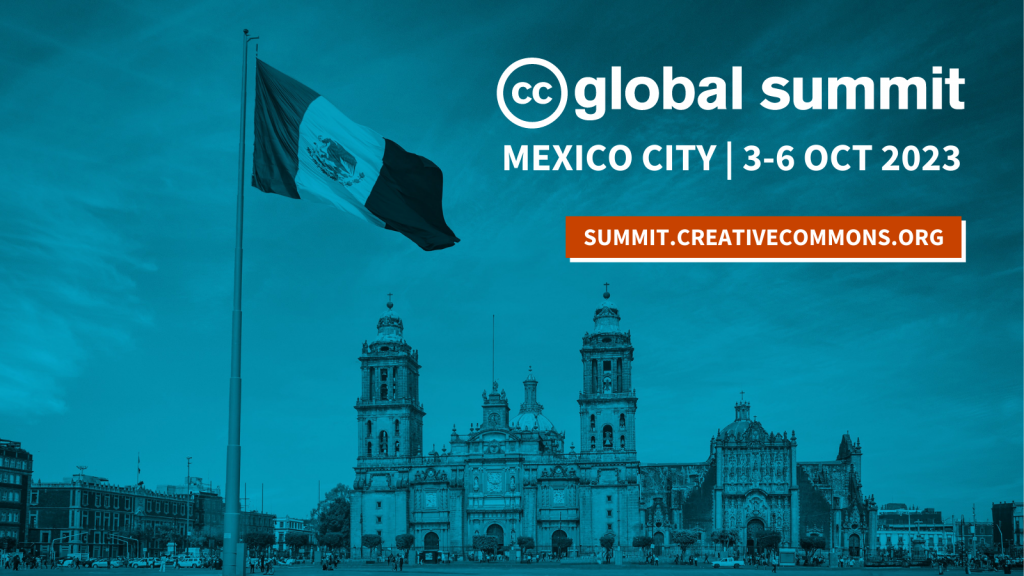
Mark Your Calendars: The 2023 CC Global Summit Is Coming to Mexico City
We are thrilled to announce that the Creative Commons Global Summit will return to an in-person event in 2023, and this time we are heading to one of the most vibrant and culturally rich cities in the world — Mexico City! During 3-6 October 2023, we will be gathering at the Centro Cultural Universitario Tlatelolco to unite, share ideas, and create a brighter future for open sharing. We are thrilled to be organizing the event in collaboration with CC Mexico, and hope you will be able to join in what will be an unforgettable experience.
This opportunity to gather together couldn’t come at a better time: Never before has the public interest commons been richer, larger, or more essential to solving the world’s biggest challenges and helping us all lead rewarding and meaningful lives. The theme of the Summit aligns with our 5-year strategy, Better Sharing, Brighter Future, and we’re excited to explore sharing that is contextual, inclusive, just, equitable, reciprocal, and sustainable in one of Latin America’s major cities. The program will be filled with keynotes, panels, community sessions, workshops, networking, art, and music. The 6 Summit tracks will include:
Science/Climate: Advocating for how open research and data play critical roles in addressing global challenges.
Education: Highlighting the work of those creating opportunity and advocating for more equitable access to educational resources.
Culture: Examining how preservation, access, sharing, use and reuse of culture are essential ingredients of thriving and resilient societies.
Journalism: Addressing the critical challenges that journalists, content creators and storytellers face, and exploring how the open commons can strengthen the media ecosystem.
Better Internet (Web3, Data, AI, Policy): Exploring how we can all work together to achieve a “better internet” and what that means in today’s world of emerging technology and a rapidly changing internet ecosystem.
Arts & Emerging Technologies: Addressing timely issues impacting artists and creators globally, and exploring opportunities at the cross-section of creativity, Open Access, and technology.
As one of the 10 largest cities in the world, Mexico City is a vibrant, never-ending mix of cultures, where you can find a perfect balance between tradition and modernity. The Summit will be the perfect opportunity to explore the city’s vibrant streets, rich history, and delicious food, while also learning from experts in the field, network with other professionals, and contribute to the open movement.
CC recognizes that language can be a barrier to connection and communication in our global community. For the 2023 CC Global Summit, we will be publishing major communications in both English and Spanish, and we are investigating how to best support both English and Spanish in the Summit program.
Does your organization want to shape the future of digital creativity and collaboration? Join us as a sponsor at the 2023 CC Global Summit in Mexico City! We are finalizing sponsors to help make this cross-cultural event possible and support our work at Creative Commons. In addition, your sponsorship will support the Scholarship Fund, which will enable wider community representation at the Summit within open knowledge spaces. Interested? Reach out to Kat Drew at kat@creativecommons.org to explore sponsorship opportunities.
Get a taste of what to expect at the CC Global Summit by revisiting our last in-person summit in Portugal 2019. Check out the wrap-up blog post and watch all seven keynotes.
Mark 3–6 October in your calendars and subscribe to our mailing list, follow us on social media (Facebook, Instagram, LinkedIn & Twitter), or join CC on Slack to stay up to date on Summit registration, scholarship, program committee, and call for proposals. We can’t wait to see you in Mexico City for an unforgettable experience!
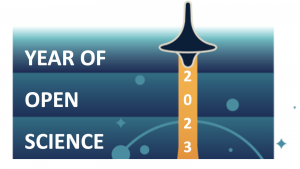
2023: The Year of Open Science
2023 is the year of the rabbit in the Chinese Lunar calendar, the year Voyager 2 is predicted to overtake Pioneer 10 as the second-farthest spacecraft from Earth, and the Year of Open Science. In an announcement by the White House Office of Science and Technology Policy (OSTP), 2023 was declared the Year of Open Science, along with new actions to advance open and equitable research. Creative Commons (CC) congratulates everyone involved in these momentous announcements, which promise to advance open science in the US federal government and bring new investments in open access research. A list of the participating agencies, as well as updates on the initiative, can be found at the newly created open.science.gov.
2023 will also be a memorable year for CC and the Open Climate Campaign, as we embark on working with national governments, funders and environmental organizations to create, adopt and implement open access policies to promote better sharing of climate change and biodiversity knowledge. We were thrilled to see OSTP emphasize values core to our better sharing strategy at CC: “The principle and practice of making research products and processes available to all, while respecting diverse cultures, maintaining security and privacy, and fostering collaborations, reproducibility, and equity.” CC looks forward to building on our involvement in NASA’s TOPSCommunity Panel, and to forge new connections and provide direct support on best practices for open licensing requirements, as US federal agencies and departments update their public open access plans per OSTP’s new guidance.
We are excited to work with additional national governments looking to emulate these leaps forward in making publicly funded knowledge openly licensed and accessible for the common good. If you are looking to join the ranks of countries like the Government of Ukraine, which recently approved itsNational Open Science Action Plan, France and others, please contact us. We are happy to help.
Open Culture is a growing sector of the open movement around the world, with museums, galleries, archives and libraries increasingly making collections available and accessible online. The Open Culture VOICES series aims to shine a light on the leaders and advocates in the sector to inspire others and increase the accessibility and availability of cultural heritage globally.
As in the first season, we ask each guest only four questions about the benefits, barriers, what inspired them, and what advice they would share with others. Episodes will be released on a weekly basis from 7 February 2023 and until the end of the year. We are delighted to share that this season we have guests from Africa, South America, the Middle East, Europe, Asia, and North America.
If you have a recommendation for someone we should feature in a future season, please email info@creativecommons.org with the subject “OCV Recommendation”
Creative Commons is in Davos this week for the World Economic Forum (WEF). While CC is not (yet) a formal member of the forum, there is extensive programming available to the public that touches on our work. As we strive to strengthen the voice of civil society and promote better sharing of knowledge and culture in the public interest, we feel it’s critical to ensure CC’s values of openness, access, collaboration, sustainability, creativity, equity, inclusivity, and diversity are taken into account in WEF conversations, especially those around emerging technology. It is imperative that we steer these discussions — and ultimately the development of new technology — to support better sharing.
I’m fortunate to be able to attend this week of public programming, alongside Brigitte Vézina, CC’s Director of Policy and Open Culture. We recognize the privilege of representing CC, and look forward to a week of learning, listening, and partnership. While we are in Davos, CC’s CEO Catherine Stihler is participating in this year’s launch event of the Morgridge Acceleration Program, for which she is one of twelve selected mentors.
While we are here we are for critical listening and making new connections, we’ve also got the opportunity to speak about open culture, the importance of strengthening the public domain, and better sharing. Our work is guided by how we see better sharing:
Sharing that is inclusive, just and equitable — where everyone has a wide opportunity to access content, contribute their own creativity, and receive recognition and rewards for their contributions.
Sharing that is reciprocal — where we rebalance the skewed world we live in now, in which a few produce and profit from works that the many consume.
Sharing that is sustainable — where open participation in the public commons is the default, rather than the exception.
Open Culture: From Web2 to a Better Internet
Today (Monday 16 January) Brigitte will be joining a panel of experts to discuss the evolution of the web. On Thursday 19 January, Brigitte will take the stage for a Lightning Keynote on Open Culture to discuss the challenges of the current digital space for open culture and concrete actions to shape a better internet, based on CC’s new global open culture call to action.
If we want to address the world’s most pressing problems, enable people to lead richer lives, and build a sustainable future for all, we need to unlock the possibilities of the digital age to preserve, share, and reuse cultural heritage free from undue restrictions. CC’s five key open culture policy actions are:
Protect the public domain from erosion
Reduce the term of copyright protection
Legally allow necessary activities of cultural heritage institutions
Shield cultural heritage institutions from liability
Ensure respect, equity, and inclusivity
Generative AI & Other Emerging Technologies
In addition to formal speaking engagements, we have a purposeful learning agenda during our time in Davos. There are formal sessions and ad hoc meetings taking place around open and decentralized science, open standards in the metaverse, and the explosion of generative artificial intelligence (AI). Whether chat, image, or video, new AI systems are turning heads and raising thorny questions around creators, users, copyright, and remuneration.
As we build on the AI policy and advocacy work we emphasized last year, we’ll work to lead conversations on how we can protect creators and users from harms, while harnessing a new technology to enhance our global digital commons and work in the public interest. Our guiding questions continue to be: How does the proliferation of AI connect to better sharing? And how does AI connect to a public interest vision for a better internet?
Ever wondered how it must have been for some of the first cultural heritage institutions to embark on their open access journey? Michael Weinberg, Executive Director of the Engelberg Center on Innovation Law & Policy at NYU Law, talked to three major institutions that helped shape the early open GLAM / open culture movement to find out. Here’s what he found.
The list of Galleries, Libraries, Archives, and Museums (GLAMs) with open access programs gets longer every day. However, those programs don’t just happen. They are the result of work from teams inside and outside of the institution.
Like the commons they create, the open access programs build on one another. Each open access program launched today uses lessons learned from programs that came before.
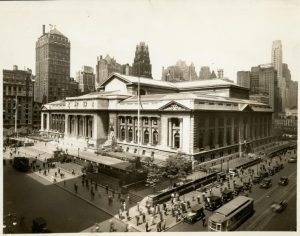
“Pioneers of Open Culture” contains three case studies of open GLAM early adopters. It examines some of the institutions that created open access programs in the early days of the movement.
The National Gallery of Art (United States), Statens Museum for Kunst, and New York Public Library are different institutions. They have different funding models, different relationships to government, and different styles of public engagement. In the years since they started, their open access programs have taken different directions. However, all three pioneered their own versions of successful open access programs.
None of these institutions would claim to have built their programs alone. They were part of communities, discussions, and practices that evolved along with them. At the same time, these institutions navigated their environment with many fewer models than are available today. That forced them to learn lessons that today’s institutions can take for granted. These case studies help shed light on that process.
Pioneers of Open Culture is not a comprehensive analysis of each institution’s open access program. It also does not explore all of the institutions that contributed to the early days of the open culture movement. Instead, it is an exploration of how some of the people who created and operated these programs understood their work. The goal is to provide a window into the process. This window might help those who want to follow similar paths.
While each case study has conclusions specific to the institution, a few points of commonality do begin to emerge:
Digital Infrastructure Matters.
Successful open access programs are built on digital foundations that directly incorporate rights and rights awareness. Digital systems redesigns were opportunities to build the possibility of open into an institution’s DNA. Well designed digital backends also made it easier to experiment with smaller projects that were not true one-offs, but rather closely integrated into the institution’s technology infrastructure.
Experimentation is Important.
Collections are diverse, as are the users who are interested in them. Open access programs succeed when there is space to try new things, and create multiple points of entry into an institution’s collections. This is true for members of the public who want to explore the collection. It is also true of internal stakeholders who want to understand how open access can help them achieve their own goals. Space takes the form of financial support from within and without the institution. It also takes the space of an institutional environment that is welcoming to experimentation.
Make the Easy Things Easy.
Open access programs can be challenging to construct and sustain. Technology must be built. Collections must be designed. Rights statuses must be documented. That makes it important to use tools that make things easier whenever they exist. Those tools include legal tools, such as the CC0 public domain dedication, and technical tools, such as open source software. The reliability of these tools allows teams to focus on the hard parts of creating open access collections.
“Pioneers of Open Culture” brings color and context to the history of open access. Hopefully, understanding that history can help accelerate open access programs yet to be created, and encourage people to embark on better sharing of cultural heritage worldwide.
Want to know more or get involved in CC’s open culture program? Reach out: info@creativecommons.org
2022 in Review: a Look at Creative Commons’ Open Culture Program
On Public Domain Day, January 1, 2022, we launched the CC Public Domain Tools in GLAMs – Needs Assessment to probe needs around CC tools in the cultural heritage sector, notably galleries, libraries, archives and museums (GLAMs). A survey was shared in English, French and Spanish, and gathered 133 responses from 43 countries on five continents. We are currently processing the data and will soon publish a report and roadmap for future action. Watch this space!
Capacity building
January marked the launch of the first Open Culture/GLAM Certificate cohort of 20 participants from six countries. And in February, CC made scholarships available for the June and September Certificate courses. The scholarships enabled participants from eight countries to take the June Certificate alone — including colleagues from Open Future, Wikimedia Italy, University of Leeds, the Wasila Museum, and other academic and research institutions. Thinking about enrolling in our next CC Certificate cohort? Check out this interview with Revekka Kefalea, a graduate of the CC Certificate for GLAM, and read what people say about CC Certificate courses.
You can register for a 2023 course for open Culture/GLAM. To access a 60% scholarship for a Certificate for Open Culture/GLAM course, simply (1) select a Certificate for “Open Culture” course fromthe 2023 list of courses. When registering for a course: (2) Select the option to “add promo code” and type in: Y2GLAMSCHOLAR60%. That will provide you with a 60% discount on registration, while tickets last. Note: there are no refunds on scholarship tickets.
We also offer on-demand training and consulting services. Reach out (info@creativecommons.org) to find out more.
Community engagement
Throughout the year, we facilitated the Open Culture Platform, a space for heritage professionals and open advocates to share resources. We held monthly calls and organized several collaboration opportunities, including six working groups tackling emerging issues, such as traditional knowledge and copyright, heritage materials from community-driven initiatives, contemporary archiving of cultural heritage, “attribution” models for public domain materials, a glossary and bibliography of open culture, and the ethics of open sharing. Interested in joining the platform? Read a few members’ experiences of taking part in platform activities, and become a member yourself! Keep an eye out for the working groups’ reports and webinar recordings, coming soon on CC’s Medium.
In January, we launched CC Open Culture VOICES, a multilingual series of 35 short interviews with dozens of distinguished experts from around the world — historians, researchers, activists, curators, professors, and many others — which engaged 3 million people across multiple platforms. Stay tuned for Season 2, a whole series of new episodes to be released in the coming months!
We also published eight community case studies, which show some of the opportunities, challenges, and needs of low-capacity and non-Western cultural heritage institutions. This helped us discover diverse and inclusive avenues of engagement with the global community, as well as generate a more global, inclusive, and equitable picture and understanding of open culture.
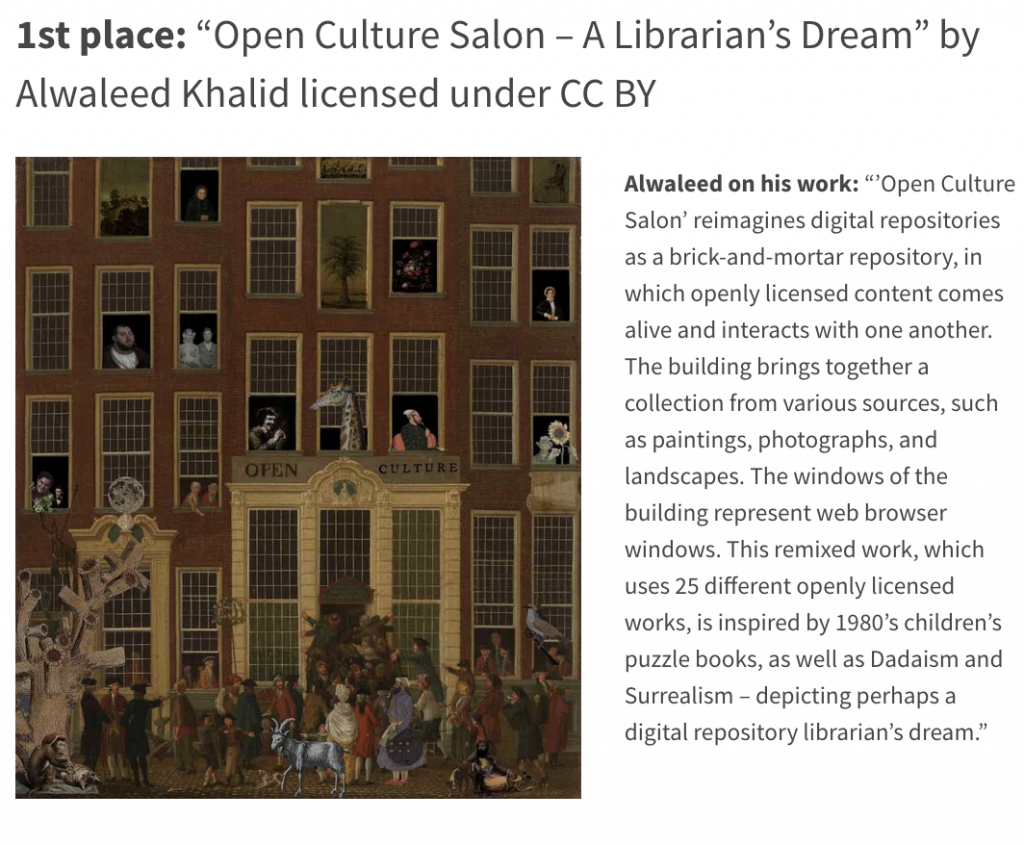
On Valentine’s Day, February 14, we launched the Open Culture Remix Art Contest calling on artists to remix public domain or openly licensed works from open GLAM collections. Not only did this showcase contemporary creativity, it also canvassed the importance of CC’s infrastructure for the dissemination and revitalization of culture. Take a look at the 1st place winner’s work:
In July, we published a comprehensive report on the Barriers to Open Culture, which lays out the legal, financial, resource, and technical barriers faced by institutions wishing to open their collections. We looked at past research, notably Andrea Wallace’sBarriers to Open Access, and analyzed our VOICES interviews for a wide range of insights, coming up with Money, People and Policy as the three main barriers. In 2023, we aspire to develop a report on the Benefits of Open Culture.
We have lots of other plans for 2023 and can’t wait to start a new chapter of CC’s Open Culture program. Want to stay informed and participate? Make sure to join our Open Culture Platform and sign up to our mailing list. You can also visit the CC Blog for more on open culture news (we hosted and attended numerous webinars, expert talks, panel discussions and community gatherings, check them out) and subscribe to the CC Newsletter for CC-wide updates. You can also go back in time and listen to a presentation of the open culture program on the podcast Open Minds… from Creative Commons, giving an overview of activities in February 2022.
?Do you want to know more about open culture at Creative Commons? Write to us at info@creativecommons.org.
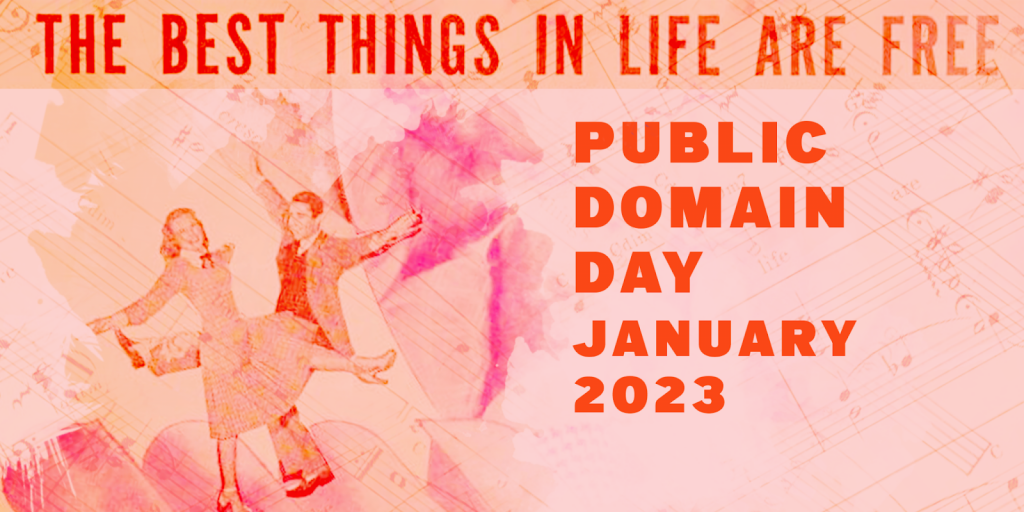
Celebrate Public Domain Day 2023 with Us: The Best Things in Life Are Free
Join Creative Commons, Internet Archive, and many other leaders from the open world to celebrate Public Domain Day 2023. As of January 2023, a treasure trove of new cultural works has become as free as the moon and the stars — at least in the USA and many other countries. And what better way to get us feeling inspired than recalling those timeless lyrics of the 1927 hit musical composition: “The Best Things In Life Are Free“. We agree! That’s why we made it our theme.
This year ushered in a wealth of creative works published in 1927 into the Public Domain, which now contribute to our cultural heritage. Iconic authors like Sir Arthur Conan Doyle, Marcel Proust, and Virginia Woolf, silent film classics like the controversial The Jazz Singer with Al Jolson and Fritz Lang’s dystopian Metropolis, and snappy musical compositions like “You Scream, I Scream, We All Scream For Ice Cream”.
You can welcome new public domain works and celebrate with us in three ways:
Join us for a virtual party on 19 January 2023 at 1pm PST / 4pm EST / 9pm UTC, where we will celebrate our theme, The Best Things In Life Are Free, with a host of entertainers, historians, librarians, academics, activists and other leaders from the open world, including additional sponsoring organizations Library Futures, SPARC, Authors Alliance, Public Knowledge, and the Duke Center for the Study of the Public Domain. REGISTER FOR THE VIRTUAL EVENT!
The Internet Archive will also host an in-person Film Remix Contest Screening Party on 20 January 2023 at 6pm at 300 Funston Ave in San Francisco. We will celebrate 1927 as the founding year of the Academy of Motion Picture Arts and Sciences, while watching this year’s Public Domain Day Remix Contest winning entries, eating popcorn and ice cream. Come dressed in your best golden age of Hollywood inspired costume, and walk the red carpet with the Internet Archive as we celebrate the entry of “talkies” into the public domain. REGISTER FOR THE IN-PERSON PARTY IN SAN FRANCISCO!
Celebrate Public Domain Day 2023 with the Internet Archive through creative expression! Artists of all levels are invited to submit short films 2-3 minutes in length crafted from resources from the Internet Archive’s collections from 1927. The uploaded videos will be judged and prizes of up to $1500 awarded. All submissions must be in by Midnight, 16 January 2023 (PST). SUBMIT AN ENTRY OR FIND OUT MORE!

 Join Creative Commons, Internet Archive, and many other leaders from the open world to celebrate Public Domain Day 2023. As of January 2023, a treasure trove of new cultural works has become as free as the moon and the stars — at least in the USA and many other countries. And what better way to get us feeling inspired than recalling those timeless lyrics of the 1927 hit musical composition: “