Stay informed. Sign up for CC’s newsletter.
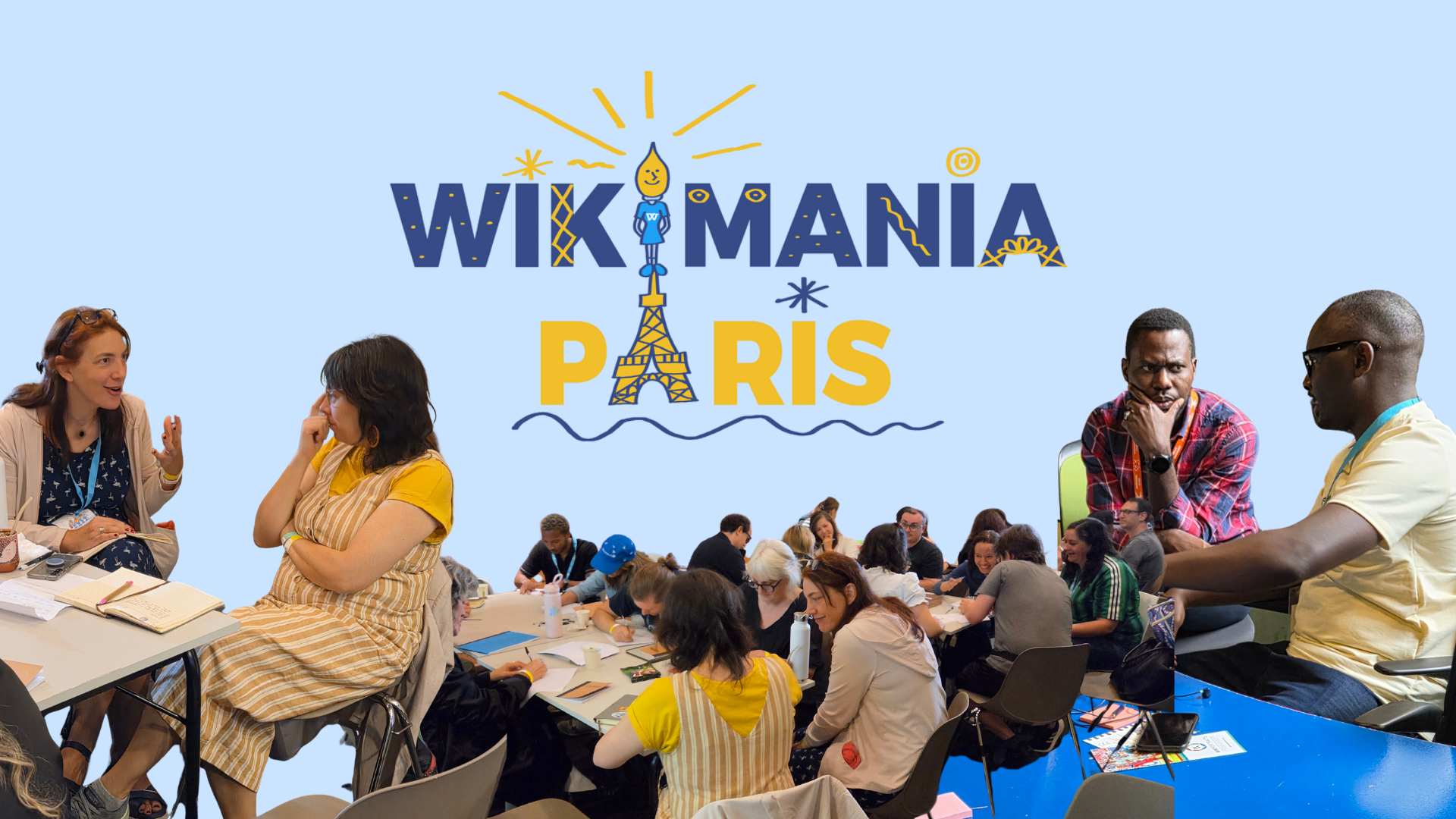
With both Wikipedia and Creative Commons turning 25 this year, our participation in Wikimania 2026 felt especially meaningful. A quarter-century in, both organizations have evolved from scrappy experiments to global infrastructure. Our community has grown through a shared commitment to openness, access, and knowledge. The weeklong conference reaffirmed that commitment as AI is reshaping how we access knowledge and share online.
During the conference, CC hosted both a pre-conference salon celebrating our 25th Anniversary and a workshop during the main conference discussing collective action in the age of AI. CC staff also spoke on multiple panels throughout the week that addressed the effects of AI crawling on human creativity and sharing, the coordination gap between cultural institutions and generative AI, and training on CC’s global advocacy for the Open Heritage Statement.
Between all of the week’s activities—which also included attendance at numerous sessions and fruitful conversations as CC’s conference booth—it was clear that top-of-mind for Wikimedians is that amidst the rapid change brought about by AI, our shared values and collective power that once helped shape the open web must now be used to ensure that AI will serve humanity, not the other way around.
With over 1,200 attendees, Wikimania gave us space to trade ideas, learn from other open advocates, and think through emerging conversations around AI. Throughout the week, sessions and conversations highlighted both the plurality of views and challenges we face in the current ecosystem, as well as the opportunities to unite around shared goals, ensuring that open knowledge can serve as an antidote to commercialization of the commons.
Creative Commons Salon: 25 Years of CC
We hosted a pre-conference salon, with approximately 30 attendees from Wikimedia Foundation, Arcadia, Wiki Community, CC Chapters, and more. While we kept the session playful and informal, it was a chance for us to share some updates on our broader work and allow the many smart folks in the room to chat amongst themselves during activities about the commons, CC’s 25 years, our values, and the connections we’ve made during our time helping influence the open movement.
Co-facilitators—Elliot Bledsoe, President Wikimedia Australia and Co-lead of Creative Commons Australia; Melissa Hagemann, Director of BOAI Org; and Patricia Díaz Rubio, Executive Director of Wikimedia Chile—each spoke about their experiences becoming a part of the CC’s work at various stages in their careers and across different global contexts.
Melissa has been part of the open movement since 2001, the same year CC was founded. She helped organize the meeting that led to the Budapest Open Access Initiative, work that put her at the forefront of the knowledge commons for over two decades before she joined CC’s board in 2025.
Elliot was a student when he began asking questions about open sharing, and joined a group doing the early work of porting the CC license to the Australian jurisdictional context.
Patricia came to open licensing by way of journalism, training as a social communicator at the University of Chile before joining Wikimedia Chile in 2018 to champion open content and heritage across the region.
An interesting point that Elliot, Terri Janke—an Indigenous cultural and intellectual property lawyer—and the CC Australia team made was that for some people, AI using data without their consent or input is the first time that they have experienced something like what many First Nations and Indigenous communities have experienced for many years even before Generative AI began ingesting training data.
Sharing & Collective Action In the Age of AI
In this CC hosted workshop, we started by imagining a more hopeful future where AI better serves the public interest, picturing what that could look like in 2035, then identified some of the problems that stand between our current moment and that hopeful future. The two challenges that emerged as the most pressing were the lack of attribution and provenance in AI outputs; and the lack of choice for data stewards and creators in how their works get used.
After this exercise, participants split into two groups to begin ideating solutions—from large idealistic social shifts to smaller, more technical solutions—that would address the two most pressing challenges. Ideas ranged from things like the international council of commons arbitration to mitigate the creator choice challenge, to other methods of ensuring source attribution and fairer compensation and remuneration.
Collateral Damage? Human Creativity and Interaction in the AI Crawling Era
Anna Tumadóttir, CC’s CEO, joined Stan Adams (moderator, WMF), Mark Graham (Wayback Machine, Internet Archive), Monica Westin (Cambridge University Press), and Alek Tarkowski (Open Future) for this discussion on the impacts of crawling on human creativity and knowledge sharing, and how organizations are experimenting with technical, policy, and social responses to protect contributors and sustain participation.
The group brought together a diverse set of organizations experiencing the impacts of large-scale AI crawling from different vantage points, and a key takeaway was just that: the views, experiences, and approaches among longtime advocates vary widely. Working on solutions that serve users globally will require multiple varied and nuanced options to alleviate the technical, legal, and social concerns raised by AI.
Bridging Institutions, Wikidata, and Generative AI: From Data Silos to Shared Infrastructure
This conversation brought together Dee Harris, CC’s Director of Communications and Engagement alongside Denny Vrandečić (Wikidata founder), Lydia Pintscher (Wikidata), João Alexandre Peschanski (WMBR), Dr. Pierre-Carl Langlais (CTO, Pleias), and Mark Graham (Director, Wayback Machine, IA)
Moderator Dr. Shani Evenstein Sigalov opened the conversation with the story about the Paris Codex, one of four surviving Maya books. It’s digitized and has its own Wikidata entry, but its provenance, physical history, and century of research never made it into the metadata or into anything an AI system could draw on. Shani used this story to frame a shared throughline about why and how institutional knowledge breaks down on its way to AI.
From there, each panelist held a piece of the bridge. Dee opened by talking about why cultural heritage institutions stay locked between two failing options: opening access risks being scraped into the ground by AI bots, while closing it off means disappearing from the researchers and public the collection was built to serve. João offered a counter-example, a painting rediscovered in technical storage. That framing carried into the rest of the panel, which picked up the same throughline from Wikidata’s infrastructure limits through to what AI builders actually need from institutional data to make the bridge worth crossing.
Global Advocacy: Capacity Building Training
Hosted by the Wikimedia Foundation and Wikimedia Europe, this session opened with Dee discussing the Open Heritage Coalition and the Open Heritage Statement, with a focus on relationship maintenance with institutions. Partway through, two of the Coalition’s workstream chairs—Hardiansyah, Executive Director of Wikimedia Indonesia, and Patricia Díaz Rubio, Executive Director of Wikimedia Chile—joined the conversation sharing their own experiences building relationships with institutions in their regions. Dee then walked through the Coalition’s Advocacy Toolkit, including core tools like Spectrum of Allies, stakeholder mapping, the Ladder of Engagement, and persuasive messaging through the Sparks and Hooks methodology. The session closed with a practical challenge for the Wikimedia audience: pick one institution, place it on the ladder, and identify their next step up this year.
The People
Across the panels, the chats, the laughs, and the hard questions, Wikimania 2026 reminded us that twenty-five years on, our biggest asset for the next twenty-five is the people who choose, again and again, to create the future they want rather than wait for someone else to do it.
CC’s 25th anniversary celebrations continue with an upcoming workshop on finding and reusing CC-licensed content, legal and community office hours, and more. See all of our upcoming events. We are also still accepting submissions for our 25th anniversary zine. Submit your collages, creative writing, photos, music, and more before August 15!
Further Reading
- A Better Way to Give Credit: Introducing the Wikimedia Attribution Framework and API
- Who Pays for the Commons? – Paul Keller
P.S. Check out some photos from the conference on Wiki Commons!
Posted 10 August 2026