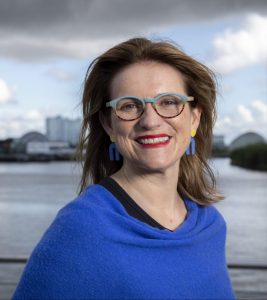
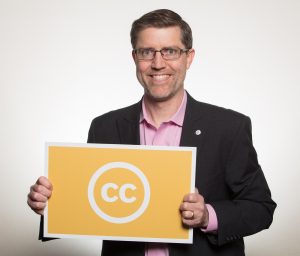
In this interview, we were delighted to speak with Jennifer Miller, a graduate of the CC Certificate for Educators with over 10 years experience teaching and doing research in public policy and public management. She is a civic technologist and open knowledge advocate. Here is the Q&A:
Thank you for joining us today. Starting off with a personal question, what’s one thing people might be surprised to learn about you?
I’ve lived in states on four of the five U.S. coasts.
So, you’re quad or tetra-coastal – that’s fun! Alright, switching gears: I know you presented “Open Syllabus: UNESCO Recommendation on Open Science” Lightning Talk for the CC Open Education Platform earlier this year. Tell us a bit more about the Open Syllabus project and how it supports the UNESCO Recommendation on Open Science.
The Open Syllabus for Open Science provides a complete but flexible way for early career researchers to learn about open science. Compared to many of the other materials being developed around open science recently, the course takes an educational approach to thinking about principles rather than focusing on specific tools. It also grounds the whole course in the principle of a human right to science, something that tends to be neglected in our STEM education.
In addition to the UNESCO Recommendation, we were heartened to see the White House Open Access Mandate, requiring that all federally funded research and data in the US be available for the public to freely access and re-use in agency-designated repositories without any embargo or delay after publication.1 Seems like this is the right time to be focused on Open Science for a number of reasons. What do you expect to see in the field of open science in the future?
It is exciting to see this momentum! I think it’s important for this message to get to educators, and from there to students. In the past, students often learned to use statistical software, data, and peer-reviewed research as part of their studies, but found that these were not accessible to them after graduation. Students could take a “never going to use that after graduation” attitude, and they weren’t entirely wrong. Now, though, software, data, and research publications are widely available for free and under open licenses. With all of the open science resources available now, graduates can’t afford to ignore it; whatever their field, the information is available to their competitors as well.
“With all of the open science resources available now, graduates can’t afford to ignore it; whatever their field, the information is available to their competitors as well.”
In terms of publications, the way some policies use the term open access doesn’t always mean openly licensed, though. One area where this difference is especially important for open science is translation of scientific publications. An article under copyright made available to access for free still requires permission to create derivatives or adaptations, including plain language summaries or translations.
What got you into open education and open access in general?
My first experiences with open education and open access were with openly licensed materials for teaching economics and public policy. I was especially impressed with the CORE Economics curriculum, which eliminated textbook costs for my students and presented the material in a way that felt more humane and helped more of my students see their lived experience in the material.
What inspired you to take the CC Certificate for Educators, and was the training useful to you?
I saw a presentation about it at the 2019 Open Education conference. The timing to take the course in early 2020 worked out perfectly!
Has the CC Certificate training been useful to you? If so, in what ways?
Yes, definitely! It has allowed me to confidently share open licensed work in my civic technology activities and advocacy in open science and open education. It also opened my eyes to the wealth of open information available. Resources like the Directory of Open Access Books really open up the world.
Any advice for people who want to get involved in open education or open science?
If you are a scientist or educator who was part of the so-called “Great Resignation,” or wave of retirements associated with the pandemic, consider how open knowledge movements can help you contribute what you’ve learned to a global knowledge commons. The Creative Commons Certificate program can be a great place to start that journey!
Notes
1. While the mandate does not require open licensing, both policies support better sharing of the knowledge we collectively produce and use.
Webinars: AI Inputs, Outputs and the Public Commons
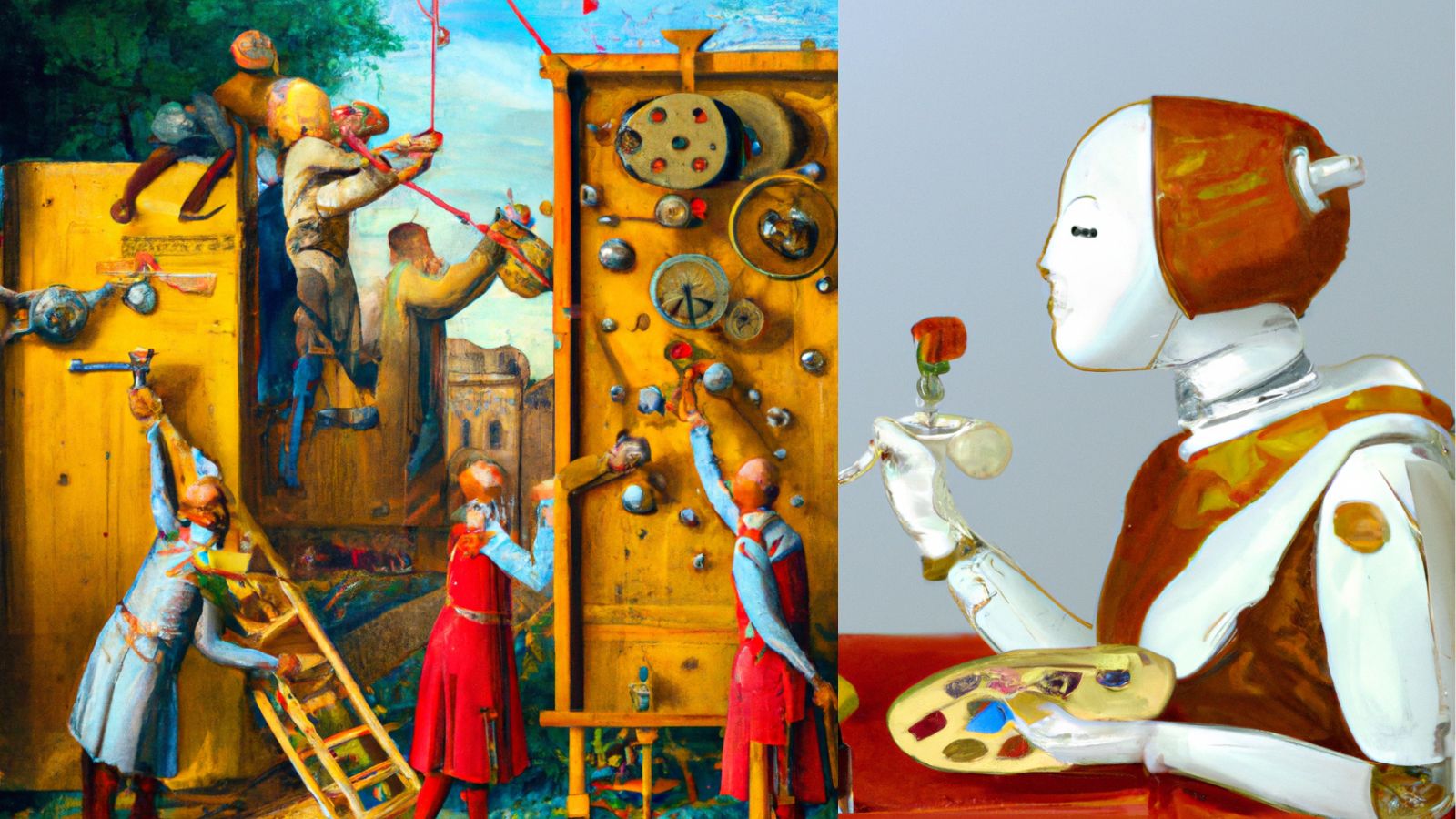
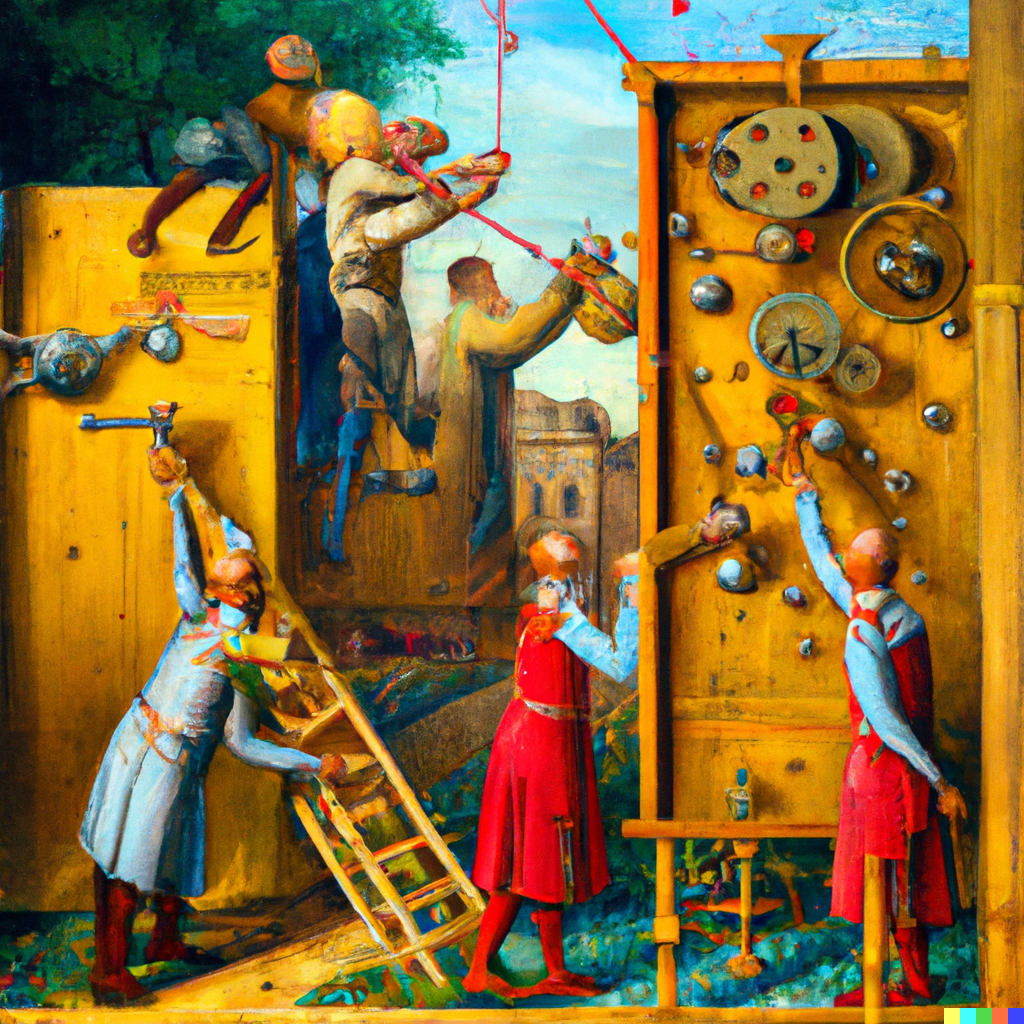
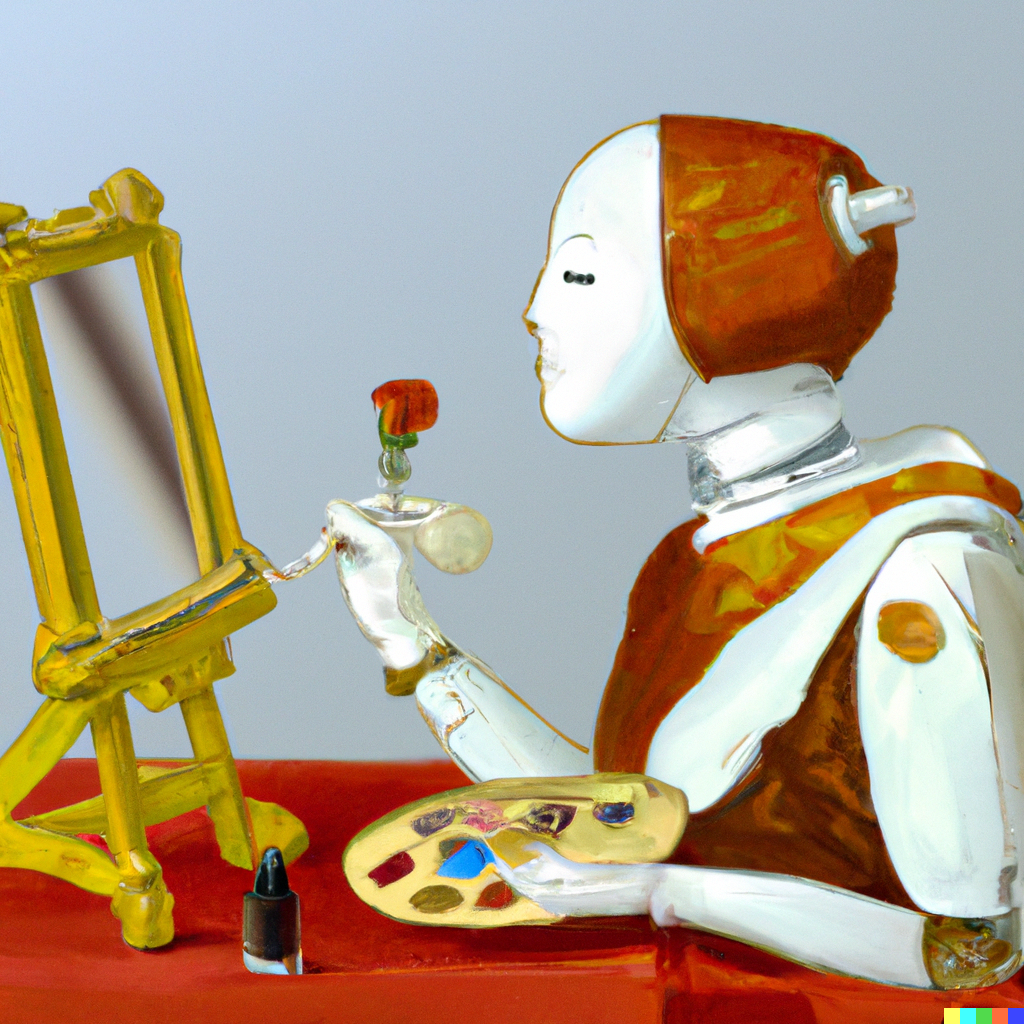
“AI Inputs and Outputs” by Creative Commons was made from details from two images generated by the DALL-E 2 AI platform with the text prompts “A Hieronymus Bosch triptych showing inputs to artificial intelligence as a Rube Goldberg machine; oil painting” and “a robot painting its own self portrait in the style of Artemisia Gentileschi.” OpenAI asserts ownership of DALL-E generated images; CC dedicates any rights it holds to the image to the public domain via CC0.
Artificial intelligence (AI) has been exploding across the digital landscape — from people sharing text and images generated by AI platforms, to new policy that tries to shape a future where AI is expected to play an even bigger role — all while we aren’t really sure yet even how to define AI, much less understand all the impact it will have.
Here at CC, we’ve been thinking about what AI means for the commons we support, both in our strategy for better sharing and for our collaboration for a better internet. Are all these new works generated by AI part of the open, public commons? Should they be? If someone does hold copyright for an AI work, who is it? The technologists who created the AI tool? The person who uses AI to generate a work? The countless creators whose works trained the AI? The machine itself? Or should works generated by AI live in the public domain, as they do in many interpretations of established law?
Going beyond AI’s outputs: How do and should human works participate in training AI? Currently, AI platforms are using untold amounts of existing content to train their systems. Not every creator welcomes their work being used in AI, especially when AI is put to life-changing uses that could amplify biases, like predictive policing, facial recognition, job recruiting, insurance claims, or loan approvals. At the same time, if AI inputs are limited, AI could be based on a more narrow view of the world that could also perpetuate biases and block insights. How can we best ensure AI is trained to support creators and good outcomes?
As we form our positions at CC, we are bringing together people with diverse perspectives to participate in broad discussions about how AI intersects with open sharing in a commons that serves the public interest.
How does the proliferation of AI connect to better sharing: sharing that is inclusive, just and equitable — where everyone has wide opportunity to access content, to contribute their own creativity, and to receive recognition and rewards for their contributions? How does the proliferation of AI connect to a better internet: a public interest vision for an internet that benefits us all?
Read our thoughts about the discussion at these two free, public webinars: one focused on how open works and better sharing intersect with AI inputs — works used in training and supplying AI — and another focused on how open works and better sharing intersect with AI outputs — works generated by AI that are, could be, or should be participating in the open commons.
Webinars
AI Inputs and the Public Commons: Wednesday 9 November 2022
“AI Inputs” by Creative Commons was generated by the DALL-E 2 AI platform with the text prompt “A Hieronymus Bosch triptych showing inputs to artificial intelligence as a Rube Goldberg machine; oil painting.” OpenAI asserts ownership of DALL-E generated images; CC dedicates any rights it holds to the image to the public domain via CC0.
A free, public webinar on how open works and better sharing intersect with AI inputs — works used in training and supplying AI — with panelists:
Abeba Birhane, Senior Fellow in Trustworthy AI, Mozilla Foundation
Alek Tarkowski, Co-Founder and Director of Strategy, Open Future Foundation
Florence Chee, Associate Professor, School of Communication, Director, Center for Digital Ethics and Policy, and Director, SIMLab, Loyola University Chicago
Moderator: Stephen Wolfson, Associate Director for Research and Copyright Services, School of Law, University of Georgia
AI Outputs and the Public Commons: Thursday 10 November 2022
“AI Outputs” by Creative Commons was generated by the DALL-E 2 AI platform with the text prompt “a robot painting its own self portrait in the style of Artemisia Gentileschi.” OpenAI asserts ownership of DALL-E generated images; CC dedicates any rights it holds to the image to the public domain via CC0.
A free, public webinar on how open works and better sharing intersect with AI outputs — works generated by AI that are, could be, or should be participating in the open commons — with panelists:
Andrés Guadamuz, Reader, Intellectual Property Law, University of Sussex
@FairDuty Tweet: CIPO appears to have ignored the requirement of originality in terms of what qualifies for (c) protection — an exercise of skill and judgement that is more than trivial – so said by our Supreme Court in 2004 (CCH). Fascinating thread of discussion about AI output and copyright.
CC celebrates 30 years of UNESCO Memory of the World
This week, the international community celebrates 30 years of the UNESCO Memory of the World Program. At Creative Commons (CC), we applaud the program’s achievements in enhancing preservation and access to documentary heritage from galleries, libraries, archives and museums (GLAMs) around the globe. We laud the multitude of efforts enlisting documentary heritage to promote inclusive, just and peaceful societies.
UNESCO’s work is important now more than ever, as climate change, global health crises, and violent conflicts are posing some of the greatest threats to documentary heritage and the memory institutions that hold it. For example:
Wars, armed conflicts, and violence in all its forms — notably in Ukraine, Ethiopia, Syria, Yemen and Myanmar — has heightened the importance of protecting cultural heritage, including GLAM collections, as embodiments of cultural identity and human spirit.
At CC, we believe that it is our collective duty and privilege to protect, preserve, safeguard, use and reuse, and celebrate heritage. That’s why through our Open Culture program, we influence policy, we maintain the world’s leading open infrastructure, made up of our licenses and tools, we support our community, and we build capacity to accompany open culture enthusiasts on their journey towards better sharing of cultural heritage. Our CC Certification in Open Culture offers professional development training for institutions or community groups engaged in cultural heritage. This course builds peoples’ capacity in opening access to cultural heritage ethically, and inclusively. Participants develop a deeper understanding of open licensing and copyright considerations with digitization projects, CC licenses and tools, Rights Statements, Traditional Knowledge Labels, working with the public domain, and more.
As we work towards better sharing of cultural heritage and open culture, we will continue to be guided by UNESCO’s Memory of the World Program, as it fosters dialogue and mutual understanding between people and cultures. Here’s how you can join CC’s efforts:
→ Register for a 2023 course with the following scholarship code, and receive 60% off course registration: Y2GLAMSCHOLAR60%.
A Better Internet for Better Sharing: Join the Movement for a Better Internet
As part of Creative Commons’ key strategic goal of Better Sharing, today we have joined six other organizations spanning the globe to launch the Movement for a Better Internet, a diverse community of advocates, activists, academics, and civil society groups working together to promote policies that create a better internet for people everywhere. The movement is a collaborative effort seeking to drive policy change based on a public interest vision for an internet that benefits us all.
For two decades, Creative Commons has worked tirelessly to facilitate the sharing of content across the planet and support an internet guided by public interest values — including privacy, openness, diversity, and equity. As part of this movement, we are committed to collaborating with other members to promote these and other values that we will determine together.
“It’s inspiring to see what started over a year ago in so many different conversations now take shape as a rich, organized movement to work toward a better internet for all,” said Catherine Stihler, CC CEO. “From governmental initiatives like over 60 nations signing the Declaration for the Future of the Internet just in April, to the new policies we now see taking shape in the EU and the USA, we can already see work for a better internet gain new momentum. This movement will bring together everyone who is dedicated to making sure the public interest shapes the future of the remarkable global network that connects us all.”
By joining the movement, we can ensure an internet shaped by our shared values — an internet for the people that puts our communities first. We encourage academics, activists, and advocates working at organizations passionate about creating this better internet to join us in this movement. Together, we can achieve a better internet for us all.
As an organizing partner, Creative Commons also joins in launching a digital hub at movementforabetterinternet.org to facilitate connection and communication among those striving to build a better internet. The full list of organizing partners includes: Association for Progressive Communications; Creative Commons; Derechos Digitales; Internet Archive; Niskanen Center; Public Knowledge; and Wikimedia Foundation.
Check out CC’s Better Internet blog post series to learn more about how the idea for the movement came about and the early groundwork that led us to this launch today.
CC’s Engagement on EU’s Artificial Intelligence Act
“EU Flag Neural Network” by Creative Commons was cropped from an image generated by the DALL-E 2 AI platform with the text prompt “European Union flag neural network.” OpenAI asserts ownership of DALL-E generated images; Creative Commons dedicates any rights it holds to the image to the public domain via CC0.
Beginning in 2021, the European Union has been considering a new AI Act, which would regulate certain uses of AI. In particular, it seeks to ban certain uses of AI, such as broad-based real-time biometric identification for law enforcement in public places, and it seeks to ensure that certain precautions are taken before deployment of uses deemed ‘high-risk,’ such as the use of AI for access to education, employment, financial credit, or other essential services.
Creative Commons has proactively worked with policymakers and other key stakeholders, creating a constructive dialogue to inform both the content of the text and the context of the debate. We agree with the objectives of the Act: ensuring AI systems placed on the Union market are used in a way that respects fundamental rights and Union values; providing legal certainty to facilitate investment and innovation in AI; and facilitating the development of a single market for lawful, transparent, and trustworthy AI applications to prevent market fragmentation.
While the proposal covers a broad range of topics, we have focused on two areas that are pertinent to our strategy, better sharing.
First, we have advocated for the benefits of supporting open data, open source, and interoperability as means to support a healthy marketplace for and robust competition in the development and use of AI.
Harmful uses of AI are best addressed through a contextual approach, based on clear principles that can adapt to new developments in how AI is designed and implemented for different use cases based on their risks to society. Such a tailored approach can and should avoid overbroad restrictions on general purpose artificial intelligence (GPAI) and the sharing and use of open source tools.
The European Commission’s original draft proposal did not directly address GPAI, and we agree that this is an appropriate approach. Requirements on GPAI creators are unnecessary because the follow-on developers of high-risk systems will already be covered by this Act. To the extent GPAI creators wish to serve that market, they already have incentives to cooperate with high-risk users to ensure broad compliance.
We also recognize that the EU legislators are currently considering ways to address responsibilities related to GPAI, including open source tools. If that moves forward, we recommend adding language to ensure that GPAI regulations are tailored and proportionate. These regulations should not constrain open source tools, and should focus on ensuring cooperation between GPAI creators and users with whom they have an ongoing relationship.
We believe this is important to get right in part because it’s vital that the capacity to develop and use AI not be concentrated in the hands of a small number of large commercial operators. Lowering barriers to the development and use of AI — such as by supporting the availability of open data and open source tools, including as part of General Purpose AI (GPAI) — can spur innovation in services and lead to major social benefits. Empowering people to share their data among services and enabling them to move between services (ie, through data portability and interoperability) also can play a role in facilitating innovation and inhibiting user lock-in. While it is crucial to ensure commercial viability and incentives for investment, it is also crucial to ensure that this does not come at the expense of robust competition, consumer protection, and the public interest more broadly.
In addition to these topics, we’ve also taken this opportunity to ensure the intersection of copyright and AI is well understood. While copyright’s relationship to AI is not at core to this proposal, it is important that policymakers understand that appropriate limits on copyright are also core to serving the public interest. As we’ve explored in the past, AI generated content should not be copyrightable, and training AI on copyrighted works should not be limited.
Join Us to Celebrate 20 Years of Creative Commons
During 2021–2022, CC has been celebrating the 20th anniversary of our founding in 2001 and the first release of the CC licenses in 2002, successfully concluding an ambitious fundraising campaign to support programs like Open Culture, Open Climate, and Open Education, and to help ensure CC’s ongoing sustainability.
In November 2022, CC will bring the 20th anniversary celebration to an official close with both online and in-person activities. The CC Global Network and our broader community are at the heart of CC’s work to support better sharing for an open commons, so we are inviting you to be a part of marking this milestone. There are several ways you can join the celebration — pick one or all!
Attend a global CC 20th Anniversary event
San Francisco
Creative Commons invites you to a 20th Anniversary Celebration on Thursday 17 November 2022 at 7pm PST at Terra Gallery, San Francisco*. Join us for an evening of entertainment as we toast to the past and mobilize support for the future! Save your seat >
Virtual
Can’t come to San Francisco? Join a virtual 20th Anniversary Celebration on Wednesday 30 November 2022. Register for 3:00–5:00 UTC and/or 15:00–17:00 UTC >
Make a contribution to support CC
Creative Commons empowers people, institutions, and governments to share content openly to advance knowledge, equity, and creativity for everyone, everywhere. As we look ahead to the next 20 years, our focus is on better sharing, sharing that is contextual, inclusive, just, equitable, reciprocal, and sustainable. As a nonprofit, we rely on contributions from people like you. Make a contribution of any size >
Share a digital artifact showcasing your community’s open contributions
Share a digital artifact that showcases your local community’s past or future work to build the open commons. CC will share accepted artifacts with the world to illustrate the variety of activities and points of view that represent the Creative Commons Global Network and CC community. Requirements: All artifacts must be shared with CC licenses or CC0 public domain dedications, and demonstrate CC’s better sharing values. Describe your artifact >
CC chapters: Grants to mark CC’s 20th Anniversary locally
CC chapters worldwide will be marking the anniversary locally with events, activities, and projects supported by #20CC Anniversary grants to celebrate CC’s past 20 years and our shared future. Stay tuned to the #20CCAnniversary hashtag on social media to hear more about what the grantees and their work.
Requirements: The grant program closed on 10 Oct 2022. If you missed it, you are still welcome to contribute a digital artifact as above to include your community’s work in the #20CC celebration.
Celebrate on social media
Help get the word out about CC’s 20th Anniversary celebration: Share this post with the #20CCAnniversary hashtag and what CC, better sharing, and the open commons mean to you.
Do you like what other people are sharing? Favorite and reshare #20CCAnniversary posts from other CC community members.
Questions?
Reach out to communications@creativecommons.org, or start a conversation in the #cc-community channel in the CC community slack.
Open Minds Podcast: Dr. Beth Harris and Dr. Steven Zucker of Smarthistory
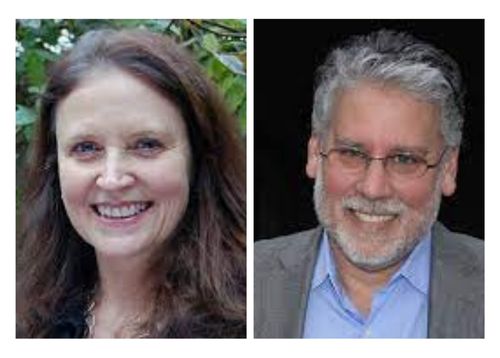
Photos courtesy of Dr. Beth Harris (left) and Dr. Steven Zucker (right)
Hi Creative Commoners! On this episode, we’re joined by art historians, Dr. Beth Harris and Dr. Steven Zucker, the co-founders and executive directors of Smarthistory. Smarthistory is a center for public art history, with thousands of free and CC licensed videos and essays written by experts who want to share their knowledge with learners around the world. Previously, Beth was dean of art and history at Khan Academy and director of digital learning at The Museum of Modern Art. Before joining MoMA, Beth was Associate Professor of art history and director of distance learning at the Fashion Institute of Technology, where she taught both online and in the classroom. Previously, Steven was dean of art and history at Khan Academy. He was chair of history of art and design at Pratt Institute, where he strengthened enrollment and led renewal of curriculum across the Institute. Previously, he was dean of the School of Graduate Studies at the Fashion Institute of Technology, SUNY and chair of art history. He has taught at The School of Visual Arts, Hunter College, and at The Museum of Modern Art.
Please subscribe to the show in whatever podcast app you use, so you don’t miss any of our conversations with people working to make the internet and our global culture more open and collaborative.
UNESCO MONDIACULT2022: A Starting Point for Open Culture
This week, policymakers from around the world gather in Mexico for MONDIACULT2022, the UNESCO World Conference on Cultural Policies and Sustainable Development, a critical event that is bound to shape the future of international cultural policies worldwide. In the lead-up to MONDIACULT2022, Creative Commons’ (CC) Brigitte Vézina delivered a keynote to the international forum “Digitalizar en común: formas distribuidas de propiedad y autoría culturales” organized by Creative Commons Mexico. Watch the recording on Facebook.
It was in 1982 that the Mexico City Declaration on Cultural Policies defined a path for culture to become a fundamental pillar of development. 40 years on, culture now underpins all 17 of the United Nations Sustainable Development Goals (SDGs), and calls are being made to make culture a sustainable development goal in itself. We agree with UNESCO that “culture is the bridge between peoples and countries… and the key to unlocking mutual understanding and reinforcing global action based human rights and respect for diversity.”
Unfortunately, people everywhere are facing tremendous challenges in accessing, sharing, and (re)using culture, in large part due to unfit and outdated copyright rules. Culture is being locked away behind undue and unnecessary paywalls, entry and rental fees, or the walled-gardens of for-profit companies. Cultural heritage institutions too face difficulties in realizing their missions in the digital world. They struggle to conduct their legitimate activities, like digitizing collections to preserve them and make them available to the public. Furthermore, climate change, global health crises, and violent conflicts are posing great threats to culture and the institutions that make it accessible.
At CC, we promote open culture and aim to help cultural heritage institutions and their users make the most out of CC licenses and tools to openup their collections online in the public interest. Many institutions have successfully harnessed CC tools to release nearly five million digital open images. But while our tools support global sharing of culture, they cannot erase all barriers. That’s why with our Open Culture Program, we work to drive global policy discussion in support of bettersharing, i.e. sharing that is contextual, ethical, inclusive, sustainable, purposeful and prosocial: sharing that builds a commons of knowledge and culture that is just and that inspires reciprocity — a commons that serves the public interest.
Today, we look to UNESCO’s leadership to build momentum for open culture and to champion better sharing. MONDIACULT offers an opportunity to rethink how policy can truly promote equitable access to culture, bolster creativity, and restore balance in a copyright system unfit for the digital age. With new technologies on the horizon, like artificial intelligence and blockchain-based conveyances, we need to build new models based on collaboration, freedom to reuse, and generative sharing of culture.
Now, more than ever, UNESCO and its Member States need to take action to protect the public domain and recalibrate copyright to support public interests in tune with the evolving sharing possibilities of our complex world. MONDIACULT 2022 is the starting point to explore how we can empower creators, liberate and celebrate culture as a global public good, and build a sustainable future for all. As the world of culture meets at MONDIACULT, with over 160 ministers and multiple actors of culture joining forces in México, let us reiterate our call: there is an urgent need to realize open culture for all.
At Creative Commons, we’ve been thinking a lot about how open principles and public interest values intersect with the decentralized web movement, particularly in relation to broader, collaborative efforts to build a Better Internet. In the past year, we’ve worked with other digital human rights and tech policy organizations to power this emerging movement, focused on addressing the challenges and failings of dominant internet platforms. One of the primary goals of the Better Internet movement is to develop an affirmative policy agenda that reflects public-interest values, championing technology that works for all. Any such agenda must be informed not only by these values, but also by the communities it intends to serve.
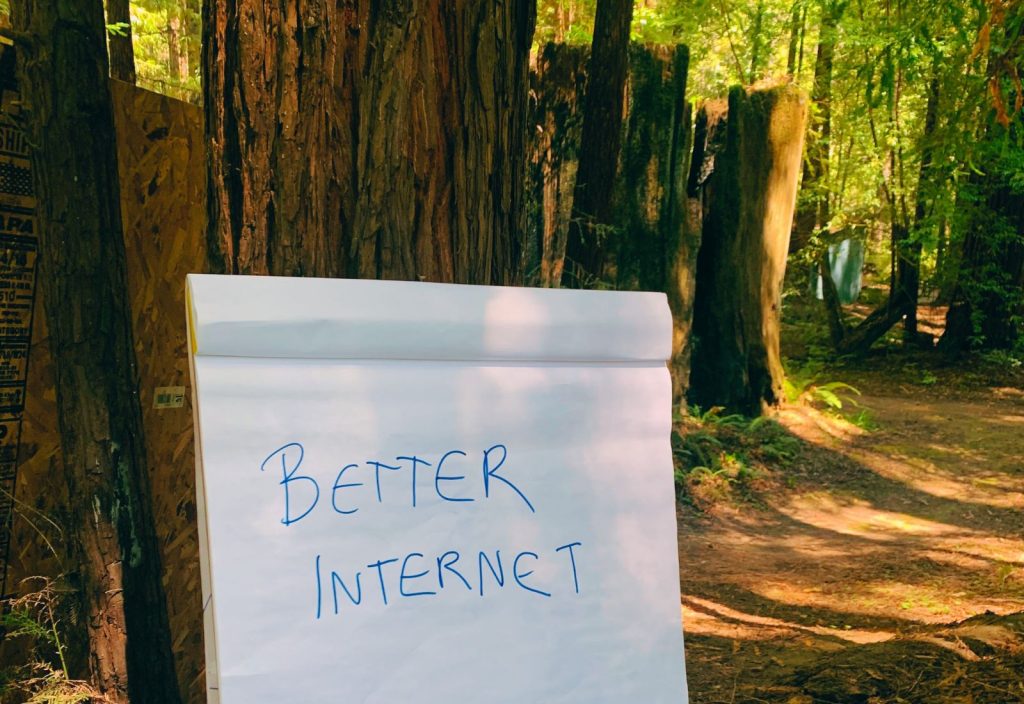
A few weeks ago, Catherine Stihler and I had the opportunity to attend DWeb Camp, a conference focused on the decentralized web that brings together a community of people around a set of collaboratively developed principles. The camp was a mix of conference and extracurricular sessions with extremely diverse and rigorous programming, balanced by free time to enjoy the outdoors.
❝ One of the primary goals of the Better Internet movement is to develop an affirmative policy agenda that reflects public-interest values, championing technology that works for all.
While there, we hosted a workshop, alongside our peers from Public Knowledge, focused on the values that might inform the building of a Better Internet. At this juncture, those active in the Better Internet movement are working to crystallize shared values about what constitutes “better” and how to get there. We saw an opportunity to brainstorm with the DWeb community, who have led the charge in exploring and building alternatives to existing platforms and systems.
Our ultimate goal is to produce a statement of values that underpins a broader public interest vision and a policy agenda for a Better Internet. But that doesn’t happen without learning, listening, and digging into some of the more challenging topics. The purpose of the workshop we hosted at DWeb Camp and the many informal conversations we had during our time there was to examine the role decentralization could play in achieving “better.”
What would decentralization enable? What are the barriers or accelerators for the DWeb? What challenges would it not address? What new issues might emerge?
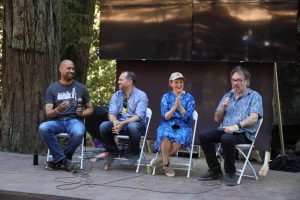
Chris Lewis, President & CEO of Public Knowledge, spoke about what it takes to build a shared vision for the internet, which respects the work of everyone in this fight. He talked through movement building, allyship, and the importance of collaborating with potential allies to make the gains that truly matter for broader society. Catherine and Chris joined Ross Schulman from the Electronic Frontier Foundation (EFF) in a panel discussion exploring broader matters of tech policy and collaboration, moderated by the Filecoin Foundation’s Danny O’Brien.
What stood out to us the most during this camp was the sheer amount of energy and enthusiasm for building a better digital environment, where people have greater autonomy and ability to control their own presence and space.
It is now a commonplace reference that Web1 was the web we read, Web2 is the web we read and write (albeit within walled gardens), and Web3 will be the web that we read, write, and own. Engaging with those building decentralized technology, though, we question this adage. In conversations with those who have focused on decentralization for the majority of their careers, it is clear that ideally future iterations of the web should actually be less about ownership and more about sharing.
This is why the CC licenses and public domain tools have a critical role to play in the development of these new technologies. Open sharing, reuse, and remix culture had a strong presence among creators in the early days of the web, when the CC licenses were integrated into popular platforms like Google, Bing, Flickr, and YouTube. This presence was diluted by the rise of social media and personal publication platforms (a.k.a. walled gardens), which did not integrate the open sharing ethos at the outset.
During our workshop at Dweb and throughout the camp, we repeatedly identified what societal challenges might benefit from the development of decentralized technologies, but also what it may hurt or hinder. Questions of privacy, autonomy, ownership, free expression — the list goes on. What is truly being “solved” by the decentralized web, and where are these new technologies overpromising, or too blunt an instrument?
Folks generally shared a belief that the decentralized web will give users greater control, introduce and amplify new community structures, and has the potential to thwart monopolistic tendencies. However, there is a fear among some that history will repeat itself, and the safe and exciting spaces and platforms that develop will be overtaken by commercial interests and monopolies regardless. This does seem inevitable. Some systems will get more use than others. Some platforms will win over a larger user base. But ideally, we will see enough disparate platforms develop that users feel they have choice. There is evidently a need, and desire, for more natural gathering points, like the public squares in our cities and the parks in our neighborhoods — where the space may be less crowded, fostering greater community cohesion.
❝ This is why the CC licenses and public domain tools have a critical role to play in the development of these new technologies.
One of the greatest challenges that currently faces these technologies is accessibility and the overall user experience. This is coupled with concerns around privacy. It isn’t lost on anyone that many of these emerging technologies are developing among broader societal tech pessimism, against a backdrop of cycles that oscillate between hype and scam. This gives many people pause about the potential that these technologies hold, and rightly so.
This is among the many reasons why we think it is critical to ensure that open principles are adopted in the values layer of emerging technology as they are being designed. Legal open sharing empowers both the creator and the user, bringing clarity of rights and intentions. What we definitely do not need is a re-invention of every wheel that already exists. We should be able to look back and learn a lot, not just from our more recent explosive whistleblowers, but also further still. We should also not just build in a reactionary way. It is valid to try to fight surveillance and want to take back control, but in product design we have to peel back many, many layers and avoid the knee-jerk solutions that haven’t been deeply interrogated.
The spirit of cooperation and optimism was a continuous through-line in our conversations with folks at the camp. If we use this moment to look ahead, we should do so as well in the context of what we’ve already learned can work well.
It’s a lot like parenting. You need to give your kid a high five for putting their socks on by themselves once in a while, so that you remember that these are the positives and achievements in our day, and not merely invisible and hidden gifts that we fail to appreciate. Let’s not just focus on the fact that somehow half their food ends up outside their plate after each meal. There are already things that are working, and there is ample opportunity to reimagine and improve that which is not, but there is no sense in re-creating the positive that already exists. We’d do so at the expense of global standards, like the CC legal tools, and we’d risk hindering the core principles of interoperability, without which open source technologies (and closed source, for that matter) would not thrive.
❝ As CC continues to engage with emerging technologies … we are guided by the fact that open principles will be critical to any new development of the web, and we need to ensure that our values are heard and reflected in the spaces where people are creating knowledge and building collaboratively.
One area in particular that we should continue to explore is around the balance between free expression and content moderation — especially as it relates to user safety and privacy. We anticipate working with those who are deep in this field as we determine the best balance to ensure free and open sharing remains unhindered, that better sharing is prioritized, but that users feel safe in their digital spaces and are protected from harms insofar as is possible. A world where someone can walk down their digital street and be free of harassment, but be able to express their opinion at the same time.
As CC continues to engage with emerging technologies — like those being built across the decentralized web, artificial intelligence tools, and beyond — we are guided by the fact that open principles will be critical to any new development of the web, and we need to ensure that our values are heard and reflected in the spaces where people are creating knowledge and building collaboratively.
In the coming week, Creative Commons will be in New York for a variety of activities related to UN Global Goals week, in addition to attending Unfinished Live and the Fake Symposium. Engaging with creators, builders, academics and those who are steeped in these thorny issues is critical, as we continue to navigate the role of openness in these new spaces.
CC at UN #GlobalGoalsWeek 2022
Want to build a fairer, more peaceful world? Creative Commons does and we are joining over 170 other organizations in New York City during 16–25 September to accelerate progress on the United Nations Sustainable Development Goals (SDGs) during 2022 #GlobalGoalsWeek.
CC’s deep engagement with the SDGs comes from two of our fundamental beliefs: First, that the 17 SDGs identify the world’s biggest challenges, enabling us all to focus where we need to ensure a better future for all. And second, that we believe addressing these challenges requires that knowledge and culture about them need to be open and accessible to all so we can solve them. When knowledge and culture are not freely and openly available, only part of humanity is able to learn about and contribute to solutions.
Opening knowledge and culture requires not only robust legal infrastructure for sharing — like CC’s open licenses and CC0 public domain dedication — but also intentional practices to support what we call better sharing:
Sharing that is inclusive, just and equitable — where everyone has wide opportunity to access content, to contribute their own creativity, and to receive recognition and rewards for their contributions.
Sharing that is reciprocal — where we rebalance the skewed world we live in now in which a few produce and profit from works that the many consume.
Sharing that is sustainable — where open participation in the public commons is the default rather than the exception.
On Friday 23 Sep, CC CEO Catherine Stihler Catherine will join Brewster Kahle, Founder & Digital Librarian at the Internet Archive and Christopher Lewis, President and CEO at Public Knowledge to lead a workshop at Unfinished Live: Want A Better World? Build A Better Internet, in an informal and intimate conversation about why they are initiating “a movement for a better internet,” and the public interest values that drive their work. Catherine is also a panelist on Tuesday, 20 Sep on Forging a More Equitable Internet hosted by the Global Blockchain Business Council as part of Blockchain Central UNGA, and is a panelist on Wednesday 21 Sep on Incorporating Principles of Sustainability in the Future of Work hosted by the Business Council for International Understanding.
Engage with CC to Open Up Your Organization with Better Sharing
We hope to connect with many people during GlobalGoalsWeek and all related events, but we know not everyone will be able to attend in person and everyone will be looking for ways to build on the energy and ideas generated by these extraordinary gatherings. We invite you to connect with CC more deeply to bring open and better sharing into your community and work.
Looking for experts to speak on Creative Commons, open tools and practices, and better sharing? CC staff and community members are available to engage with your community and bring their expertise and experience to your organization, topics, and goals. Tell us more about your event >
Need help bringing the power of openness to meet Sustainable Development Goals? CC works with organizations and governments all over the world to help them integrate tools and practices for open and better sharing into their work to meet the SDGs. Start a conversation with CC >
Is your organization part of the Creative Commons Global Network? Join over 60 organizations from around the world who are dedicated to building the open commons and promoting better sharing in knowledge and culture. Contact us to learn more about our global network >
Want to build your expertise in open practices? The CC Certificate program offers in-depth courses about CC licenses, open practices, and the ethos of sharing in our global, digital commons in three tracks: for educators, for academic librarians, and for professionals working in open culture and GLAM (galleries, libraries, archives and museums). Certificate cohorts start on a rolling basis >
 This week, the international community celebrates