Help us protect the commons. Make a tax deductible gift to fund our work. Donate today!
Message to the Creative Commons Community Regarding Joi Ito
Jeffrey Epstein used his position of power, influence, and wealth to abuse young women and girls. The brief message that follows relates to matters that are inconsequential in comparison to the pain of the survivors, although it connects to broader issues about the society in which that pain was inflicted and persisted.
Like many members of the Creative Commons community, I learned about MIT Media Lab Director Joi Ito’s fundraising from Jeffrey Epstein when Ito posted his public apology on August 15. Since then, Ito has resigned from MIT, from several boards, and also from the Creative Commons advisory council. In light of Ito’s history with CC, members of our community may have questions about his role and about our own fundraising practices. The FAQ below aims to answer those questions.
Did CC raise money from Jeffrey Epstein?
No. We have reviewed our donor database and can confirm, based on that review, that CC never received any funding from Epstein or his foundations or companies. Nor did CC ever identify Epstein as a possible donor. In addition, Ito has informed us that he had no contact whatsoever with Epstein on behalf of CC, which is consistent with our internal investigation.
What was Ito’s involvement with CC, past and current?
Ito was a CC board member from 2003-2014, CC’s board chair from 2006-2008 and from 2010-2012, CEO (part-time, unpaid) from 2008-2011, and on CC’s advisory council from 2014-2019. He resigned his advisory council position on September 7, 2019, effective immediately. The council is an ad-hoc group of individuals who provide advice to the organization on an as-needed basis. It is customary for directors who term off the board of directors to join our advisory council.
How do CC’s values shape its fundraising and what more could be done?
CC identifies and evaluates potential major donors using philanthropy databases and publicly available information. We also follow a gift acceptance policy that articulates the principles that constrain our fundraising efforts.
This episode provides a sobering opportunity for all groups who rely on donations to reflect on good practices for responsible fundraising. We are evaluating our policies and considering whether there is more we can do to ensure that we do not pursue or accept donations from sources that do not reflect our values.
This episode also raises bigger and more profound issues about who is included in and excluded from institutions that shape knowledge production and dissemination in our society. I won’t try to do justice to those issues of equity and inclusion here. But I do want to acknowledge their centrality to the mission of Creative Commons, an organization dedicated to empowering shared creativity and knowledge to build a more equitable, accessible, and innovative world. I look forward to engaging with our community as we reflect together on how we achieve those goals.
Welcome to the Newest Members of the Creative Commons Team!
We’ve added two new awesome staff members to the Creative Commons team. Whitney Valentine-Wafer joined us earlier this year as CC’s Director of Finance and Treasurer. And just this past week, Victoria Heath began her new role as CC’s Communications Manager. We’re very excited to be able to work with these two very fine folks.
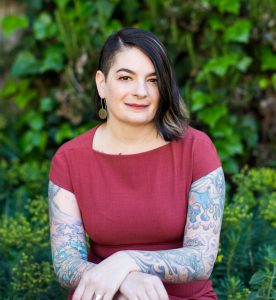
Whitney Valentine-Wafer (Photo by Sarah Deragon, CC BY)
Whitney Valentine-Wafer, Director of Finance and Treasurer
Whitney brings 17 years of finance and accounting experience to CC, having worked extensively in both the nonprofit and private sectors. Prior to joining us, Whitney was the CFO for 4505 Meats. Whitney currently lives Alameda, CA with her husband, children, and cats. In her spare time, she enjoys preparing recipes from her sizeable cookbook collection.
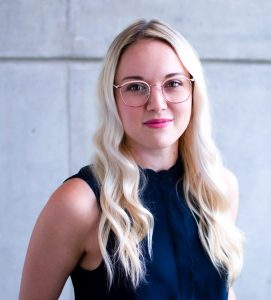
Victoria Heath (Photo by Hannah Rosen, CC BY)
Victoria Heath, Communications Manager
Victoria brings experience in knowledge translation and content creation—using effective communication tools and techniques to increase accessibility to global issues and policies. Before joining CC, Victoria was the Digital Communications Officer for the Institute for Gender and the Economy at the University of Toronto. Victoria can usually be found wandering around Toronto with her Nikon in one hand and a mocha in the other, listening to BBC radio and talking to strangers.
Please join us in welcoming Whitney and Victoria!
Book Preview: “Creative Commons for Educators and Librarians”
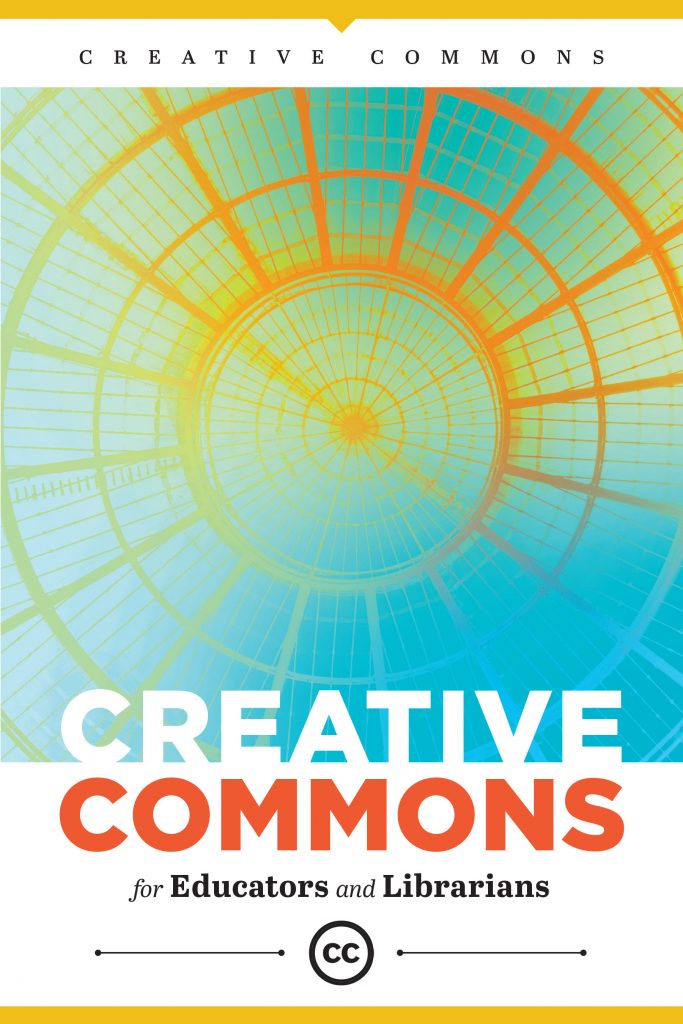
Over the last several months, Creative Commons has collaborated with theAmerican Library Association (ALA) on the first-ever print complement to the CC Certificate program—and we are thrilled to announce that the book will be available in November!
The CC Certificate program is Creative Commons’ official training in open licensing. It targets copyright law, CC legal tools, and the recommended practices of working in our global, shared commons. The CC Certificate is currently offered as a 10-week online course, or as a 1-week in-person training (bootcamp) to educators and academic librarians.
After training hundreds of academics, technologists, lawyers, instructional designers, and non-government organizations, we’ve received many requests to make the Certificate accessible to more people. Addressing that demand, we:
Implemented a training program for facilitators, so we can host more classes at once;
Launched a scholarship program to make the Certificate program more affordable to colleagues in the Global South;
Collaborated with colleagues around the world on translations in multiple languages as well as Certificates for different audiences (ex: GLAM);
Posted all of our course content freely accessible in downloadable file formats online;
And now, we’ve collaborated with the American Library Association to create the print companion to our online course! Titled Creative Commons for Educators and Librarians, this publication is licensed CC BY, and offers an additional way to access the open-licensed Certificate content. Pre-order this book in print at the ALA bookstore, ahead of its official release in November 2019.
Announcing an Open Call for Proposals: The Bassel Khartabil Fellowship
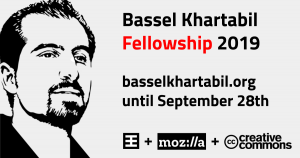
Today the Fabricatorz Foundation announced an open call for applicants for the Bassel Khartabil Fellowship.
The Fellowship supports outstanding individuals developing free culture projects in their communities under adverse circumstances, honoring the legacy of beloved artist, open source technology innovator, free culture advocate Bassel Khartabil.
Bassel was Creative Commons’ Syrian project lead, the cofounder of Syria’s first hackerspace, and a prolific open source contributor to projects like Firefox and Wikipedia. Bassel’s final project, relaunched as #NEWPALMYRA, entailed building free and open 3D models of the ancient Syrian city of Palmyra. In his work as a computer engineer, educator, artist, musician, cultural heritage researcher, and thought leader, Bassel modeled a more open world, impacting lives globally.
Bassel was taken from the streets in March of 2012 in a military arrest and interrogated and tortured in secret in a facility controlled by Syria’s General Intelligence Directorate. Despite international outrage at his treatment and calls for his release, in October of 2015 he was moved to an undisclosed location and executed shortly thereafter.
“Bassel was not only a dear friend, but also a fearless advocate for free culture who showed us all what a true commitment to the betterment of humanity looked like,” said Barry Threw, Executive Director of Fabricatorz Foundation. “His work could not have succeeded without the friendship of a global community. With supporters like Mozilla Foundation and Creative Commons, we can make sure the next generation can advance the values core to Bassel’s life.”
Fellows are expected to lead projects or initiatives that will catalyze free culture, particularly in societies vulnerable to attacks on freedom of expression and free access to knowledge.
Special consideration will be given to applicants operating within closed societies and in developing economies where other forms of support are scarce, but all interested applicants are encouraged to apply.
The Fellowship is organized by Fabricatorz Foundation with support from Creative Commons and Mozilla Foundation, along with partnership from Khartabil’s final projects: Nophotozone and #NEWPALMYRA.
The Fellow will be selected by a jury of free culture community luminaries, and presented at the 10th anniversary Mozilla Festival, from October 21-27 in London. Throughout their one-year term, the chosen Fellow will receive a stipend of $50,000 USD, mentorship from affiliate organizations, skill development, project promotion, and fundraising support from the partner network, as well as other benefits.
You Loved the 2019 CC Global Summit Logo, So We Put it on a T-Shirt
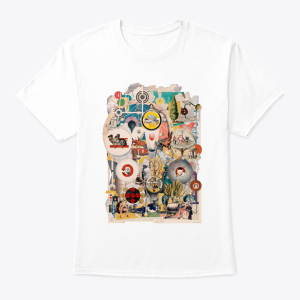
We’re excited to release our latest Teespring campaign that features the artwork created by João Pombeiro for the 2019 CC Global Summit!
When we asked Portuguese artist and filmmaker, João Pombeiro to design a logo for the 2019 CC Global Summit, we were confident he would create something that would capture the global movement for the commons. He didn’t disappoint.
By using only the CC search tool, the public domain and CC0 licensed images, João crafted a unique piece of art (licensed under CC BY) that resonated with our community.
It’s Happening—The CC Global Summit Will Be in Lisbon, May 14-16!
Why mess with success?
We’re happy to announce that the 2020 CC Global Summit will once again be in Lisbon from May 14-16, 2020! Please save the date!
All of our workshops, talks, planning sessions and small group sessions will be hosted in the beautiful and vibrant Museu do Oriente, located on the Alcântara Waterfront. The event will again be co-hosted by Creative Commons and CC Portugal, who did such a tremendous job co-hosting the 2019 CC Summit.
We hope to build on the success of this year’s CC Summit, where nearly 400 Creative Commoners gathered from across the globe to attend over 130 sessions and listen to seven incredible keynotes. If you’re interested in the global movement for the commons as an activist, advocate, artist, librarian, educator, lawyer, technologist, etc., we want you to join us for discussion and debate, workshops and planning, talks and community building.
Are you interested in sponsoring the 2020 CC Global Summit?
Sponsorship levels| CC is pleased to invite sponsors to join us for the 2020 Global Summit in Lisbon at a range of levels from $2,000 to $50,000, including Exhibitor Sponsors, Lounge Sponsors, Lunch Sponsors, Keynote Sponsors, and more.
To learn more about sponsoring the 2020 Global Summit, contact Jami Vass, Director of Development, at jami@creativecommons.org.
Where the money goes| CC’s annual Global Summit draws together an international community of technologists, legal experts, academics, activists, and community members who work to promote the power of open worldwide. The powerful act of gathering these diverse networks in one place enables CC to advance open strategy, develop stronger teams, and cross-pollinate expertise to create an ever-stronger community of open advocates.
Global Summit Sponsors make this annual cross-cultural event possible, providing an essential opportunity to advance and maximize digital creativity, collaboration, and sharing. The Summit is a key gathering of individuals working in the open knowledge sphere — and it is only as impactful as the breadth of voices we are able to engage and include in the event. In addition to supporting the convening at large, sponsors help support our Summit Scholarship Fund, enabling Creative Commons to broaden the spectrum of voices that are able to participate in these conversations — which in turn impacts the broader open knowledge space year-round.
Information on programming and how you can get involved coming soon. For updates, subscribe to our mailing list or join us on Slack.
Now You Can Watch the Keynotes from CC’s 2019 Global Summit
Well this is exciting—all of the keynote talks from CC’s 2019 Global Summit are now online!
We wanted to make sure that the insights shared by the summit’s seven amazing keynote speakers are accessible to people who couldn’t make it to the event, so we’ve uploaded their talks to YouTube and made them available under a CC Attribution license.
So, while you’re sipping your morning coffee, riding the bus to work, or settling down for bed, we encourage you to watch (and share) each of these inspiring keynotes that cover a range of important topics—from decolonizing archives in Palestine to the barriers of copyright reform in Europe.
Watch all of the keynotes through the links below.
Thank you to all of the keynote speakers for sharing their expertise and for being a crucial part of this year’s summit. To learn more about everything that happened at CC’s 2019 Global Summit, check out our wrap-up blog post.
SELF Magazine and the AAP Promote Vaccine Awareness Through CC-Licensed Images
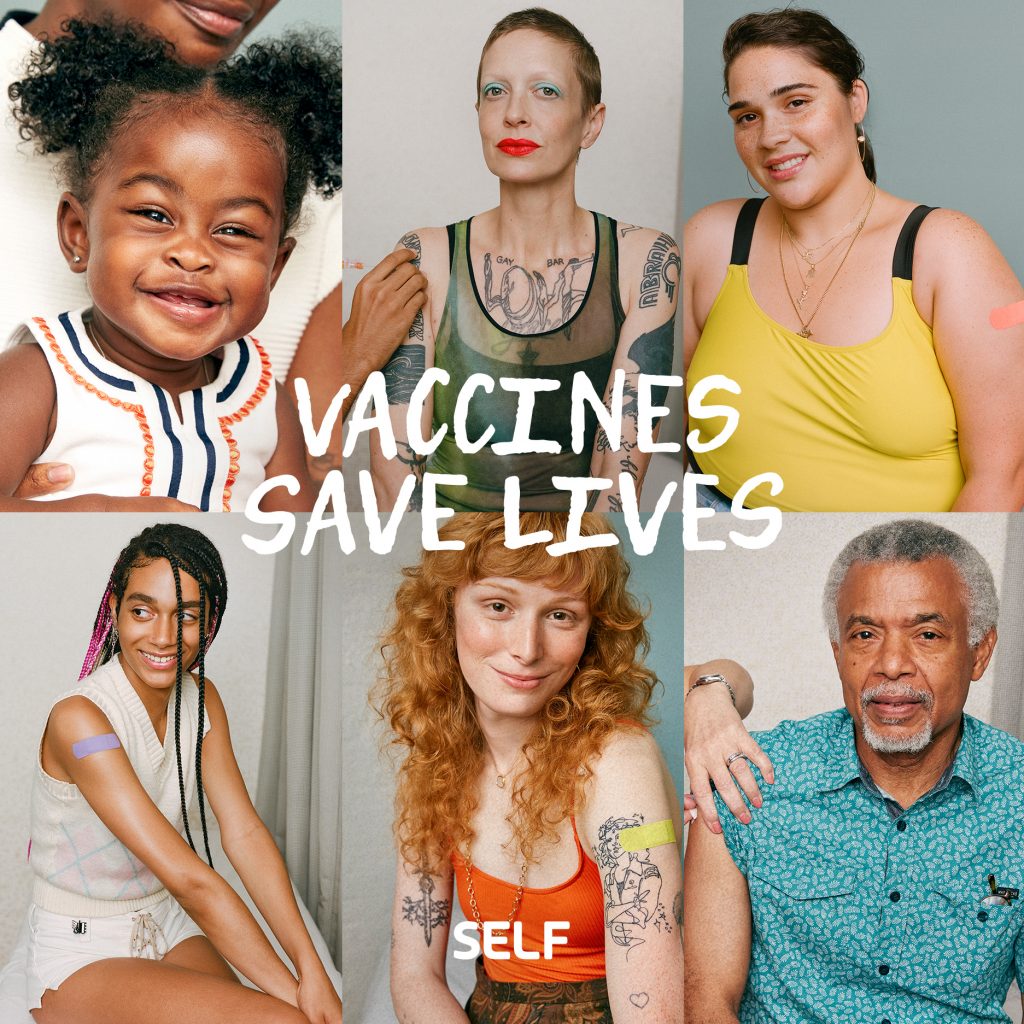
Today, SELF magazine released a collection of new CC-licensed photos created to increase awareness about vaccines and promote accurate information about immunizations. The project, developed in partnership with the American Academy of Pediatrics, includes several dozen high-quality images made by photographer Heather Hazzan. These photos are available to the public as a free alternative to traditional stock photography and were designed to be used for illustrating stories about vaccines.
Photo credit: Heather Hazzan, SELF (CC BY)
After consulting with us here at Creative Commons, SELF and the AAP chose to release these images under our Creative Commons Attribution (CC BY) license, so that they can be freely used by anyone—including media outlets, hospitals, public health departments, and other organizations creating content about vaccines—as long as credit is given to the photographer.
In addition to the photo project, SELF magazine today released “Vaccines Save Lives,” a special digital issue dedicated to exploring vaccines and highlighting the inaccuracy and dangers of anti-vaccine misinformation.
We’re pleased that SELF and the AAP chose CC licensing to share freely and openly with the world. Read more about the photo project on SELF’s site, and dig into the photo collection itself over at Flickr.
Leadership Transitions at Creative Commons
Today Creative Commons CEO Ryan Merkley is announcing the conclusion of his five years of leadership of the organization. As he describes in his personal message, he is stepping down as CEO to start a new position at Wikimedia. We are thankful to Ryan for his five years of leadership at CC and excited for him and the Commons that he will continue as a leader in the open knowledge community. We are all very proud of Creative Commons’ accomplishments during the past five years—including redesign of our global network, launch and development of the CC Certificate program, and our new search engine—which provides a welcoming front door to the commons.
In other leadership news, I am delighted to announce today the appointment of four new members of the Creative Commons Board of Directors. Carolina Botero, Bilal Randeree, Alek Tarkowski, and Alexander Macgillivray are all longtime members of the CC community. Each of them brings incredible expertise and insight to this new role with the organization, as the bios below illustrate. Carolina, Bilal, and Alek have begun their CC board service, while Alex will begin his term in January 2020. All of us at Creative Commons are thrilled to start working with these outstanding CC community members in this new capacity.
Two of the touchstones of the organizational strategy that has driven our recent work have been gratitude and collaboration. On behalf of the Creative Commons Board of Directors, I want to express my sincere gratitude for Ryan’s service to our organization and mission. Looking to the future, we are excited about the opportunities for collaboration we will have with Ryan in his new role. I am also grateful to our new board members for their willingness to serve, and I’m excited to collaborate with them and with the global Creative Commons community on the process of searching for a new leader for CC as we enter our third decade. We will soon be announcing details about that search process and inviting community input. In the meantime, my board colleagues and I are working closely with CC’s dedicated management team to ensure continuity and momentum for our important work.
The Commons is ever-changing and resilient. It is my great honor to cultivate it along with Creative Commons staff, our global network, and supporters.
Share alike, friends!
Molly Van Houweling
Creative Commons Board Chair
==
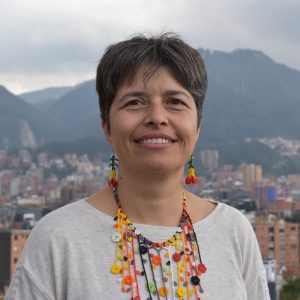
Carolina Botero (Photo by Diego Mora, CC BY)
Carolina Botero is the Executive Director of the Colombian civil society digital rights organization Karisma Foundation. She is a researcher, lawyer, lecturer, writer, and consultant on topics related to law and technology. Carolina works in the defense of human rights in technology environments, following debates on freedom of expression, privacy, access to knowledge and culture, social innovation and ICT in technology. She has been a leader in the CC community in Colombia and around the world since 2003. Carolina holds a master’s degree in international law and cooperation (VUB – Belgium), and a master’s degree in Business and Contracting Law (2006, UAB – Spain). She frequently writes op-eds for El Espectador and La Silla Vacía.
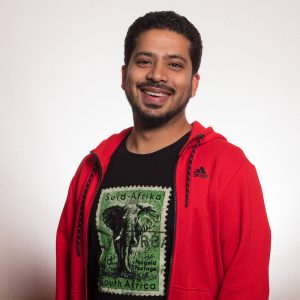
Bilal Randeree (Photo by Sebastiaan ter Burg, CC BY)
Bilal Randeree is a digital media practitioner, investor and strategist. He currently serves as the Director for Africa/MENA at the Media Development Investment Fund, a mission-driven investment fund providing debt and equity financing to independent news and information companies. Bilal has 15 years’ experience in business, tech and media—by way of a unique career path. As a qualified Chartered Accountant, he spent a few years in Transaction Services before going back to school and studying journalism. That culminated with him serving as Social Media Manager and Online Editor at Al Jazeera in Qatar, which he eventually left to lead a tech startup. He has participated and led Creative Commons activities in the Arab World for the last 10 years, and now back home in South Africa.
Alek Tarkowski (Photo by Centrum Cyfrowe, CC BY)
Alek Tarkowski is President of Centrum Cyfrowe, a Polish foundation supporting open, digital society. He is a sociologist, activist, and strategist. Since 2004 he has been active in Poland and around the world in organizations and social movements building an open internet. His focus has been on copyright, commons-based approaches to resource management, and intellectual property. His interests include digital strategies for societies, regulation of emergent technologies, digital skills, and openness of public resources. He is the co-founder of Creative Commons Poland, Communia (the European Association on the Digital Public Domain), and Polish Coalition for Open Education (KOED). He co-chaired the strategic process for the new Creative Commons Global Network Strategy, is an alumnus of the Leadership Academy of Poland (Class of 2017), and in 2016 was named a New Europe 100 Challenger.
Alexander Macgillivray (Photo by Doc Searls, CC BY-SA)
Alexander Macgillivray is a lawyer whose interests span ethics, law, policy, government, decision making, the Internet, algorithms, social justice, access to information, coding, and the intersection of all of those. He was United States Deputy Chief Technology Officer for the final two plus years of the Obama Administration. He was Twitter’s General Counsel, as well as the company’s head of Corporate Development, Public Policy, Communications, and Trust & Safety. Before that he was Deputy General Counsel at Google and created the Product Counsel team. He has served on the board of the Campaign for Female Education (CAMFED) USA, was one of the early Berkman Klein Center folks, was certified as a First Grade Teacher by the State of New Jersey, and studied Reasoning & Decision Making as an undergraduate. he He is currently co-founder and GC of Alloy.us. He is also doing a bunch of coding, writing, and short burst projects with organizations thinking about what they should be doing next. He is also proud to be a board member at Data & Society and advisor to the Mozilla Tech Policy Fellows.
Moving on from Creative Commons
I have some bittersweet professional news to share. I will be stepping down from my position at Creative Commons and joining the Wikimedia Foundation as Chief of Staff. Leading Creative Commons has been the most challenging and rewarding role of my career. It has been a privilege to do this work, and together we’ve had some incredible accomplishments. I’m deeply grateful for the opportunity to work with such a dedicated and professional staff, and a caring and driven community — I deeply believe that our collaborative efforts are the reason for every success we’ve had. I’m excited to continue working on issues that I care about in the open community. And I’m excited to continue working collaboratively with the CC team as a community member and partner.
Looking back on five years as CC’s CEO, I believe that the organization is in a stronger position than it has ever been. CC’s focus is clear, building a vibrant, usable commons powered by collaboration and gratitude through community support and training, product development and partnerships, and engagement.
Operationally, CC has an inspired and driven management team, with exceptional staff leading all aspects of our operations and programs. They are some of my favorite humans, and it’s been a joy to work with them. The team is guided by a multi-year strategy and collaboratively developed goals that support accountability and transparency. Financially, the organization has established a meaningful reserve upon which it can draw, secured partnerships with new multi-year funders, and initiated a strategy to secure multi-year relationships that has been embraced by the Board and is being executed upon by CC’s senior management.
Together, we renewed and expanded the CC network, and it is now nearly four times its previous size, with new and long-standing leaders working together to grow CC in communities previously not engaged with CC. I can’t underscore how important that community work has been, how impactful it will be in the future, and how happy I was to see the community hold such a central role in CC’s strategy and programs. Finally, CC has renewed and strengthened partnerships with funders, peer organizations, content partners, institutions, governments, and more. We have established The Big Open, and taken a leading role in inviting others to join us.
That’s a lot. And after five years, it should be. I joined the organization at a challenging time, with a deep belief in the power of sharing to create a more equitable world, to drive innovation, and create access for all to culture and knowledge. My hope was always to leave the organization in a good place, so that its next CEO can join the staff, community, and board in imagining where CC should go next.
Nobody’s perfect, but I do believe I’ve accomplished the goals we set together, and it’s a good time to move on and invite new leadership in the organization. In the intervening period I will work closely with the CC management team and the board to effect a smooth transition.
To the entire CC team, with whom it has been my great pleasure to work so closely for the past five years, I want to share an enormous amount of gratitude. To CC’s many partners, supporters, and communities, I’m sure I’ll see you again in The Big Open. And as CC enters its 20th year, I look forward to celebrating with all of you as colleagues and friends.