Creative Commons has been exploring questions around artificial intelligence for a long time: how this profound technological shift might affect people’s motivations to share, whether the intentions behind sharing work before AI became mainstream still hold when we consider how those works are being used now, and how we sustain a thriving commons when the fundamental bargain of the open web has shifted.
Creative Commons (CC) is happy to announce the launch of a new publication entitled Guidance for Indigenous Collections and Indigenous Data: Recommendations from Creative Commons and Local Contexts. This publication is the result of a collaboration with Local Contexts, as both organizations share commitments to equitable knowledge sharing, proper attribution, and respect for diverse cultural and community protocols. It aims to support cultural heritage institutions (CHIs) in navigating the complex legal, ethical, and cultural issues regarding open access to Indigenous heritage and associated data.
The recent emergence of generative artificial intelligence (AI) has had a phenomenal impact on CHIs, especially as the content they steward is accessed and used for AI development. One key question centers on the conditions, norms, and expectations governing the use of openly licensed and public domain cultural heritage materials as data for AI development.
It’s been a while since we last shared an update on CC signals and our work around AI and the commons. Over the past several months, we’ve been deep in research, in conversation, and in active collaboration with communities, policymakers, and practitioners. We took the time to understand where power is consolidating, where harms are emerging, and where meaningful intervention is actually possible. We are now at a point where we believe we can act in ways that will have real impact.
The United Nations Convention to Combat Desertification (UNCCD), established in 1994, unites governments, scientists, policymakers, the private sector, and communities to mitigate the effects of desertification, land degradation, and drought. Through land protection and restoration, the Convention promotes global action to restore and manage land for the sustainability of humanity and the planet and advances…
Before you decide that you want to apply a Creative Commons license or CC0 to your creative work, there are some important things to consider: The licenses and CC0 are irrevocable. Irrevocable means a legal agreement that cannot be canceled. That means once you apply a CC license to a work, the CC license applies…
AI systems are developed using datasets drawn largely from publicly available information: research papers, educational resources, cultural works, images, and data shared by millions of people and institutions around the world. A significant portion of this knowledge exists because of CC licenses and the global movement for open sharing. For over a quarter century, the…
Creative Commons builds and maintains open tools that help creators and institutions share knowledge and creativity legally and globally. Our tools, like the CC licenses and public domain marker, power how people share knowledge, creativity, and culture across borders, languages, and technologies. From education and science to art and archives, from open access to AI,…
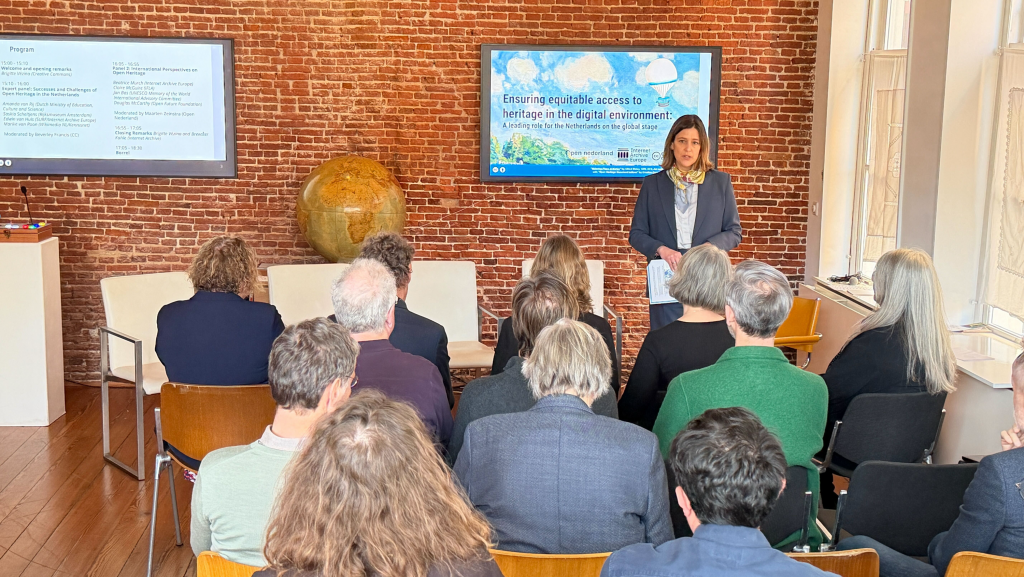
On Monday 2 March 2026, Creative Commons (CC) and Internet Archive Europe, together with the support of Open Nederland, hosted an event entitled “Ensuring equitable access to heritage in the digital environment: A leading role for the Netherlands on the global stage.” In this blog post, we offer a recap of the dynamic discussions and share why they matter for CC.