Copyright as a tool to censor political dissent in Latin America
Copyright
The “Safe harbor” provisions on the DMCA have been critical to build the internet as we know it today.
Stay informed. Sign up for CC’s newsletter.
The “Safe harbor” provisions on the DMCA have been critical to build the internet as we know it today.
Today the U.S. Department of State released the Federal Open Licensing Playbook, a list of considerations, use cases, and recommendations for federal departments interested in developing and implementing open license requirements on federally-funded grant projects. It is designed to assist federal efforts to maximize the impact of grant funds, and create opportunities for innovation and…
Our core of community is not a series of disparate projects, but instead a network of people driven by the desire to share their creativity with the world. What is creating in the 21st century? It’s remix, it’s reuse, and it’s collaboration, made possible by the dream of the global commons.
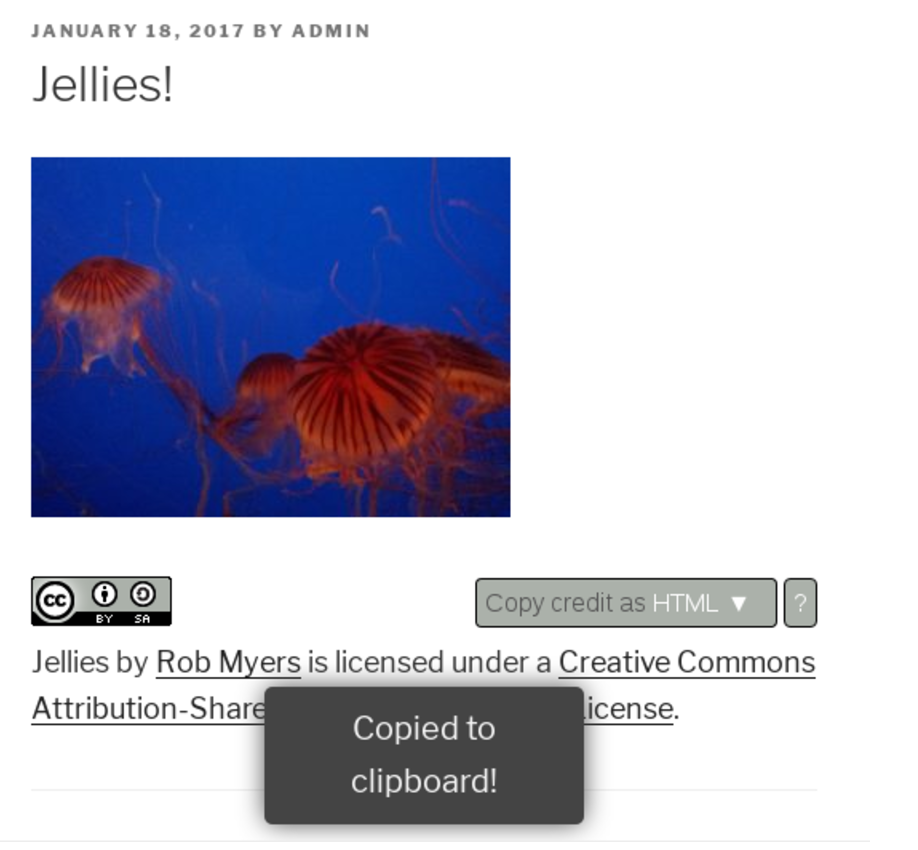
Today we’re excited to announce the public beta and feedback period for our One Click Attribution Tool for Wordpress.
We’re taking part in Copyright Week, a series of actions and discussions supporting key principles that should guide copyright policy. Every day this week, various groups are taking on different elements of the law, and addressing what’s at stake, and what we need to do to make sure that copyright promotes creativity and innovation. Today’s…
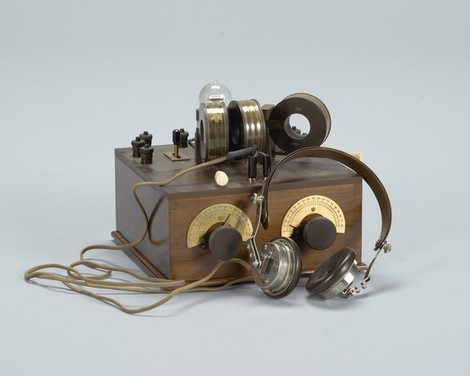
Recently, Europeana Sounds has doubled the amount of audio heritage available on the Europeana platform.
We’re taking part in Copyright Week, a series of actions and discussions supporting key principles that should guide copyright policy. Every day this week, various groups are taking on different elements of the law, and addressing what’s at stake, and what we need to do to make sure that copyright promotes creativity and innovation. Today’s…
We are so happy to announce our official translation of 4.0 into Swedish. Now all Swedish speakers can benefit from the 4.0 licenses in their own language.
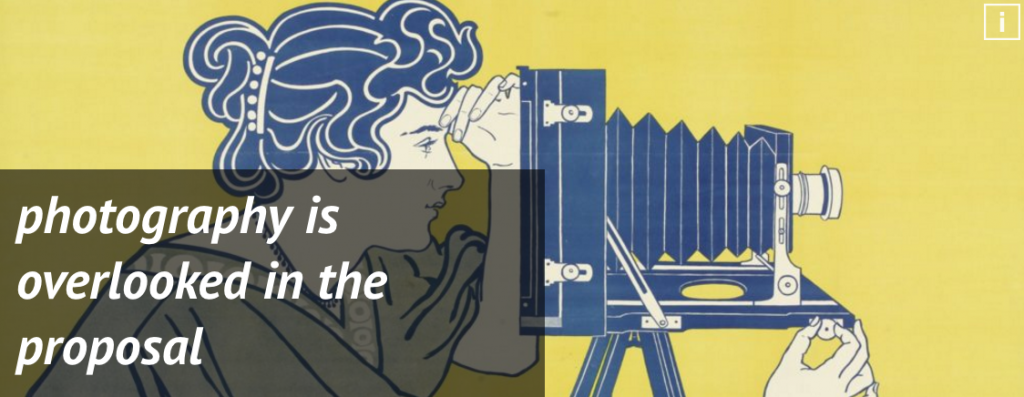
In September 2016 the European Commission released its proposed changes to copyright in the EU. Unfortunately, the proposal fails to deliver on the promise for a modern copyright law in Europe. Creative Commons is a founding member of the Communia Association, which has been hard at work advocating for positive changes to the Commission’s plan.…
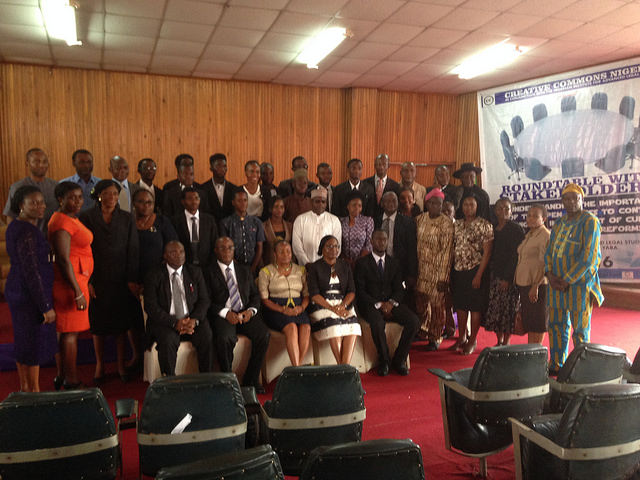
In the area of knowledge governance today, it is no longer in doubt that ‘open’ is an important and emerging paradigm and philosophy.