Meet Your New Global Network Council Executive Committee!
In December 2020 the Creative Commons Global Network Council (GNC) voted on the new Executive Committee (ExCom). The ExCom took up its work in January 2021 and will be working throughout the next year and beyond by supporting the Network, fostering and strengthening connections, and encouraging activities around the new CC Strategy.
Meet the six elected members of the ExCom below!
- Susanna Ånäs (2021-2022 term)
 Susanna is a photographer and media artist by background. She works with Open GLAM at Avoin GLAM, a joint effort of Wikimedia, Open Knowledge and Creative Commons in Finland (for which she is the GNC representative). Through this collaboration, we hope to explore the boundaries of Open Access when it comes to Traditional Knowledge or personal information. She develops Wikidocumentaries, a microhistory platform and a maker space for citizen historians. She likes weaving linked open cultural heritage data and personal memories into stories with the help of Wikibase and Wikimedia projects. Her recent projects include arranging the online cultural hackathon Hack4OpenGLAM at the Creative Commons Summit 2020, the initiation of a local history wiki Paikallishistoriawiki and a local archiving project The Central Park Archives in the neighbourhood of Maunula, Helsinki.
- Franco Giandana – the new ExCom Chair (2021 term)
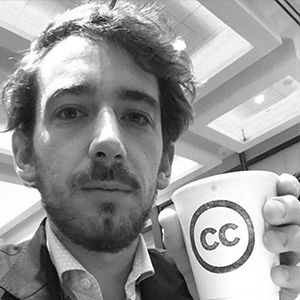 Franco is a long time contributor to the Open Movement ecosystem, working at the Unviersidad Nacional de Córdoba as a Coordinator por Public Innovation, developing open technology to foster civil participation in local governments. As a private lawyer, he has participated in national and international cases representing artists and authors in different industries, such as the film, music or street art industries. Recently, he joined the Fundacion Via Libre as a legal and policy analyst and is currently working on a LACNIC funded project to counteract abusive DMCA content moderation in internet platforms in Latin America. He is the GNC representative for the Creative Commons Argentine Chapter.
- Arturo Sánchez Pineda (2021-2022 term)
 Arturo is a Venezuelan researcher (PhD) in physics, computer sciences and education. He lives in Europe and develops his professional activities at CERN, LAPP and ICTP in Switzerland, France and Italy, respectively. Some of the relevant activities in the OER area are the management of the ATLAS Open Data project for Education at CERN, the coordination of the CEVALE2VE, and member of the EU Horizon 2020 project ESCAPE, and the EU ERASMUS+ project LA-CoNGA physics. He is also the co-founder and GNC representative of the Venezuela Creative Commons Chapter (founded in 2018) and is working on the re-establishment of a Creative Commons Chapter in Switzerland (2021). In general, he always tries to teach and outreach what he learns. In his opinion, the best way to contribute to the Creative Commons objectives and society has been through education.
- Irene Soria (2021-2022 term)
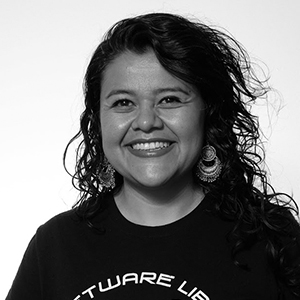 Irene is a PhD candidate in the Feminist Studies Department at Universidad Autónoma Metropolitana in Mexico City. She is a part-time faculty member, academic, consultant, graphic designer and activist for the free software / free culture movement since 2009. Irene decided to explore and study her own practices when migrating to the exclusive use of free software as a graphic designer, which led her to the in-depth analysis of open knowledge, free access, the Commons and above all: social sciences crossed by feminism and decolonial studies. Around these topics, she has written a degree thesis, academic and general interest articles, books and compilations, as well as attended and presented at conferences in many countries. In 2018, she was invited to re-found the Creative Commons Mexico Chapter, which she represents at the Global Network Council, in addition to being a member of the CC Global Network Council Membership Committee and, lately, part of the ExCom.
- Alek Tarkowski (2021 term)
 Alek is the Strategy Director of Open Future Foundation, a European think tank for the open movement. He is a sociologist, activist and strategist. Since 2004 he has been active, in Poland and globally, in organizations and social movements building an open internet. His focus has been on copyright, commons-based approaches to resource management and intellectual property. His interests include digital strategies for societies, regulation of emergent technologies, digital skills and openness of public resources.
He is the co-founder of Centrum Cyfrowe, a Polish think-and-do tank supporting open, digital society, where he currently chairs the Oversight Board. He also co-founded Creative Commons Poland, Communia (the European Association on the Digital Public Domain) and the Polish Coalition for Open Education (KOED). He has co-chaired the strategic process for the new Creative Commons Global Network Strategy. He is an alumnus of the Leadership Academy of Poland (Class of 2017), in 2016 he was named New Europe 100 Challenger. Member of the Steering Committee of Internet Governance Forum Poland. Formerly, member of the Board of Strategic Advisors to the Prime Minister of Poland (2008-2011), member of the Polish Board of Digitisation, an advisory body to the Minister of Digitisation (2011-2016) and Junior Fellow at the McLuhan Program on Culture and Technology at the University of Toronto.
He co-authored a range of Polish strategic documents, including the strategic report “Poland 2030”, the “Digital Poland” strategy and the Polish official long-term strategy for growth. He advised as well multiple public institutions and civil society organizations on digital strategies and projects. Co-author, with Mirek Filiciak, of a collection of essays titled “Two zero. Alphabet of new culture and other texts”. Lecturer at Artes Liberales Faculty at University of Warsaw and SWPS University of Social Sciences and Humanities. Member of the Advisory Board of the Commonwealth Center for Connected Learning, School of Ideas SWPS and CoderDojo Polska.
- Tomo Watanabe (2021-2022 term)
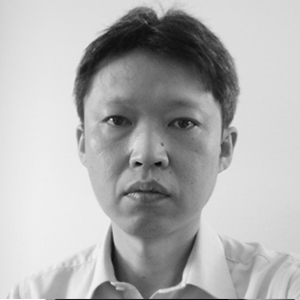 Tomo is a long-time member of the Creative Commons Japan Chapter, involved in its launch circa 2003 and continuously active since 2007. He has been leading the Japan team while being involved in license porting and translation, open data, copyright reform advocacy, and other activities. He is an academic at GLOCOM, the International University of Japan where he also manages the research division. His interests include social and policy issues related to openness, such as open data, open innovation through FabLab, multi-stakeholder policymaking process, open collaboration on Wikipedia, open strategies, open network infrastructure policies. He co-founded Open Knowledge Foundation Japan and was once a Wikipediholic. He holds a PhD from Indiana University.
The ExCom also has three CC positions. These are filled by CC’s CEO Catherine Stihler, CC’s Network Manager, and CC’s Board member Delia Browne.
Image credits: Susanna and Irene: Sebastiaan ter Burg under (CC BY 2.0); Franco, Arturo, Tomo, and Alek provided their photos.
Her Story: Transforming Open Through Feminism
For over 40 years, millions across the globe have collectively celebrated the achievements, histories, ideas, and contributions of women on March 8 and increasingly, throughout March for Women’s History Month using #HerStory and #BecauseOfHerStory. This year, we wanted to do something special to celebrate this annual event, so we reached out to several members of the Creative Commons Global Network and the broader open community to ask them to share their personal stories, ideas, and insights by responding to five questions. The result is this five-part blog series called, “Her Story.” Throughout this series, we’ll also be highlighting the work of women artists who submitted pieces to Fine Acts’ Reimagining Human Rights challenge.
Our hope is that these conversations will inspire you to reflect on your own stories and ideas. We also hope it will motivate you to think about how you can help make open sharing more inclusive, equitable, and sustainable. Put simply, we want to make sharing better—to do that, we need your help.
In part three of this series, participants responded to the following question: How can feminism transform the open movement?
- Florence Devouard | Co-Lead, Wiki Loves Women; Wikimedian for 19 years; Former Chairwoman, Wikimedia Foundation
Les courants féministes sont de véritables bouillons de culture d’idées et des valeurs et accompagnent sous diverses formes notre histoire à travers des demandes d’égalité, de justice, de liberté, de visibilité. De son côté, le mouvement de la culture libre reste majoritairement masculin (par exemple seule 10% de personnes participant à Wikipedia sont des femmes; il y également beaucoup moins de femmes dans le développement de logiciel libre que dans le développement de logiciel propriétaire) et l’ambiance parfois assez agressive, voire sexiste. Les féministes sont à l’origine de nombreuses initiatives innovantes destinées à sensibiliser, recruter, former, soutenir les novices du mouvement libre, et membres des groupes de travail réfléchissant aux moyens de développer un environnement plus amical, plus positif, plus réceptif et réactif aux situations individuelles (tels que développement de Charte de participation).
EN: Feminist currents are veritable broths for the culture of ideas and values, and in various forms accompany our history through demands for equality, justice, freedom, and visibility. For its part, the free culture movement remains predominantly male (for example, only 10% of people participating in Wikipedia are women; there are also far fewer women in the development of free software than in the development of proprietary software) and the atmosphere is sometimes quite aggressive, even sexist. Feminists are behind many innovative initiatives aimed at sensitizing, recruiting, training, and supporting novices of the free movement, and are also members of working groups reflecting on ways in which to develop a more friendly, positive, receptive, and responsive environment.
Abolishing the patriarchy and cisheteronormativity gives room in which we can foster creativity into the knowledge we consider important to share and preserve. Black women and Black queer folks have so much knowledge and brilliance to share, but this is shadowed daily by the small but meaningful and impactful things that go on within the open movement. Such as controlling or directing who receives funding, people not having the “necessary” networks that could get them into rooms where important and powerful decisions and conversations are made, Eurocentrism, a lack of diversity in leading organizations, inequality in labour and hiring procedures, etc. Until these things are dealt with, nothing will change.
- İlkay Holt | Representative to the CC Global Network Council, CC Turkey
I am not an expert in this area but I can say that feminism would help to put equality in practise in the open community, not only in terms of gender but every level of social equality.
- Irene Soria Guzmán | Representative to the Global Network Council, CC México; feminista; académica y activista de la cultura libre
Silvia Federici dice que los comunes no son “cosas” sino relaciones sociales. Por ello, hablar del acto de compartir, [commoning], los vínculos y la interdepencia, pueden ser ideas que desde el feminismo ayuden a derribar las jerarquías sociales impuestas y transformar el movimiento abierto.
EN: Silvia Federici says that the commons are not “things” but social relationships. For this reason, talking about feminist ideas like the act of sharing, commoning, social ties, and inter-dependence can help demolish the imposed social hierarchies and transform the open movement.
- Isla Haddow-Flood | Chair and Advancement Lead, Wiki In Africa; CoProject Lead, Wiki Loves Women
Feminism is an integral part of the open movement. Equity and inclusion are building blocks of openness: you cannot be truly open if you are keeping people out. Most of the main players in this space are dedicated to ensuring gender equity. Within the Wikimedia movement alone, active feminism and gender-equity projects and groups exist across languages, themes, and regions. Accompanied by safety and security teams and policies (such as the Universal Code of Conduct and friendly space policy), together and separately these projects and initiatives have transformed the Wikimedia movement. There is a LOT of work still to be done, but the movement is definitely a more gender-friendly space than it used to be. These projects have not only elevated women and encouraged female contribution but have also allowed for space where men can be gender sensitised and have the opportunity to work towards gender equity too.
- Mariana Valente | Director, InternetLab; Professor, Insper University; 2019-2020 CC Brazil lead
Obviously, we need to address gender equality in the open movement, but here I would like to go beyond that. Feminism has a lot to teach about forming communities, destabilizing crystallized power structures, and learning within differences. There are many affinities between the open movement and feminism. More than a legal solution, the open movement is about changing worldviews and creating—in the present—the living experience of what a different future could look like. Feminists are about that too. But one of the things which I think is exceptional is that feminists have learned over the decades how to fight in extremely adversarial environments, how to protect themselves from reactive waves, and how to reshape the movement in the face of internal power imbalances. Feminists have had to differentiate and define themselves too, politically, geographically, and in terms of values and principles—and at times, to join forces for common causes. Feminists have long understood the need to fight for both cultural and institutional change. These are all learnings that I think are very useful in addressing today’s challenges in the open movement.
- Primah Kwagala | Executive Director, Women’s Probono Initiative (Uganda)
An ecofeminist approach to the open movement requires us to interrogate the patriarchal systems that continuously make it impossible for women to access, share, and consume openly accessible knowledge and content. Traditionally, it is men that are considered professionals whilst women were and are referenced/viewed as an aesthetic and a support system to their male colleagues in the open movement. Many women, to this date, are only able to exist as ghostwriters to their male colleagues in the open movement. This needs to end. The open movement needs to embrace and expose women’s works so we can equally celebrate and promote women as co-creators with their male colleagues.
? There’s more! Read part one and part two of our “Her Story” blog series today. Part four and five will be published Monday mornings (EST) throughout the month of March. Stay tuned!
Meet CC Nepal, Our Next Feature for CC Network Fridays!
After introducing the CC Italy Chapter to you in July, the CC Netherlands Chapter in August, CC Bangladesh Chapter in September, CC Tanzania Chapter in October, and the CC India Chapter in November, the CC Mexico Chapter in December, and CC Argentina Chapter in January, and CC South Africa Chapter in February, we are now back to Asia to introduce CC Nepal!
The Creative Commons Global Network (CCGN) consists of 48 CC Country Chapters spread across the globe. They’re the home for a community of advocates, activists, educators, artists, lawyers, and users who share CC’s vision and values. They implement and strengthen open access policies, copyright reform, open education, and open culture in the communities in which they live.
To help showcase their work, we’re excited to continue our blog series and social media initiative: CC Network Fridays. At least one Friday a month, we’re traveling around the world through our blog and on Twitter (using #CCNetworkFridays) to a different CC Chapter, introducing their teams, discussing their work, and celebrating their commitment to open!
Say hello to CC Nepal!
The CC Nepal Chapter was formed in 2018. Its Chapter Lead is Kshitiz Khanal and its representative to the CC Global Network Council is Roshan Kumar Karn. CC Nepal is involved in advocacy, open education and copyright reform. For this post, we spoke to Roshan who told us a bit more about the Chapter’s work.
CC: What open movement work is your Chapter actively involved in? What would you like to achieve with your work?
CC Nepal: CC Nepal is actively involved in the promotion and advocacy of CC licenses, open education and copyright reform. We’re involved in the creation, curation and digitization of textbooks under appropriate CC licenses. We organize workshops and seminars to advocate for CC licenses.
CC: What exciting project has your Chapter engaged in recently?
CC Nepal: We organized Open Access “Back to School” teachers’ training recently. With the emerging need for virtual education and content development, the proper use of content with appropriate licenses has become equally important. CC licenses are of great impact for low and middle-income countries like Nepal as they will reduce knowledge barriers.
CC: What do you find inspiring and rewarding about your work in the open movement?
CC Nepal: The open movement allows researchers, students, and professionals from all fields to access relevant and up-to-date information enabling them in their careers, assisting them in making better decisions, and producing better outcomes—this is what we find rewarding. The pleasure of imparting knowledge without any barriers is eternally satisfying.
CC: What are your plans for the future?
CC Nepal:
- Establishing an OER unit in the Ministry of Education to plan, implement and evaluate OER activities.
- Make a robust network to digitize educational resources/textbooks provided by the Nepal government and implement appropriate CC licenses in it.
- Organize workshops, webinars, boot camps, roadshows and other live engagements to raise awareness and facilitate communication.
CC: What projects in your country are using CC licenses that you’d like to highlight?
CC Nepal: A few resources provided by the Ministry of Education use CC licenses:
Thank you to the CC Nepal team, especially Roshan for contributing to the CC Network Fridays feature, and for all of their work in the open community! To see this conversation on Twitter, click here. To become a member of the CCGN, visit our website!
?: Featured image has icons by Guilherme Furtado and Vectors Point via Noun Project (CC BY 3.0).
Our Response To Canada’s Copyright Term Extension Consultation
On 29 January 2020, the Canadian federal government introduced Bill C-4, “An Act to Implement the Agreement between Canada, the United States of America and the United Mexican States” (CUSMA).1 The bill includes a proposal to extend copyright’s term of protection2 by 20 years, moving it from “life of the author + 50 years” (the international minimum standard as per the Berne Convention and TRIPS Agreement) to “life + 70 years.” An open consultation process is open until 12 March 2021 and Creative Commons, together with Creative Commons Canada, submitted comments to remind the Government of Canada of the imperative to preserve the public domain and safeguard the public interest in access to copyright works despite an inevitable term extension.
Extending copyright’s term harms the public domain
At Creative Commons, we believe that copyright policy should encourage creativity, not hamper it. In a balanced copyright system, the rights and interests granted to both creators and the general public are necessary to stimulate vibrant creativity and foster the sharing of knowledge. We’ve previously made it clear that excessive copyright terms inhibit our ability to build upon and rework creative content. A 20-year extension effectively keeps creative works out of the public domain for two extra decades. This is an incredible loss given the role of the public domain as the trove of materials on which contemporary creativity depends.
There is no reason for copyright protection to last as long as it already does—let alone be further extended. In fact, we argue for the term of protection to be significantly reduced. A brief filed by leading economists in the 2002 Eldred v. Ashcroft case demonstrated how the costs of a term extension outweigh the benefits. In a 2009 paper, economist Rufus Pollock estimated the optimal copyright term to be about 15 years. Adding 20 years is a huge step in the wrong direction.
An extension is also going to negatively impact the sectors hard hit by the COVID-19 pandemic, namely the education, academic and GLAM3/cultural sectors, as pointed out by Canadian copyright academic Michael Geist who called the copyright term extension “bad policy.” With copyright erecting so many unnecessary barriers preventing the free flow of knowledge and culture, extending its length flies in the face of policy efforts made to increase access to knowledge in times of crisis and of community efforts to reduce the effects of the pandemic.
Canada must uphold the public domain
As stated in the Industry Committee’s 2019 recommendations — which we praised upon their release — there is no way around Canada’s obligation to extend the term under the CUSMA trade agreement. Despite the inevitable term extension, Canada’s copyright policy should still strive to promote a robust and universally accessible public domain. In fact, Canadian ministers have indicated in the past some support of the public domain, stating that copyright law “should ensure […] that users benefit from a public domain.” Accompanying mitigation measures must include a registration obligation (as generally recommended by the COMMUNIA Association) or other types of formalities for creators wishing to benefit from the extra 20 years of protection.
Despite the inevitable term extension, Canada’s copyright policy should still strive to promote a robust and universally accessible public domain.
In line with our 2021-2025 strategy, we encourage collaboration among open advocates defending the public interest in Canada to push for a balanced copyright regime that truly rewards creators and upholds the rights of users to access, reuse, and further contribute to the public domain.
We will also continue to make available to creators a simple tool to enable them to waive their copyright using CC0 and share their creations under open CC licenses to recalibrate a copyright system that is too tilted against sharing and collaboration. Around the world, we will also continue to hold our strong stance against any copyright term extension to ensure better sharing and uphold the public domain as our shining light in times of darkness.
1. The Canada-United States-Mexico Agreement CUSMA (or USMCA) is a trade agreement between the three North American countries that entered into force on July 1, 2020.
2. The copyright term is the period of time during which creators can enjoy exclusive rights over how their works are used.
3. GLAM refers to galleries, libraries, archives and museums.
Her Story: Facing Our Greatest Challenges
For over 40 years, millions across the globe have collectively celebrated the achievements, histories, ideas, and contributions of women on March 8 and increasingly, throughout March for Women’s History Month using #HerStory and #BecauseOfHerStory. This year, we wanted to do something special to celebrate this annual event, so we reached out to several members of the Creative Commons Global Network and the broader open community to ask them to share their personal stories, ideas, and insights by responding to five questions. The result is this five-part blog series called, “Her Story.” Throughout this series, we’ll also be highlighting the work of women artists who submitted pieces to Fine Acts’ Reimagining Human Rights challenge.
Our hope is that these conversations will inspire you to reflect on your own stories and ideas. We also hope it will motivate you to think about how you can help make open sharing more inclusive, equitable, and sustainable. Put simply, we want to make sharing better—to do that, we need your help.
In part two of this series, participants responded to the following questions: What is the biggest challenge facing the open movement today? And what’s the solution?
- Florence Devouard | Co-Lead, Wiki Loves Women; Wikimedian for 19 years; Former Chairwoman, Wikimedia Foundation
Je pense que notre plus gros challenge aujourd’hui est de parvenir à rester pertinent au regard des évolutions actuelles, quelles soient technologiques ou sociétales. Par exemple prendre en compte la fragmentation des réseaux et les actes de censure qui limitent la libre participation et la libre circulation des contenus. Ou par exemple être capables de donner accès aux informations sous différents formats technologiques, faciliter le partage d’information entre plateformes. Par exemple améliorer l’expérience utilisateur-trice, en fournissant un service respectueux des besoins de chaque personne. A beaucoup d’égard, notre mouvement était très novateur il y a 15-20 ans. Est-ce toujours le cas aujourd’hui ? On ne peut sans doute pas rivaliser avec les innovations technologiques des GAFA, mais notre mouvement est certainement capable de montrer le chemin et inspirer sur le plan humain au regard d’innovations liées à notre fonctionnement collectif.
EN: I think that our biggest challenge today is to remain relevant with regard to current developments, whether technological or societal. For example, take into account the fragmentation of networks and acts of censorship which limit free participation and the free circulation of content, or being able to provide access to information in different technological formats or facilitate the sharing of information between platforms. For example, improving the user experience by providing a service that respects the needs of each person. In many ways, our movement was very innovative 15-20 years ago. Is this still the case today? We can undoubtedly not compete with the technological innovations of GAFA, but our movement is certainly capable of showing the way and inspiring people on the human level with regard to innovations linked to our collective functioning.
Volunteerism and Eurocentrism—the idea that if someone loves doing something they can do this for free—is unsustainable and exploitative, to say the least. There is also more recognition for white men in anything open culture and this to me considers that they’re more knowledgeable and important to the movement; I say every day that for every one brilliant white man you know in the open movement, there are at least ten brilliant Black women doing the same thing without receiving any recognition or support because of this white exceptionalism.
- İlkay Holt | Representative to the CC Global Network Council, CC Turkey
There are many challenges in the open movement. I guess the most prominent ones today are equity and diversity. Equity in access to knowledge and diversity in terms of language and communities. The COVID-19 pandemic proved how large the gap is in access to knowledge around the world but also proved the status quo can be changed if challenged. A short, great article on this is available here.
- Irene Soria Guzmán | Representative to the Global Network Council, CC México; feminista; académica y activista de la cultura libre
Uno de los retos es luchar contra la idea “individualista” de “autor único” que crea solo, por que no nos permite ver que se “crea” en comunidad y para los demás. La solución podría ser, hacerle ver al mundo que pensar en “comunidad” nos beneficia más. “Soy por que somos”
EN: One of the challenges is to fight against the “individualistic” idea of a “unique author” who creates alone because it does not allow us to see that they are “creating” in a community and for others. The solution could be to make the world see that thinking about “community” benefits us more. Put simply, “I am because we are.”
- Isla Haddow-Flood | Chair and Advancement Lead, Wiki In Africa; CoProject Lead, Wiki Loves Women
The open movement has come so far in the nearly 10 years since I have been officially involved. Ultimately the open movement is a brave new world—so different from the corporate mindset. Like anything new, it has had teething problems and difficulties settling. Perhaps the elements that have been holding it back are those very elements that make it so powerful: the multiple voices, needs, and requirements that all the various and diverse stakeholders have. The strategic discussions that have been happening among some of the major players are definitely helping to drive the movement beyond its awkward teenage years.
With regards to individual involvement, I think the main challenge is still the lack of multiple fun and engaging pathways open to people so they can see how they can benefit personally or professionally. Most people still come to the movement through word of mouth or professional advancement. Across Africa, there is still a lot of confusion and a lack of applied knowledge around copyright and the open movement. So much more could happen if people understood the benefits and applications better. I would encourage greater visibility drives at the national and thematic level with fun ways to engage with and adopt the many open movement tools and resources that are available. Local aligned open organisations, affiliates, and chapters should work together more towards this aim.
- Mariana Valente | Director, InternetLab; Professor, Insper University; 2019-2020 CC Brazil lead
The internet has changed—new challenges have emerged that divide our attention. The environment is much more complex than it was 20 years ago in terms of business models for the entertainment industry, new controls over users, and the opaqueness of injustices in the knowledge ecosystem. I think our message used to be simpler and clearer.
However, the open movement has crucial solutions for many of the issues we are facing today, such as misinformation, walled gardens, online violence and discrimination, and geopolitical inequalities in the digital environment. Thankfully, many people in the open community have realized this. We must face these problems boldly and proactively—and make the connections to openness crystal clear. Free knowledge and culture are at the center of the digital transformation agenda and are critical for overcoming global inequalities in the information era.
- Primah Kwagala | Executive Director, Women’s Probono Initiative (Uganda)
The biggest challenge in my opinion is the fear by content creators that they won’t be able to realise royalty for their creations if their work is made freely available to the public. This is a fear that we have to dispel. If the work is openly licenced online but commercialised in hardcopies, I find it a bigger and better marketing strategy. People still prefer flipping papers and the smell and sound of paper. They can still buy physical copies of the work and the creators can still make significant gains out of their creation.
? There’s more! You can now read part one of our “Her Story” blog series here. Part three, four, and five will be published Monday mornings (EST) throughout the month of March. Stay tuned!
Her Story: Becoming an Advocate for Open
For over 40 years, millions across the globe have collectively celebrated the achievements, histories, ideas, and contributions of women on March 8 and increasingly, throughout March for Women’s History Month using #HerStory and #BecauseOfHerStory. This year, we wanted to do something special to celebrate this annual event, so we reached out to several members of the Creative Commons Global Network and the broader open community to ask them to share their personal stories, ideas, and insights by responding to five questions. The result is this five-part blog series called, “Her Story.” Throughout this series, we’ll also be highlighting the work of women artists who submitted pieces to Fine Acts’ Reimagining Human Rights challenge.
Our hope is that these conversations will inspire you to reflect on your own stories and ideas. We also hope it will motivate you to think about how you can help make open sharing more inclusive, equitable, and sustainable. Put simply, we want to make sharing better—to do that, we need your help.
In part one of this series, participants responded to the following question: What motivated you to join the open movement and become an advocate for open access to knowledge and culture?
- Florence Devouard | Co-Lead, Wiki Loves Women; Wikimedian for 19 years; Former Chairwoman, Wikimedia Foundation
J’ai rejoint le mouvement libre il y a 19 ans, lorsque j’ai découvert l’encyclopédie Wikipédia. Je n’avais pas la moindre idée du fait que je rejoignais le mouvement libre ! Je n’en avais en fait jamais entendu parler. Wikipedia m’a séduite par sa vision, l’accès à la connaissance au plus grand nombre, ainsi que par les valeurs que professent sa communauté, en particulier le fait que tout le monde puisse y participer et le positionnement éditorial ferme que nous appelons “la neutralité de point de vue”. Mais tout comme Mr Jourdain faisait de la prose sans le savoir, je faisais la promotion du mouvement libre sans le savoir. Par exemple, je n’ai commencé à vraiment comprendre les particularités des “licence libre” qu’au bout de 2 ans de contribution.
EN: I joined the free movement 19 years ago when I discovered the Wikipedia encyclopedia. I had no idea that I was joining the free movement! I had never actually heard of it. Wikipedia seduced me with its vision, access to knowledge to as many people as possible, as well as the values professed by its community. In particular, I like the fact that everyone can participate and the firm editorial positioning that we call “point of view neutrality.” But, just as Mr Jourdain was doing prose without knowing it, I was promoting the open movement without knowing it. For example, I only started to really understand the specifics of “open licenses” after two years of contribution.
My long time friend Simeon Oriko encouraged me to find a way of sharing the knowledge and skills I had accrued with students from less-fortunate backgrounds here in Kenya and who aspired to the same things in life as I did. While building on this work, I realized that a lot of the content we consume erases the work done by women—especially Black women—and did not encourage learners to create projects that would preserve their communities’ histories, culture, and knowledge.
- İlkay Holt | Representative to the CC Global Network Council, CC Turkey
I joined the open movement a long time ago. Although I can’t remember my initial motivation, what keeps me in it is the public good. It doesn’t matter which area of “open” that you work in or advocate for, doing something good for the public and acting like it are the most rewarding aspects. Acting collectively for the public good motivates me to do more.
- Irene Soria Guzmán | Representative to the Global Network Council, CC México; feminista; académica y activista de la cultura libre
Me motiva que todas las personas del mundo puedan acceder al conocimiento y la cultura para tomar las mejores decisiones en su proyecto de vida, sobre todo a quienes menos acceso tienen, y no solo unas cuantas personas privilegiadas.
EN: That all people in the world can access knowledge and culture to make the best decisions in their life—especially for those who have less access, not just a few privileged people.
- Isla Haddow-Flood | Chair and Advancement Lead, Wiki In Africa; CoProject Lead, Wiki Loves Women
I was first introduced to the open movement when working in the arts and culture scene in Cape Town. It just felt right. It encapsulated all the ideals I hadn’t yet given a voice to: sharing, collaboration, equity, openness, transparency. These were all incorporated within the movement and were easy to contribute and benefit from. My main contribution has been to activate, drive and support the WikiAfrica movement across the African continent, ensuring that Africa’s voices, cultures, and knowledge were given an equal opportunity within the Wikimedia movement. So, I guess it was a combination of personal beliefs and the passion to ensure the voices, cultures, and knowledge of Africa were heard—not only globally, but more importantly by those in Africa. This passion led to Wiki Loves Africa, Wiki Loves Women and multiple education projects and offline tools through Wiki In Africa.
- Mariana Valente | Director, InternetLab; Professor, Insper University; 2019-2020 CC Brazil lead
I was a law student at the University of São Paulo when I first learned about Creative Commons in 2009. I was thrilled! I was interested in cultural policies, had begun studying copyright law on my own and was developing a critical perspective. I remember quite well how it felt to find that there were people all around the world actually using the law to produce very concrete, transforming results in access to culture and knowledge.
The thrill never left me. I became more interested and wrote my master’s dissertation about Free Software and Creative Commons at the University of São Paulo. When I was finished in 2012, I had the chance to join the team that then represented CC Brazil—the Center for Technology and Society at the Getúlio Vargas Foundation. I jumped right in, started joining CC international meetings, developed several collaborations, and made good friends in the community. Over the years, my interest only grew for the other subjects CC introduced me to, including internet policy and human rights. Both of which I currently work on.
- Primah Kwagala | Executive Director, Women’s Probono Initiative (Uganda)
Women and girls are disproportionately affected by limited access to knowledge goods and resources. Finances are traditionally in the hands of men in our society. There are more men than women on the internet. The inability to access resources for women and girls intersects with the inability to access knowledge and culture outside their traditional environment. The desire to bring knowledge goods closer to women who cannot otherwise afford them when copyrighted spurred me to become an advocate for open access to knowledge and culture in Uganda and Africa as a whole.
? There’s more! You can now read the next part of our “Her Story” blog series here. Part three, four, and five will be published Monday mornings (EST) throughout the month of March. Stay tuned!
Should CC-Licensed Content be Used to Train AI? It Depends.
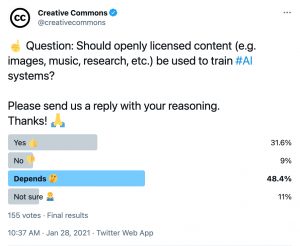
Developments in artificial intelligence (AI) raise several questions when it comes to the use of copyright material and Creative Commons-licensed content in particular.1 One of them is whether CC-licensed content (e.g. photographs, artworks, text, music, etc.) should be used as input to train AI. To get a sense of the various views on this question, we launched a Twitter poll where nearly half of respondents said, “it depends.” We agree and here’s why: while we generally support broad access to content to train AI, we also aim to increase our understanding of the ethical concerns that may constitute barriers to open sharing by creators.
 CC supports broad access to content in the public interest
CC is dedicated to facilitating greater openness for the common good. We believe that the use of openly accessible content can lead to greater innovation, collaboration, and creativity. We also believe that the limitations within copyright law, which generally privilege the reuse of the facts and ideas embodied in creative works, contribute to a rich and generative public domain. CC thus supports, in principle, broad access and use of copyright works, including openly licensed content, to train AI in the public interest. Such access can, for instance, help reduce bias, enhance inclusion, promote important activities such as education and research, and foster beneficial innovation in the development of AI.
Does the training of AI implicate copyright?
Whether one has to comply with the copyright regime (and hence with the CC license terms) depends on whether the type of AI training activity is an exercise of a right reserved to the rightsholder.
There is no consensus on whether the use of copyright works as input to train an AI system is an exercise of an exclusive right.
There remains significant legal uncertainty about whether copyright applies to AI training, which means it may not always be clear whether a CC license applies. In other words, there is no consensus on whether the use of copyright works as inputs to train an AI system is an exercise of an exclusive right (e.g., reproduction, adaptation, etc.). The situation is likely to vary across jurisdictions, as countries progressively regulate the copyright-AI nexus. In the US, the use of works to train AI is likely considered fair use. In the EU, Article 3 of the Directive on Copyright in the Digital Single Market (DSM) provides an exception for non-commercial text-and-data mining (TDM, a form of AI) by research and cultural heritage institutions, while Article 4 offers an exception regime for commercial TDM, from which rightsholders may opt-out.
At CC, we believe that, as a matter of copyright law, the use of works to train AI should be considered non-infringing by default, assuming that access to the copyright works was lawful at the point of input. For example, TDM in the context of research or education should be allowed under an exception to copyright, following the adage that “the right to read is the right to mine.” As one commentator stated in our abovementioned Twitter poll: “Copyright should not be used as an instrument to stop data mining and AI research.” Regarding the use of CC-licensed content, a short refresher about how the licenses operate is in order.
CC licenses refresher
Our licenses do not restrict reuse to any particular types of reuse or technologies, so long as the attribution (BY), share-alike (SA), no-derivatives (ND) and non-commercial (NC) terms are respected. Therefore, strictly from a copyright perspective, no special or explicit permission is required from the licensor to use CC-licensed content to train AI applications to the extent that copyright permission is required at all.2 In addition, our licenses do not override limitations and exceptions, such as fair use. If a use is not one that requires permission under copyright or sui generis database rights (e.g. text and data mining allowed under an exception), one may conduct the AI training activity without regard to the CC license.
It’s also important to recall that our licenses operate within the copyright system. Privacy, personality, publicity and other types of rights or ethical considerations are not covered by the licenses.3 We do our best to ensure that those releasing their creations under our licenses understand the scope of the copyright rights that are managed under our licenses. For example, while a CC license may offer users permission to reuse a photo, it would not offer the permission users would need to make use of the personal likenesses of other people in the photo, which may be governed by image or personality rights.
Uncertainty around AI can raise additional barriers to sharing
Beyond the framework of freedoms that the licenses provide, there are concerns on the part of creators that their CC-licensed content can be used for problematic purposes, such as AI designed for facial recognition.
In 2019, we learned that researchers at companies like IBM were training their facial recognition AI programs by feeding their algorithms with CC-licensed photos from publicly available collections (e.g. one million photos on Flickr). IBM had not asked permission from the people photographed or the photographers. Some Flickr users were dismayed to learn that IBM had used their CC-licensed photos to train the AI, all the more so as it was done for commercial advantage. They had questions about the ethics and privacy implications of such a dataset being used for algorithmic training.4
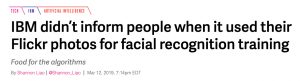
The incident magnified the tension between the value of open data vs. legitimate concerns about ethical, moral and responsible use of openly licensed content. The United Nations Secretary-General António Guterres acknowledged that “advances in artificial intelligence-related technologies, such as facial recognition software and digital identification, must not be used to erode human rights, deepen inequality or exacerbate existing discrimination.”5 As with any fundamental ideal, the “openness” of data is not an absolute end in itself and must be balanced with equally valid considerations to ensure sharing ultimately benefits the public.
Our thoughts moving forward: an inclusive approach to support better sharing
Beyond copyright issues, AI is likely to affect the sharing of creative content and the open community in general. The legal uncertainty caused by ethical concerns around AI, the lack of transparency of AI algorithms, and the patterns of privatization and enclosure of AI outputs, all together constitute yet another obstacle to better sharing. Indeed, for many creators, these concerns are a reason not to share.
As one actor in a vibrant community of open advocates defending the interests of the millions of people who use CC licenses, we want to engage in rich conversations on AI’s multiple facets to promote better sharing in the public interest.
That’s why to promote the use of CC-licensed content to train AI, we need a community-led, coordinated and inclusive approach to consider not only the copyright system in which CC licenses operate, but also issues of accountability, responsibility, sustainability, cultural rights, human rights, personality rights, privacy rights, data protection, and ethics. As one actor in a vibrant community of open advocates defending the interests of the millions of people who use CC licenses, we want to engage in rich conversations on AI’s multiple facets to promote better sharing in the public interest.
To that end, the CC Copyright Platform of the Creative Commons Global Network will examine, throughout the year, the intersection of AI and open content. Through discussions and collective action, we look forward to exploring options in licensing and infrastructure, policy,6 norm building,7 and awareness-raising.
Are you interested in joining the conversation with policy experts from all over the world? Become a member of the CC Copyright Platform by joining our CC Policy Mailing List.
1. Our previous blog posts on AI include: Why We’re Advocating for a Cautious Approach to Copyright and Artificial Intelligence; Artificial Intelligence and Creativity: Why We’re Against Copyright Protection for AI-Generated Output and Artificial Intelligence and Creativity: Can Machines Write Like Jane Austen? See also our official submissions to the World Intellectual Property Organization (CC Submission to WIPO Consultation on AI and IP Policy (February 2020) and CC Statement at WIPO Conversation on IP and AI (2nd session) (July 2020)) and the European Commission (Creative Commons Submission to the European Commission Consultation on Artificial Intelligence (June 2020)).
2. For further information on our licenses and AI see our FAQ: https://creativecommons.org/faq/#artificial-intelligence-and-cc-licenses and https://creativecommons.org/faq/#can-i-conduct-textdata-mining-on-a-cc-licensed-database.
3. The licenses do, however, include a waiver from the licensor not to assert their own moral, publicity, privacy, and/or similar personality rights against reusers.
4. A tool called exposing.ai has since been developed to allow Flickr users to check if their CC-licensed photos were used to train facial recognition AI.
5. Guterres, A. (2020, Feb 24). The Highest Aspiration: A Call to Action for Human Rights. Geneva, Switzerland, UN Human Rights Council.
6. We want our policy work to focus on global, representative and inclusive advocacy efforts, notably in the context of the UNESCO Recommendation the ethics of artificial intelligence and the WIPO Conversation on Intellectual Property and Artificial Intelligence.
7. Lessons from the data collection practices of archives have been touted as useful guidance for developing codes of conduct and ethical guidelines in machine learning systems.
Thank You for Participating in Open Sharing Is Caring!
February is usually the time to share virtual hugs, chocolates, and witty cards with family and friends for Valentine’s Day ❤️. (Or “Friend’s Day” in Finland!) This past Valentine’s Day, we wanted you to share something a little different: your creative work.
In our Open Sharing is Caring challenge, we asked you to openly share an image, song, artwork, research paper, poem, GIF…whatever it may be with the world by gifting it to the public domain. By using #OpenSharingIsCaring on Twitter, LinkedIn, and Facebook, we watched as you generously gave to the public domain.
In this post, we’re sharing five of our favorite images!

Illustration created by Joëlle Botter (CC0)
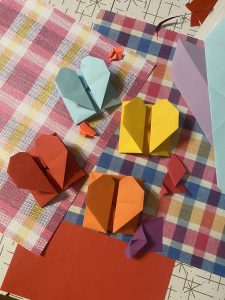
Image by Alison Pearce (CC0)

Illustration of “Bar du Matin in Brussels” by Sam Donvil (CC0)
Finally, we received a few touching and witty poems via email for Valentine’s Day. One of our favorites was shared by Lisanne.
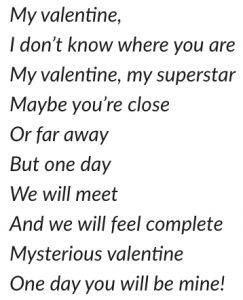
Thank you to everyone who shared with us in the #OpenSharingIsCaring challenge! Check out more openly shared creative works here and please continue to give back to the public domain all year long!
Panel: A New Era of Open? COVID-19 and the Pursuit for Equitable Solutions
In response to the COVID-19 pandemic, Creative Commons published an article titled, “Now Is the Time for Open Access Policies—Here’s Why” in March 2020. A lot has changed since then and it’s important to assess the progress made and take a hard look at the dangers ahead.
In this panel, we’ll examine the fields of Open Data, Open Science, and Open Source Medical Hardware with leading experts and practitioners, asking questions like: “What does “open” mean in the COVID-19 context?” “What role can open access and the open community play in ensuring there is timely and equitable access to medical and scientific research outputs and data, vaccines and treatments?” “Can open science and open data help prevent the next pandemic?” “What legal tools should be used to expedite the manufacturing of vaccines?” “How can we balance individual privacy with the need to share information about genome variation and patterns of infection?”
Panellists include:
- Brigitte Vézina | Director of Policy, Creative Commons (Moderator)
- Dr. Tarek Loubani | Medical Director and Physician, Glia
- Dr. Tim Hubbard | Professor of Bioinformatics, Department of Medical & Molecular Genetics at King’s College London
- Dr. Uma Suthersanen | Professor of Global Intellectual Property Law, Queen Mary University of London
Date: Tuesday, 16 March 2021
Time: 11:00 – 12:20 EST/15:00 – 16:20 GMT/16:00 – 17:20 CET
Location: Anywhere and everywhere! We’ll be using a virtual platform called Hopin to host the event.
Join us as we attempt to map out the present and the future of “open” in the era of COVID-19!
Pay-What-You-Can Registration: We’re aiming to make this event as accessible to as many participants as possible. All ticket holders receive the same access to the event. Register by Monday, 15 March!
?: Featured image is“Need for Hope” by Joey Guidone (CC BY-NC-SA)
Open Minds: Celebrating Smithsonian Open Access With Effie Kapsalis
In two days, the Smithsonian will celebrate one year of Smithsonian Open Access. This initiative removed copyright restrictions from 2.8 million digital collection 2D and 3D images and nearly two centuries of data using Creative Commons’ public domain dedication tool (CC0). Launched just before many of us went into lockdown due to COVID-19, Smithsonian Open Access unexpectedly became an invaluable resource for parents and educators alike as traditional education was disrupted due to the pandemic.
 To mark this occasion, we reconnected with Effie Kapsalis (Senior Digital Program Officer, Smithsonian) for our new 20th-anniversary podcast, “Open Minds…from Creative Commons.”
In this episode, we talk through the history of Smithsonian Open Access, including the years of research and collaboration it took to get the initiative launched, where it’s going as new challenges have emerged (e.g. mis/disinformation on digital platforms), and Effie’s personal advice for other open advocates in the cultural heritage sector. Hint: Leverage research like this paper!
The value of open “was always to be able to include many hands in the work we have to do to make this live on into perpetuity.”
You’ll leave this episode energized by Effie’s telling of the journey of Smithsonian Open Access, which has undoubtedly reaffirmed her belief in the power and the value of open access. “We had a class of graduate data [visualization] students from Parsons [School of Design] this last semester and they created these really delightful explorations of different pockets of our collections,” she explained, “This is the value of open—it was always to be able to include many hands in the work we have to do to make this live on into perpetuity.”
Listen on Apple Podcasts, Spotify, SoundCloud, and more. You can also subscribe via the show’s RSS feed.
We hope you enjoy the show. Please subscribe to it in whatever podcast app you use, so you don’t miss any of our conversations with people working to make the internet and our global culture more open and collaborative.