As the United Nations General Assembly (UNGA) convenes its 81st session in New York in September, Creative Commons is bringing together leading civil society and digital rights organizations for “A Conversation on Collaboration,” a day-long symposium examining how to balance digital sovereignty with open collaboration.
In this post, we outline our plans to build upon and strengthen CC signals in order to support our goal of sustained access to human knowledge. We do not have all the answers yet. What we do have is a framework for how we will work toward them.
It’s been a while since we last shared an update on CC signals and our work around AI and the commons. Over the past several months, we’ve been deep in research, in conversation, and in active collaboration with communities, policymakers, and practitioners. We took the time to understand where power is consolidating, where harms are emerging, and where meaningful intervention is actually possible. We are now at a point where we believe we can act in ways that will have real impact.
Last month, we published a preview of what we intended to bring to the AI Impact Summit in Delhi: a focus on data governance, shared infrastructure, and democratic approaches to AI that genuinely advance the public interest rather than replicate existing power imbalances. That piece outlined our core interventions and the principles that have guided our thinking as we grapple with how to ensure openness, agency, and equity in the age of AI.
by
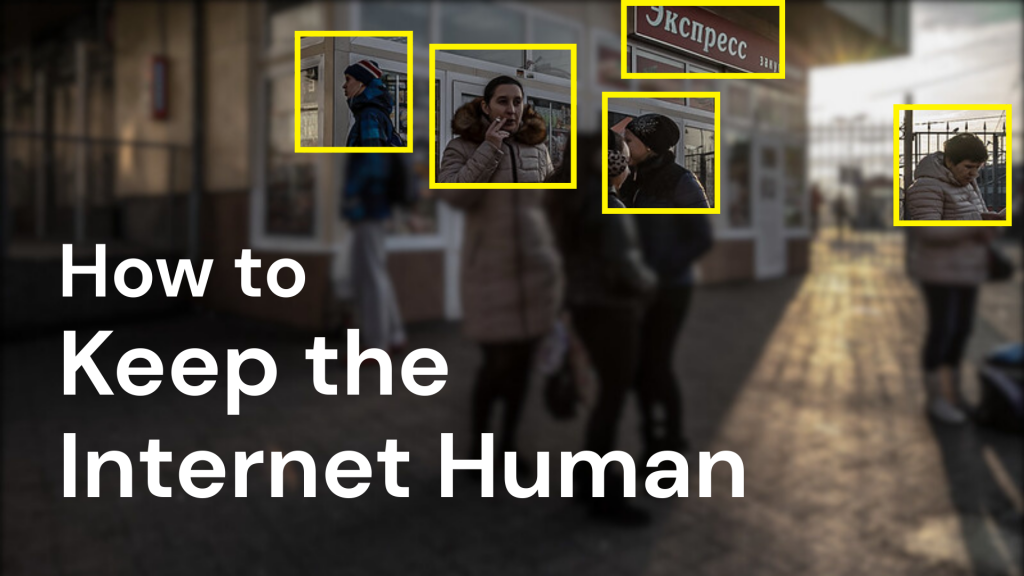
Sarah Hinchliff PearsonPolicyPhoto by Dmitry Ryzhkov, 2014, licensed with CC BY-NC-SA 2.0, Flickr, remixed by Creative Commons, 2026, CC BY 4.0.
I like to say I am a “writer who lawyers”. I begin here because I want to name my biases up front. I am a lawyer, but I come to this work first and foremost as a writer thinking about the conditions that will allow us to continue to share knowledge publicly. And in spite of—or perhaps because of—the fact that I am a lawyer, I have a healthy skepticism about the power of legal terms and conditions. The law will play a role, but the challenge of keeping the internet human will ultimately be navigated by the stories we imagine and tell. We need new stories.
As we’ve discussed before, the rise of large artificial intelligence (AI) models has fundamentally disrupted the social contract governing machine use of web content. Today, machines don’t just access the web to make it more searchable or to help unlock new insights; they feed algorithms that fundamentally change (and threaten) the web we know. What once functioned as a mostly reciprocal ecosystem now risks becoming extractive by default.
Whether you are a creator, researcher, or anyone licensing your work with a CC license, you might be wondering how it can be used to train AI. Many AI developers, who wish to comply with the CC license terms, are also seeking guidance. The application of copyright law to AI training is complex. The CC…